
House of the Angel Guardian Part II: “I told them my name was John Erickson…”
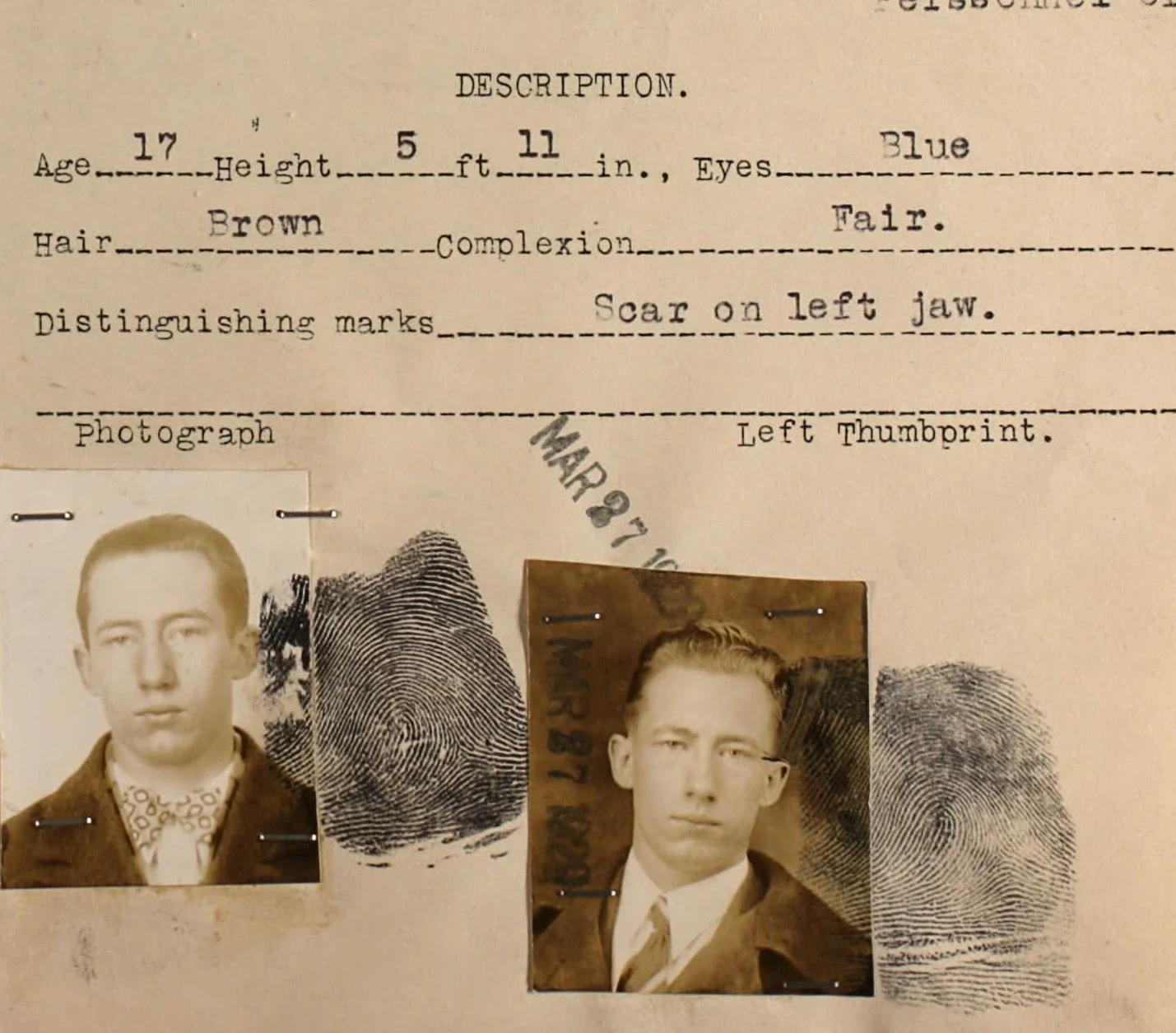
1927 Seaman’s Protection Certificate for my grandfather, John Edward Muzrall, using his own name and age once again.
Last week, my friend Scott came to visit me in the office. I asked him if he read the newsletter. He nodded. Then, because I know he loves a good story, I asked him if he had seen the article about my grandfather. He snorted. “Well I started to and then I said to myself, what has this to do with Newburyport?” I reminded him that though we both believe the sun rises and sets here, specifically, there are other places in this world, and since this is MY grandfather, I thought it would pass muster. He smiled. “Let me know when he gets to Newburyport,” he said. I sighed. John Edward Muzrall got as close as West Newbury, but this part of his story takes place mostly out-of-state. Sorry, Scott. This story may not be for you.
I did hear back from a great many of you who enjoyed the tale of my not-quite-an-orphan grandfather at one orphanage and foster farm after another. I really do read all of your comments and emails and I am filled with gratitude for all of the connections we find in this world. Some of you had family members who were in orphanages around the same time. One of you even had family from Iron Bound Cove, New Brunswick! And so, though this part of the story has very little to do with my West Newburian grandmother, who he had not yet met, we soldier on.
When last we left John Muzrall, he had run away from a violent farmer and made his way back to Boston, where he was caught sleeping behind a furnace because his long legs were sticking out. He was determined that he would not go back to his mother, who had abandoned him repeatedly, but one of the policemen who was called when he was found knew him from the neighborhood (his bad luck), and he was caught. I’ll let him take it from here. He was 12 years old.
“So this policeman escorted me to East Boston, where my mother was living with my stepfather, who was a man about 24 years older than she was, a blacksmith. He didn’t marry her for love or romance. He married her because he needed a housekeeper, and she was willing to do this because she had all these other children to take care of.
Well, I was the last one to show up, so when this policeman took me to the door, my mother opened it. My stepfather said, Who is it, Annie?
Oh, she said, It’s my oldest son, John. So he came out, and he looked at me and he said, Goddamn It! He said, every time the door opens, another one comes in, and they’re getting bigger all the time. All right, bring him in, he said.
Now, he tried to be nice to me. He took me to his blacksmith shop to try to teach me the trade. I’m left-handed. After a couple of days, he said to me, you’ll have to leave. I never had anybody swing a left-handed sledge at me before, and I’m afraid you’ll hit me on the head with it.
He gave me $12 and bought me a winter coat, which I didn’t have. ”
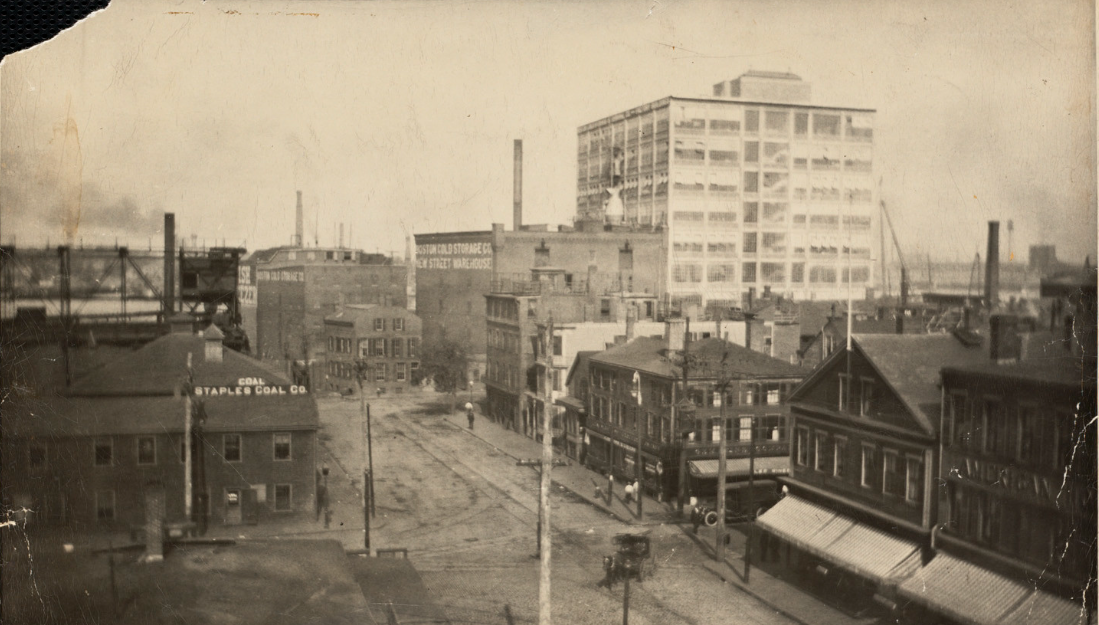
This view of East Boston is c.1911. Courtesy of the Boston Public Library via Digital Commonwealth
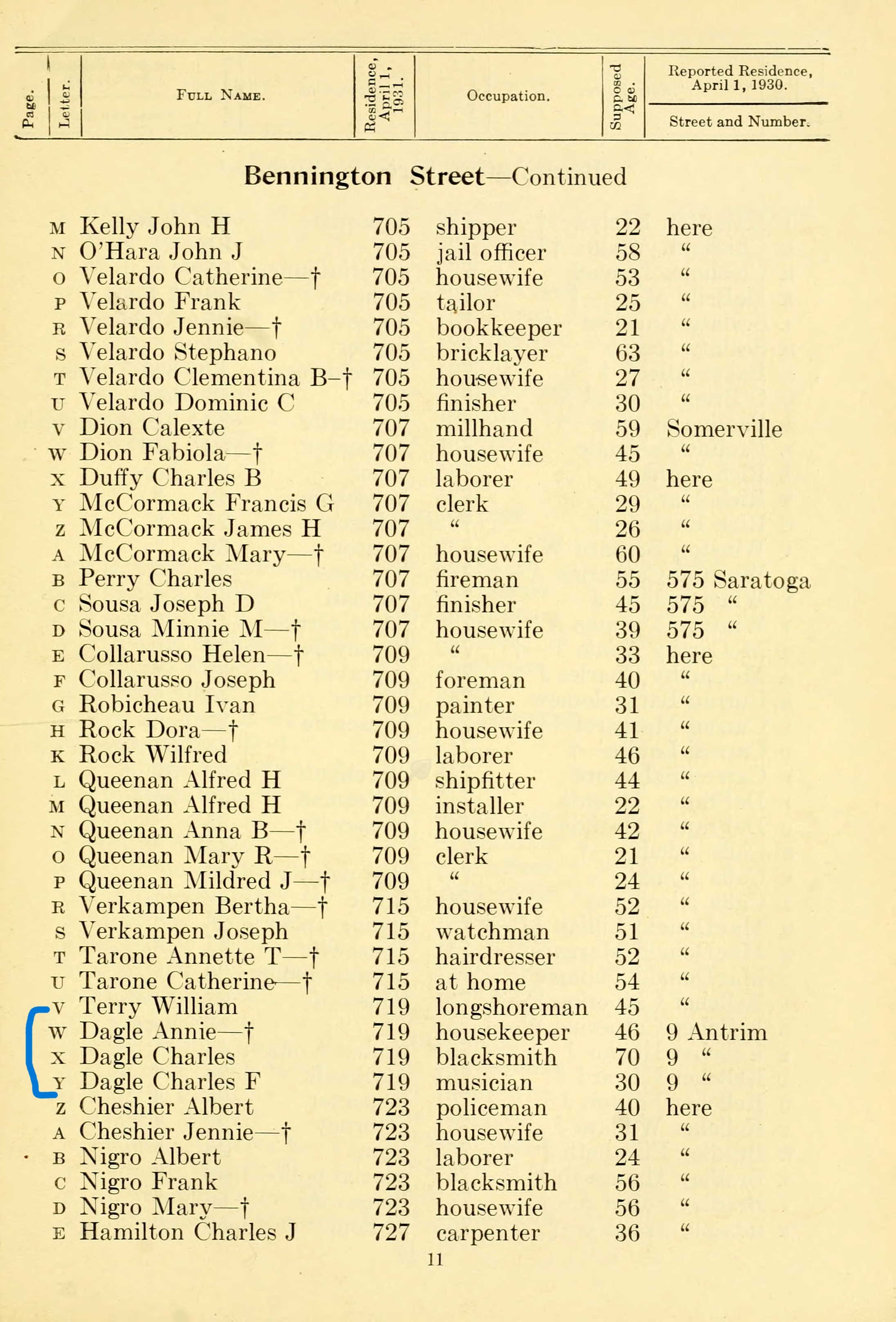
This listing from the 1930 directory has my great-grandmother, Annie, now Dagle, her husband, the kindly blacksmith Charles, and his son, Charles F Dagle living at 9 Antrim St. in East Boston
“ I then went into Boston, got a job as a telegraph messenger, where I was paid $12.60 a week. Now, my mother was not very honest, and insisted that I give her $9 and a half a week for my room and board and the clothes she said she was going to have to buy for me. Well, that left me just enough for car fare and lunch, and not a big lunch either. However, she told my stepfather that I was spending all my wages on myself, and she needed more money from him to feed me. I didn’t know this till later, of course.
I went home one day after work. I had my pay when I came in, went into the little bedroom I had, and I took a little handbag, like a little shoulder bag, and I put in clean shirt, change of underwear, pair of socks. I’m going out the door. My mother says, Where are you going? I said, I’m going out to the shoemaker to get new heels put on my shoes. Where’s your pay, she said. I said, I’ll give it to you when I come back. I didn’t come back.
I went into Boston, the South End. I was familiar with it because as a telegraph messenger, I knew the streets pretty well. I called my mother up and said, I’m not coming back. Don’t expect me. She said, I’ll give you one hour to get back here. Where are you?
I said, I’m at the North Station. Then I hung up. So she assumed that if I was at the North Station, I was going to try to take a train and go to Canada, to my grandparents. Instead, I was at the South Station. I slept overnight in the station, and the next day, I took a bus that was going to New York City.”
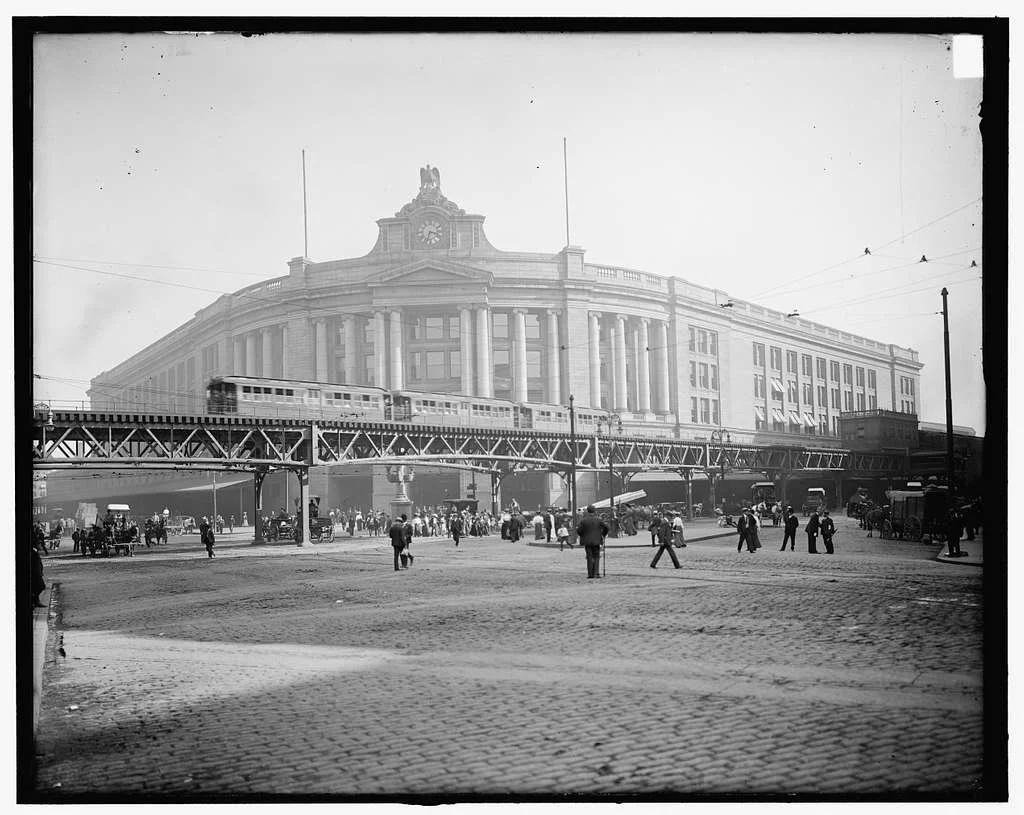
South Station at Atlantic Avenue, 1905.
“Now, on the way down in the bus, I was thinking, what am I going to do to keep my mother from finding me? Because I didn’t want to be found, you understand. It was March by this time, and when I got off the bus in New York, I already knew I was going to be pretend to be a Swede, and I was going to take the name John Erickson. I had learned to read and speak some Swedish from one of my chums. So I got the Swedish newspaper, and I looked up rooms for rent, and I found one in Brooklyn.
(Note: my grandfather told me that he learned Swedish from one of the other boys that was sent to work on the farm with him, and it was there that they came up with the plan to go to New York and live as a Swede).
Well, after a couple of false starts on the subway, I got over to Brooklyn around 10 o’clock at night, and it turned out to be Naomi (Naomi Verena Welsh Dahlgren, born in Portland, Jamaica in 1893, died in NYC in 1986), and her husband, Hilmer Dahlgren (Johan Olaf Hilmer Dahlgren, born in Visby, Sweden in 1891, died in NYC in 1955).
They rented me a hall bedroom for $4 a week. I had $8 with me. So that left me with $4 and I told them my name was John Erickson and I was 16. They never questioned me. They didn’t want to see a birth certificate. People were more trusting then.
Now, the first job I got was in a Greek restaurant in Ridgewood the next day, washing dishes. However, I only lasted two days on that job.
The owner caught me throwing away food that came back on the plates and he wanted it saved. The leftover bread was for bread pudding. Leftover butter was for frying steaks and eggs, and the leftover meat was for hash, and I didn’t like the idea of reclaiming it and reusing it, and he caught me throwing it in the garbage can, and he said, you cost me too much money. Get out of here. So that was my first short job - two days.
The next job I got was apprentice electrician with an electrical contractor. It was a union job. It paid $12 a week, which was the going pay in those days. Well, I worked there all through one summer, and you don’t save anything on $12 a week. So I didn’t have any money to buy winter clothes, and it was an outdoor job.
So then I worked as a radio service man. This is in 1926 now...I didn’t last too long, because they used to make such extravagant promises to their customers, which I couldn’t make good on...
So then Winter is coming on again, so I decided I need an indoor job where I can eat. Right across the street from the radio store was a very large chain restaurant called Bickford’s.
It wasn’t fast food, but it was a cafeteria. Well, I went in there and I got a job as bus boy. That means picking up all the dirty dishes off the table bring them to the dishwasher. Well, from there, I graduated to salad man and cook and counterman. In fact, after a while there, the manager said, How would you like to be assistant manager?
And I thought to myself, I’m not going to get tied down to a restaurant. This isn’t what I want. So anyway, he had been talking, this is 1927 now. He had been talking about a voyage he made as a clerk on a big passenger ship to Europe and back, three weeks round trip. And he talked about it as if he was an old seasoned salt that had been going to sea for years.
But I said to him, how did you get this job? Well, he said, whenever the ship comes in, they have a hiring hall in Hoboken, and if you’re over there, when they’re hiring, they call out the jobs they want, and then they pick you out if they need you. Well, my next day off coincided with the first day that this big passenger ship came in. So here I am in Hoboken, and what do you know?”
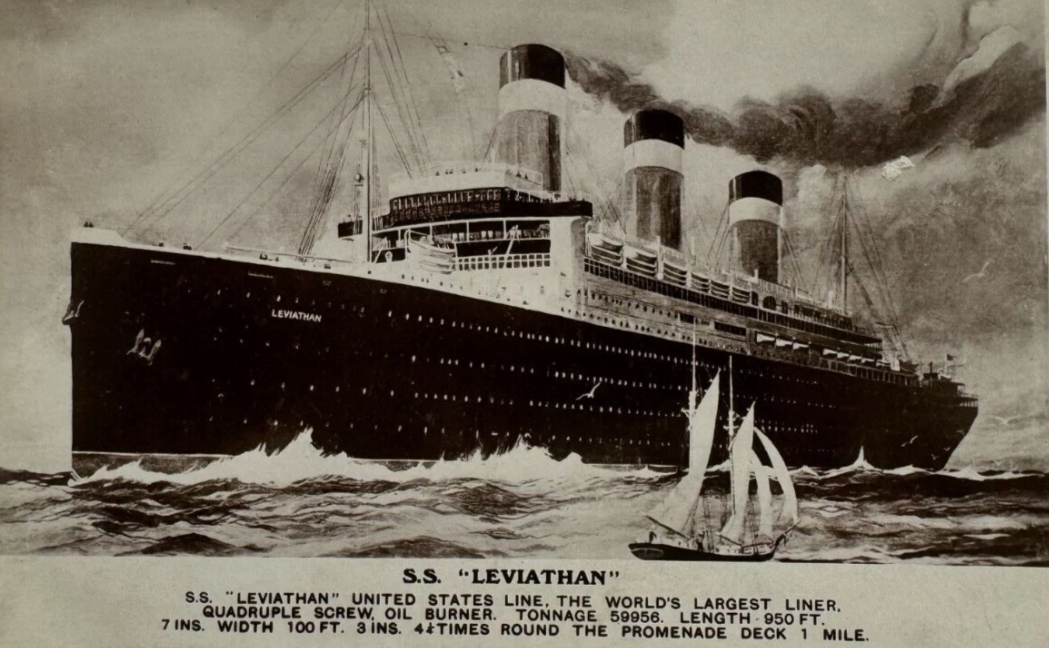
“I wind up with a job as a scullion. I don’t know what a scullion is, but I agreed. I found out it was a pot washer. So for that first season, about six months, I was pot washer, and there were 600 passengers in first class. The soup kettles were about twice the size of garbage cans. In fact, you had to get inside them to clean them. And my assistant was a German school teacher who could only make $35 a month as a school teacher in Germany, but he got $60 a month washing pots on this passenger ship, which was called the Leviathan.
Now, when I got the job on the ship, I was required to work that night as the ship was loading fresh stores. So the next morning, I’m all beat, and I go back to the restaurant, I said to the manager, I’d like to quit and get my pay. Well, he said, If you quit, you can’t get your pay till payday, and that’s not till next week.
All right, I didn’t care. The pay wasn’t that much but I had to have it. I’m working picking up dishes, and I set a big tray of dishes on the edge of a table carelessly. It fell off on the tile floor, and the floor was covered with broken dishes.
So the manager come over, and he bawled me out, and we cleaned up the dishes. And I started thinking, well, if I did it again, maybe he’ll fire me, then he’ll have to give me my pay. So I did. I repeated the maneuver this time on purpose, and sure enough, he fired me, gave me my pay, and then I hurried off to Hoboken, and the next night, the ship sailed... ”
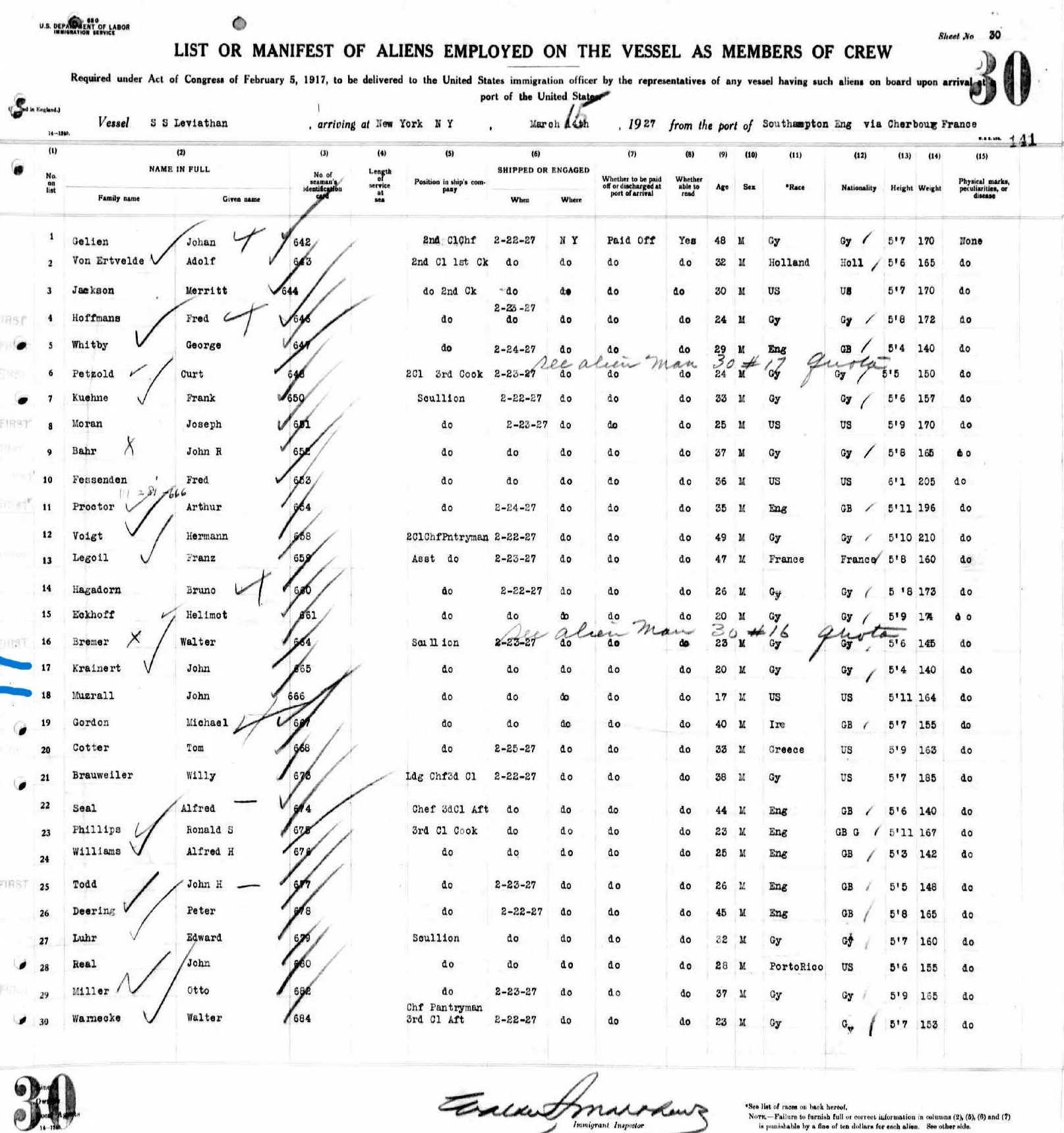
John Muzrall, 17, appears on the crew list of the Leviathan as he returns to New York City from Cherbourg, France, and Southampton, England. There are several scullions from Germany, though John Krainert rings a bell as the schoolteacher who worked with him on his first voyage.
“The Leviathan had 1100 crew. That’s how big it was, the biggest ship in the world at that time. And we went from New York to Cherbourg in France and to Southampton in England. Well, of course, as a passenger ship, it didn’t run across the Atlantic in the winter. So when the fall came, you know, after Labor Day, the ship was laid up, and I found a job ashore at another restaurant. This carried me over.
And then the next spring, 1928 I go back on the ship and I sign up again. This time I’m on as an assistant pantry man. In other words, the cooks prepare the hot food, and the pantry men prepare the cold like, you know, salads, ice cream and cold cuts and so forth. Well, I worked about three trips that time, and then I found out that life on a passenger ship is wonderful for the passengers, but the crew get the worst of everything, the worst quarters, the worst food, the worst conditions, and we only were allowed to have one day off every three weeks. Well, I didn’t want to just look at the ocean, so I decided I got to get off this. So I signed on another ship that was running down to Havana.
This was during Prohibition, when liquor was not allowed to be sold in the United States, so these Americans used to pile on the ship in New York, and in two days they were in Havana, where they could drink all they wanted, and then two days in Havana for the weekend, and then two more days for the trip back. In other words, a week round trip. And although it was a passenger ship, yet, we did manage to get some shore leave in Havana, which was kind of wild at that time, everything was wide open, as they say. However, even that didn’t satisfy me too much after I was fined a day’s pay for walking on a deck that was reserved for the passengers. I didn’t do anything, I just crossed the deck, but those were the rules, so I decided I don’t want this either.
”
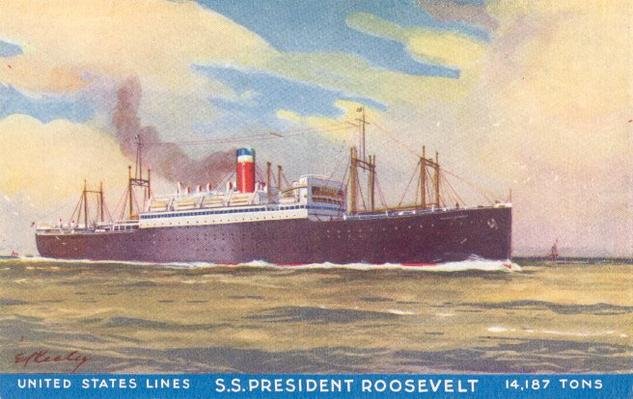
The S.S. President Roosevelt, which did a weekly run from New York City to Havana, Cuba, famously transported Amelia Earhart back from England the year before my grandfather joined the crew.
“So then I signed on a ship, a freighter on the lumber run from the west coast to the east coast through the Panama Canal. Now these ships were practically all Scandinavian crew, although they had the American flag, and I was able to speak with them. They were owned by a company on the west coast that had lumber mills, and they bought these ships to carry their lumber. I thrived on this.
Although the pay was less, we got paid once every 100 Days. That was the time for the round trip from the west coast through Panama and to the East Coast. It included the times for loading and unloading the cargo. And we would have three, four days in port. Gave us a chance to get ashore.
We’d go as far north as Canada on the West Coast and as far north as Maine on the East Coast. Well, I was messman. In other words, I was a waiter for the crew. And one day we’re in Philadelphia, and when it came time for the ship to sail, both cooks are missing, so I was promoted to second cook, or galley hand.
Well, I did fine with that, but then I ran into another problem which I hadn’t anticipated. I didn’t drink. I never drank. I had no desire to drink. But that wasn’t true of my shipmates. So whenever we came in port, they would take off and leave me alone to do all the cooking and everything for the crew who were working, because they said, “Oh, Muzrall doesn’t drink. He doesn’t have to go ashore.” And I found out I was becoming like a prisoner on the ship, because in every port, I couldn’t just walk away. Well, I could have but I didn’t. I decided, well, I had better get out of the steward department....”