
Adventures in the Archives: The “Codfish Note” by Ashley Adams Serveiss
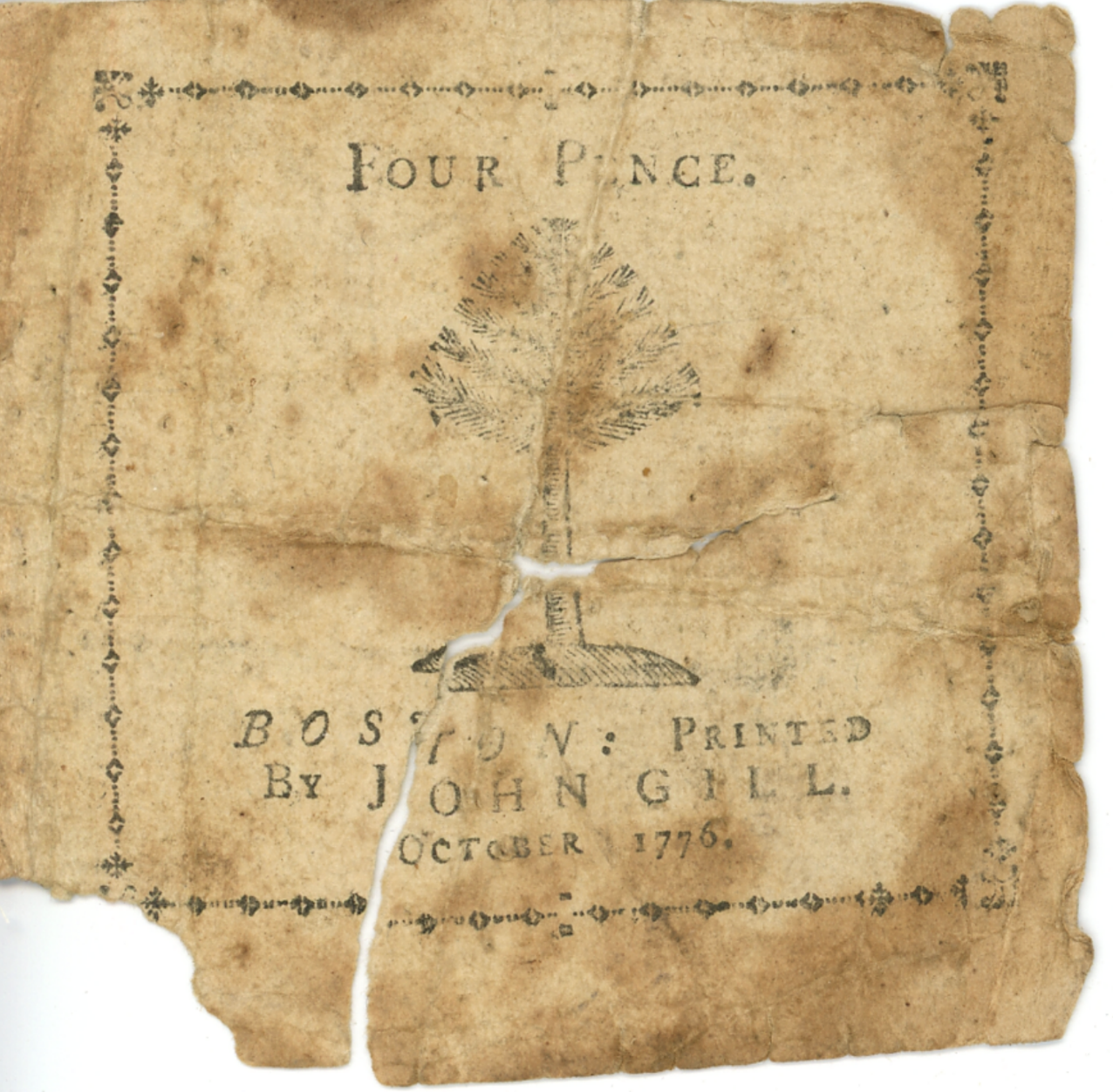
Reverse of our Codfish Note, printed in Boston in 1776
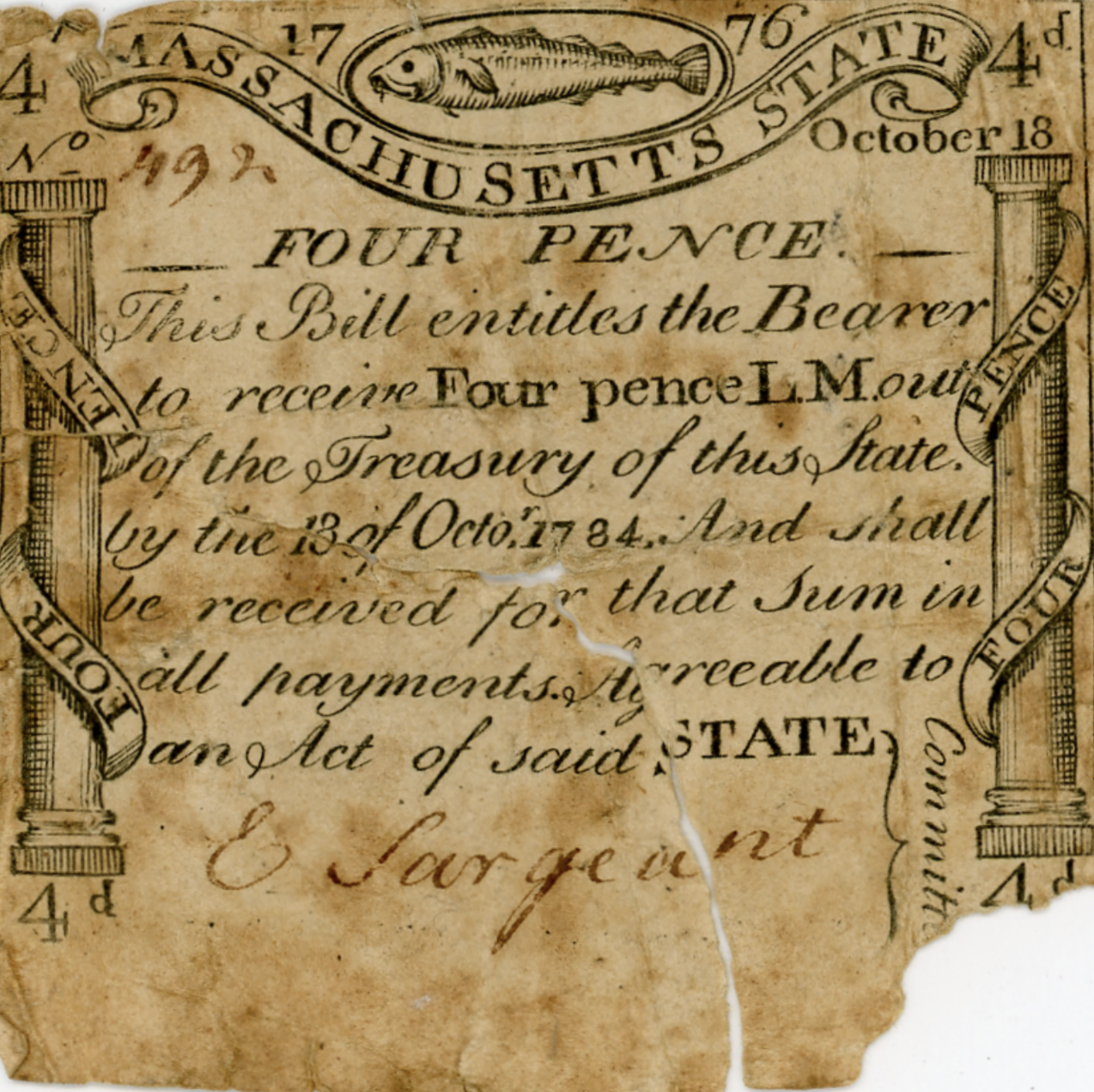
Obverse of our Codfish Note.
This week's #ThrowbackThursday from the Perkins Art & Research Center places focus on Revolutionary-era currency, just in time for our nation's semiquincentennial celebration! So, what does this odd looking scrap of paper have to do with the American Revolution? What you're looking at is a very rare four pence "Codfish Note," printed in Boston in 1776 in the midst of the Revolution. Paul Revere engraved and printed the obverse of this note, while Thomas Fleet printed the pine tree on the reverse. For Bay Staters, the codfish is our most enduring state symbol.
For over two centuries, codfish have represented Massachusetts' maritime heritage and working resilience. Codfish were sacred to the Native Americans who first inhabited the North American continent. When the Puritans arrived, they learned from the Native Americans how to use cod for food, fertilizer, and later, revenue. Today, codfish remain an enduring symbol of prosperity and hardiness for the Bay State; "The Sacred Cod," commissioned by John Rowe in 1784, is still displayed in the State House today.
Revere understood the important role codfish played in Massachusetts and chose to feature the fish on this iteration of Revolutionary-era state currency. Revere was a member of the Sons of Liberty, perhaps most famous for his Midnight Ride to warn his fellow countrymen that, "The Regulars are coming out! (generally remembered as The British are coming!)" We can also remember Revere for his design of the Codfish Note, now a true rarity: of 8,571 originally printed, fewer than two dozen are known to exist today. The scarcity of the Codfish Note bears a unique parallel to the troubles encountered by the codfish industry in the early 1990s, but that's a story for another day. For now, we wish you all a very Happy 4th, and long live the cod!
Images are CURR-024a and CURR-024b from the Museum of Old Newbury's Currency Collection.