The Grounds
The Cushing Garden
Ever-Changing
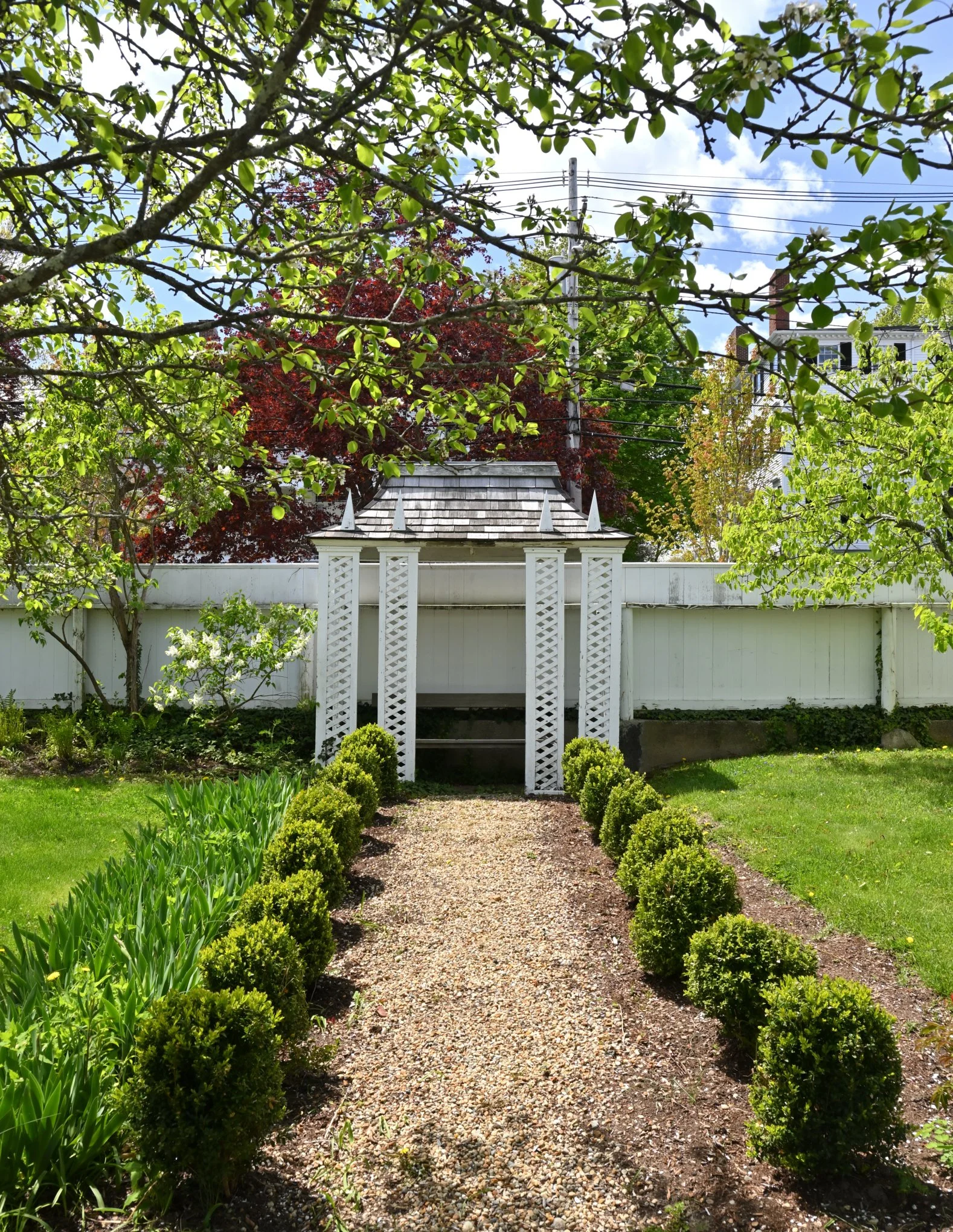
The garden that exists today has evolved over time from its earliest inception as the Cushing family's garden. After the Cushings acquired the 1808 house in 1818, they gradually added sections of neighboring properties, increasing the garden to its current dimensions..
Cushing family members and their staff cared for the gardens for 150 years, filling it with fruit trees, perennials, and annuals. At one point, the Cushing family propagated “blood peach” trees, producing a fruit which, on the exterior was a mousy color, but whose inner flesh and juices ran blood red. The family sold harvested fruit to locals on the condition that the peach pits were returned to the Cushings so that no one else could corner the market on this rare and delicious fruit!
The Museum of Old Newbury acquired the garden and the Cushing House in 1955 after the death of Margaret Cushing, who lived in the house for 100 years. In 1998, the garden was restored to its mid-19th century layout. The design is based both on historic documents and a sketch done by Margaret Cushing showing the gardens as she remembered them from her childhood in the 1860s. Today, the garden is cared for by a group of dedicated volunteers who work hard to maintain both the garden’s historical integrity and its beauty.
The museum's historic garden and grounds are open free of charge from dawn to dusk year-round. Enjoy our free audio tour of the grounds by downloading the Uniguide app to your smartphone!


Cushing House
The brick, Federal mansion that houses the Museum of Old Newbury's headquarters was built in 1808 for Captain William Hunt. The home boasts many architectural elements typical of the Federal period, including its symmetrical design, hipped roof, double-hung sash windows, louvered shutters, and the fanlight window over its front door. The house has served as both a single and two-family home, and over the years, its grounds have evolved to include a carriage house, garden, orchard, and privy.
In 1818, Captain John Newmarch Cushing purchased half of the large Federal home from Captain Hunt’s widow, as the captain himself died at sea before the house’s completion. By 1823, Cushing owned the entire house and grounds, and for the next 132 years, the Cushing family called 98 High Street home.
Captain John Newmarch Cushing married twice and had five children who survived into adulthood. Two sons, William and John, Jr. followed in their father’s footsteps as merchants and ship owners in Newburyport. Caleb Cushing became a successful lawyer, politician and diplomat, serving as mayor of Newburyport, US Congressman for Massachusetts, Attorney General under President Franklin Pierce, Massachusetts Supreme Judicial Court justice, and US Ambassador to China.
John, Jr. eventually acquired 98 High Street and raised his family here. John, Jr.’s daughter Margaret was the last Cushing to live in the house, and at her death in 1955, she had spent all 100 years of her life here. The Cushing heirs then gave the building to the Historical Society of Old Newbury (now the Museum of Old Newbury).
Today, when you visit the Cushing House, you will see a mix of period rooms and gallery spaces that tell the stories of the past 300 years in the Newburys. Many features, such as carpeting, light fixtures, balustrades, and faux-marbled floors, remain intact from the home’s long occupancy by the Cushing family. Against this historic backdrop, the stories of the Newburys unfold, including those of ship captains, craftsmen, politicians, and artists.
Carriage House
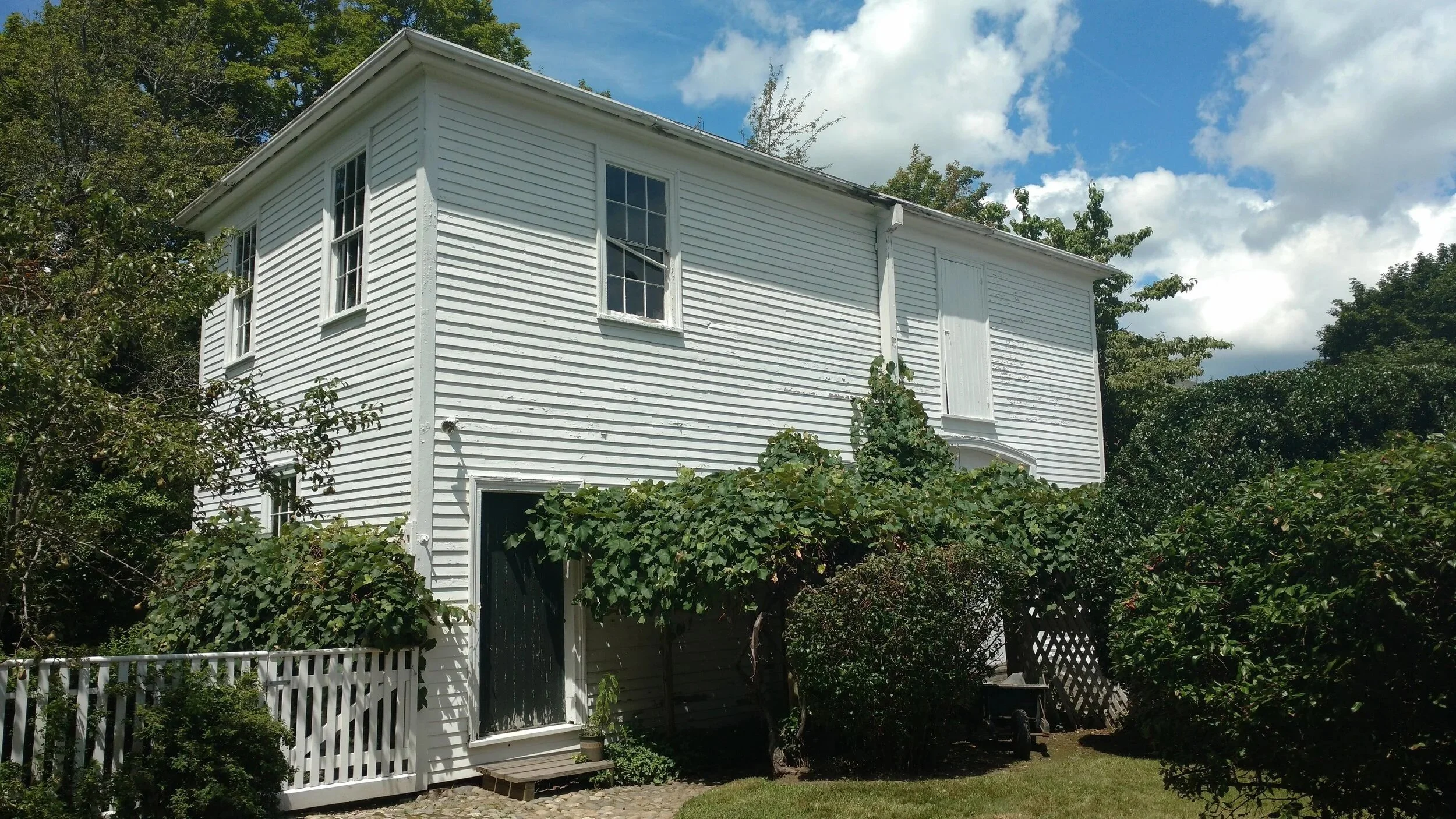
The Cushings’ two-story carriage house was completed shortly after the main house. Originally, the carriage house faced High Street, with cartways allowing access from both High St. and Fruit St.
John Newmarch Cushing’s widow, Elizabeth, died in 1865, ending the era of first generation Cushings at 98 High Street. Shortly thereafter, the next generation began to make improvements to the property. John Cushing, Jr. purchased his brother William’s half of the estate, as well as the abutting property to the north belonging to Perley Tenney.
With an enlarged parcel of land to work with, John Jr. reoriented the carriage house, turning it 90 degrees to face Fruit Street rather than High Street. With the main cartway now leading the Fruit Street, John Jr. expanded the property’s garden into the space previously occupied by the High Street cartway.
The original layout of horse stalls and mangers remains intact inside the carriage house. The building currently houses some large collection pieces, including a carriage, carts, and tools, and is used during special events at the museum.
The Privy
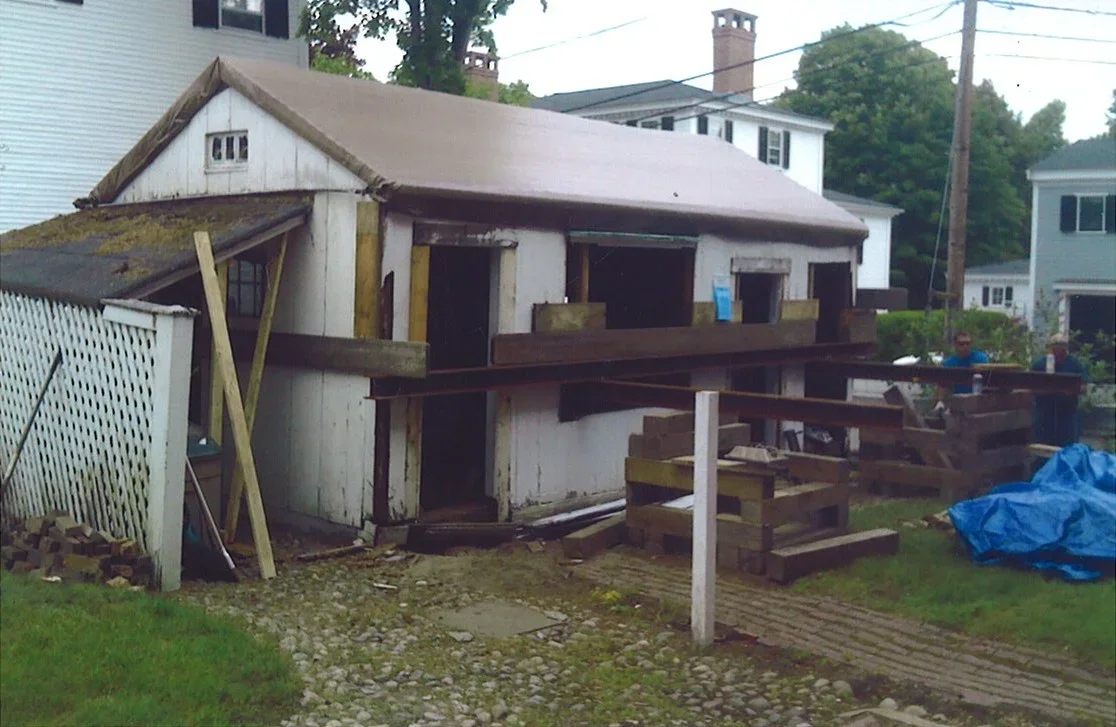
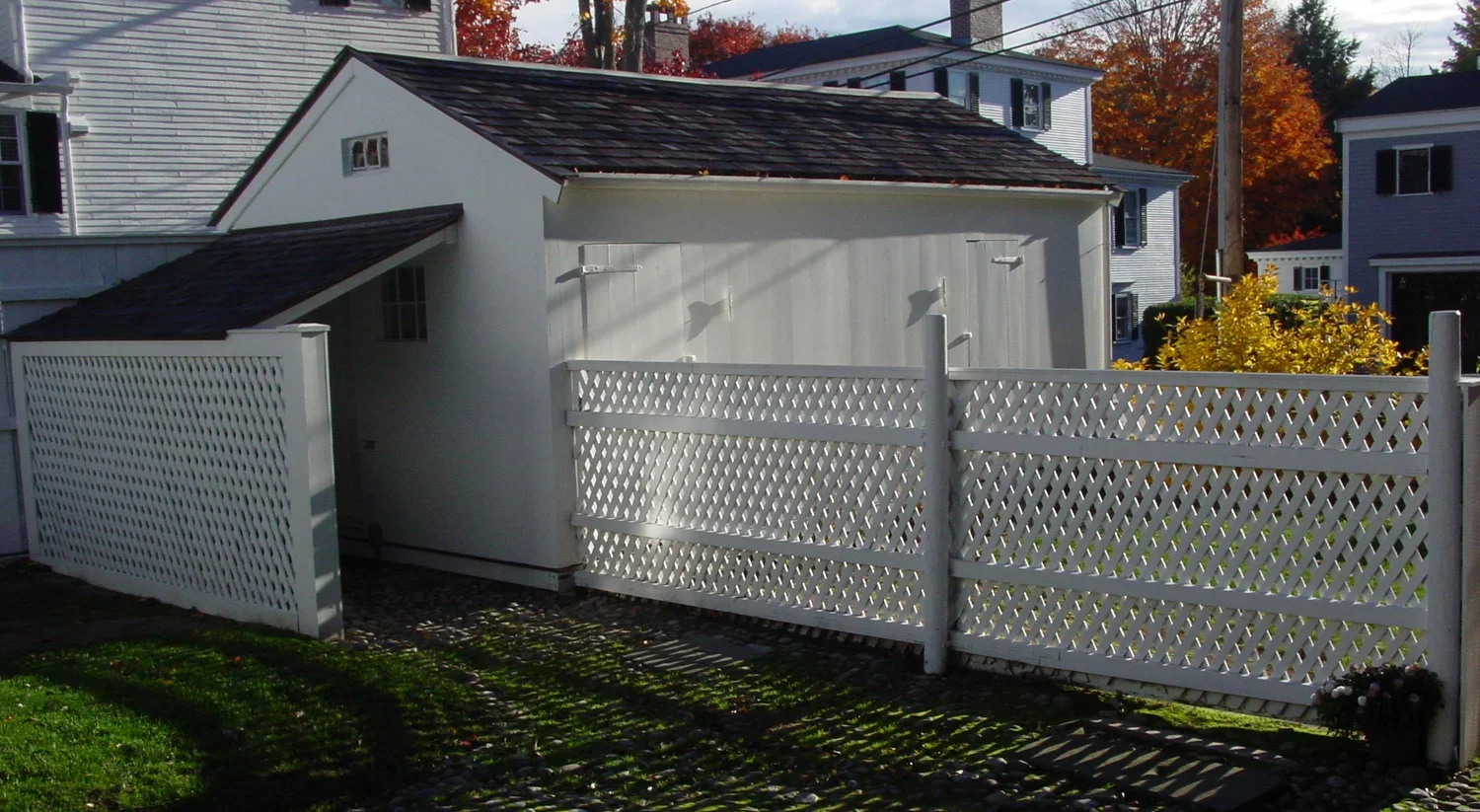
The privy, located behind the main house, dates from approximately 1860. Part of the building served as an outhouse, while the rest was used as a workspace, primarily for laundry. A nearby pump supplied water for laundering, and drilled holes in the building’s original two-inch thick floorboards ensured proper drainage. Laundry lines were strung between cleats on the exteriors of the privy and the main house.
In 2009, the Museum of Old Newbury undertook a major restoration of the privy. This restoration addressed structural issues, and a modern restroom was installed on one side of the building. In May 2011, the privy received a Preservation Award for Exterior Restoration from the Newburyport Preservation Trust.