The Bark Allioth: A New Acquisition in Expert Hands
by Monica Reuss, Rob Napier, and Bethany Groff Dorau
On Wednesday, September 9, 86 members of the Museum of Old Newbury gathered in the lecture hall of the Cushing House to participate in a pivotal event in the life of our 149-year-old organization - the Annual Meeting. There were the usual minutes and financial reports to be approved, nominees to the board to be welcomed, bylaws to be updated, heaping mounds of Shelley’s legendary sandwiches, salads, snacks (Sally Chandler’s cheddar cheese coins…mmm), and delicious Long Hill Orchard pies to be eaten.
With the business meeting out of the way and the audience suitably fortified, we embarked upon what I lovingly refer to as Adult Show-and-Tell, where we have a chance to see a tiny portion of the treasures that have entered our collection over the past year.
All of the presenters were fabulous, and their stories will be shared throughout the year, but the gasps and murmurs around the room during this presentation indicated that this object, and the reason it is crucially important and incredibly rare, along with the good looks and charm of the board members/experts in their fields/presenters, had piqued the interest of the assembled crowd.


American art specialist Monica Reuss (left), a member of the Museum’s Board and Collections Committee, has spent more than twenty-five years researching, cataloging, and appraising American paintings. Rob Napier (right) has made, studied, repaired, and conserved ship models professionally for decades. Between them, they brought an extraordinary level of expertise and interest to the examination of one very special new acquisition.
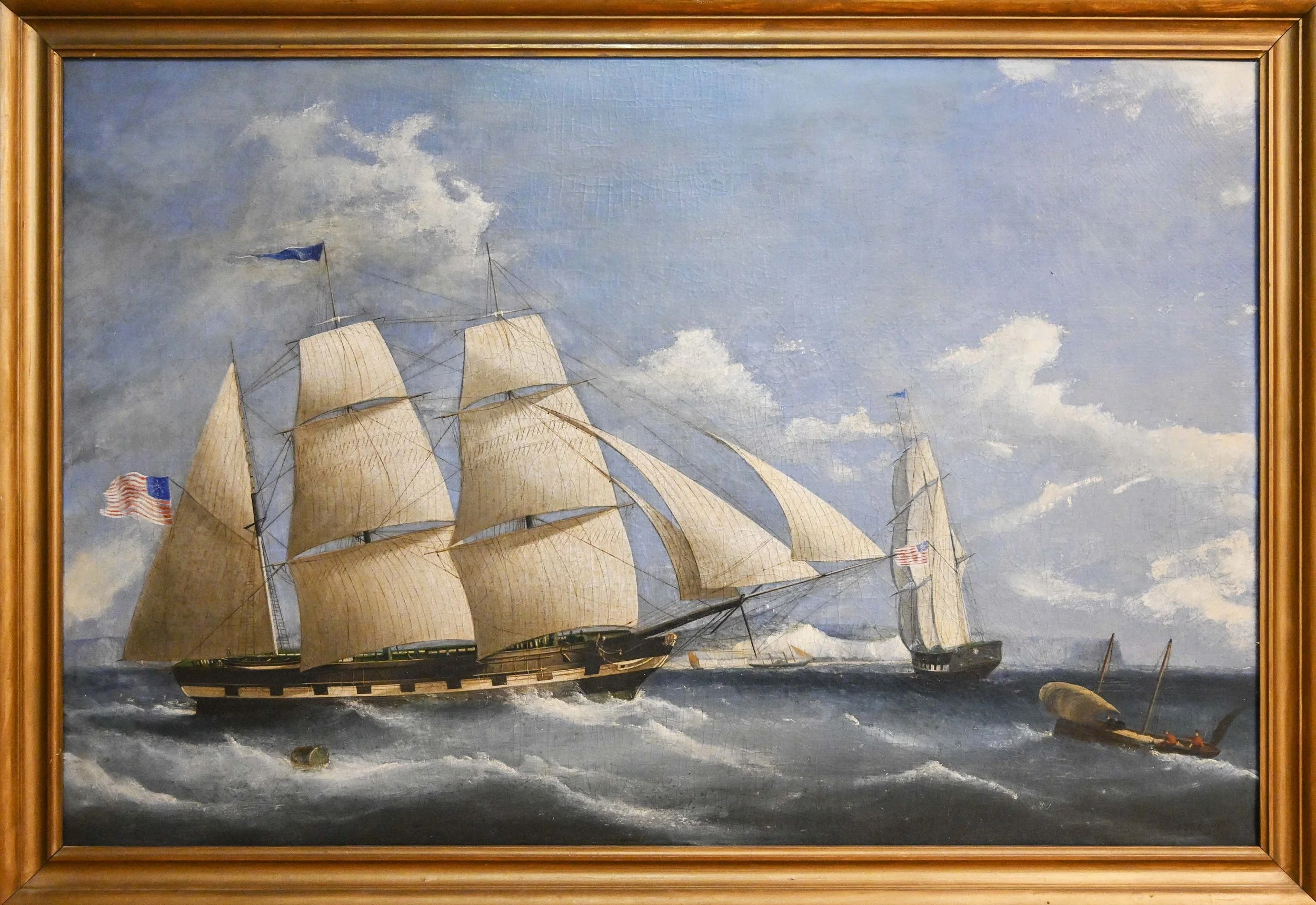
Reuss and Napier presented an introduction to a newly acquired painting, The Bark Allioth, off the White Cliffs of Dover, England, 1852, an oil on canvas signed and dated by British marine artist John Tudgay (1820–1865). Tudgay belonged to a London family intimately familiar with the details of the maritime world. The family were sail-makers and ship chandlers, and their marine paintings were distinguished by a draftsman’s attention to the details of individual vessels.
That precision is Napier’s stock in trade. He has spent his life noticing the finest details so he can best recreate, repair, and preserve ship models around the world. Napier pointed out details that might escape notice the first time around: the name ALLIOTH written along the vessel’s quarter; the brilliant stars painted on her stern; the painted or “false” gunports, a familiar nineteenth-century tradition that gave merchant vessels the appearance of being armed, the accuracy of the rigging, and even the deep green color of her interior planking.
Then there is the second ship (and the first audience gasp).
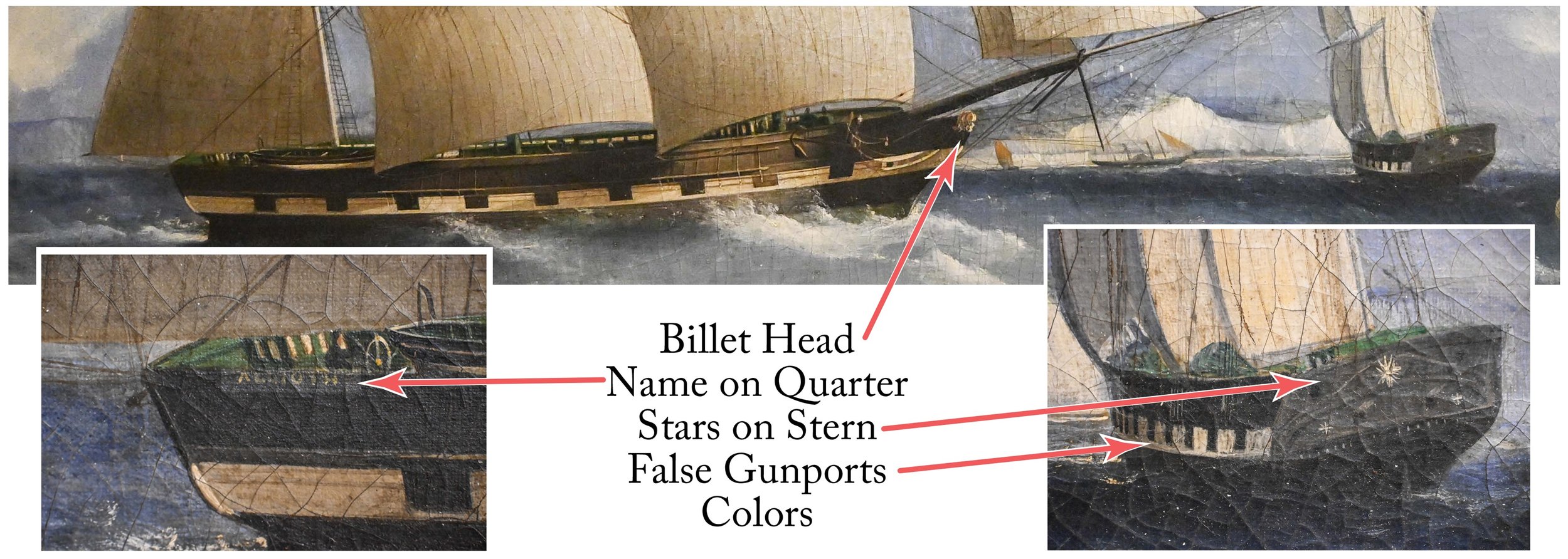
Look closely at the right side of Tudgay’s painting and you will see a smaller vessel sailing away from you. Napier noted that this is not another ship at all. It is Allioth again, shown from astern so that the viewer can see details not depicted in the broadside view. The same vessel portrayed in multiple positions was a standard convention of nineteenth-century ship portraiture, and an incredible boon to model-makers. Tudgay has effectively given us two views for the price of one.

Allioth was built at Newbury (likely in what is now the south end of Newburyport, then part of Newbury and known as Joppa) in 1836 and registered at 329 tons. She measured 115 feet 10 inches in registered length, 24 feet 11 inches in breadth, and 12 feet 5½ inches in depth, with a billet head at the bow. Her Newburyport registration of October 28, 1836, names merchant Francis Todd as owner and George Chase as captain, or master.
The Allioth was a bark, or barque, a three-masted (or more) vessel featuring square-rigged sails on all masts except the rear one, which was fore-and-aft rigged. I will leave it to you to ask Rob to draw this for you the next time you see him. The arrangement of the sails offered a more convenient way to manage them without sacrificing power, and the bark was a nineteenth-century cargo workhorse.
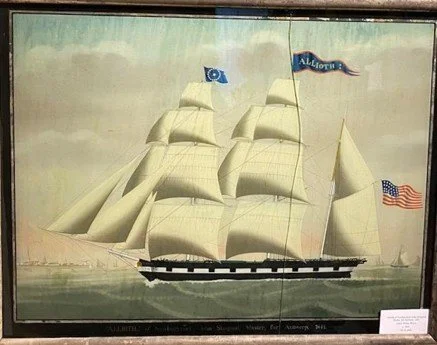
Reuss introduced other related objects in our collection. Eleven years before Tudgay painted Allioth off Dover, Belgian artist Petrus Cornelius Weyts (1799–1855) had painted her at Antwerp, identifying John Simpson as master. Weyts specialized in the technique of reverse painting on glass, in which the artist paints details in the opposite order from conventional painting because the finished image is viewed through the glass. Born in Gistel, Weyts worked first in Ostend and moved to Antwerp in 1838, where the busy port provided a ready clientele for his detailed and fashionable ship portraits on glass.
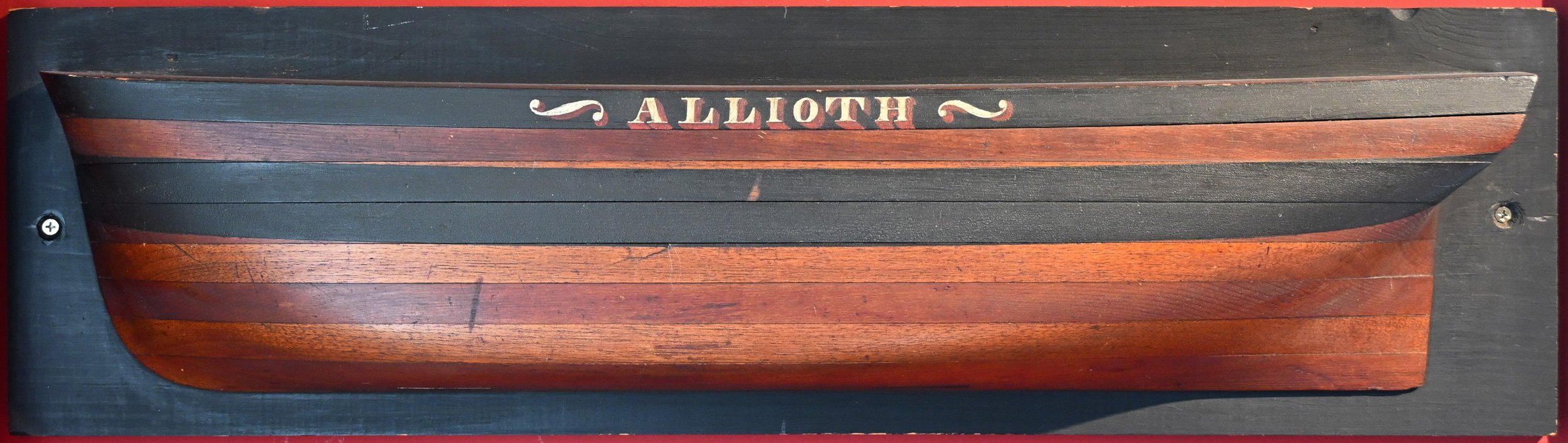
In addition to Weyts’s 1841 depiction of Allioth and Tudgay’s 1852 Allioth, the Museum also holds the vessel’s builder’s half-hull model.
Napier offered a statistic that brought home how rare and extraordinary it is to have so many views of this vessel. Of the approximately 2300 to 2500 vessels built here, it is possible to depict only 10-20 with a degree of accuracy, particularly before the widespread use of photography. Even in photographs, however, details like the rich colors of the Allioth, are lost.
It is incredibly rare, therefore, to be able to “see” the Allioth in this way. We know how she was built, and how she looked as a working vessel, rigged, painted, and moving through the water.
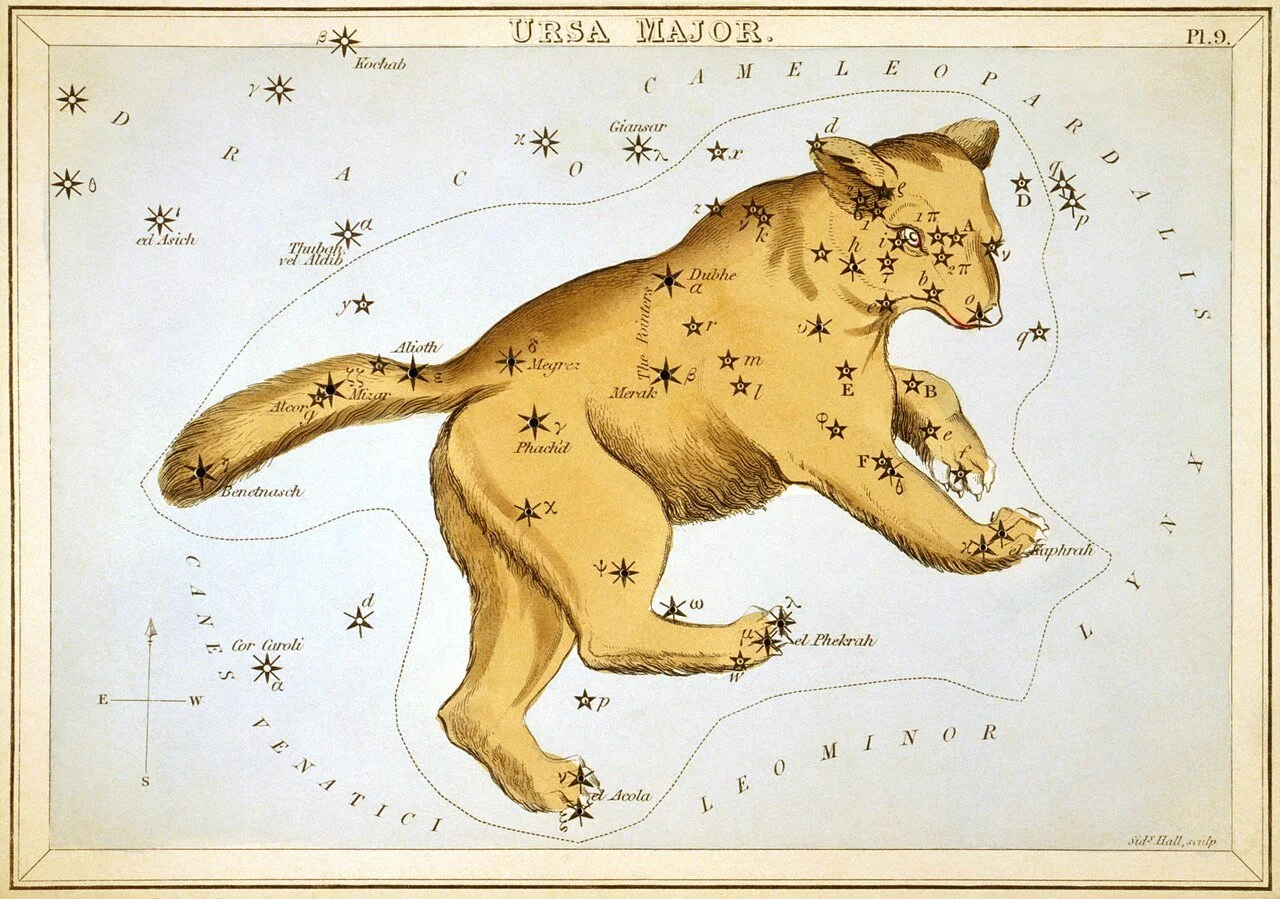
What’s in a (vessel’s) name? Quite a lot, actually.
Allioth, generally spelled with one “L” in modern records, refers to the bright star, Epsilon Ursae Majoris, in the handle of the Big Dipper and the base of the tail of Ursa Major as seen above.
Noah Webster’s 1828 American Dictionary of the English Language, published eight years before the bark was built, defined ALLIOTH as “a star in the tail of the great bear” and, significantly for a vessel’s name, noted that the bright star was used for navigation at sea. For nineteenth-century mariners, Allioth was an important and practical name. It was a working star, and its namesake a working vessel.
The Middle Eastern origins of the name add another layer of meaning. Allioth is generally understood to be derived from alyat al-hamal, commonly translated as “the fat of a sheep’s tail.” The name is deployed by Chaucer in the House of Fame as Aliot, in 17th century German astronomy as Aliath, in the 16th century France as Risalioth, and in 17th century Italy as Alabieth, Alaioth, Alhiath, and Alhaiath.
Reuss has also noticed what may be a broader pattern of Arabic-derived names among other vessels associated with the Allioth’s captain, though it is not immediately clear what the connection may be.
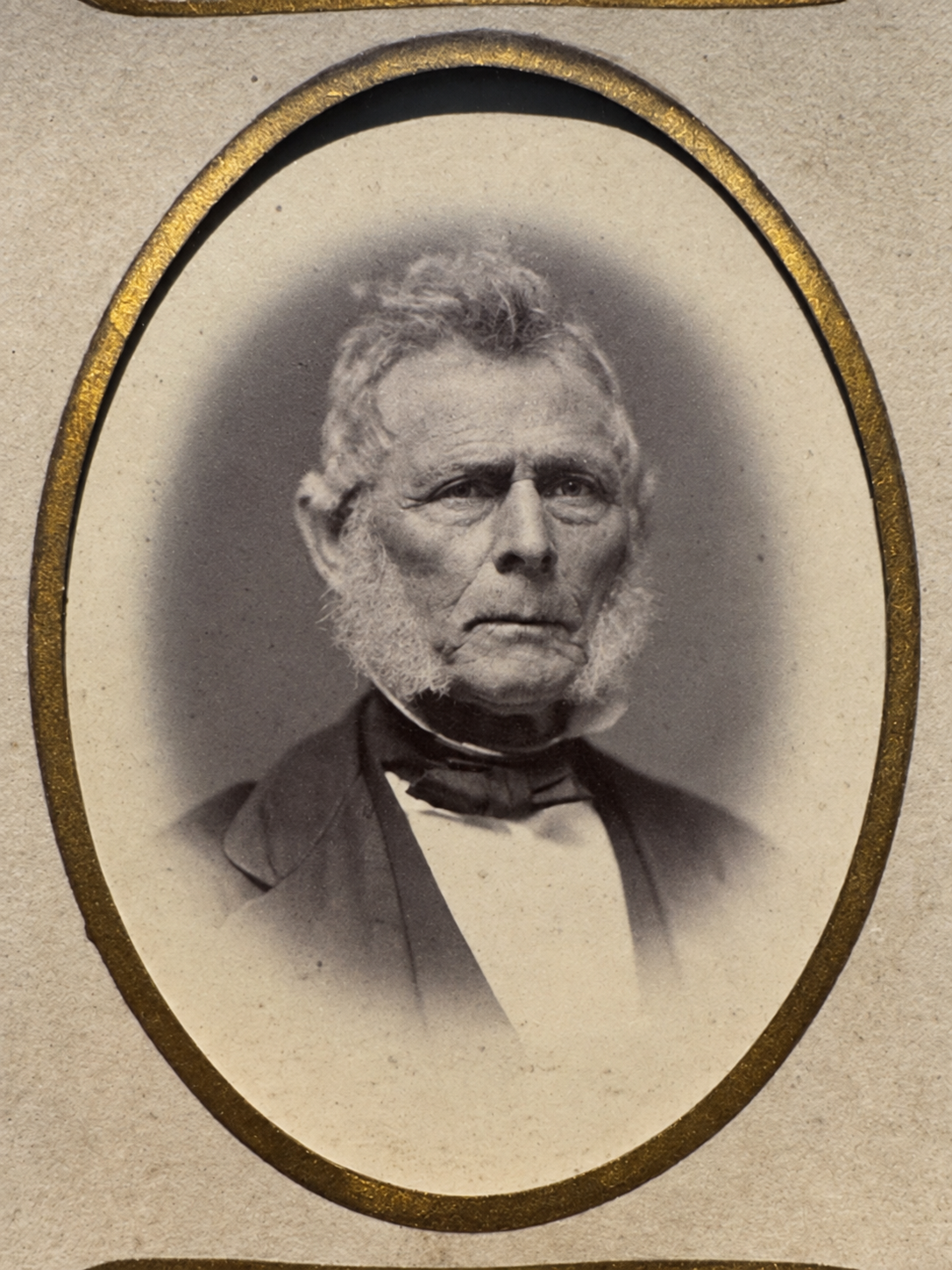
Captain John Simpson (1802-1887)
John Simpson’s obituary read, “he was eminently a sailor and captain of the old school, of commanding presence on the quarter-deck, but large-hearted and generous, with an intense love for children and animals, the pets among which were to the last the constant subjects of his solicitude. For more than fifty years his was a rough, troubled and stormy life, but since his retirement from the sea almost another quarter of a century has glided away, he has enjoyed in the peaceful haven of his home, before he sailed forth upon his final voyage.”
Captain John Simpson, master of the Allioth from the summer of 1841, kept records and artifacts of his time aboard the vessel. His “love for children” ensured their preservation as his granddaughters, the Whitney sisters, donated many of these artifacts to the Museum of Old Newbury in the 1960s.
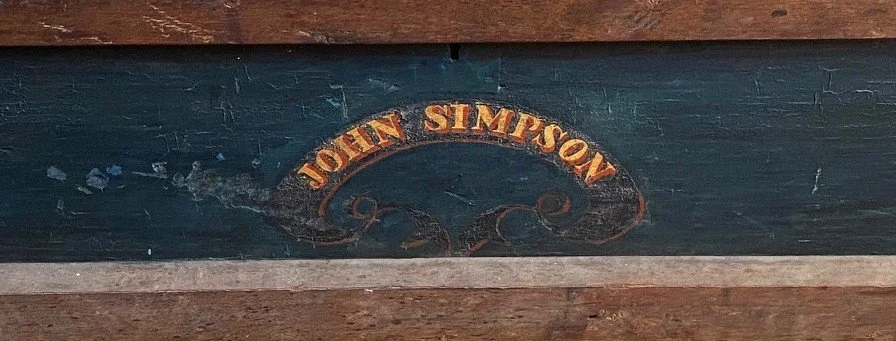
The Museum holds Simpson’s sea chest, still containing a dozen charts from his voyages.
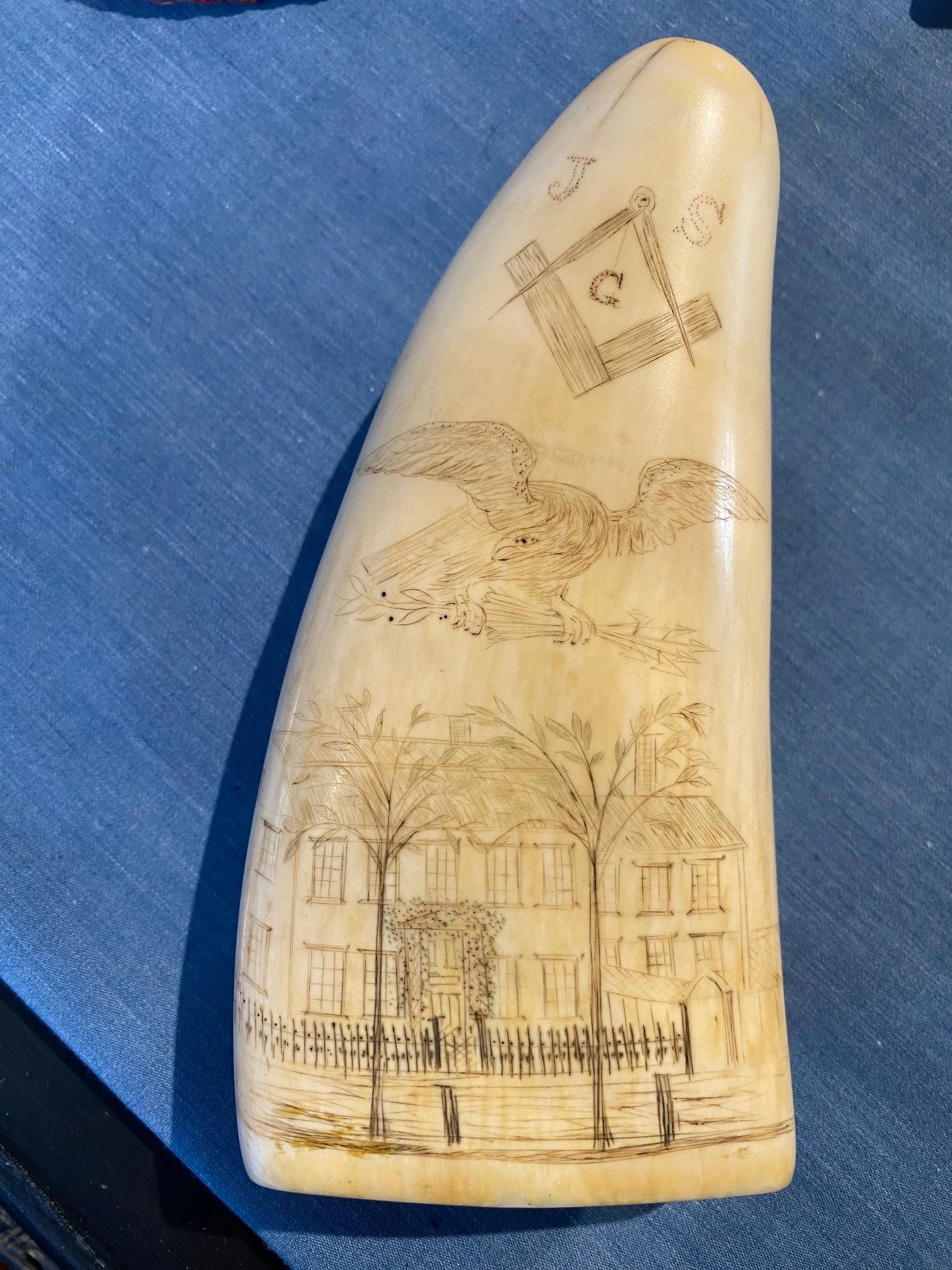
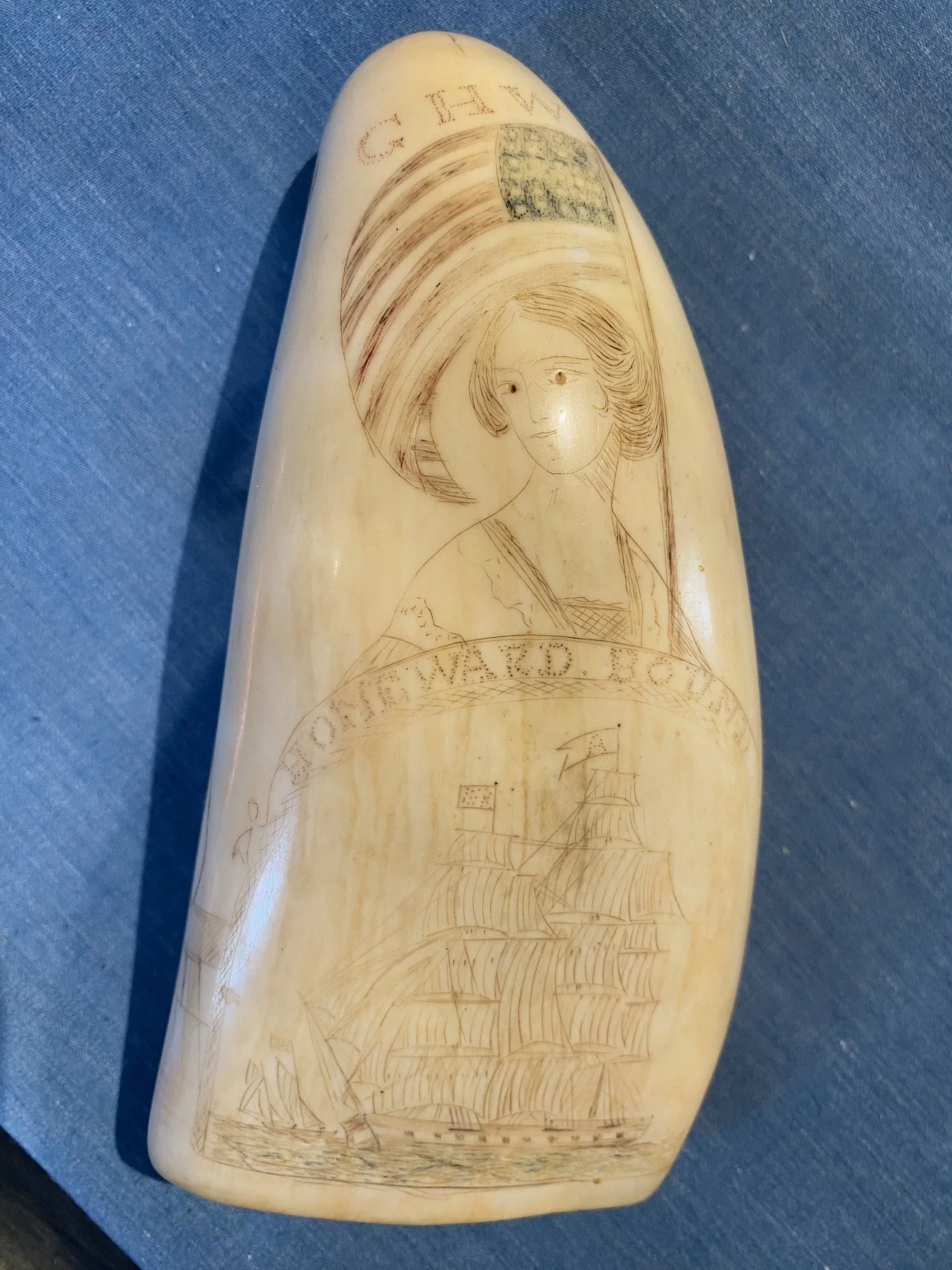
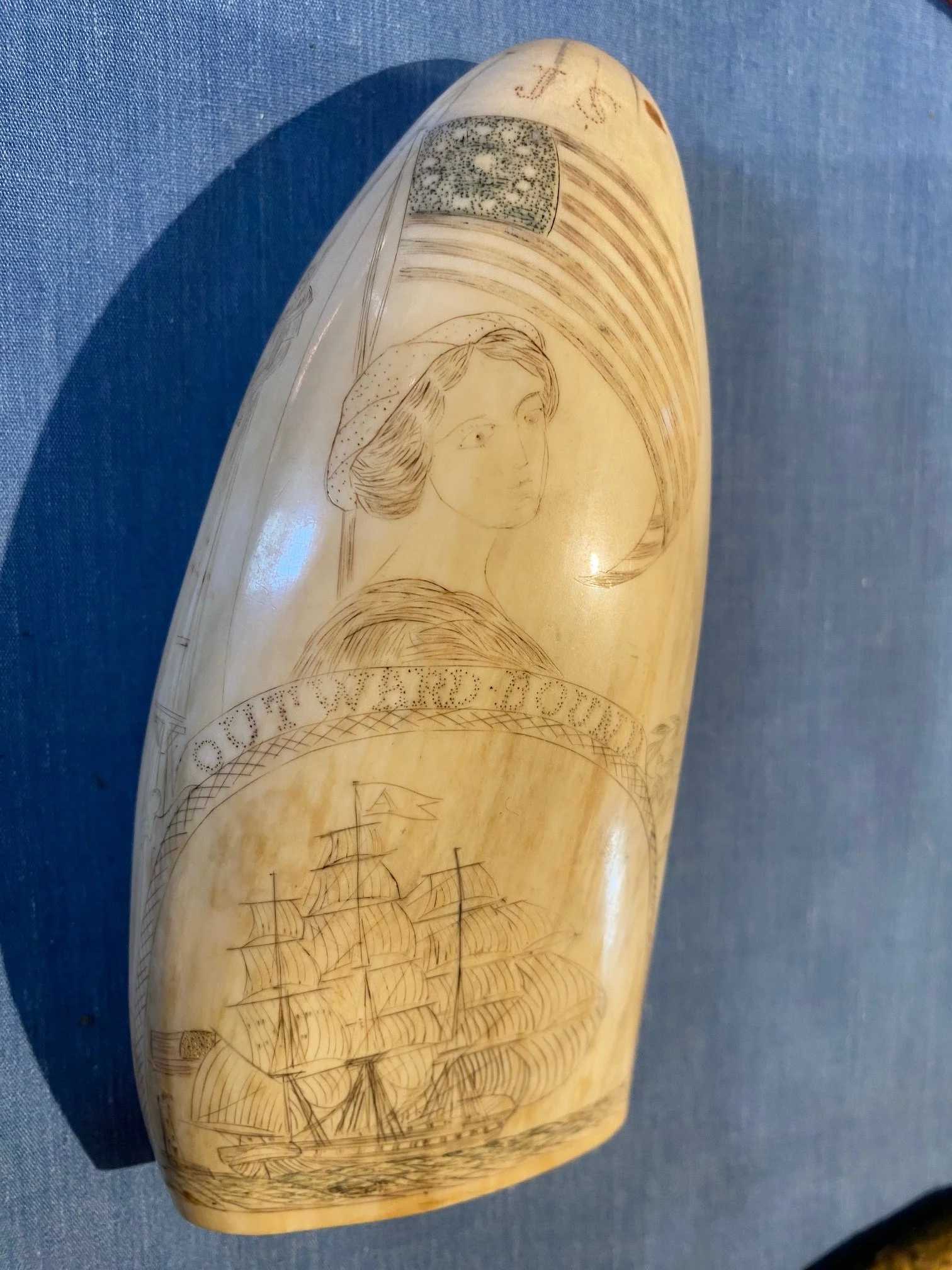
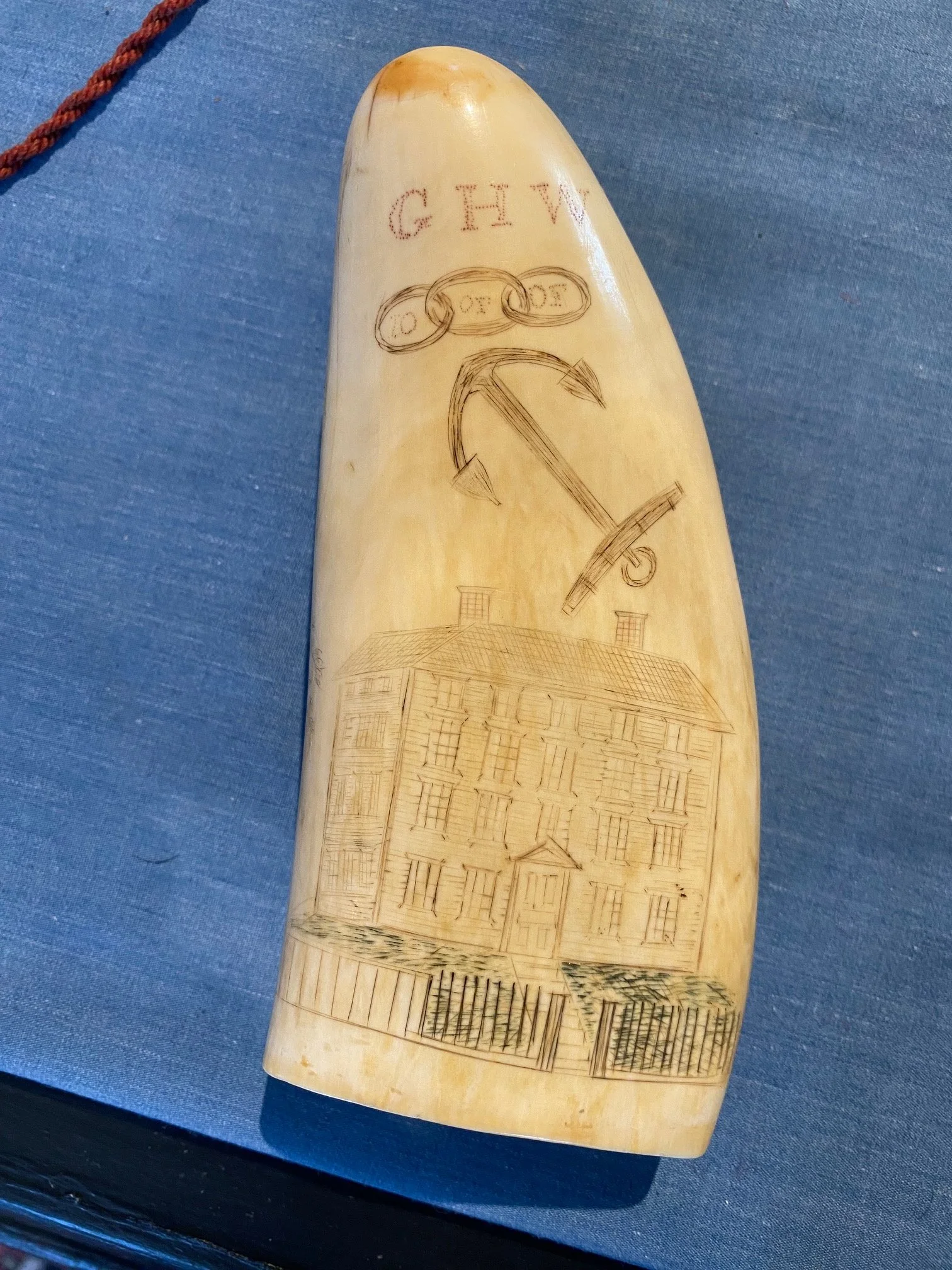
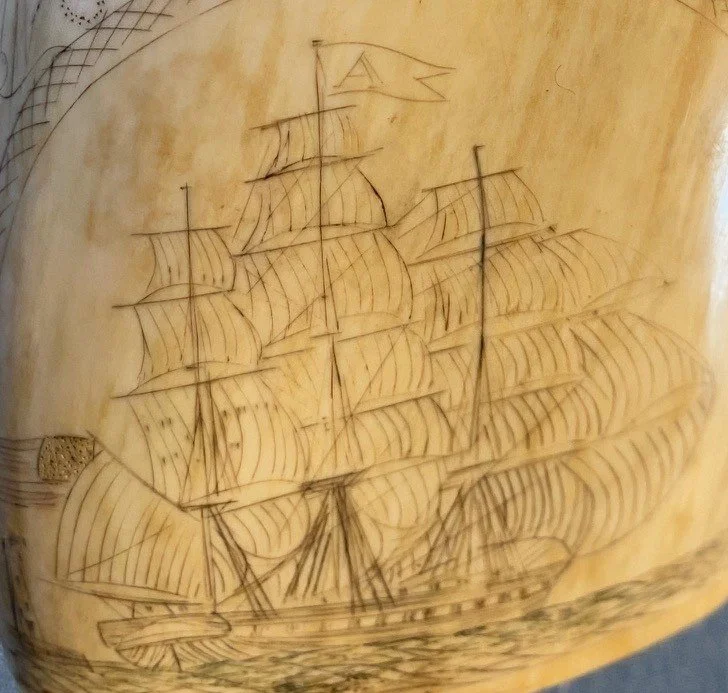
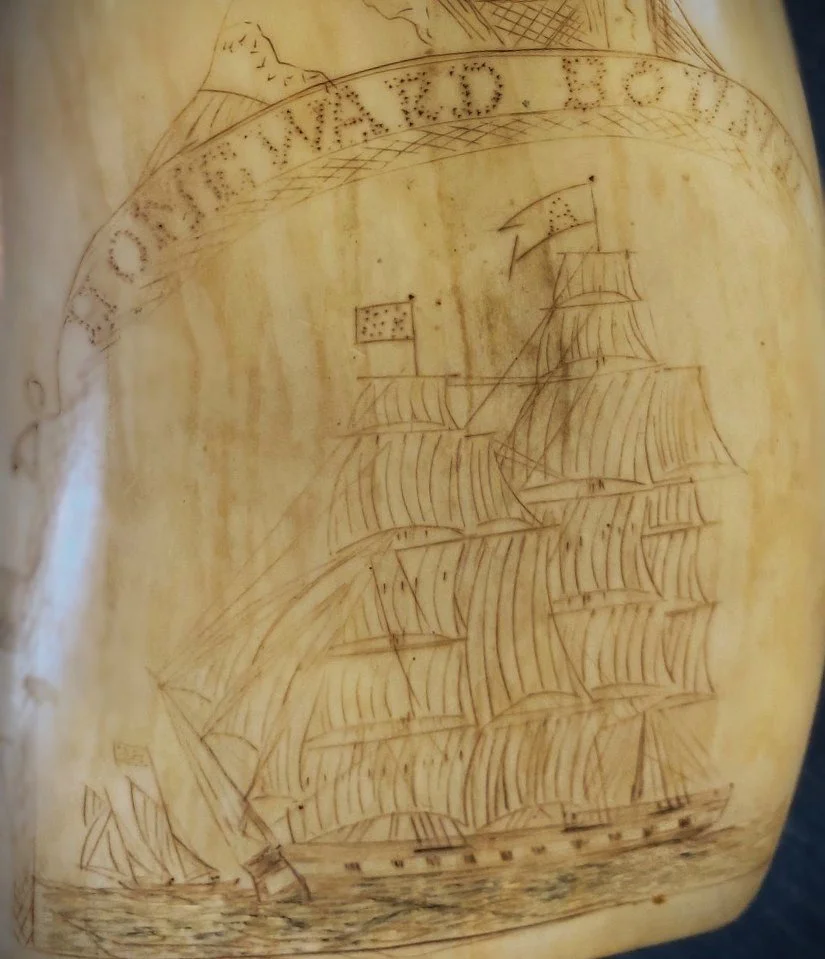
We also care for several pieces of scrimshaw associated with Simpson’s life at sea. He carved these teeth, including depictions of houses and vessels - one flying a flag with the letter “A”, and with the same false gunports as the Allioth. The tooth marked GHW was carved for the younger brother of Simpson’s son-in-law, George H. Whitney.
Captain Simpson deserves a story of his own, and perhaps there will be one in an upcoming newsletter. He lived a hard life, but a long one, and was fondly remembered by his community, his family, and his neighbors. He first went to sea as a child, rose through the ranks, and commanded a succession of Newburyport vessels, including the Moses Wheeler, Saladin, Alkmaar, General Harrison, Statira, and Allioth. He joined the Newburyport Marine Society in 1843 and later served for nearly a decade as superintendent of its headquarters on State Street.
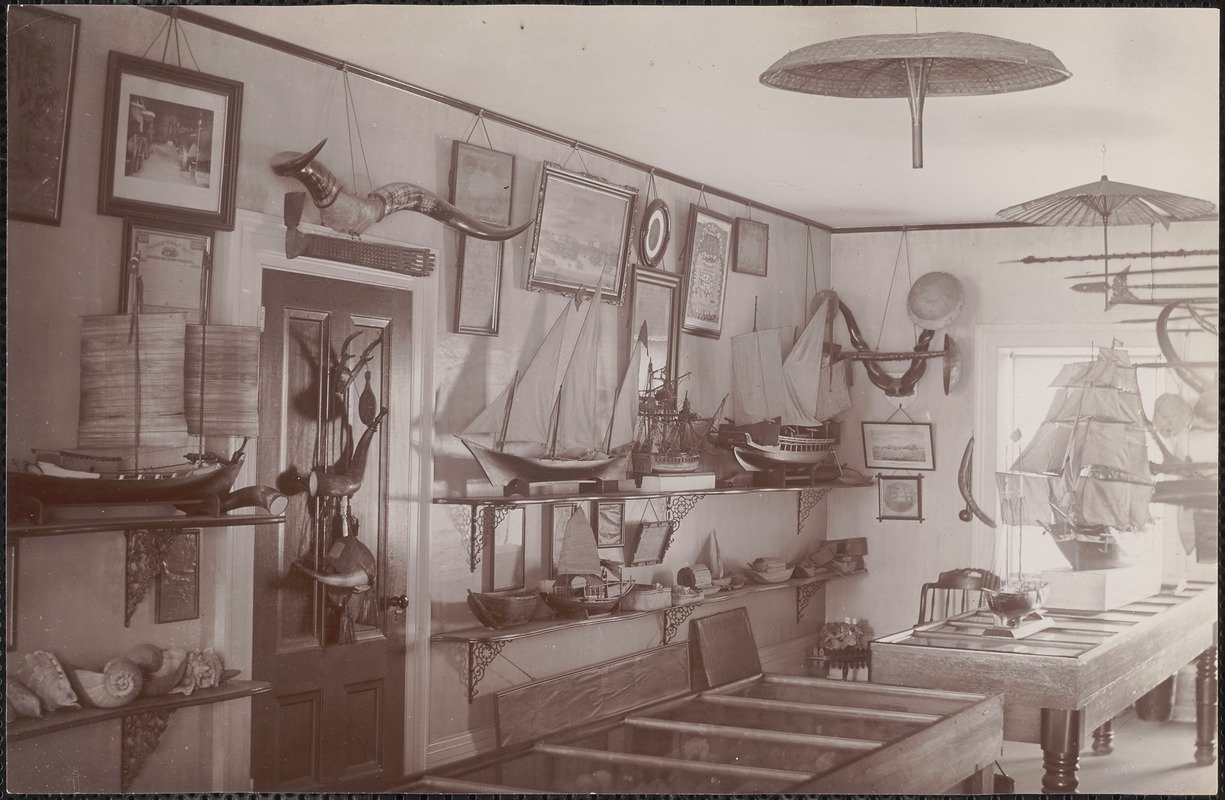
The interior of one of the rooms of the Newburyport Marine Society. Many of the artifacts shown here were given first to the Museum of Old Newbury and later to the Custom House Maritime Museum.

Among the most personal pieces in our collection is a wooden busk carved for Susan Simpson aboard Allioth in May 1842. Decorated with their initials, hearts, an anchor, a longboat, and the bark herself, it was an intimate gift, and a suggestive one, meant to be worn close to the body and near the heart.
This new acquisition came alive to our members and friends on Wednesday night because of the expertise and enthusiasm of two members of our board. On its own, it is a handsome portrait of a Newbury(port) vessel far from home, but through their research, and in the context of our rich collection, it becomes something even more precious.
Thank you, Monica and Rob, and all the members of the staff, board, and Museum of Old Newbury volunteer family, whose skills and interests bring this place to life and open a portal to the past.
And to you, our members, thank you for your support. It allows us to keep artifacts like these in our communities. I like to think of Captain Simpson thinking of this place, and all of us, as he sat carving this tooth and wishing to be “Homeward Bound”.