
Adventures in the Archives: A Glimpse Into the Interests of a Newburyport Merchant
By Ashley Adams Serveiss, Collections Manager & Archivist
Most folks who have spent a little time in Newburyport likely know a bit about the city’s legacy as an historic port and trading center, particularly during the late 18th and early 19th centuries. The Museum of Old Newbury holds dozens of ship’s logs, Marine Insurance records, shipping papers, and correspondence held by those involved in the maritime trades. We also have a large collection of papers attributed to a single person, William Wyer Jr. (1767-1807), who was a Newburyport-born merchant, insurance agent, and attorney. He lived with his wife and family at 189 High Street here in town.
Wyer had interests in fire prevention and was an active member of the Newburyport Commandery of the Knights Templar. He was a founding member of the Federal Fire Society of Newburyport, organized in 1791. Before contemporary municipal fire departments existed, these societies required members to maintain their own fire buckets and canvas sacks at home in order to form bucket brigades and save property during fires. As an aside, we have quite a few fire buckets in the collection, some of which are visible during tours of our Cushing House Museum. But I digress, as this is not about fire brigades or the Knights Templars.
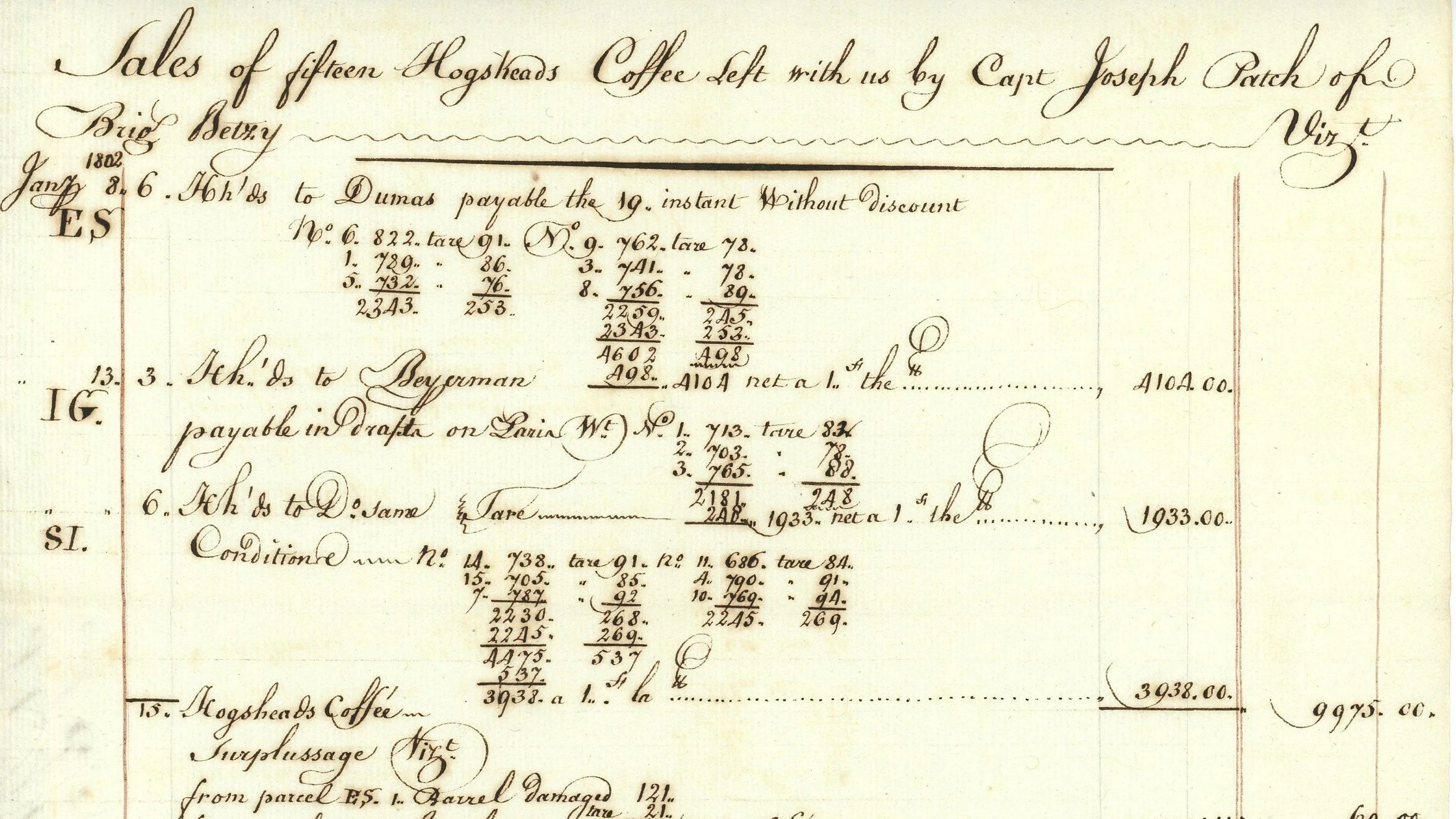
Record of “hogsheads of coffee,” purchased by William Wyer, Jr. in January 1802. Wyer did a fair amount of business with Capt. Patch, who often traded on behalf of Wyer in the South of France. From the William Wyer, Jr. Papers.
In my line of work, I have the privilege of reading through a very wide range of papers, from contemporary personal correspondence to the early Proprietor’s Records of Newbury, and beyond. What interests me the most, however, is how people lived. I am fascinated by what our forebears chose to purchase, wear, make, and do — and this applies to bygone individuals of any demographic background — nothing is out of my realm of interest!
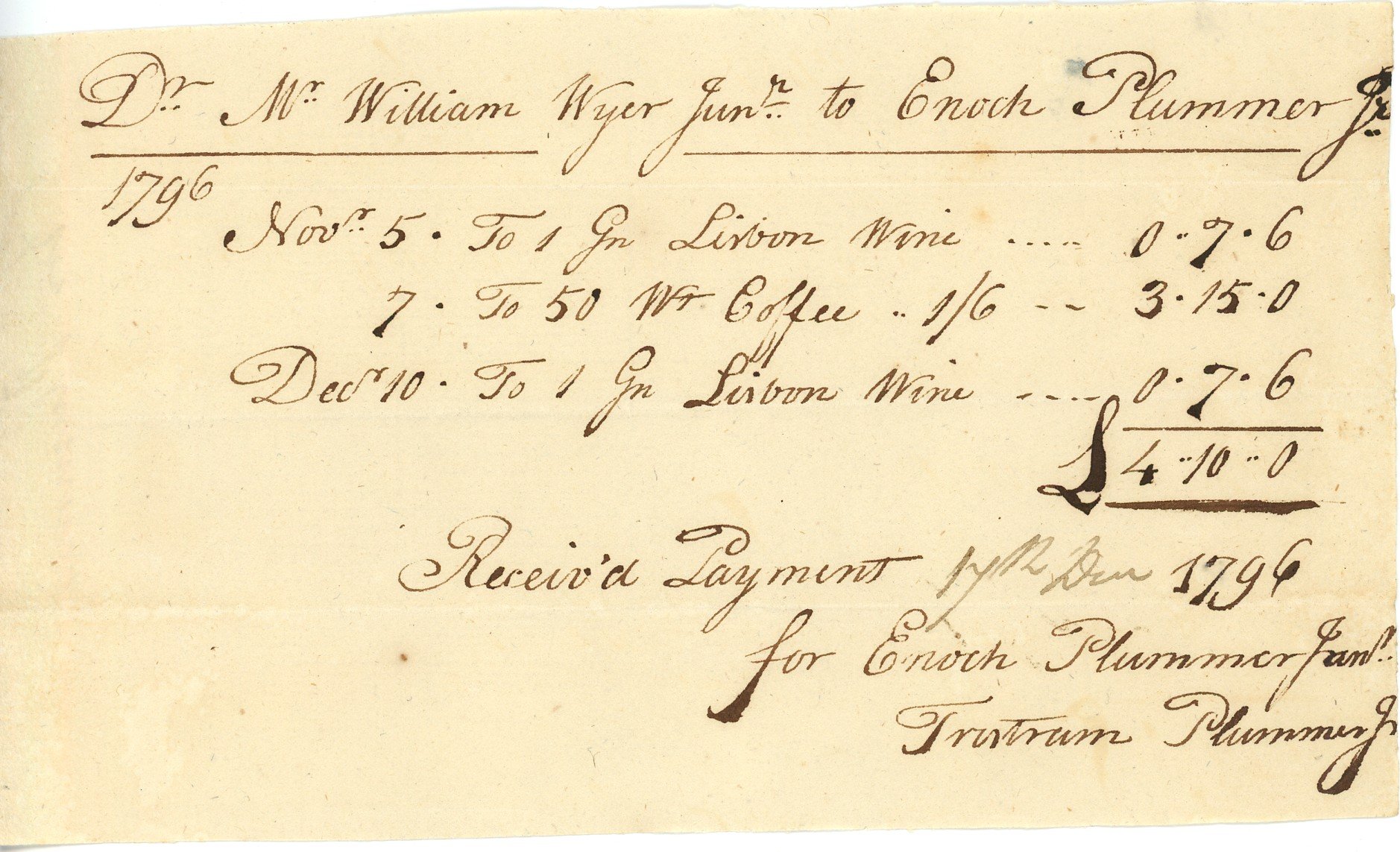
A receipt for personal purchases for the household of William Wyer, Jr. in 1796. Lisbon wine and coffee were the two items purchased at different intervals. From the William Wyer, Jr. Papers.
In the case of William Wyer Jr., we are lucky to have a very complete record of his later life, both personally and professionally. His papers contain personal correspondence between Wyer and various family members and business associates, as well as business ledgers, personal financial records, and insurance policies issued through his office. From these papers we are able to understand Wyer on a slightly more intimate level. We know how he preferred to indulge himself through his personal financial records (the wealthy merchant enjoyed purchasing clothing, shoes, wine, and coffee — my kind of guy!). We also know that he chose to deal primarily in coffee, sugar, and hemp, although he did make some rather unorthodox purchases. One receipt that stands out has a line for duck (not so weird, as this was actually a heavy cloth) and ravens (a little weird, but also totally awesome). See below:
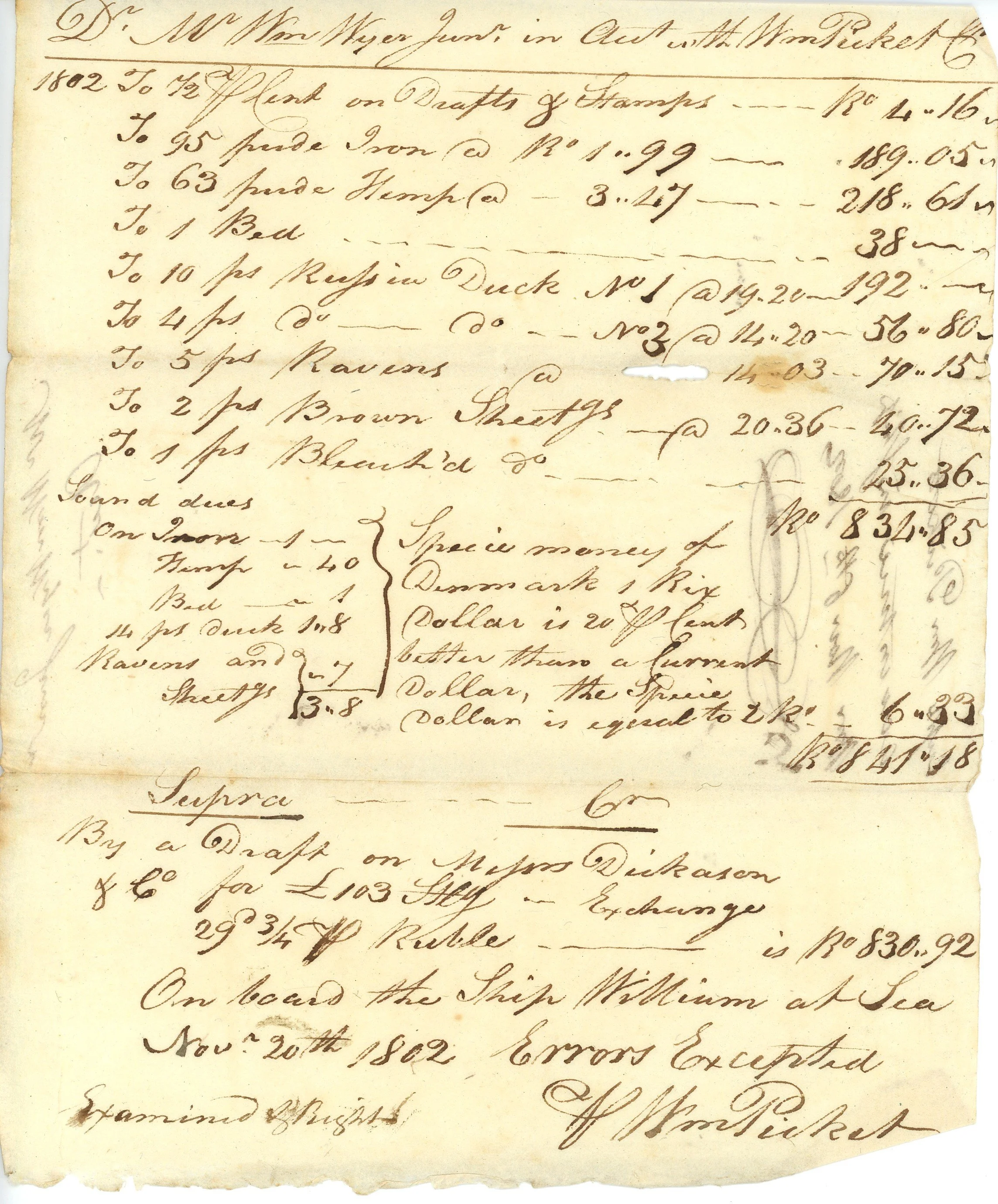
A receipt for goods bought by the merchant William Wyer, Jr. from William Picket — note the line for ravens, which seems to be a kind of cloth, but we think the birds would be a much more interesting purchase! From the William Wyer, Jr. Papers.
If you’re interested in learning more about William Wyer Jr., please visit the Perkins Art and Research Center during Open Hours on Fridays and Saturdays from 10 am - 2pm, or by appointment. The William Wyer, Jr. Papers are a large and fascinating collection of manuscript material that appeal to those interested in shipping, marine insurance, personal expenditures, and early 19th century commerce and trade. We hope to see you soon!