
Adventures in the Archives: An Ode to the End of Summer at the Plum Island Hotel
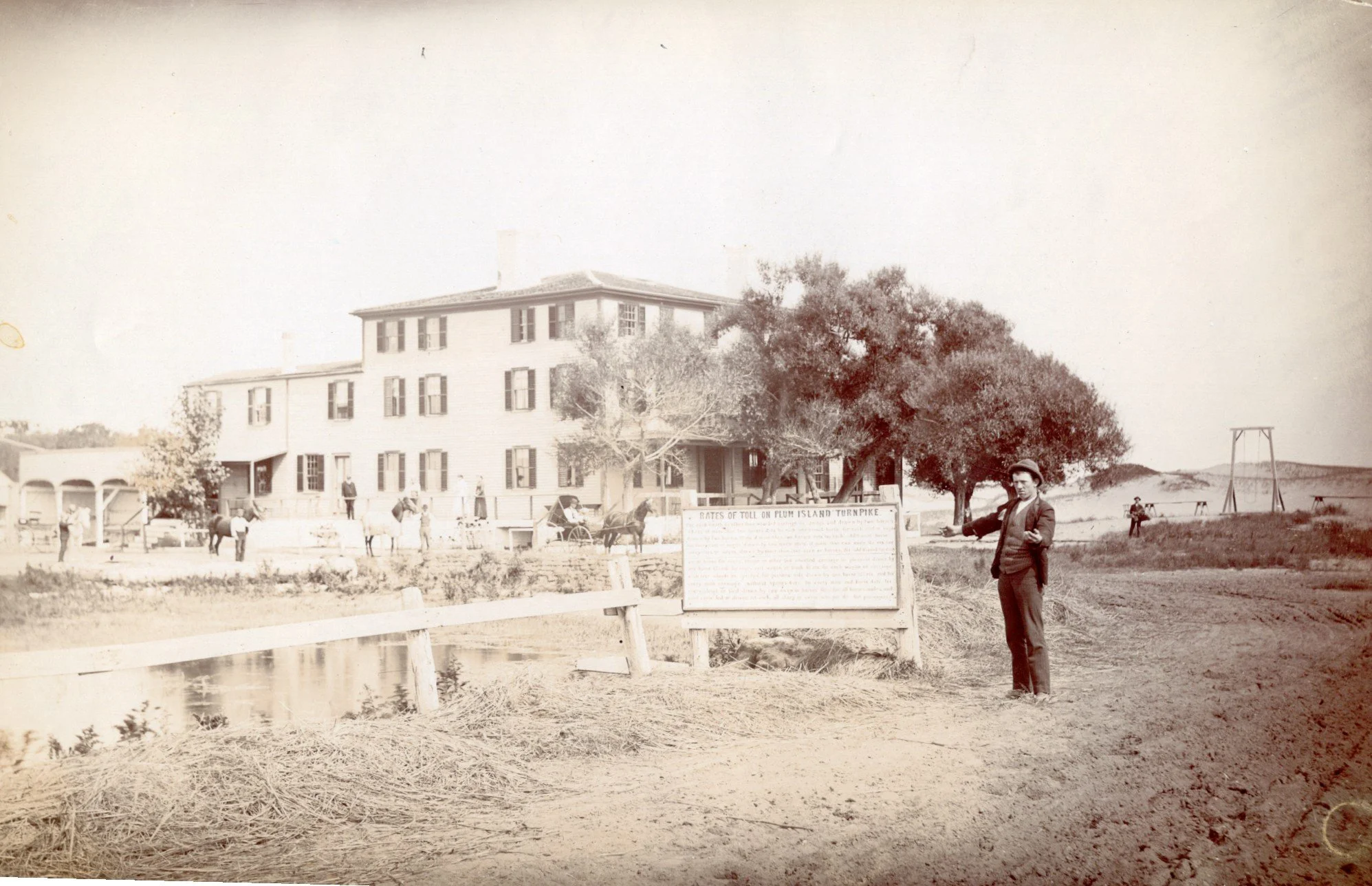
Image of the Plum Island Hotel from the Museum of Old Newbury’s General Photograph Collection (GPH-53). Note the sign at the foreground, which lists the, “Rates of Toll on Plum Island Turnpike.” Beside the hotel are a number of people, horses, and a carriage. In the background we can see sand dunes. Ca mid-19th century.
By Ashley Adams Serveiss, Collections Manager & Archivist
Summertime, sweet sweet summertime. The beginning of August marks the symbolic end of summer for many. The sun starts to set earlier (don’t shoot the messenger!) and the nights become cooler. Folks embark on their last vacations of the season, students begin their to return to school, and the whole month seems to reverberate with bittersweet nostalgia and a sense of longing, maybe for a few more days of perfect weather, and perhaps for something else I can’t quite put my finger on. The entire month evokes that good old Sunday Feeling, where we’re all taking a moment to catch our breath just before something new begins — in this case, it’s autumn.
The month of August and the place we call Plum Island have always been in close company for me. Growing up, my family would often join several others in heading out to the Island in the few weeks leading up to school starting, trying to pack in the best beach days of the season before returning to the structured, routine-oriented life that was the school year. Even now as an adult, I yearn for trips to Plum Island just as the season begins to close. A century or two ago, people were doing the same, just not solely in the month of August.
In 1807, the Plum Island Turnpike and Bridge Corporation completed construction of a turnpike road and bridge over the Plum Island River. Before this, access to the island was limited to transport via boat or ferry. That same year, the Plum Island Hotel was constructed near what is today the corner of the Plum Island Turnpike and Northern Boulevard. The hotel immediately attracted summertime pleasure-seekers and sportsmen, but this idyllic existence was soon disrupted by the War of 1812, when the hotel functioned as a barracks for soldiers stationed out on Plum Island. Soon after, however, it returned to its original intention as a summertime destination for those in need of respite.
By the late 19th century, the Plum Island Hotel had become a favored destination for locals and tourists alike. In 1886, Edward Payson Shaw (1841–1921) purchased the Plum Island Turnpike, Bridge, and Hotel. Shaw was a local entrepreneur who had his hand in many different enterprises. He owned several liveries, the People’s Line of Steamers, multiple electric and horse-drawn street railways, a dry goods business, the Hotel Cushing, the Plum Island Hotel, and, at one point, the Wolfe Tavern, just to name a few. Shaw is credited with developing Salisbury Beach into a summertime destination, creating both a ferry line and a street railway leading directly to the beach. He did the same with the Plum Island Hotel and created a railway service that went straight from the Mainland to the Island. He was also involved in politics, serving as a state senator, representative, and treasurer for the Commonwealth. Suffice to say, E.P. Shaw’s business savvy left a marked influence on this part of the North Shore, with the impacts of his business ventures still enduring today.
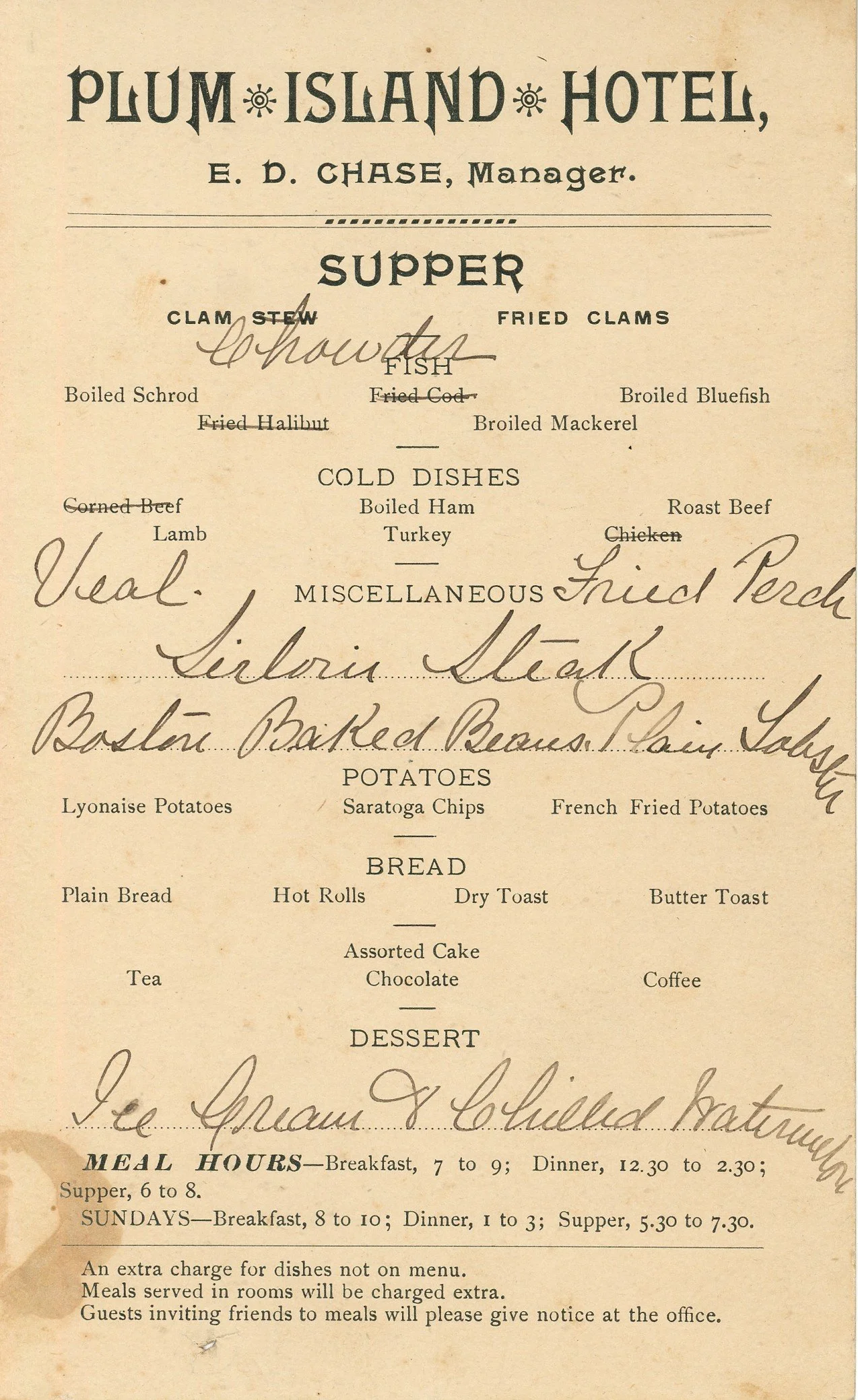
In the latter 19th and early 20th centuries, the Plum Island Hotel offered a range of entertainment for its guests, including bowling, a dancehall, a refreshment stand, evening entertainment, and its restaurant, which attracted not only its guests, but guests of guests. This menu is dated 1900 and is Object ID PlumIslandHotel-001 from our Business & Industry Collection. I’ll have the ice cream and chilled watermelon, please!
Sadly, the Plum Island Hotel suffered several fires, one in 1913 and a devastating one in 1914, which ended the hotel’s 107 year run. A new dancehall was built on the site the following year, and was a popular spot until it too was incinerated in 1933. By this time, the heirs of Moses Pettingell had sold their interest in the northerly end of the Island to the Plum Island Beach Corporation. Cottages adorned the north end, and the character of this particular part of Plum Island changed entirely. Today the Island remains a popular destination for tourists and locals alike and offers some of the same amenities as there once were two centuries ago — Blue offers fine accommodation for travelers, and places like the Sunset Club and Riptide provide meals, refreshments, and libations to their guests.
Perhaps the most traditional New England way to close out summer is with a good old fashioned clambake, and the folks at the Plum Island Hotel knew this well. Below is an invitation to the Hotel’s end of summer clambake, held on the afternoon of September 3, 1885. As I write this, I am sitting in the Perkins Art & Research Center after just having leisurely strolled through our glorious Cushing House Garden, which is at its late summer’s best. The branches of our peach tree are growing heavy, monarchs are fluttering about, and a comfortable breeze winds its way along the garden path. I imagine it may have felt similar to this on September 3, 1885, just a few miles from here, where those seeking the last bits of summer felt the embrace of a perfect late estival’s breeze as they wistfully indulged in the bounty of the end of the season.
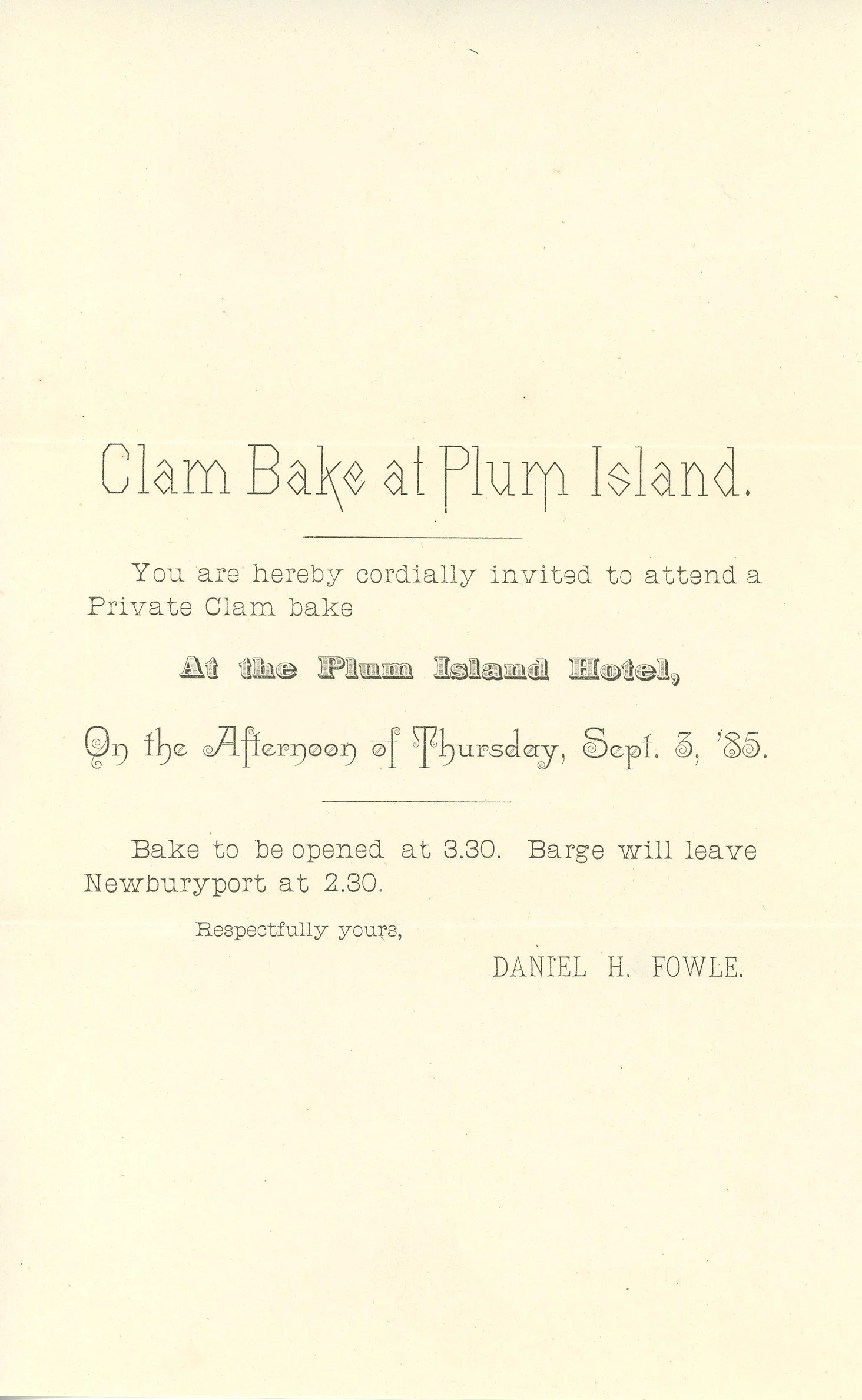
Object ID PlumIslandHotel-002 from our Business & Industry Collection.
Fin.