
Tale of Two Pearson Taverns...and an invitation to party in one of them!

Well, my friends, it has been a while since I sank my teeth into a juicy history mystery, and this one really captured my attention and my affection, in the end. I hope you will indulge me as I drag you along with me down the dusty roads of Byfield and over bridges into Amesbury in search of some tavern truths. A tip of the hat, first and foremost, to Ashley Serveiss and Ellie Bailey for some crackerjack research!
Let me start at the beginning, for me anyway. It was sixteen years ago and I was at a Christmas party in Ipswich with my new boyfriend, now my husband, who was dressed as Father Christmas, complete with torch, and into the room, lurching and roaring, came a very realistic six-and-a-half foot bear. This bear turned out to be Tim Purinton, and after a series of additional, and often equally strange encounters, Tim, his wife the exquisite artist Julia, and I became friends. This is how I managed to worm my way onto the invite list to the final couple of holiday parties thrown by Tim’s legendary parents, Joanie and Dick Purinton, at their rambling, gorgeous colonial home in Byfield. This is also why, after Dick died and Joanie moved and the family began to think that they wanted to have one last blow-out party at the home they all love, Tim thought of a fundraiser for the Museum of Old Newbury and called me. Well, that’s the condensed version, with lots of visits and drinks along the way, but that is where we landed.
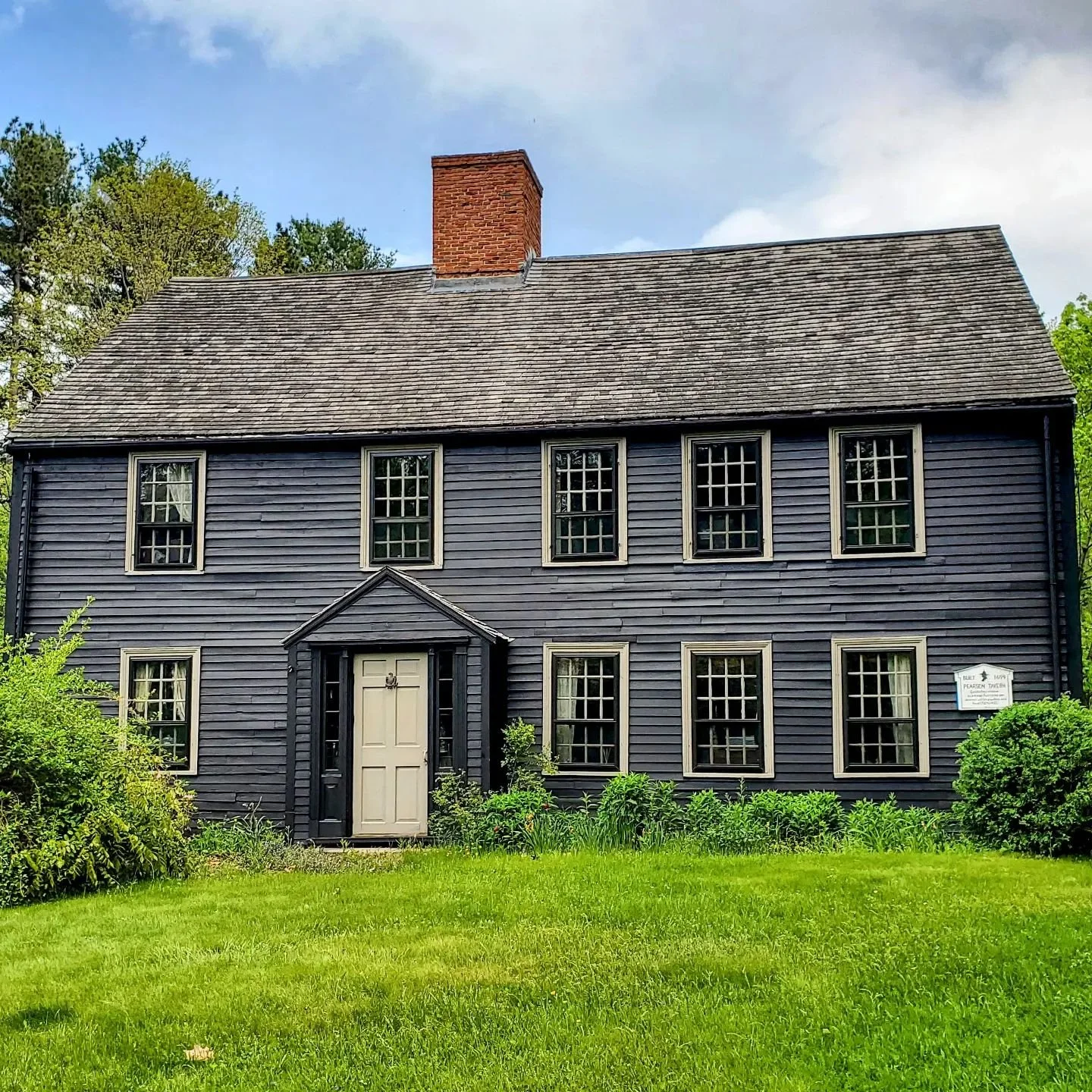
Many of you will remember the Cocktails in the Clink fundraiser held by the museum last April at the 1825 Old Gaol. With this beautiful memory in mind, a committee was formed, and along with the family, and with the support of some key sponsors, we went wild planning the newly minted Cocktails in the Colonies event, set for the evening of Saturday, October 3.
Although I have a hand in almost every aspect of event planning, the part I enjoy the most is the opportunity to research a place and its people. What we knew about Pearson Tavern at the time was basically what the sign on the front of the house said - built in 1694, served as a tavern while owned by Jeremiah Pearson and his son, Jeremiah Pearson, and his grandson John Pearson. Easy enough, right? I mean, how many Pearson Taverns can there be in the 18th century?
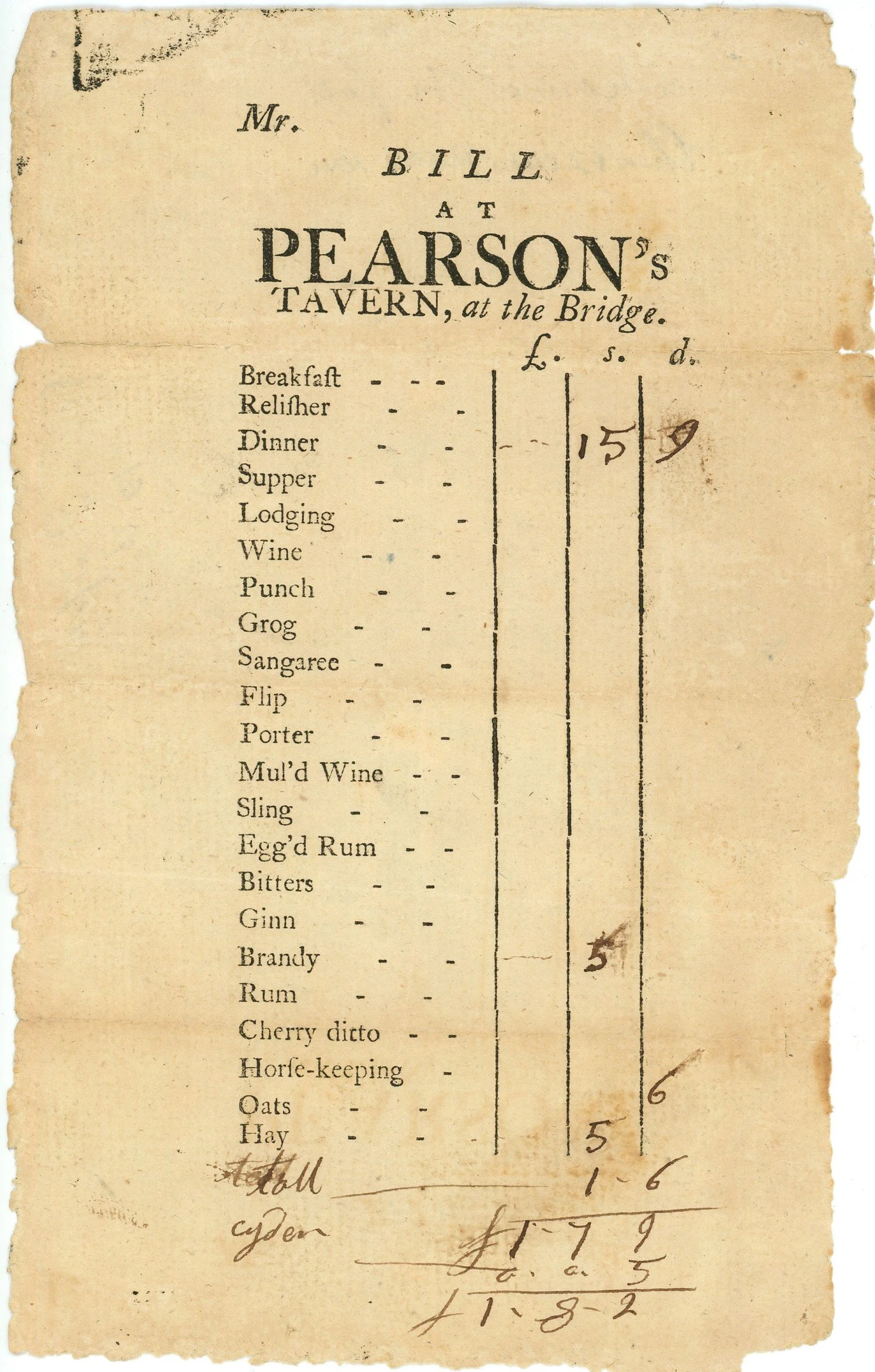
Read more about this tavern bill in this week’s Adventures in the Archives. Click the link at the bottom of this story.
And, joy of all joys, right here in our Perkins Archive and Research Center we have a delightful, though undated, bill of fare from Pearson’s Tavern at the Bridge. Surely there is a bridge in Byfield near our Pearson Tavern. We did wild dances of joy. Not so fast. Ashley Serveiss, accidental destroyer of dreams, did some excellent research and found that this bill was not from Byfield. It was from an Ebenezer Pearson who famously ran a tavern on Deer Island, a stop between the Chain Bridge (then called the Essex-Merrimack Bridge) and the drawbridge to Amesbury/Salisbury. Right. Well, I regrouped, taking solace in the name of Jeremiah Pearson in the list of original investors in this bridge in 1791. Surely this must be a brother/son/nephew of the tavern-keeper of Byfield.
I will not drag you too deeply into the Ebenezers and Jeremiahs in the Pearson family. Suffice it to say, there are many, and they are nearly impossible to disentangle. Ancestry.com is a Gordian knot. Trust nothing. I pulled birth records, read every newspaper, will, and letter I could find. The much abbreviated version of the tale is this - there are at least five Jeremiah Pearsons and three Ebenezer Pearsons living in Newbury/Newburyport/Byfield in the 18th century, from two different family lines, one from Lynn and one from Rowley/Byfield, and on, mysteriously, associated with Gloucester. It gave me some comfort to know that I was not the first researcher tearing her hair out over these blasted Pearsons. The amazing convoluted Pearsons were the subject of considerable debate in the Genealogical section of the Boston Transcript in 1910-12, with one sleuth calling them “The Swarm”, and another bemoaning their “hopeless mingling”.
And so, though we will return to Jeremiah Pearson of the Byfield tavern, we began with Ebenezer Pearson and his tavern on Deer Island in the middle of the Merrimack River. There were plenty of records about this tavern. Its location along a busy road ensured that it was a going concern.
Tavern #1: Ebenezer Pearson of the Essex Merrimack Bridge
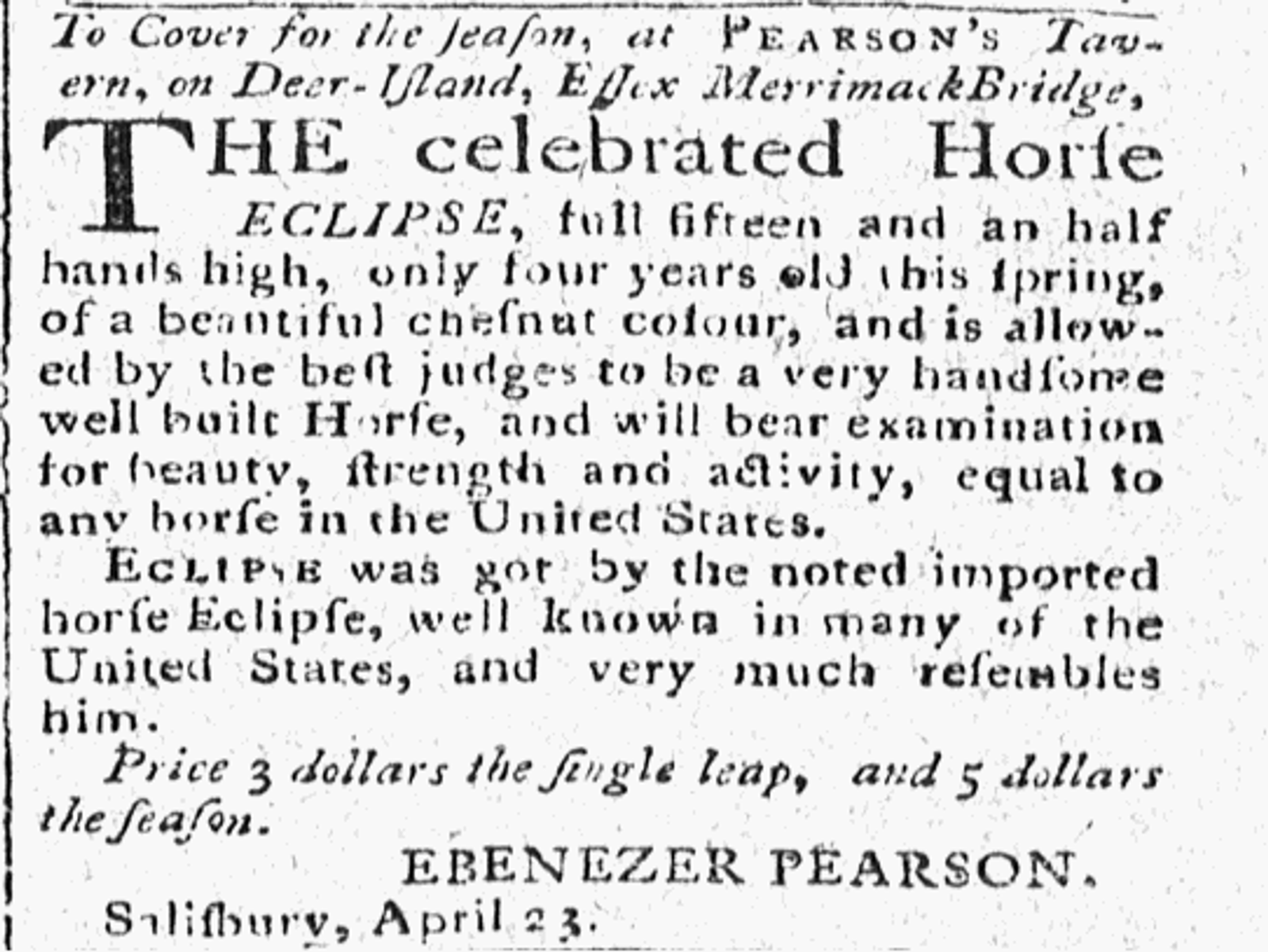
In 1798, Ebenezer Pearson, “at Pearson’s Tavern on Deer-Island, Essex Merrimack Bridge” was renting the services of his fine stallion Eclipse for “3 dollars the single leap and 5 dollars the season.”
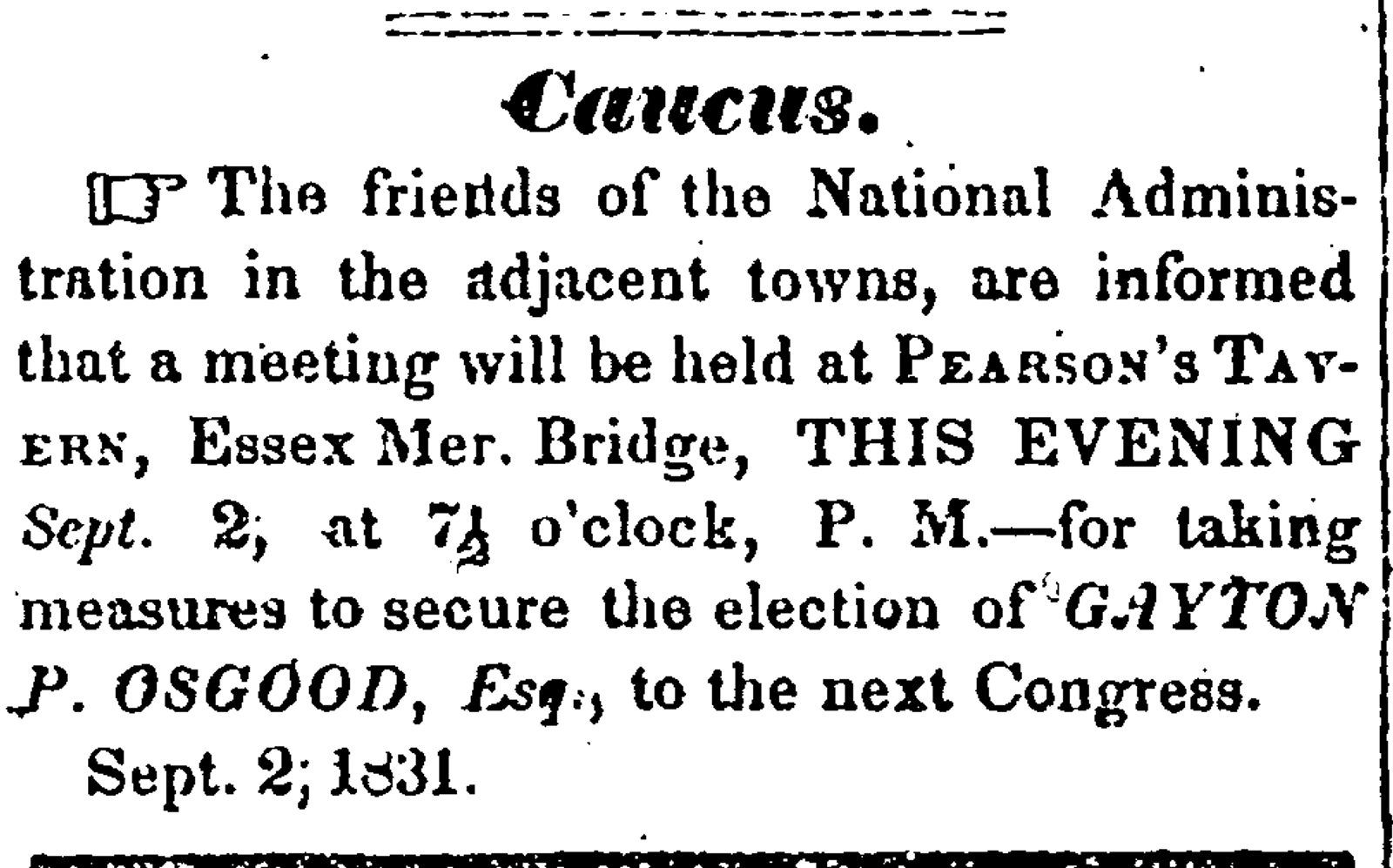
Below, a variety of advertisements and notices from 1810-1824 refer to Pearson and the Essex-Merrimack Bridge.
![Newburyport_Herald_1818-08-11_[3].png](https://images.squarespace-cdn.com/content/v1/54b0086fe4b066a5a28b222e/1785438307275-PNUTPB1YG94I734G7JUH/Newburyport_Herald_1818-08-11_%5B3%5D.png)
![Newburyport_Herald_1823-10-28_[3].png](https://images.squarespace-cdn.com/content/v1/54b0086fe4b066a5a28b222e/1785438307307-JBQ7QXRKN876NZOLVFLP/Newburyport_Herald_1823-10-28_%5B3%5D.png)
![Newburyport_Herald_1824-07-16_[4].png](https://images.squarespace-cdn.com/content/v1/54b0086fe4b066a5a28b222e/1785438308675-8E4RVRUURBFWLIGWCZYX/Newburyport_Herald_1824-07-16_%5B4%5D.png)
Eben(ezer) Pearson remained a mystery, however, as there were, maddeningly, three possibly candidates. The first, Ebenezer Pearson “of Salisbury”, born in 1768, makes his will in 1836. We find an Eben Pearson, son of David and Sarah, in Newbury dying in 1836. Jackpot! Nope. The will was made in December, 1836. He died in February, 1836. Unless there was some serious time travel back then, it is a dead end (no pun intended). His son, also named Ebenezer, born in 1797, was too young to have been running a tavern in the late 18th century.
The other candidate, Ebenezer Pearson “of Amesbury”, is born in 1760 according to his headstone, but has no birth record. At a time when Salisbury and Amesbury were used interchangeably and people often did not know their birthdate, is it possible that this Ebenezer Pearson is the same as the one born in 1768 and there is some mistake with the date of the will? Nope. We dig down, snuffle around. Though his birth is unrecorded, his death is recorded on his headstone as May 17, 1846.
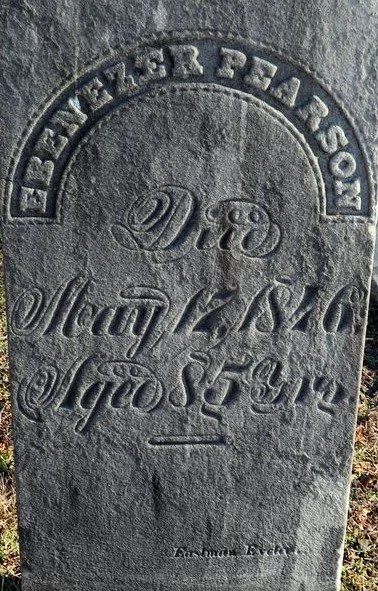

The “smoking gun” record is here in Ebenezer Pearson’s death record. He died at age 85, and his occupation is listed as “Toll-gatherer”.

Since we had not found a birth record, we were still left to wonder who this Ebenezer Pearson’s parents could have been. More committed digging produced a result - an Ebenezer born to Thomas and Mary Pearson in the Amesbury records on July 6, 1760.
The death notice for Thomas Pearson of Amesbury in 1785 bears out this link. He is noted as a tavern-keeper, a profession he shared with his son, who is also mentioned in his estate.
If you are into this sort of thing, what an adventure! For many of the rest of you, this may be dull and hard to follow. For me, it is both a fascinating puzzle and a chore, but it offers a picture of a real person, if we can tease him out from his same-name peers. It gives him back his house, his profession, his wife, his fancy horse.
Tavern #2: Jeremiah Pearson of Byfield
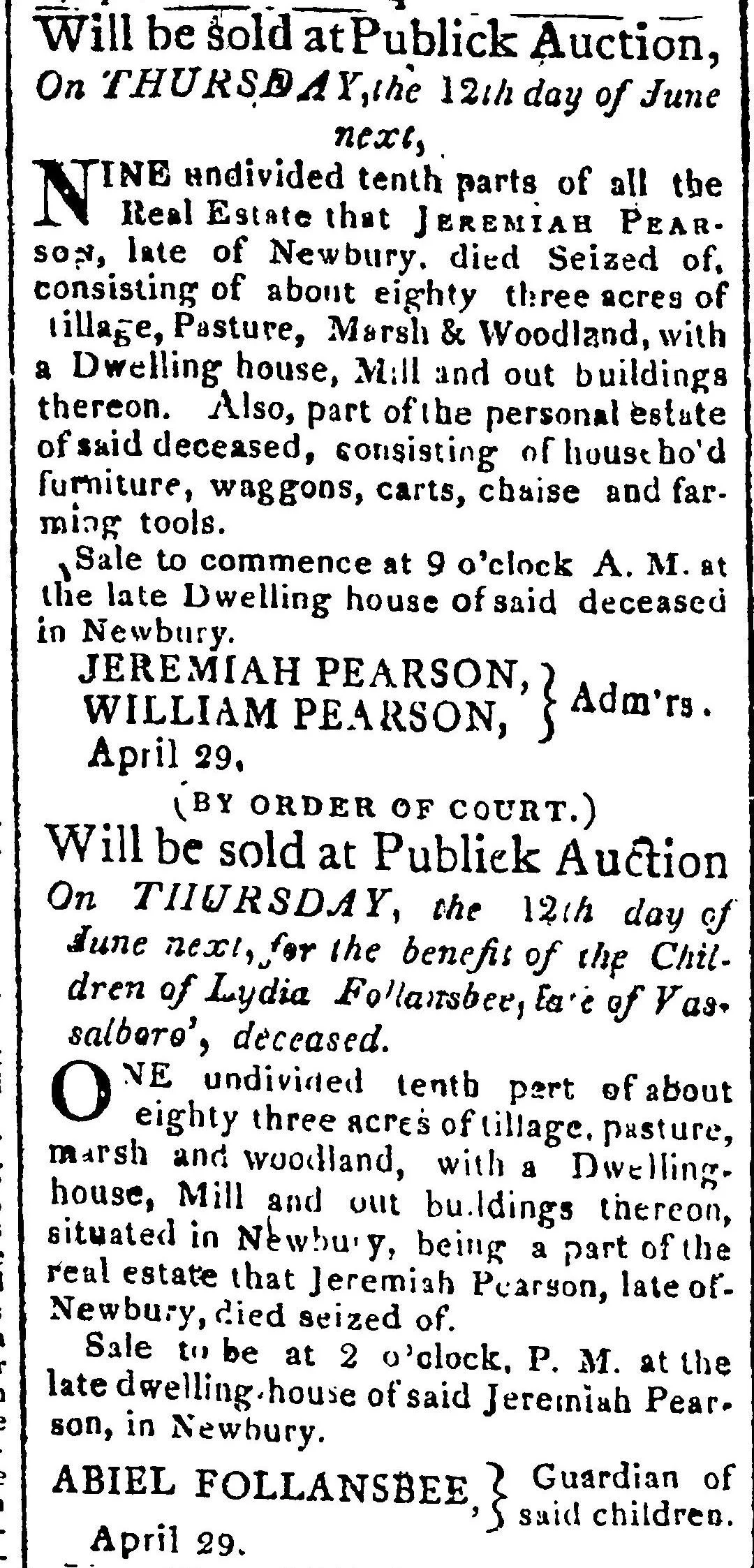
This April, 1817 notice makes no reference to a tavern, but the description fits the property owned by the branch of the Pearson family who owned the tavern. As we tried to untangle the history of the tavern, we turned to researcher Ellie Bailey. “There are a lot of Jeremiahs and a lot of Johns, and they bought a lot of land before 1800”, she said, cautiously.
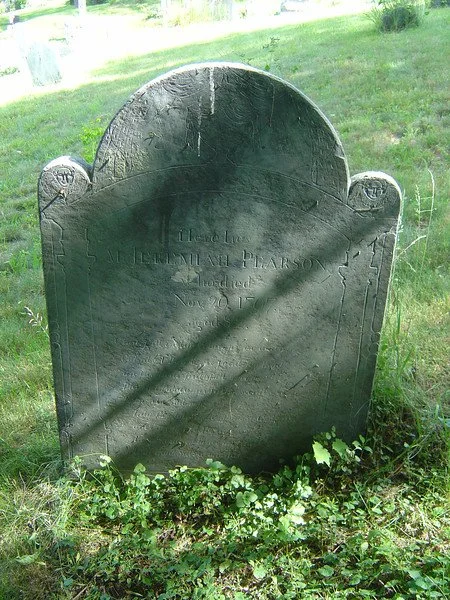
The Jeremiah who died in December 11, 1816 lines up with this notice, so we start there.
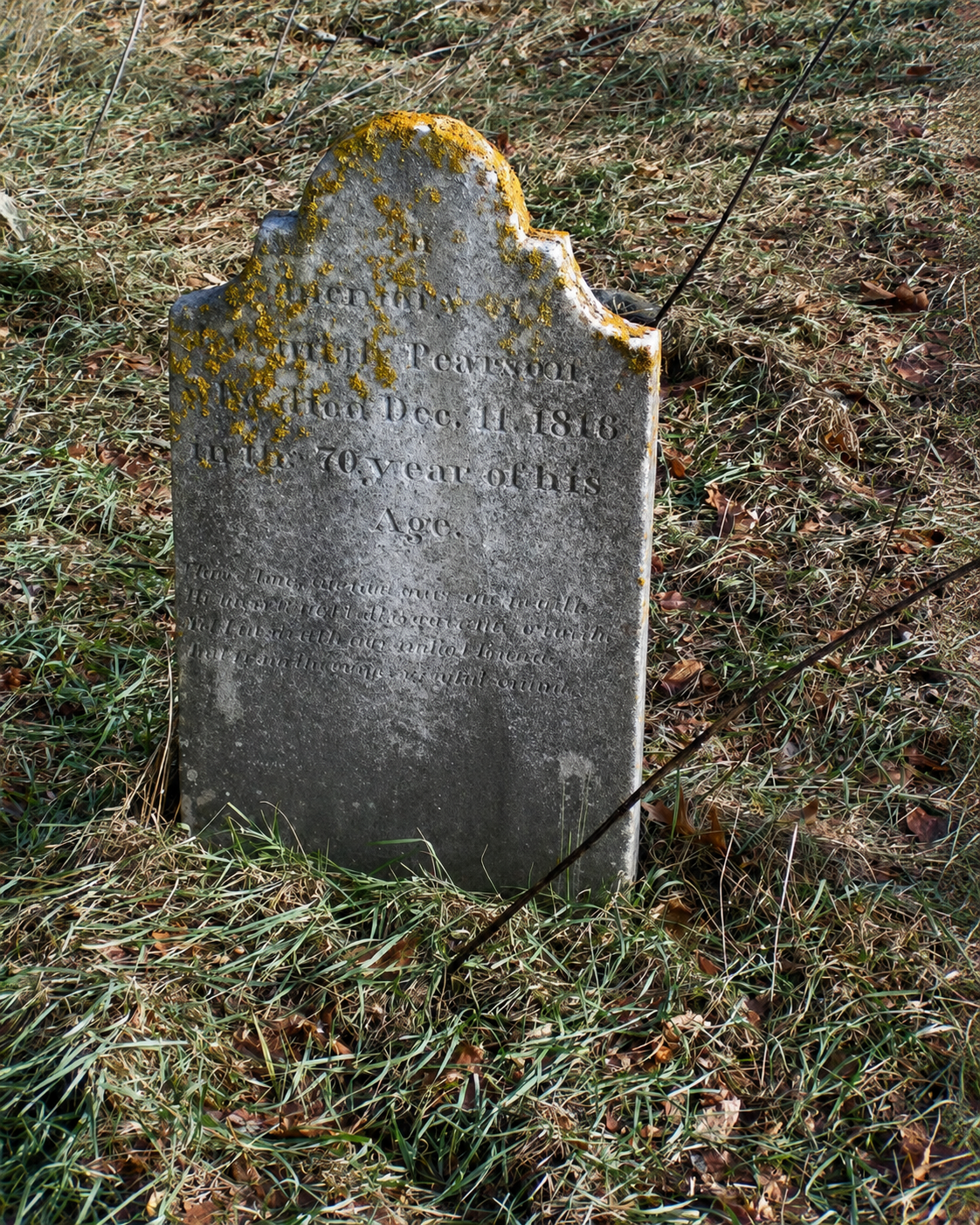
With the discovery of this notice, we have a likely candidate for our tavern-keeper. Jeremiah Pearson, whose headstone you see here, was born in 1741 and died in 1816 at age 76. The notice above gives us additional clues that line up with Ellie’s deed chain research.
The deed chain on the Pearson Tavern property can be traced back from the Purintons to a group of people, presumably the heirs of Jeremiah Pearson, selling their shares in the property to John Pearson, his son, in 1817. The advertisement above and probate records show Abiel Follansbee and Jeremiah Jr. and William Pearson as heirs, so this all checks out. We have our Revolutionary War-era tavern-keeper, who seems to have been preceded by his father, also Jeremiah, who died in 1749. Nearly a full century of Jeremiah Pearsons running a tavern! Huzzah!
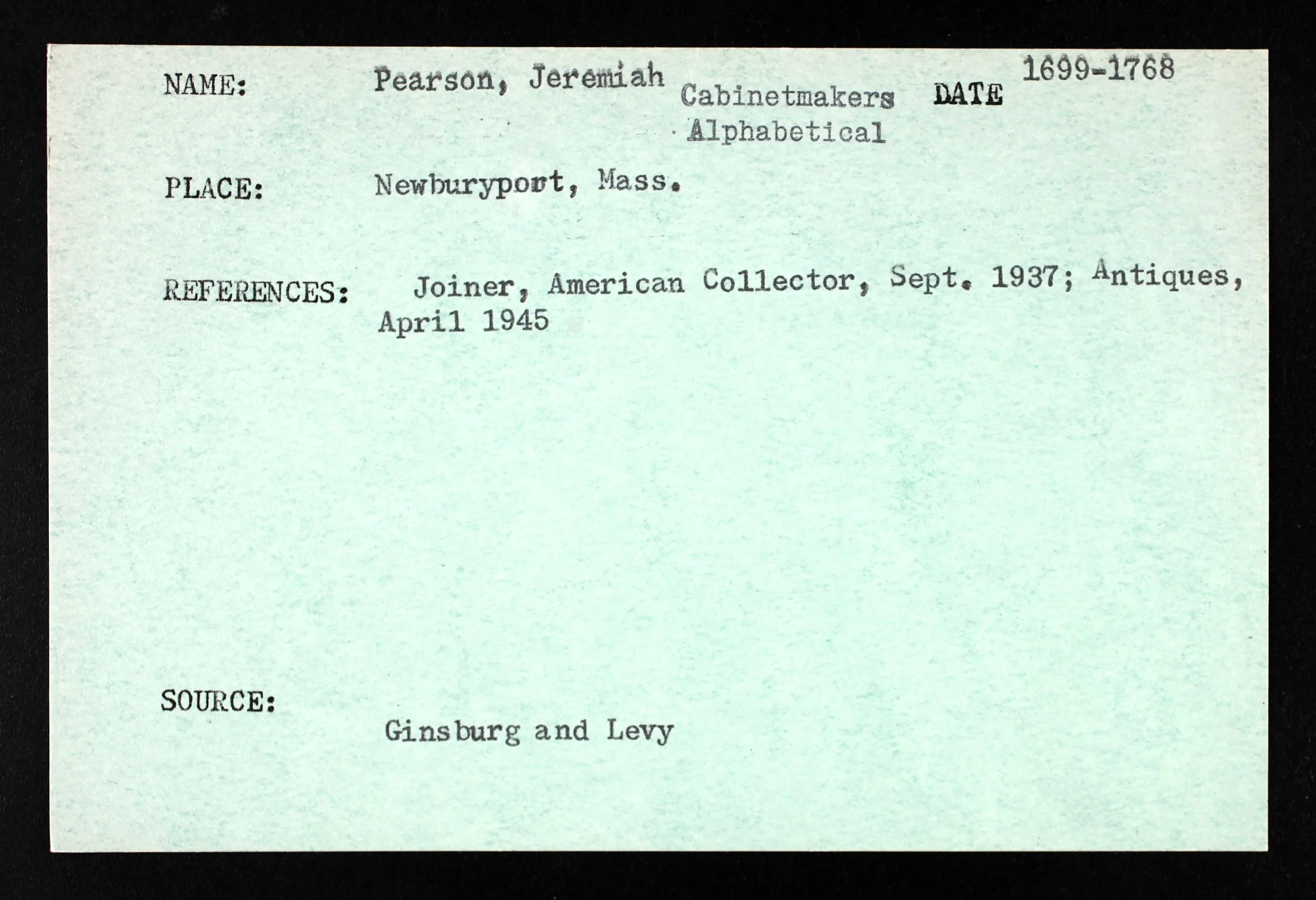
And then, we turn our attention to fleshing out the details of life at Byfield’s Pearson Tavern, and the contemporary record dries up almost completely. There are no notices in the newspaper for meetings or stallions for rent - nothing that I can find in the town records except tax bills. There are other Jeremiah Pearsons floating around Newburyport, one instrumental in founding the Newburyport Marine Society and captaining the Schooners Ranger and Unity during the Revolution, another making furniture, selling coal and accruing debts, I have to be very careful not to confuse them.
All of the images below, ranging from 1776 to 1816, are NOT our Byfield tavern keeper, though he was alive and conducting business during this time. They all sent me down a research rabbit hole!
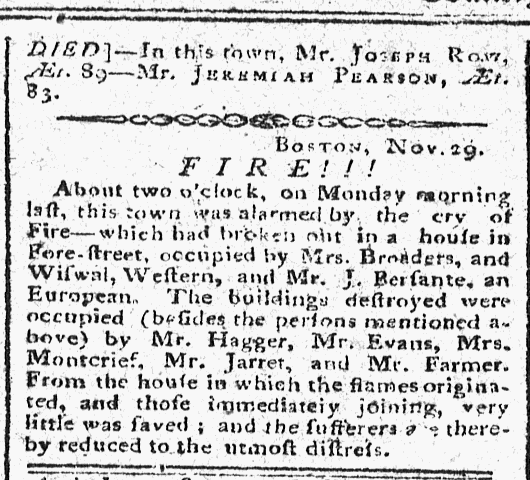
![Newburyport_Herald_1815-02-21_[4].png](https://images.squarespace-cdn.com/content/v1/54b0086fe4b066a5a28b222e/1785523564754-H07DQY1HIAJL57YOBTOF/Newburyport_Herald_1815-02-21_%5B4%5D.png)
![Newburyport_Herald_1809-07-28_[3].png](https://images.squarespace-cdn.com/content/v1/54b0086fe4b066a5a28b222e/1785523565131-876X3P6DRX3KFQJBPEV2/Newburyport_Herald_1809-07-28_%5B3%5D.png)
![Newburyport_Herald_1809-03-31_[3].png](https://images.squarespace-cdn.com/content/v1/54b0086fe4b066a5a28b222e/1785523565692-21F41S0QR22R7FJNRDIS/Newburyport_Herald_1809-03-31_%5B3%5D.png)
![Political_Calendar_1804-03-26_[3].png](https://images.squarespace-cdn.com/content/v1/54b0086fe4b066a5a28b222e/1785523566233-IC5VF662KHZTL18YA6B4/Political_Calendar_1804-03-26_%5B3%5D.png)

All is not lost, however. Our Revolutionary inn-keeper, Jeremiah Pearson, does pop up in the newspaper, and is flagged as being in or of Newbury or Byfield, likely to distinguish him from his contemporary doppelgänger who lives and works in NewburyPORT.
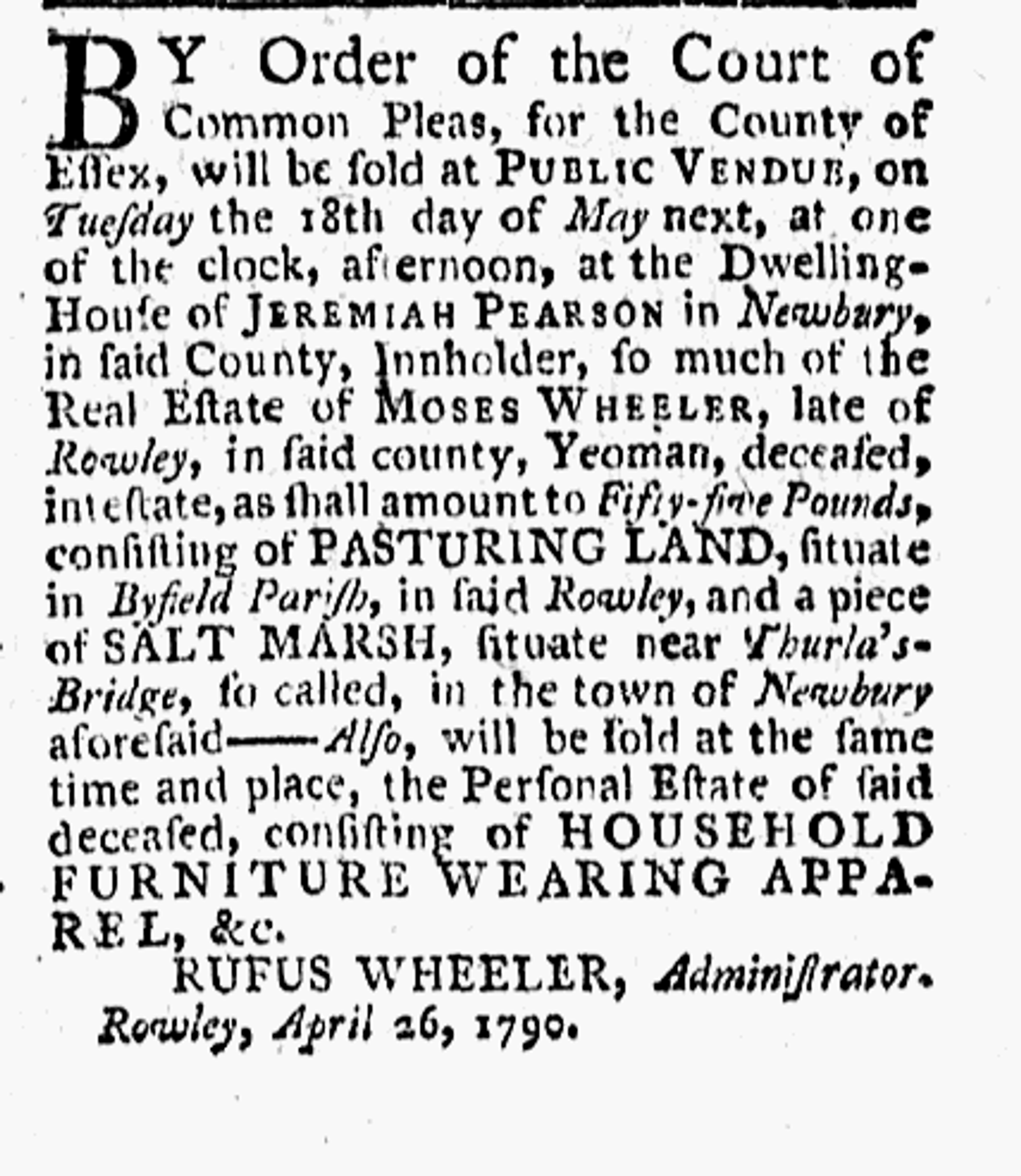
This 1790 advertisement in the Essex Journal invites readers to a Byfield estate sale, held at the home of “Jeremiah Pearson, Innholder”, and specifies that this is in Newbury.
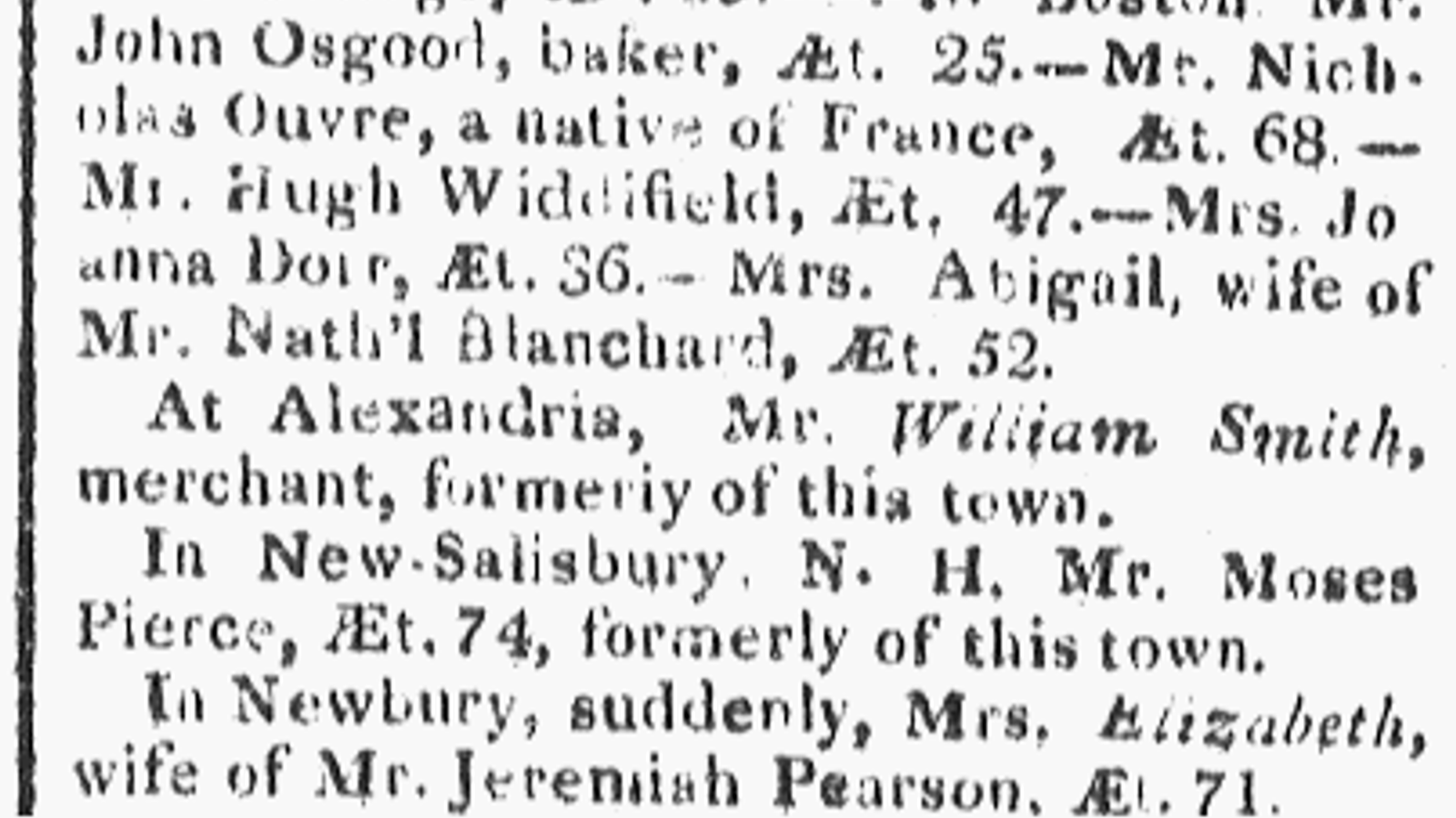
In the death notices below for Jeremiah Pearson and his wife, Elizabeth Pearson Pearson (she was born a Pearson and married a Pearson), “In Newbury” is specified to avoid confusion.
![Newburyport_Herald_1816-12-13_[3].png](https://images.squarespace-cdn.com/content/v1/54b0086fe4b066a5a28b222e/1785524525515-TBDTPF24LGVDLRP4JPDT/Newburyport_Herald_1816-12-13_%5B3%5D.png)
There is precious little information on our Jeremiah Pearson and his tavern (which was also likely his father’s tavern, and his son’s) in the contemporary record. Perhaps this is one reason why, when this canvaswork flame-stitched pocketbook, embroidered “Jeremiah Pearson, 1766” came up for auction last month, we were beside ourselves.
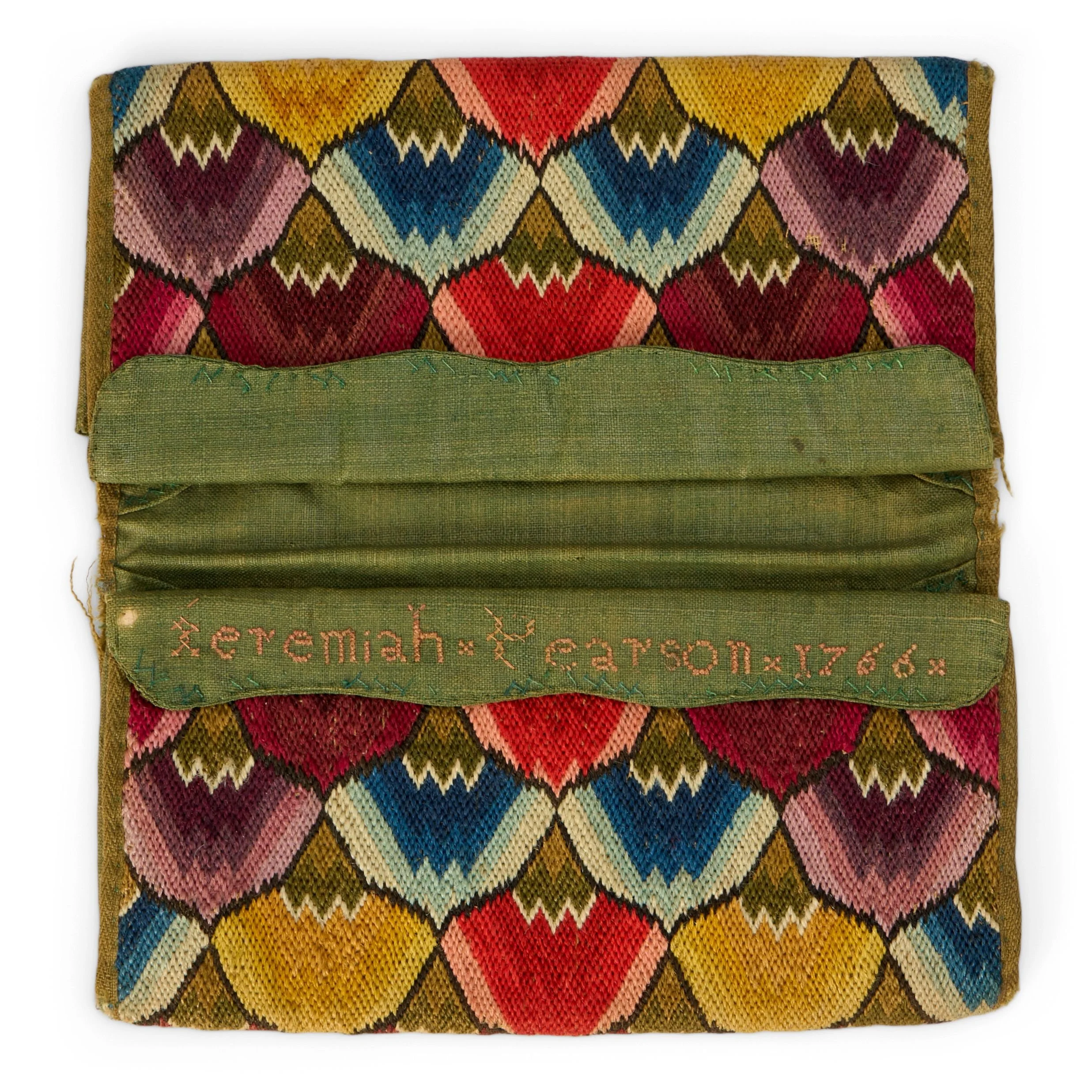
This 1766 embroidered canvas pocketbook was likely stitched for Jeremiah Pearson, our tavern-keeper, by his wife Elizabeth Pearson, who he married in February, 1762, when she was 17 and he was 22. Though it is possible that this belonged to one of the other Jeremiah Pearsons, our fellow is an idea candidate as he was still a young man in 1766.
We gathered the troops and raised some funds and won this pocketbook at auction, adding it to our remarkable collection of men’s embroidered pocketbooks (more like today’s wallets). As we continued to plan Cocktails in the Colonies, the addition of such a personal item was a source of inspiration to the committee. There are plans to incorporate it into the evening’s festivities!
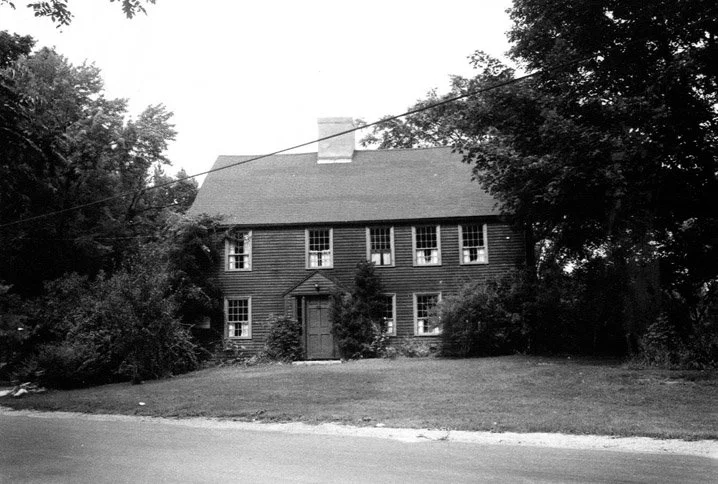
This view of the Pearson Tavern in the 1960’s is from the Massachusetts Historical Commission records.
When researching, I tend to look at contemporary sources first before I dig into the later antiquarian compilations, but in this case, there are few records to be found, so I turned to Coffin and Currier’s histories of Newbury, published in the late 19th and early 20th centuries., but no luck.
I turned to Ewell’s history of Byfield, a useful, if flawed volume, and hit the jackpot.
“The Jeremiah Pearson ledger, belonging to Mr. Joseph Pearson, the blacksmith, stretches at least from 1742 to 1786. Mr. Pearson kept a tavern in the house where Mrs. E. C. Ferguson now lives, and liquors of many kinds afford the characteristic entries, but he sold a great variety of articles, and took many things besides money in exchange. He had many customers from outside the parish limits -- Lord Timothy Dexter, for instance, from Newburyport…”
What I would give to get my hands on this ledger! I live in hope that it will turn up at the Perkins Art & Research Center one of these days.
The Pearson Tavern of Byfield, which seems to have attracted little attention during its heyday, became a favorite nostalgic reference in the newspapers and magazines of the early 20th century.
In 1928 in the Daily News, an old Byfielder waxed nostalgic about the village of his youth.
“A short distance above the waterfall is the old Pearson Tavern, known for many years now as the Ferguson farm. When John Pearson, the last proprietor of the tavern, sold it to James Ferguson over a century ago, he retired to a smaller house a little nearer the “fall.” His descendants still occupy the latter.”
In 1957 at the 30th Annual Meeting of the Sons and Daughters of the First Settlers of Old Newbury, a lengthy paper by the late Martha Larkin Poor entitled, “Old Byfield Homesteads and Their Occupants,” was read to the assembled crowd.
“A short distance above [my] old home in the Parish was the Ferguson farmhouse, originally the Pearson Tavern, where the stage coach stopped, and Lord Timothy Dexter visited. It was owned and run by three generations of Pearsons and the last one, John, sold it to James Ferguson, who had been superintendent of the Fatherland Farms, built by Eben Parsons, son of Moses Parsons. He was the second ordained minister of the Byfield Parish.”
Lastly, this evocative passage is from The Boston Cooking-School Magazine, from an article called "Old New England Inns," published in 1908.
“Among the old inns still standing is one at Byfield, Mass., formerly kept by Jeremiah Pearson, or “Old J. P.” as he was familiarly known, from the fact that these initials were stamped on his rum barrels. The dining-room of this old tavern was known as “Independence Hall,” having been so named by the soldiers of the vicinity, to whom “Old J. P.” gave an elaborate dinner upon their return home at the close of the Revolution. It was here “Lord” Timothy Dexter, that eccentric old character of Newburyport, used to delight to come with Jonathan Plummer, his “poet-laureate,” and partake of the tempting viands “Old J. P.” set before him. I once saw a list of “Lord” Timothy’s indebtedness to “Old J. P.” in a book, now in the possession of one of the old innkeeper’s descendants, and it amused me to note that the principal item on the bill was for liquors.”

And so, dear friends, we are leaning into the apocryphal records of the more recent past as we prepare to celebrate the 250th birthday of our country at a once-in-a-lifetime party at the Pearson Tavern on October 3. We will recreate Independence Hall, a very special batch of “Old JP” navy-strength rum is being created for the occasion by our friends at Privateer Rum. It is possible that Lord Timothy Dexter will stop by and harangue us. We will continue to comb the records in search of the account book that will give these stories some historical heft, but in the meantime, we are going to contribute one last celebration to the long tradition of hospitality in the Pearson Tavern.
We hope you will join us. The funds we raise will help us preserve and share our own Revolutionary treasures at the Museum of Old Newbury. There is much more to discover!