
Conferencing, Learning, and Networking at New England Archivists by Ashley Adams Serveiss
Last week, I had the opportunity to attend New England Archivist’s annual conference, which is held yearly in the spring. Each year, the conference is held in a different New England state. This year, I was thrilled to have the chance to head to Portland, Maine for a couple of days.
The archives world is a small one, and the New England archives world is even tinier. I think this is one of the reasons why I love attending NEA so much — I get the chance to run into former colleagues, grad school classmates, friends, and professors, all while meeting other information professionals from our little slice of heaven, AKA New England.
This year’s theme was “Resilience and Action in the Archives.” It was an appropriate theme, given the current climate we are working under as archivists. Emerging technology, AI, loss of federal funding, and changing researcher habits have presented a number of challenges to the profession. Lots of great conversations were had at breakfast, during and in between sessions, and in the hallways of the conference venue. The common consensus seemed to be, sure, AI can transcribe cursive, but it isn’t the end-all-be-all of the archival profession. It is a tool, similar to the analog ones we’ve been using for generations. I like to think of AI as akin to a hake brush or a bone folder; useful for some tasks, but certainly not the answer to every obstacle we encounter. My fellow archivists seemed to (mostly) agree with this sentiment.
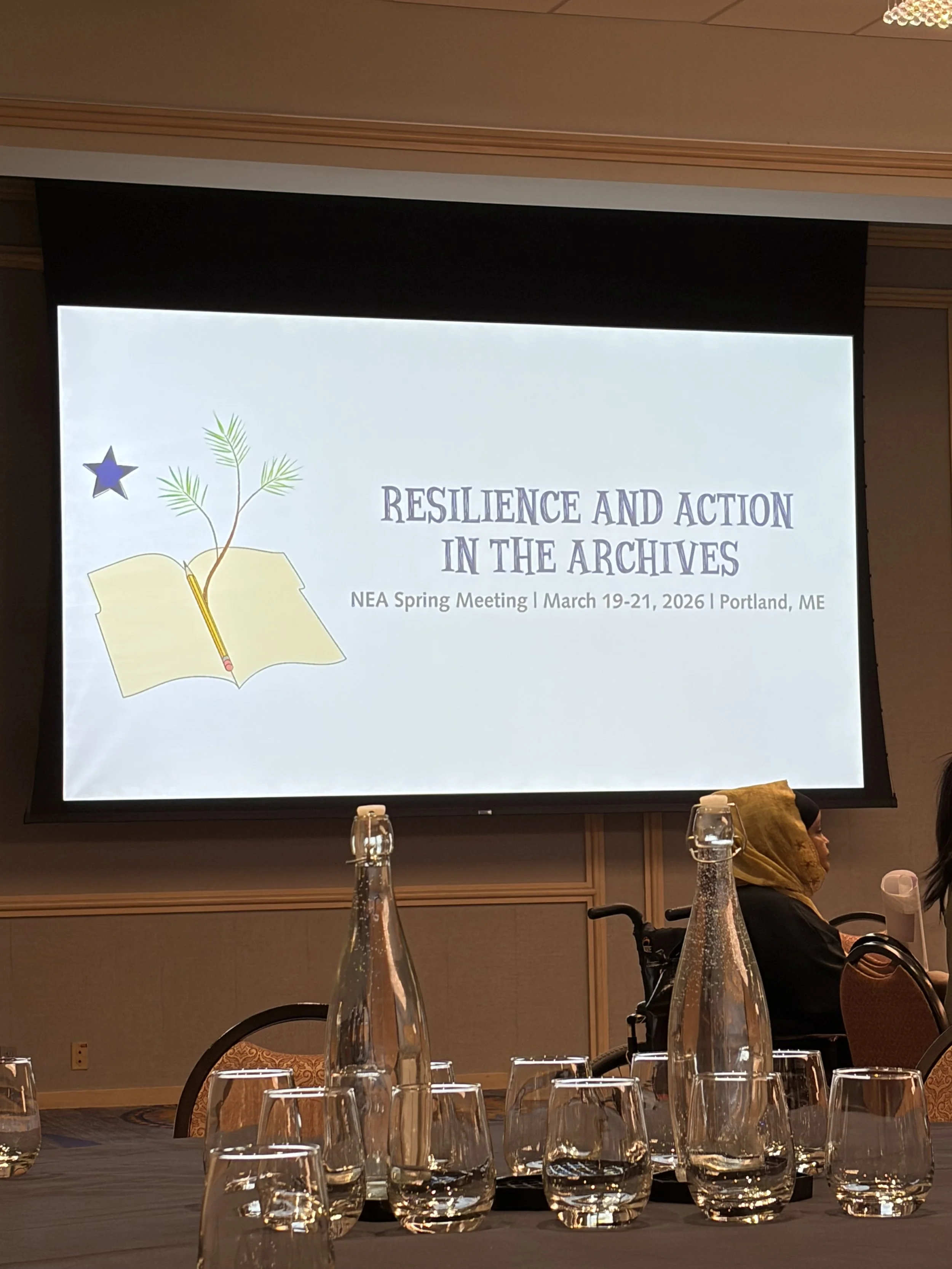
Resilience and Action in the Archives
I stayed well hydrated at the conference — the venue staff were constantly refilling the water bottles on each table!
I attended as many sessions as I could, and there were two that really resonated with the work I do here at the Museum of Old Newbury and the Perkins Art & Research Center. The first was a session on complex processing projects, facilitated by folks from the University of Vermont and Harvard. The speakers offered a unique take on how to approach large-scale processing projects, wherein collections arrived with some level of arrangement and description already in place.
This session made me think of our Fran Dalton Collection, a recent acquisition that was pre-processed by the donors. The collection itself is big — roughly 30 linear feet, give or take. It’s a mixed media collection consisting of mostly photographs, film, and camera equipment, along with correspondence, poetry, diaries, and some ephemera. The Fran Dalton Collection is quite unlike anything else at Perkins, which is probably why I have been a bit humbled by its presence. Fran Dalton was a well-known photographer and one of the first openly trans people in this area who captured Newburyport throughout several decades of profound change in the city, beginning with the urban renewal of the downtown area in the 1960s through the 21st century. Fran captured the everyday in her photography, intertwining people and place in an unadulterated and easy manner. Her work is representative of Newburyport in much of its 20th century forms, from gritty and dilapidated to renewed and revived. In hearing how Harvard’s archivists tackled their Ben Shahn Collection, which arrived with similar arrangement and description to our Fran Dalton Collection, I felt inspired to get to work on Fran’s collection with a newly acquired framework of practical and logistical planning.
The second session that really connected to my work, particularly in the way of assisting researchers, was one by Rakashi Chand of the Massachusetts Historical Society. Ms. Chand held an open forum for folks to share, vent, and offer unique and differing perspectives on serving the public. As we navigate the nascent stages of Perkins being open to the public, it was great to hear from Rakashi and the other session attendees on what has been working (and not working) in their efforts to create a competent plan for their reading rooms and research spaces.
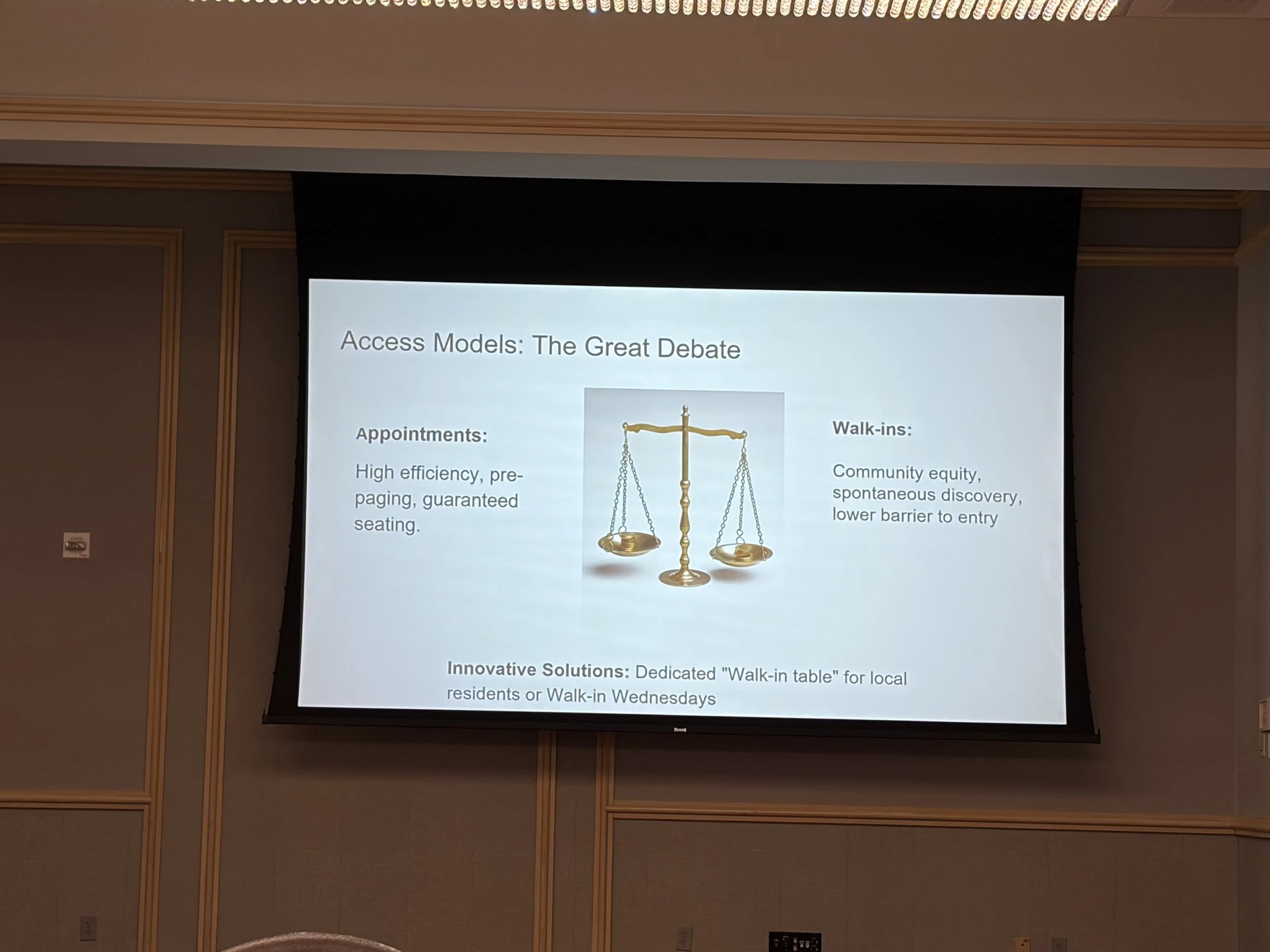
Access Models: The Great Debate
This slide during Rakashi Chand’s session sparked a thoughtful dialogue about discovery and access within the archival research space.
I found it most interesting that the majority of polled participants require researchers to make an appointment, rather than having set open hours. I was actually quite surprised by this. I’ve worked in three different archival environments in my career — public libraries, academic libraries, and museums, and the only space that required an appointment was in academia. Yet the respondents for the poll came from all types of different archival spaces. This knowledge, and the ensuing open dialogue during the session, made me feel strongly that we are doing the right thing at Perkins. For those who don’t know, or haven’t visited, the Perkins Art & Research Center at the Museum of Old Newbury is open every Friday and Saturday from 10am - 2pm. While we prefer advance notice from researchers, we welcome walk-ins during Open Hours.
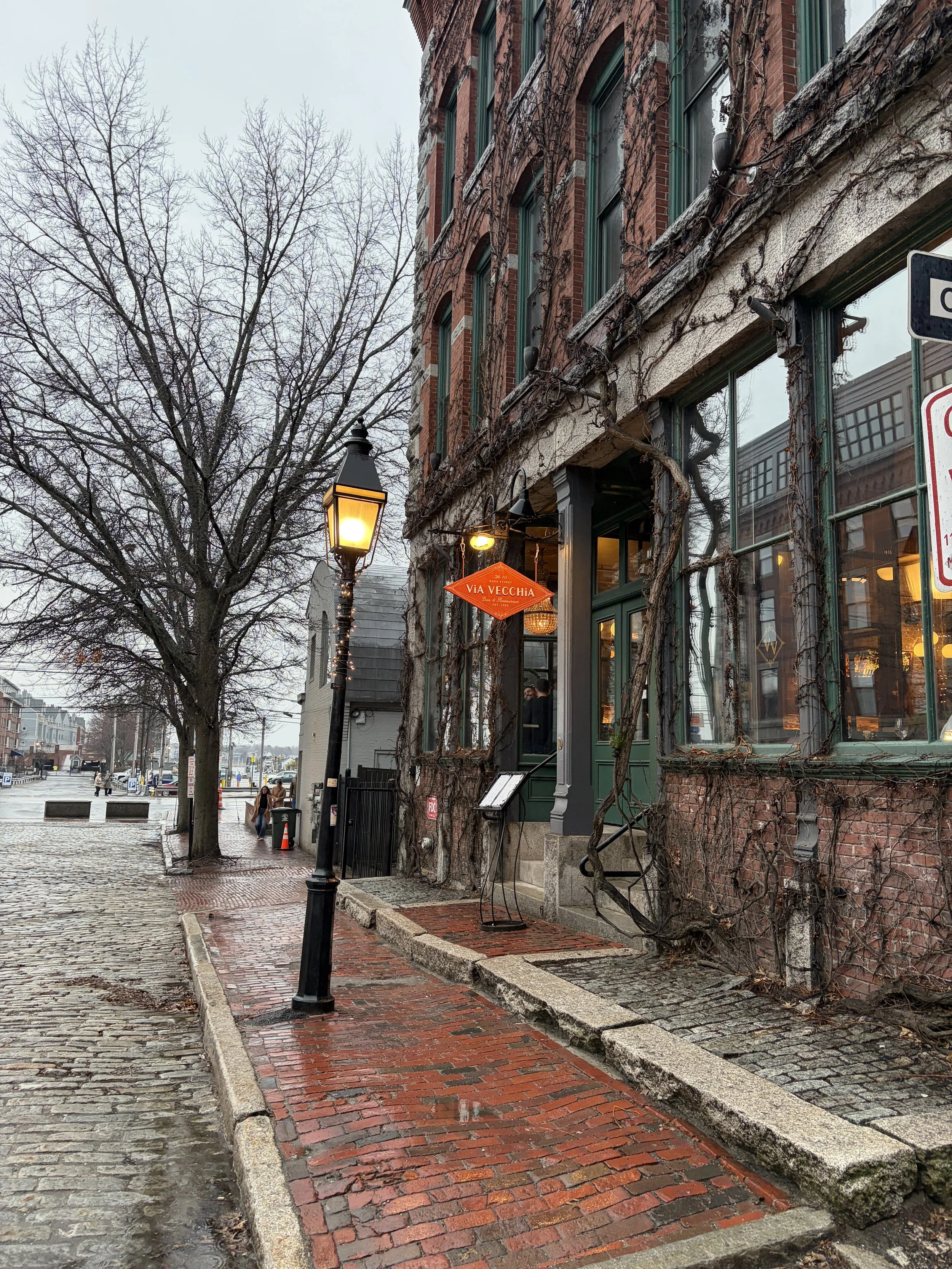
A Scene from Portland in the Spring
Quiet, rainy, not crowded, and absolutely perfect.
Overall, my trip to Portland for New England Archivists Annual Spring Conference was a fruitful one. It gave me the chance to connect with new faces, reconnect with many old friends and colleagues, and to learn about what other archivists across New England are working on. I gathered new insights and ideas to bring back to the MOON and Perkins. I am grateful for the opportunity to participate in professional development programs, especially NEA. I am also grateful for the time to bop around Portland. Because it is the off-season, I was able to navigate the city a little better than if it were June or August! Some stops I made during my trip (which I highly recommend) included the Portland Room at the Portland Public Library (special collections heaven!), Via Vecchia for dinner in the Old Port (the tortellini was delicious), and the Portland Museum of Art, which was right across from the conference venue. It was a great weekend, full of listening, talking, connecting, and learning how to be resilient.