
What’s in a Name? A Seattle Sojourn
Bethany Groff Dorau
Imagine the scene. Your favorite museum director (how presumptuous, I know!) and her husband on a night out in Portland, Maine, going to see a musician that aforementioned director has loved since she was in her 20s. Andrew Bird, whistler, fiddler, singer, Illinois native, and, as far as we know, NOT a cousin of mine (more’s the pity), invites his insanely talented drummer to open the show.
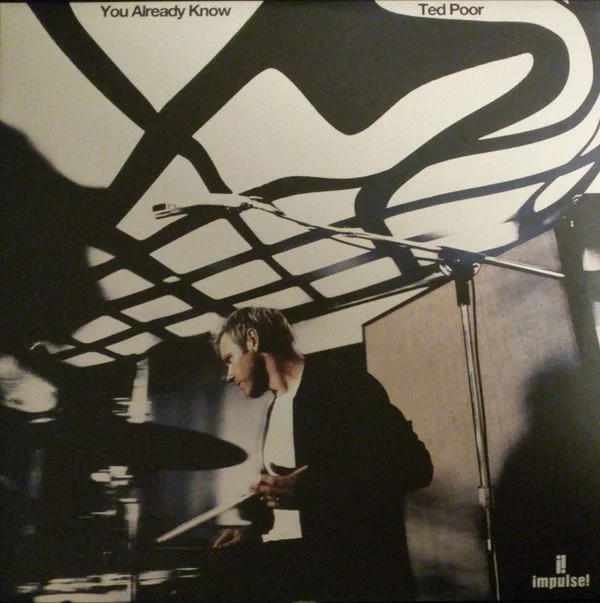
Aforementioned director, never one for the long drum solo, wanders off to check out the rest of the venue. Upon her return, husband announces, “I think he said his name is Ted POOR”, pointing at the drummer, who is somehow making his drums harmonize with each other. “No chance,” I said. “I never meet another Poor(e). It’s probably Ted Moore or Morse.”
And then, upon return to the merchandise table, there it was on an album cover. Ted Poor. Now, a brief aside – Poor and Poore are the same name. In my own family, until my grandmother’s generation, they were used interchangeably. My great-uncle Howard’s books are marked Howard Poor until he went off to Harvard, when he seems to have opted permanently for Poore. Also, I have never met a Poor, “e” or otherwise, who is not descended from the Newbury Poores.
And so the scene concludes with your favorite museum director cornering Ted Poor in a back alley after the show and shouting genealogy information at him until he gives her his phone number. He is, in fact, a descendant of the Newbury Poor(e) family, and my distant cousin. He lives in Seattle, where he teaches at the University of Washington, but has family at the Poor/Merrill homestead in Andover, Maine. He is tall and blonde and looks a great deal like my friend Sarah Spalding’s side of the family. He is, as it turns out, her much closer cousin.
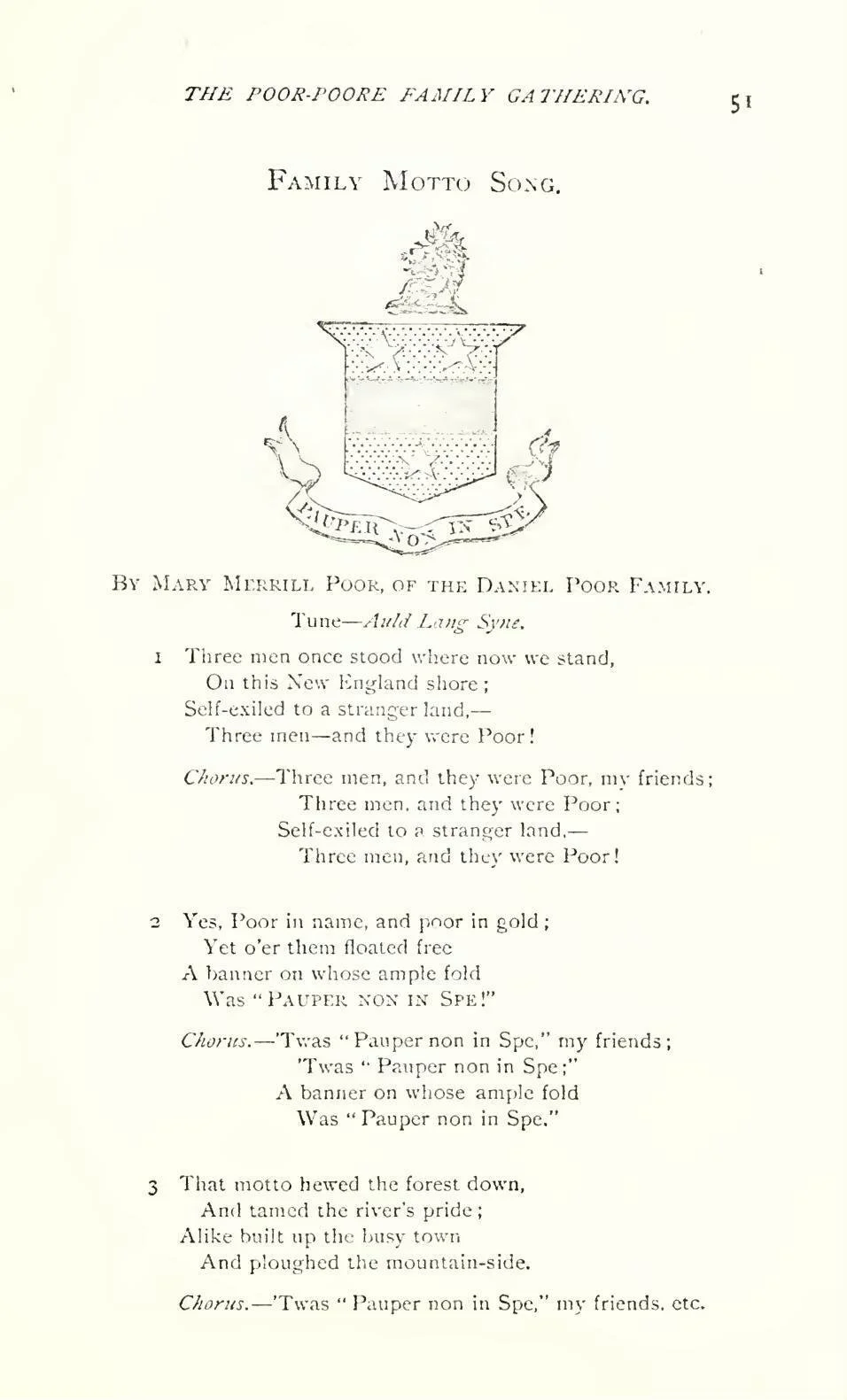
The Poore family song, to the tune of Auld Lang Syne.
We have become friends in the subsequent years. When he is touring anywhere nearby, or when we see Andrew Bird in Chicago, we will meet up briefly. I have brought him a Poor(e) bookplate, the lyrics to the Poor(e) family song. Each time, he will say something like, “I think this is cool, but my dad would LOVE it”. And so, though it was a terrible time to go anywhere, last weekend, James and I took advantage of some airline points and flew to Seattle for the weekend to see our friend Ted Poor play in his home state and meet the family.
And here is where everything went terribly wrong.
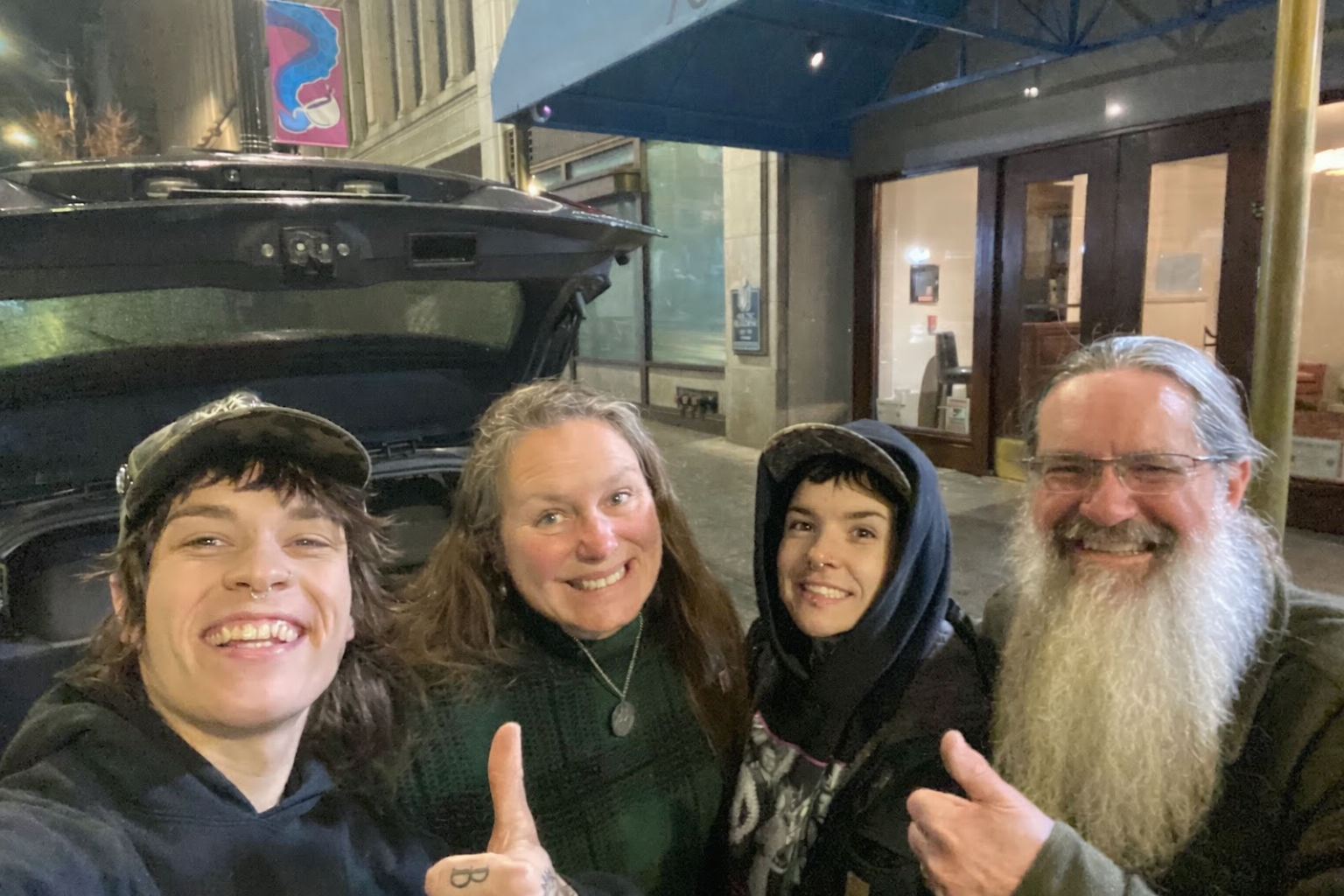
We landed, not in Seattle, but in Boise, and there we languished as our flight was delayed and delayed and delayed and then, finally, cancelled entirely. Amid the rising din of stranded, angry passengers, we found ourselves chatting with a pair of 20-something folks from Portland, Maine. They were on their way to a kickboxing competition. They were pierced, tattooed, and a bit (understandably) wary of the gathering rage and hostile energy in the Boise airport. At one point, one of them proposed renting a car together and driving to Seattle. It was then about 6 p.m. (we had been scheduled to land in Seattle at 11 a.m.) and it was a 9-hour drive. Of course, we said yes, our keen sense of adventure and desire to get away from the madding crowd kicking in.
And so, that is how we found ourselves driving through the night in a rented Subaru through the Rocky Mountains in dumping rain with two of the funniest, smartest people I have met in a long time. Okay, three, counting James. It was epic.
At some point in the wee hours of the morning, as I found myself amid the looming, rain-black mountains, my three fellow travelers snoozing away, I found myself thinking about what this journey would have been like for those New Englanders who made the journey out West, on foot, on horseback, or in wagons. It is daunting enough in a Subaru. I always think in particular of the ill-fated Donner party, whose matriarch, Tamsen, was born in Newburyport in 1801 and died on the trail in March, 1847. Though their party took a sharp left through the Sierra Nevadas, and ours took a sharp right into Oregon, I spent my girlhood reading voraciously about the American West, and Tamsen’s plight (my 4th cousin, 5x removed, for those of you playing at home), is burned into my memory.
But, I digress.
We arrived in Seattle at around 4 a.m., and there was much hugging and high-fiving, and then we caught a few hours of delicious sleep at our hotel before the saga of finding our luggage began (we had carry-on bags that had to be checked). To make a very long story short, all was well by the end of the day, and we set off to the University of Washington to see cousin Ted Poor and meet the rest of the family.
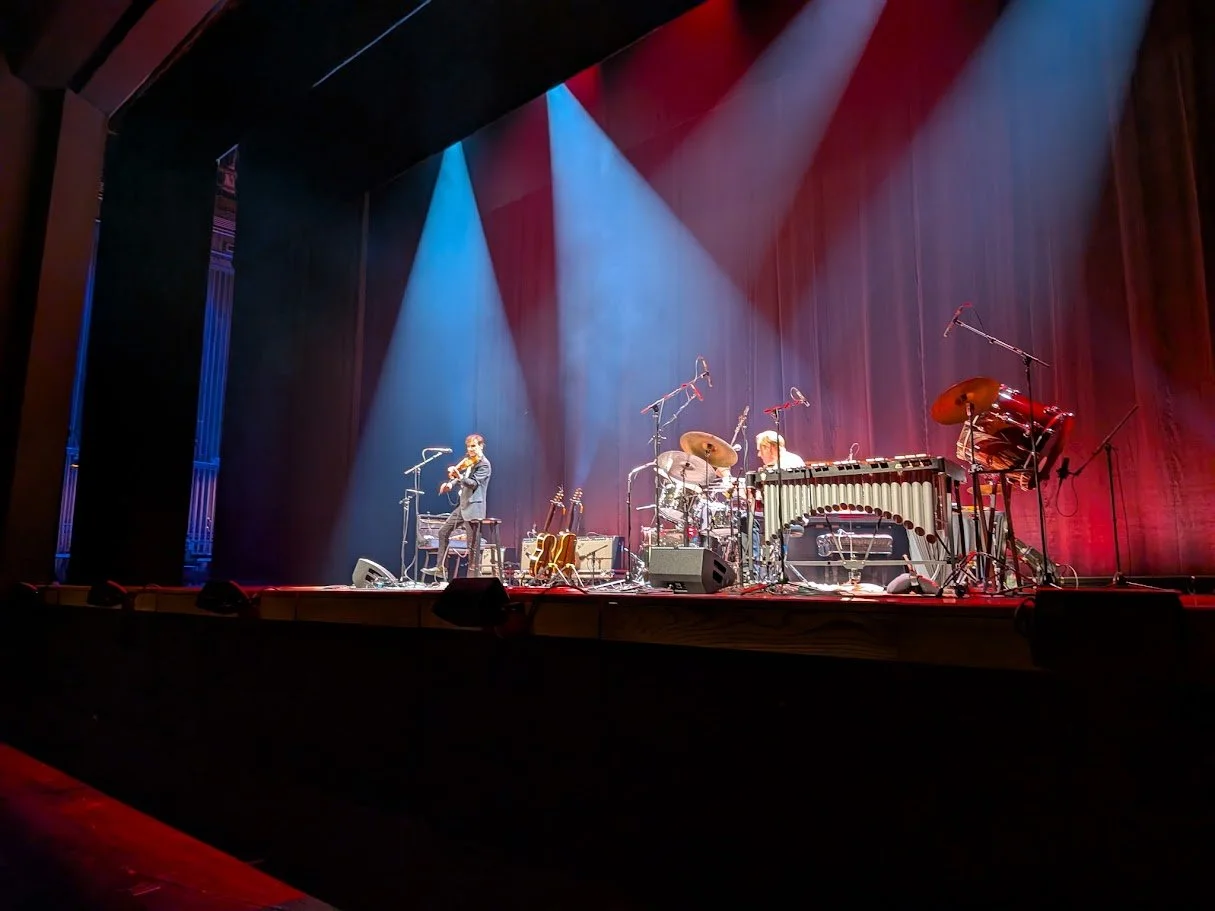
The concert was a triumph – Andrew Bird and Ted filled the arts center with music. We were ushered over afterward to the family area, which is where I generally start feeling like a fraud. The woman at the door, eager to keep out the riffraff, yelled “family only”, and asked for my name. I stammered it out, and her face lit up. “Bethany! The country cousin!” she said.
There are no pictures of our visit with Ted and the rest of the West Coast Poors. It was a family gathering, but my beloved Andrew Bird was hanging around the cheese table, and I wanted very much to a. not invade his privacy and b. take a picture for this newsletter. In the end, privacy won and the phone stayed in my pocket. As Ted predicted, his dad (and his mom) and James and I got along like a house afire, his dad and I trading obscure Poor(e) questions and facts at blazing speeds. We made plans to get together in June here, when I will whack back the poison ivy and show him the sacred Poor(e) places of my youth.
The next day, serious sightseeing began. James and I have our agenda in any new city down pat - food, beer, museum, repeat. These days, I begin each trip with a perusal of NARM (North American Reciprocal Museum Association) member offerings. The Seattle list did not disappoint, and we settled on The Museum of History & Industry (MOHAI), whose $25/person admission charge may have been a challenge but for NARM. The museum boasts a “collection of over 4 million objects, documents, and photographs from the Puget Sound region’s past,” and bonus – the Center for Wooden Boats is right out front, a working waterfront at the back.
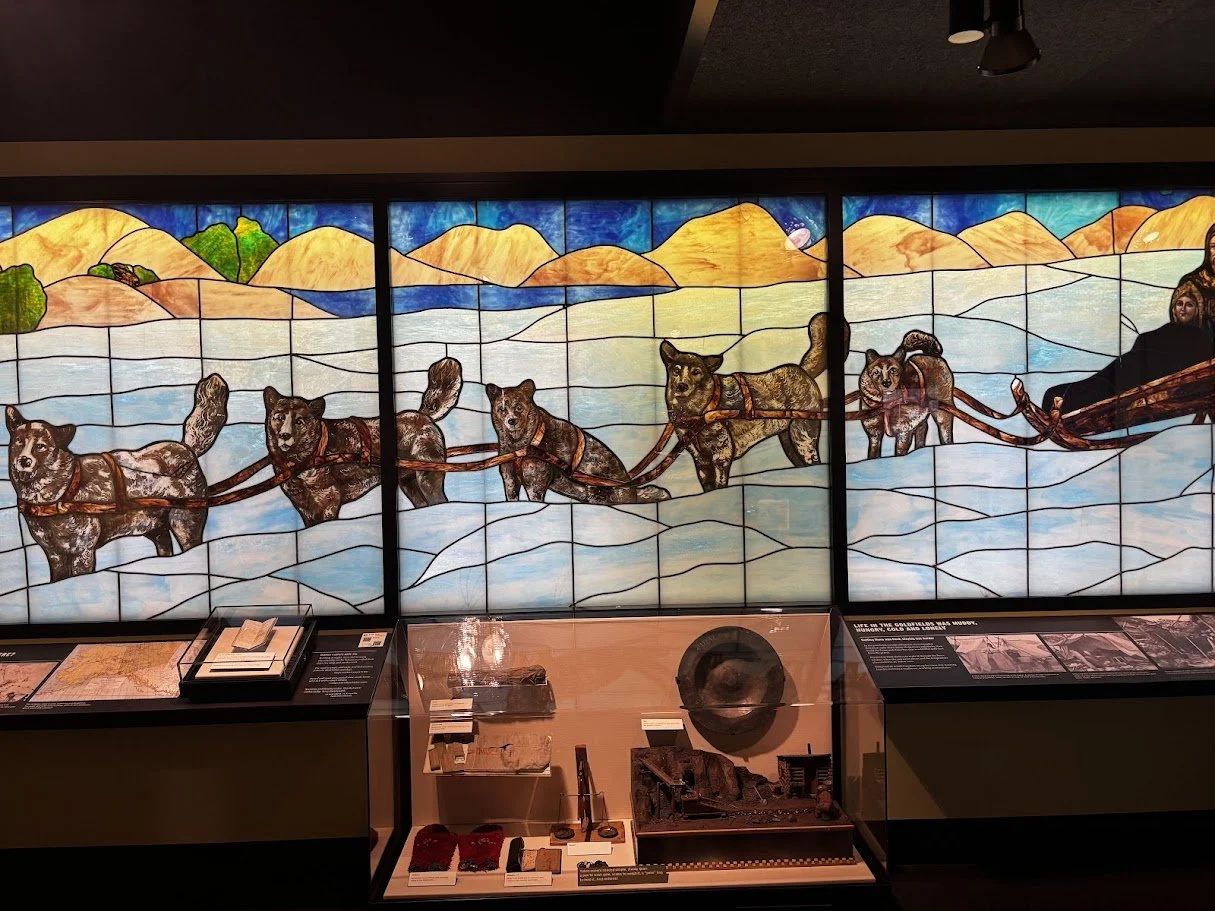
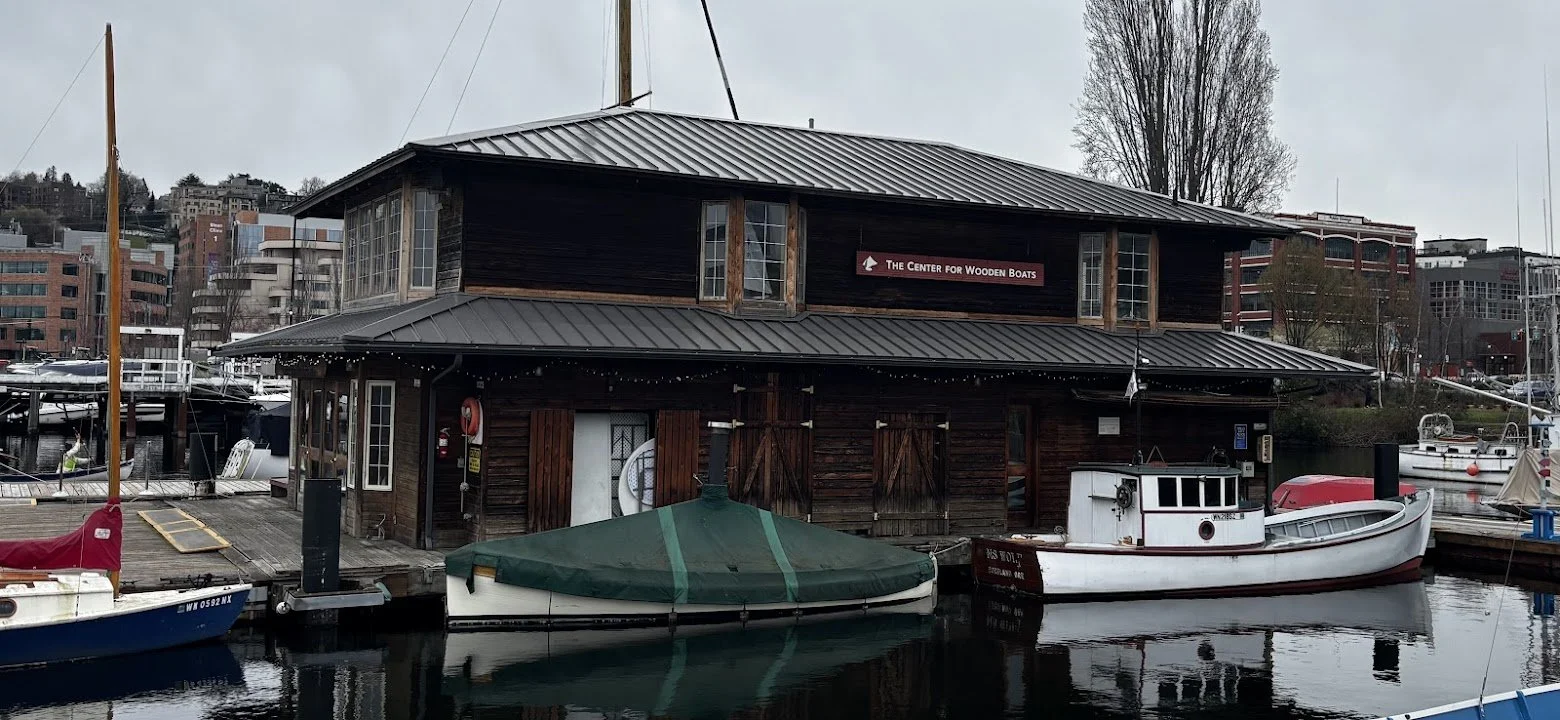
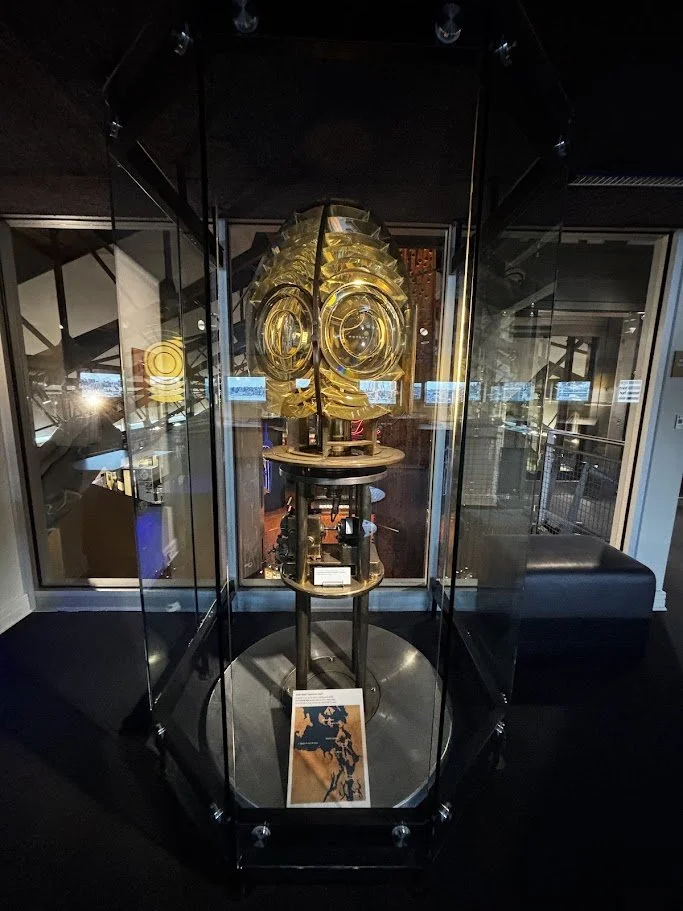
I will spare you the full travelogue, but we could have spent several days in the cavernous depths of the MOHAI. I looked all over, as I do, for connections to Newbury(port). There were plenty, most of them transient tales of familiar names who stopped in as they headed to the Yukon to search for gold. And then, like a moth to the flame, I was drawn to a small room off another room that told of the early years of non-Indigenous settlement in Seattle. Next to a photo of bright-eyed Lizzie Ordway and a box made for her by a sailor, the panel read, “Enterprising young ASA Mercer – lonely, and worried about this rough town - has collected funds from other bachelors to find women who might come here to teach and perhaps marry them. On his first trip, Mercer found 11 recruits. From Lizzie Ordway to Aurelia Coffin, they are remarkable women: educated and refined – but bold enough to pack up and leave their lives behind. They sailed from San Francisco in spring 1864, bound for Seattle on the Torrent, a lumber schooner.”
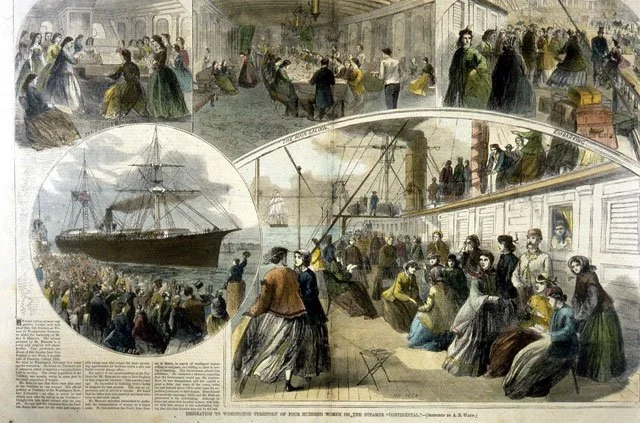
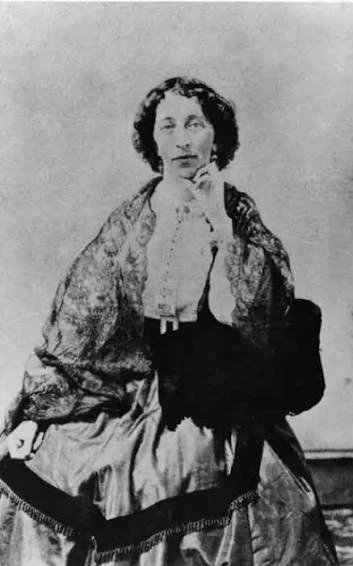
Lizzie Ordway, my 4th cousin, and one of the first New England women in Seattle.
The tale of the so-called “Mercer Girls” (most of them full-grown women, of course) is a remarkable one, and the list of the original eleven women to answer the bachelor howl of Asa Mercer reads like a Newburyport phone book. There is Kate Stickney, two Pearsons, a Cheney, a Stevens, an Adams, and aforementioned Coffin and Ordway. They were educated, tough, dynamic women, and they would change the history of Seattle forever. Stay tuned.
But, back to the glorious Poor(e) family reunion. I had a lovely email from Ted’s father, Geoff, when I returned home from Seattle, making contact so we could arrange a visit. We are very distant cousins – 6th, at last calculation, though in multiple family lines. Still, the connection is tenuous at best. There is very little, if any, DNA shared between us. I have come to understand genealogical connections as just one more way we humans can find common ground with each other, however - just one more excuse to open oneself up to a connection.
As I was looking through my great-great-aunt’s scrapbook, I came across a record of the 1881 Poore/Poor Family Reunion, held in Newburyport. Henry Varnum Poor, my Seattle cousin Geoff Poor’s great-great-grandfather, and my great-grandfather, Moses Hall Poore, were there, together. In the scrapbook for the event is this note:
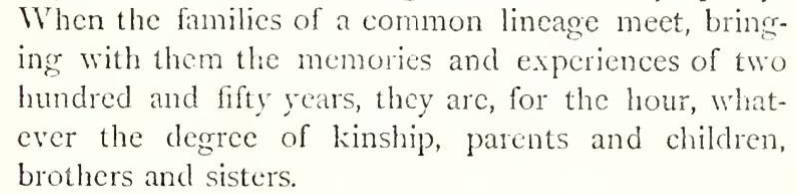
Maybe this is hogwash, but it was enough to get me on a plane to Seattle. Connections are everywhere, friends, even in line in a Boise airport. May we find them wherever we go.