
Craftsmanship in Copper
MOON’s 1873 Tufts Brothers Lantern Shines Again!
by Bethany Groff Dorau
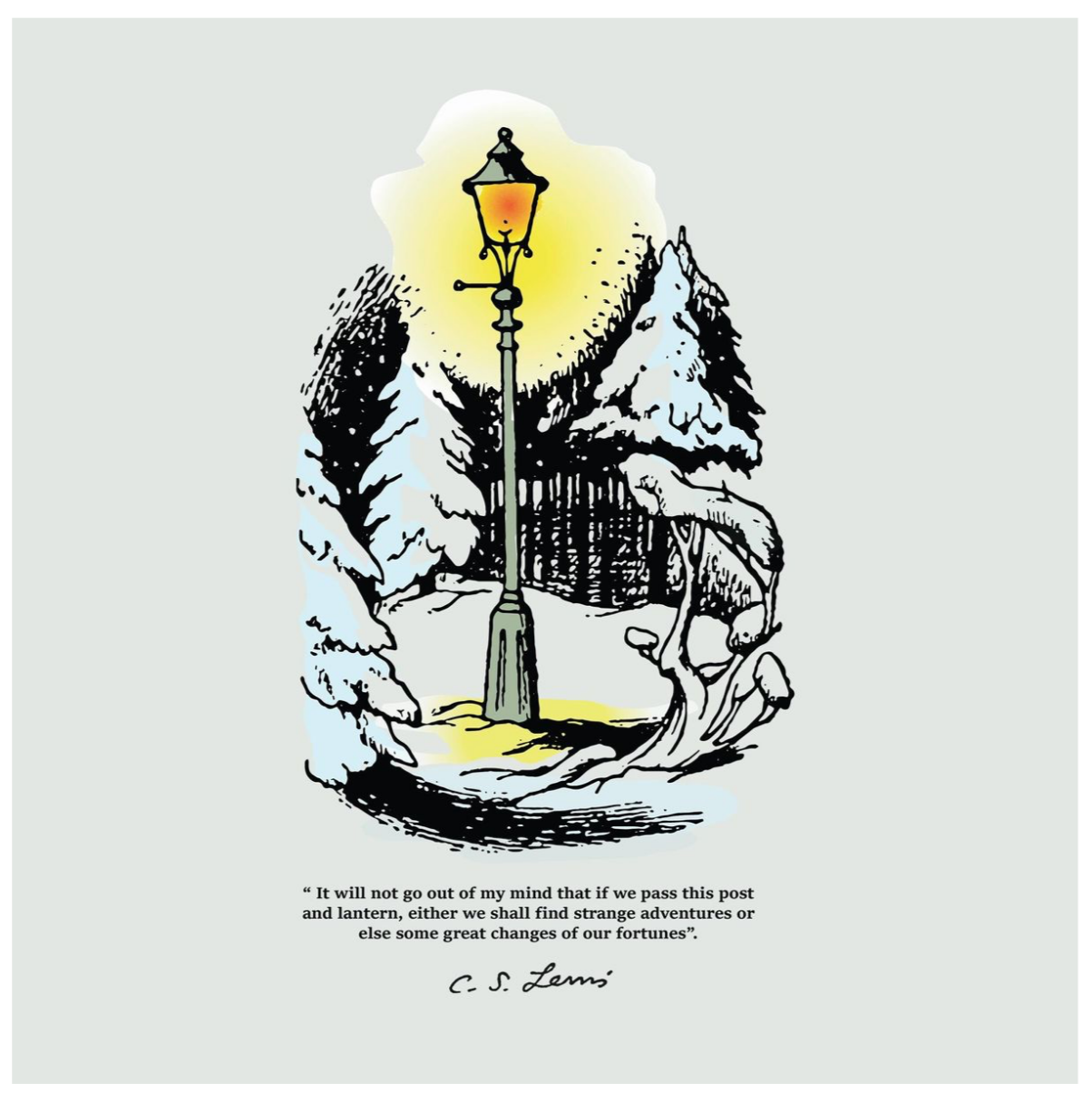
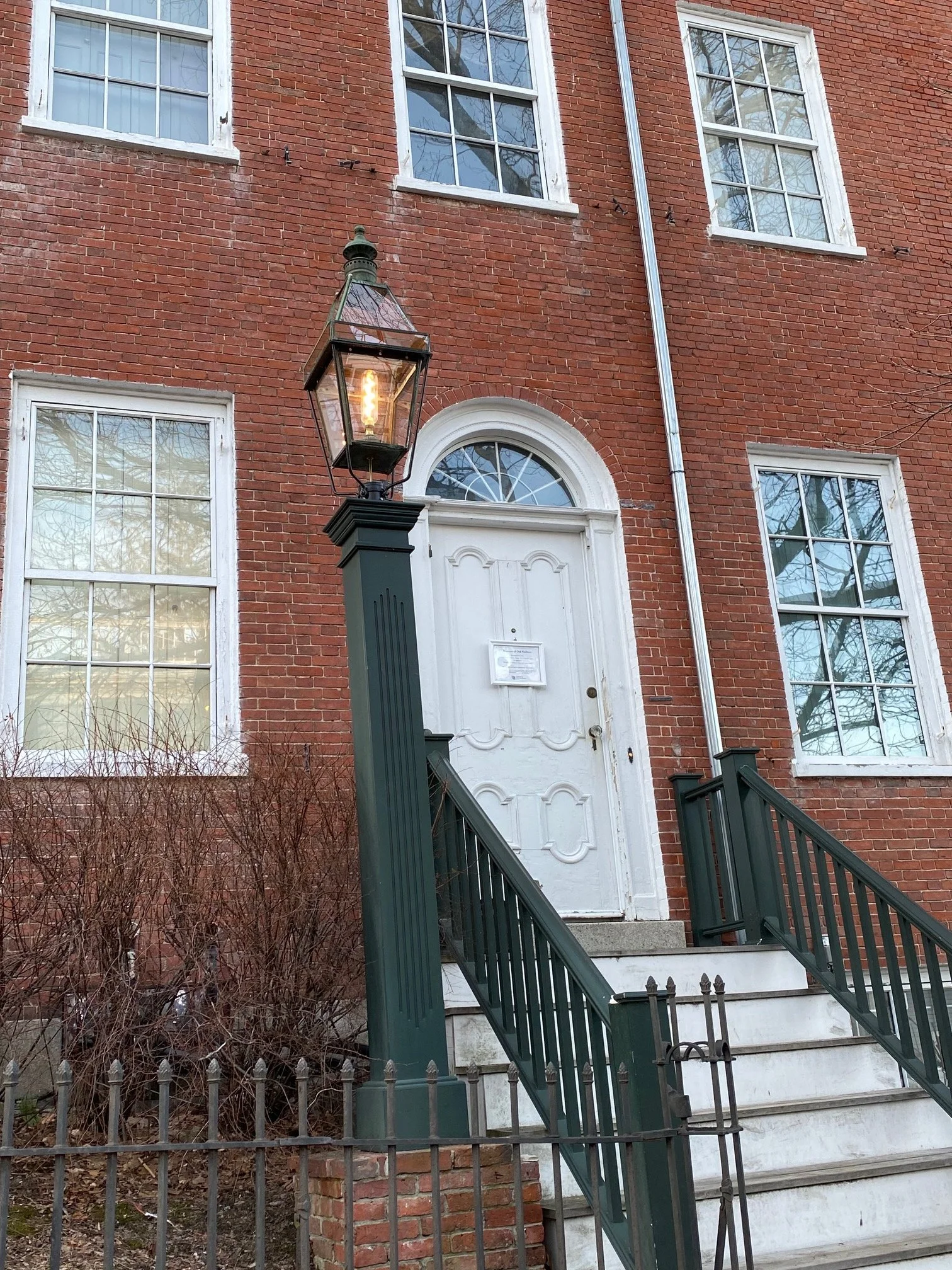
Well, friends, as with Sierra and her fancy knobs in the last newsletter, I have also fallen for a utilitarian bit of our built environment. A large metal lantern sits atop a post at the bottom of the stairs leading to our office. I appreciated this lantern as a light source on many a dark and stormy night, and was impressed when the bulb was replaced, and the electricians waxed rhapsodic. It also reminded me of the liminal space of the “lantern waste” in The Lion, The Witch, and The Wardrobe, one of my many childhood obsessions.
So when, on May 23 of last year, a storm went ripping through the area, felling trees left and right, I was thrilled to see that only one big limb had fallen from the trees here, and that limb had missed the building! Huzzah!
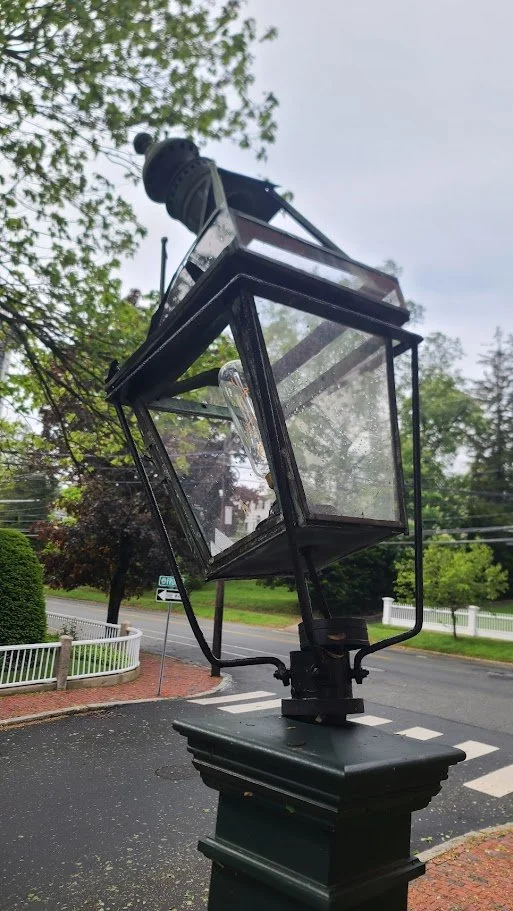
The limb had, however, crushed the Fruit Street stair lantern, which was dramatically clinging to its post, though glass and bits of metal littered the ground. That, I am sorry to say, was the first time I think I really looked at it, warped and smashed but beautiful, nonetheless.
We debated whether it was repairable. Most of the copper solder points had broken or were twisted. I called our trusty friend, neighbor, carpenter, and font of history knowledge, Steve Crosby. He found Casey.
Casey McHale, owner of Newbury Copper Shop in Newbury has been working with metal for 38 years and is known for his painstaking attention to detail. He was interested, but warned us that it would take a long time, and it would require an extensive amount of repair.
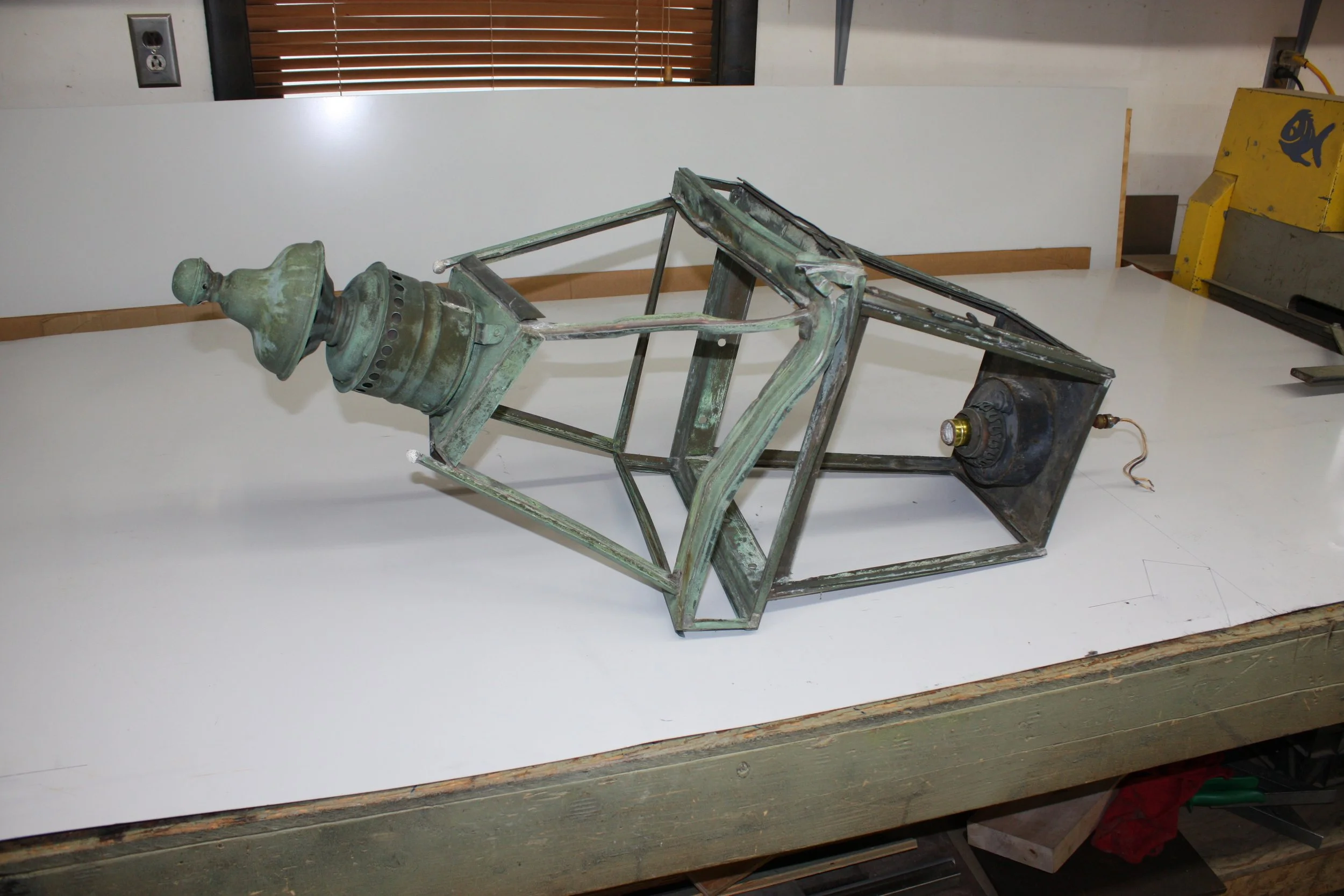
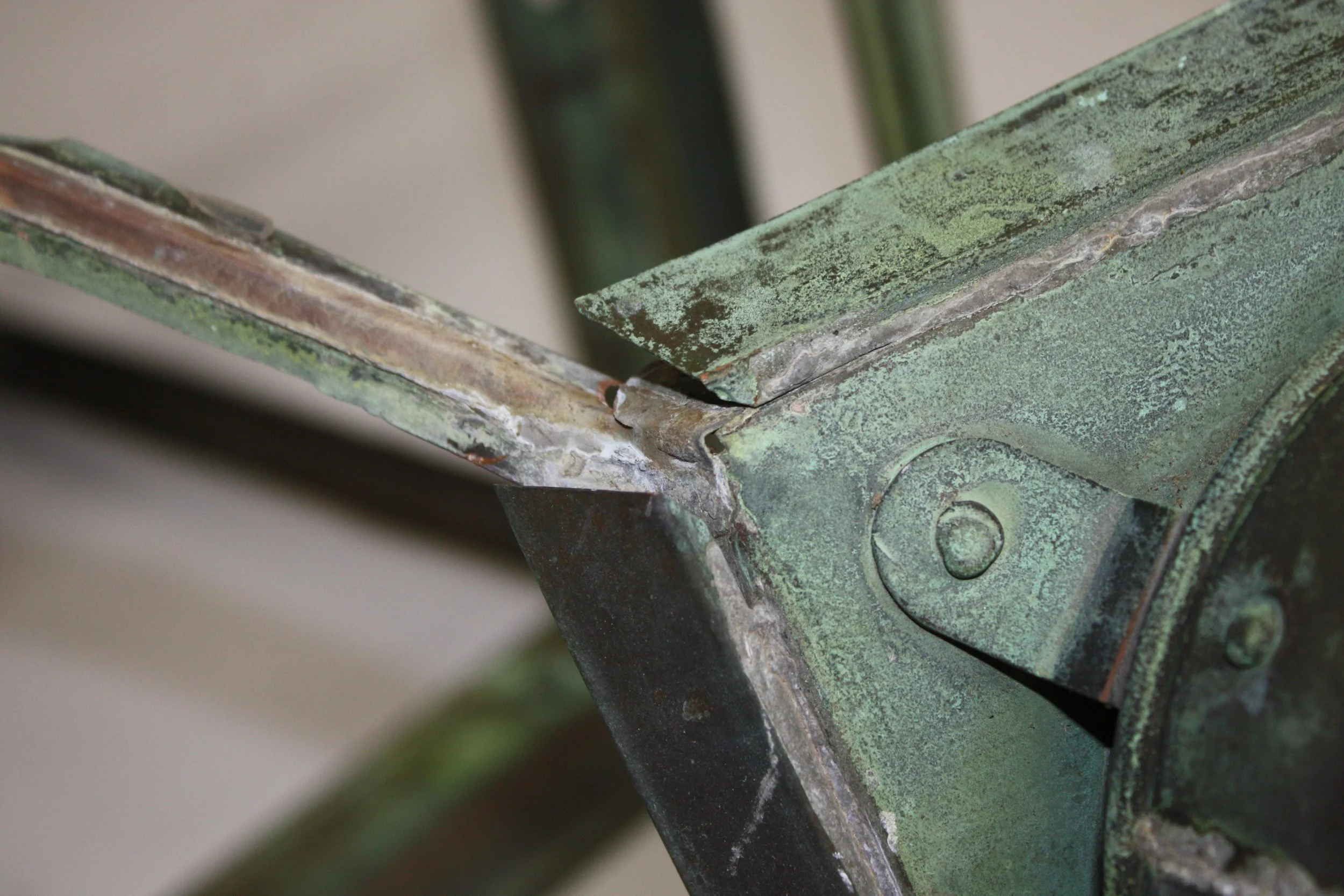
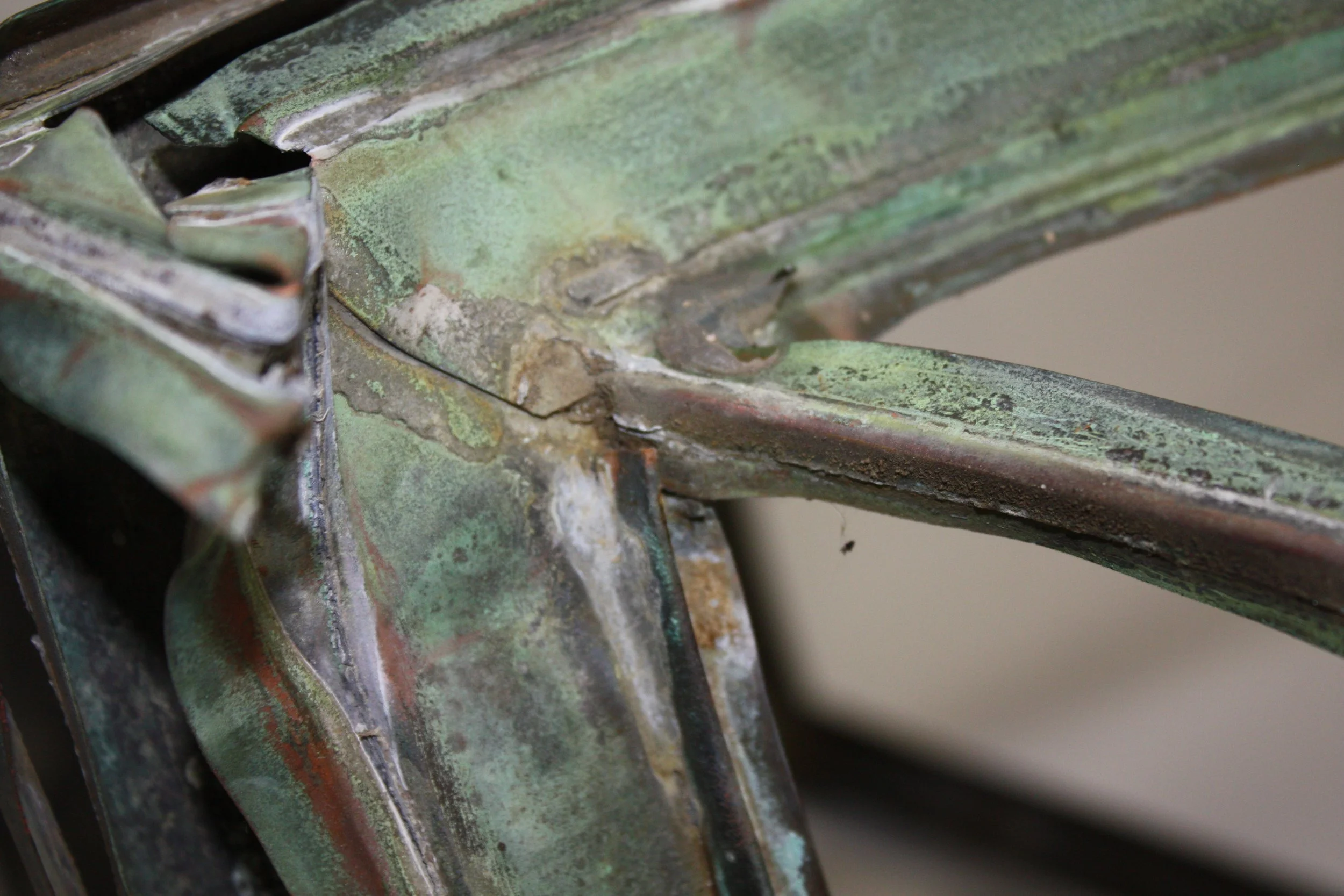
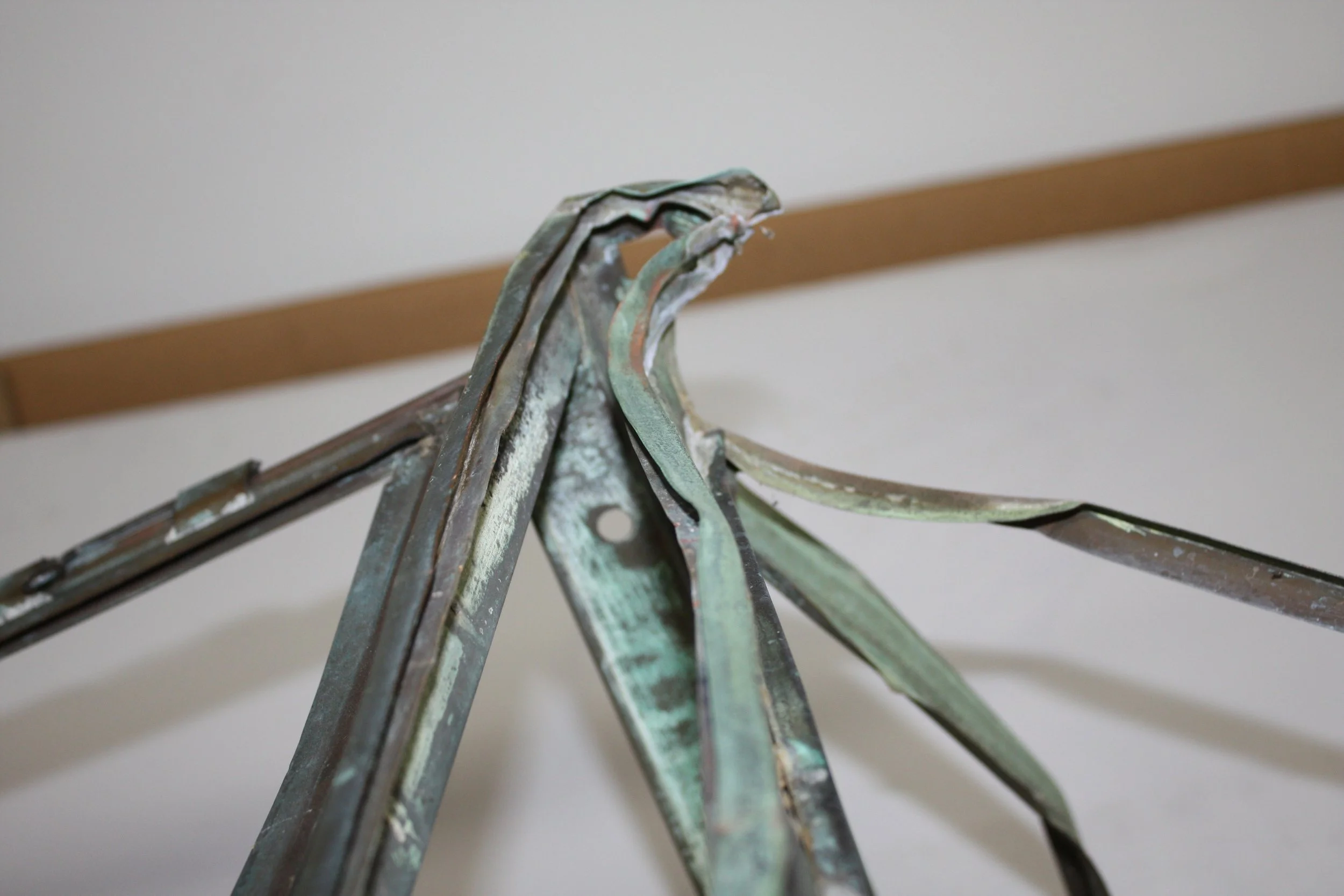
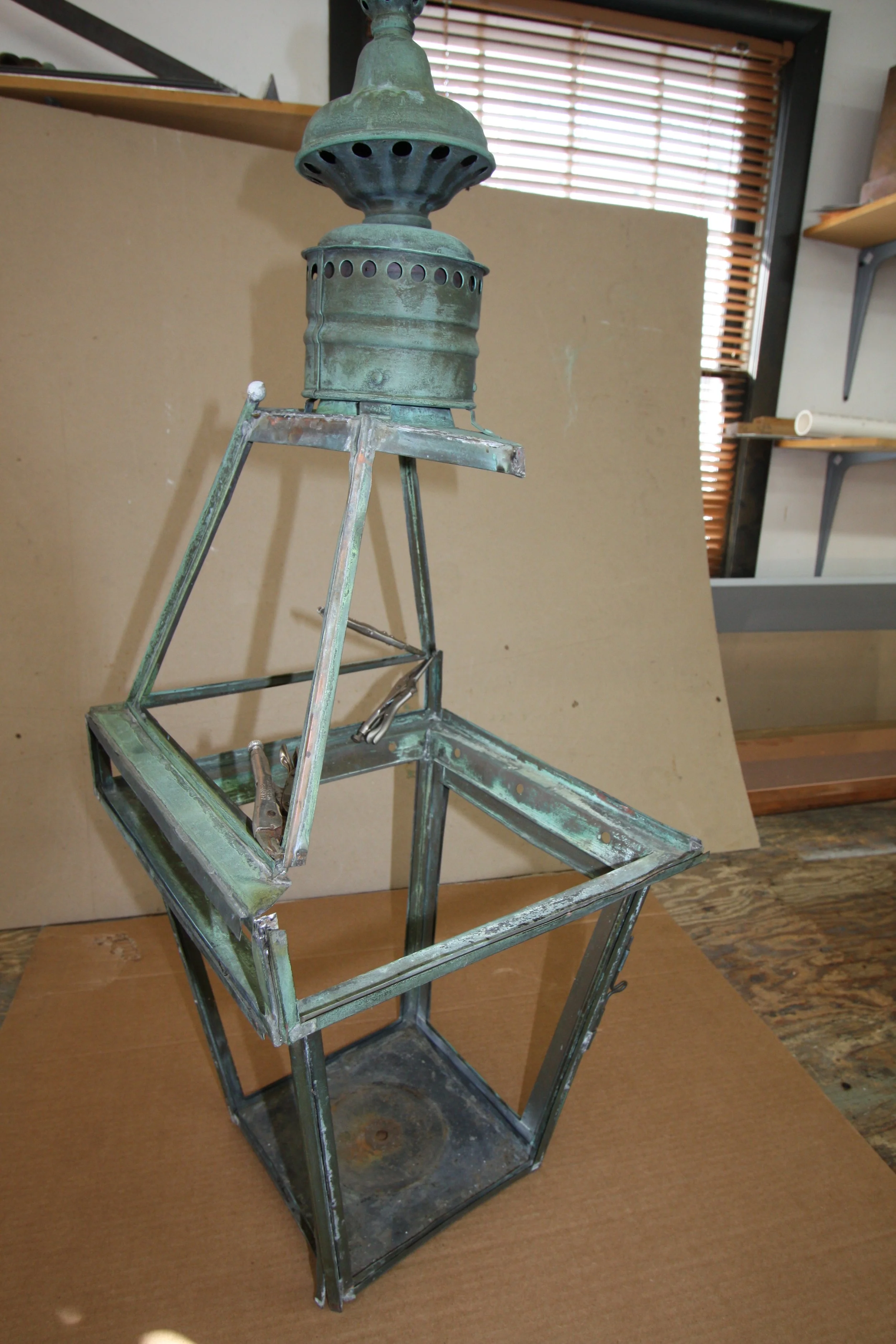
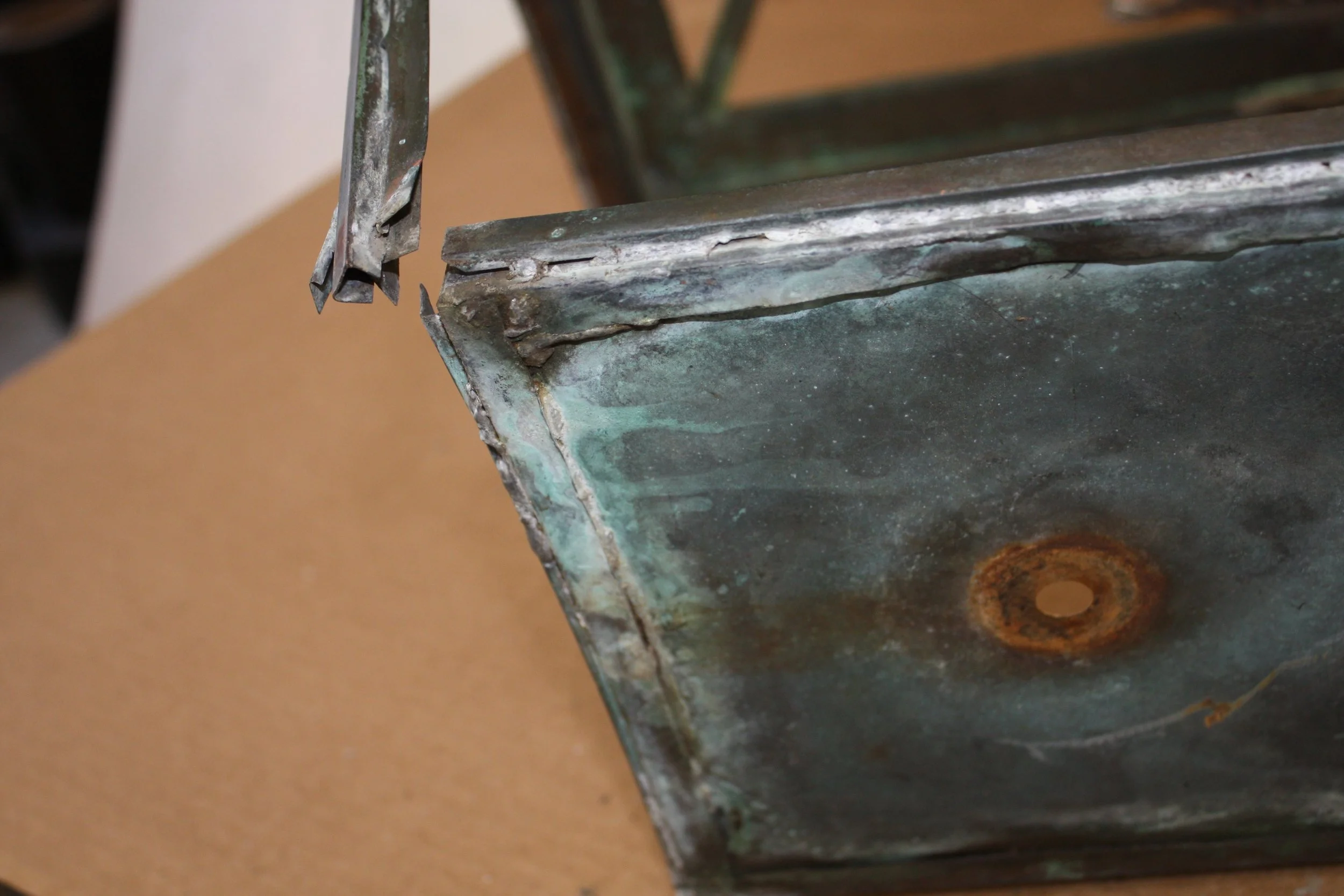
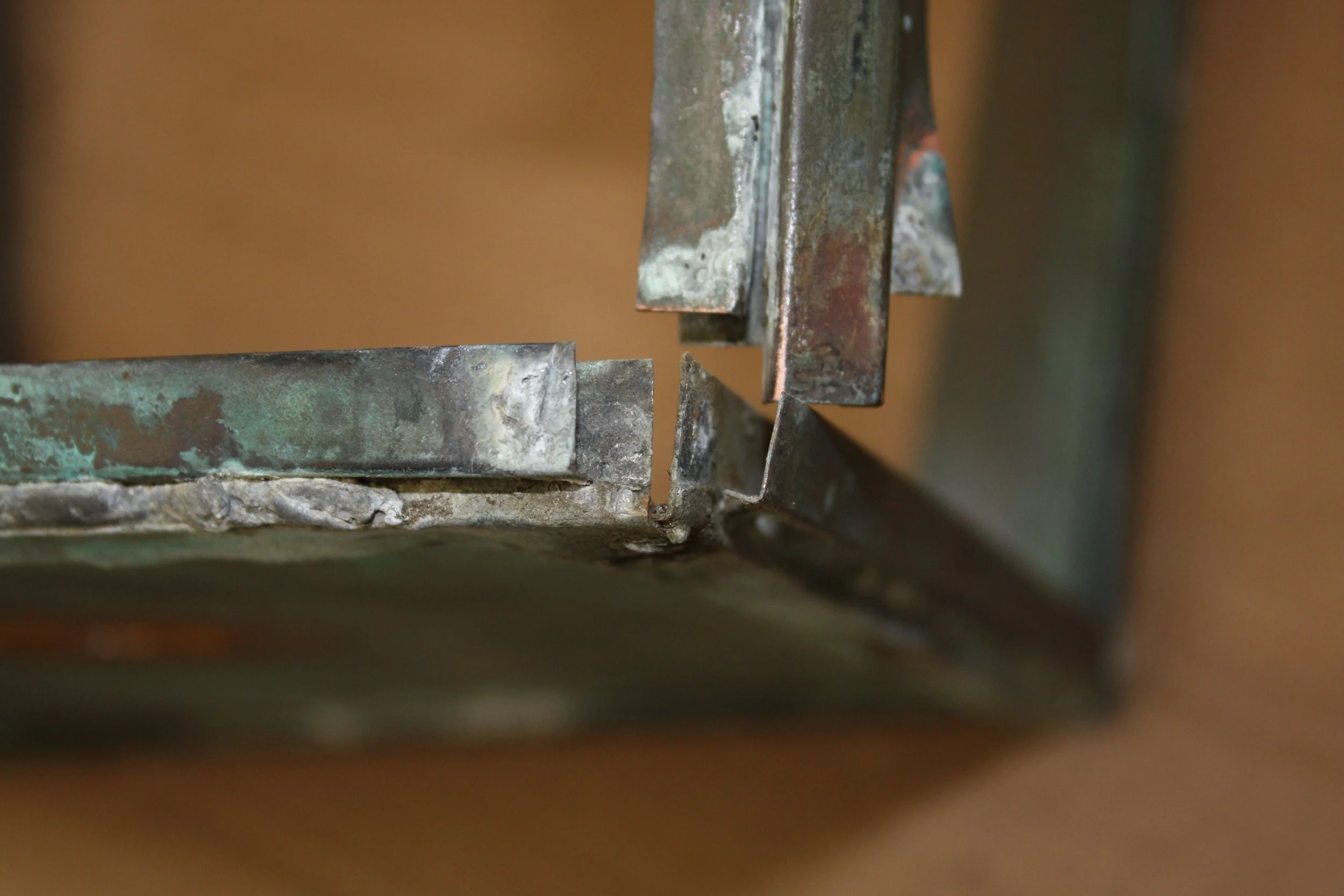
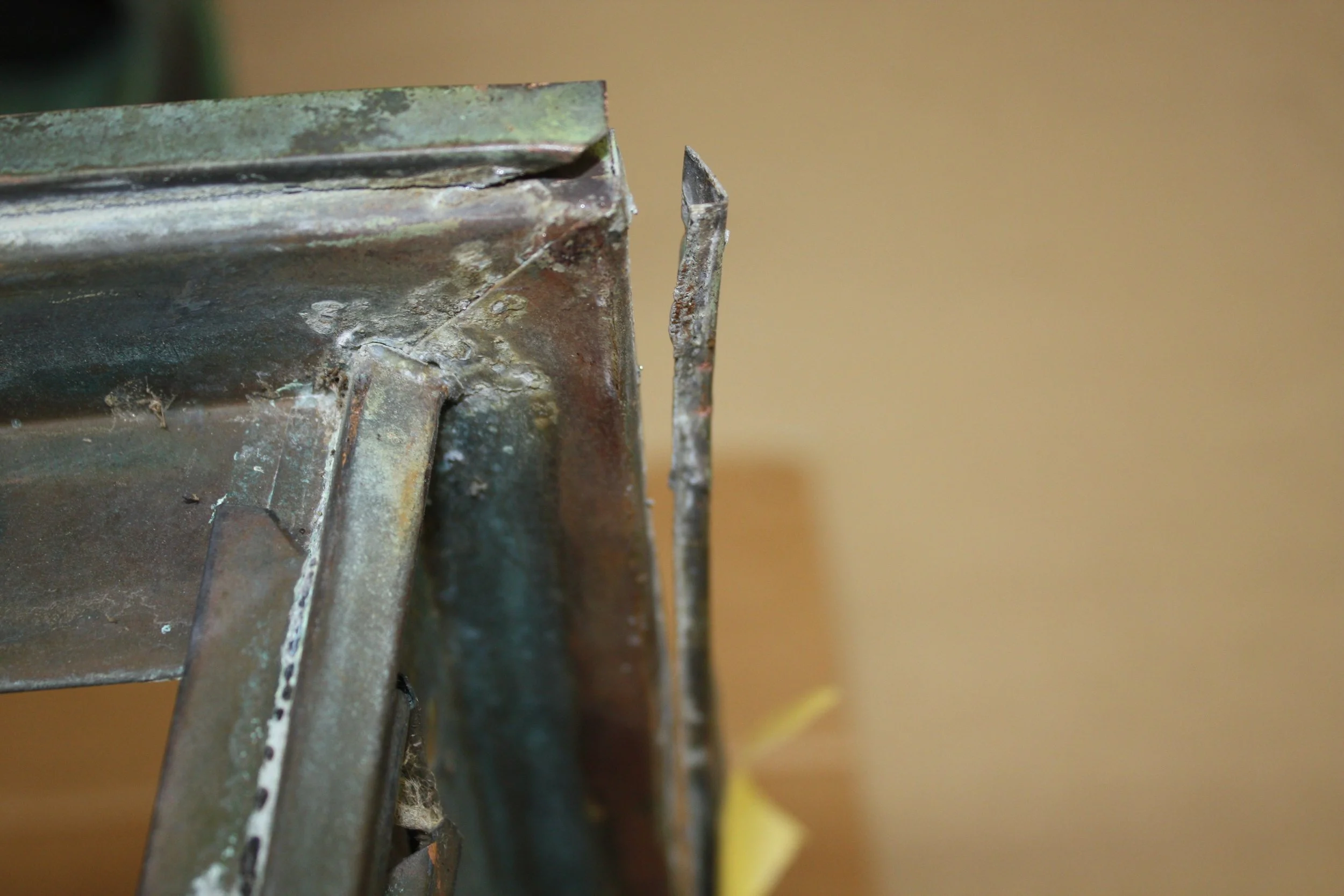
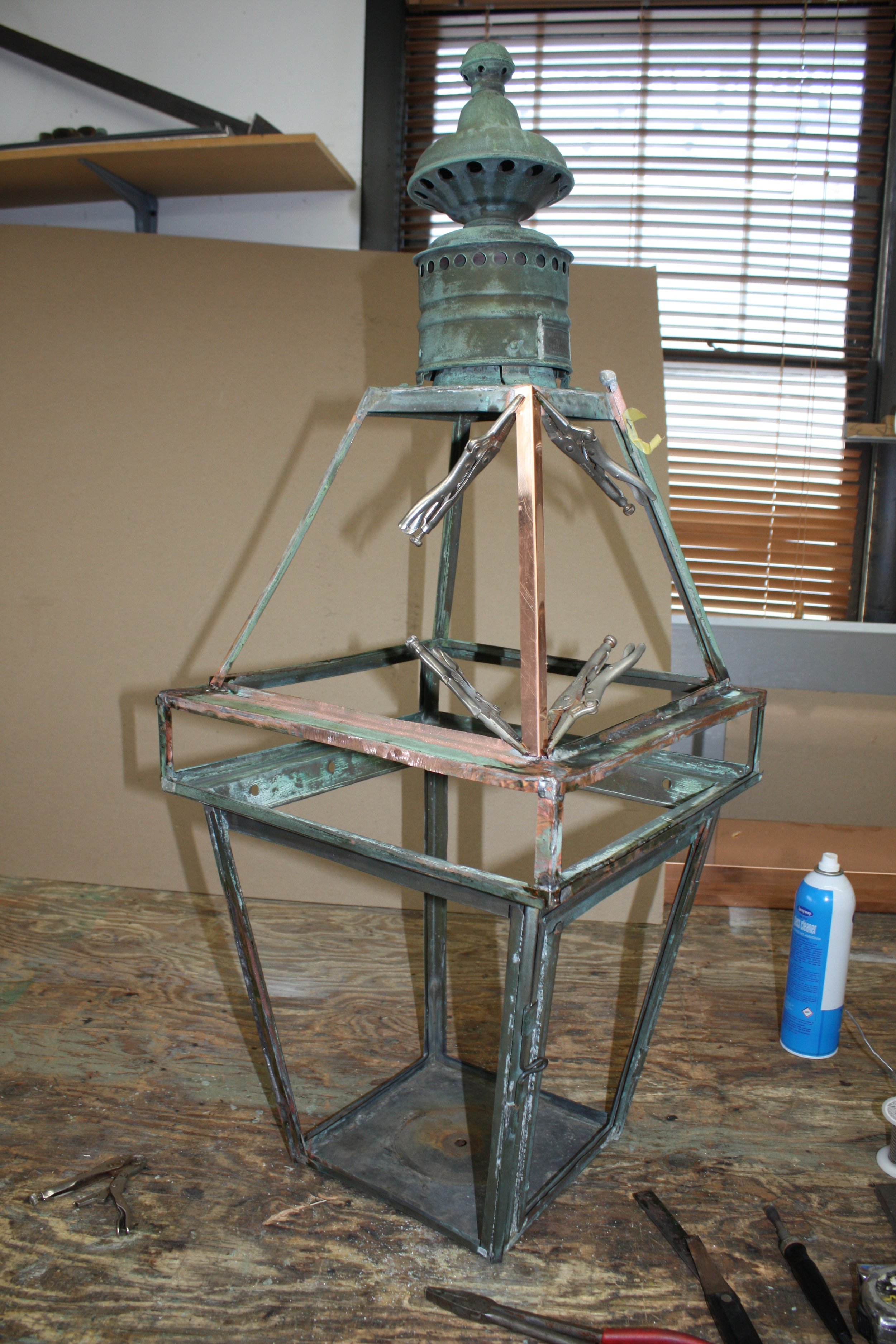
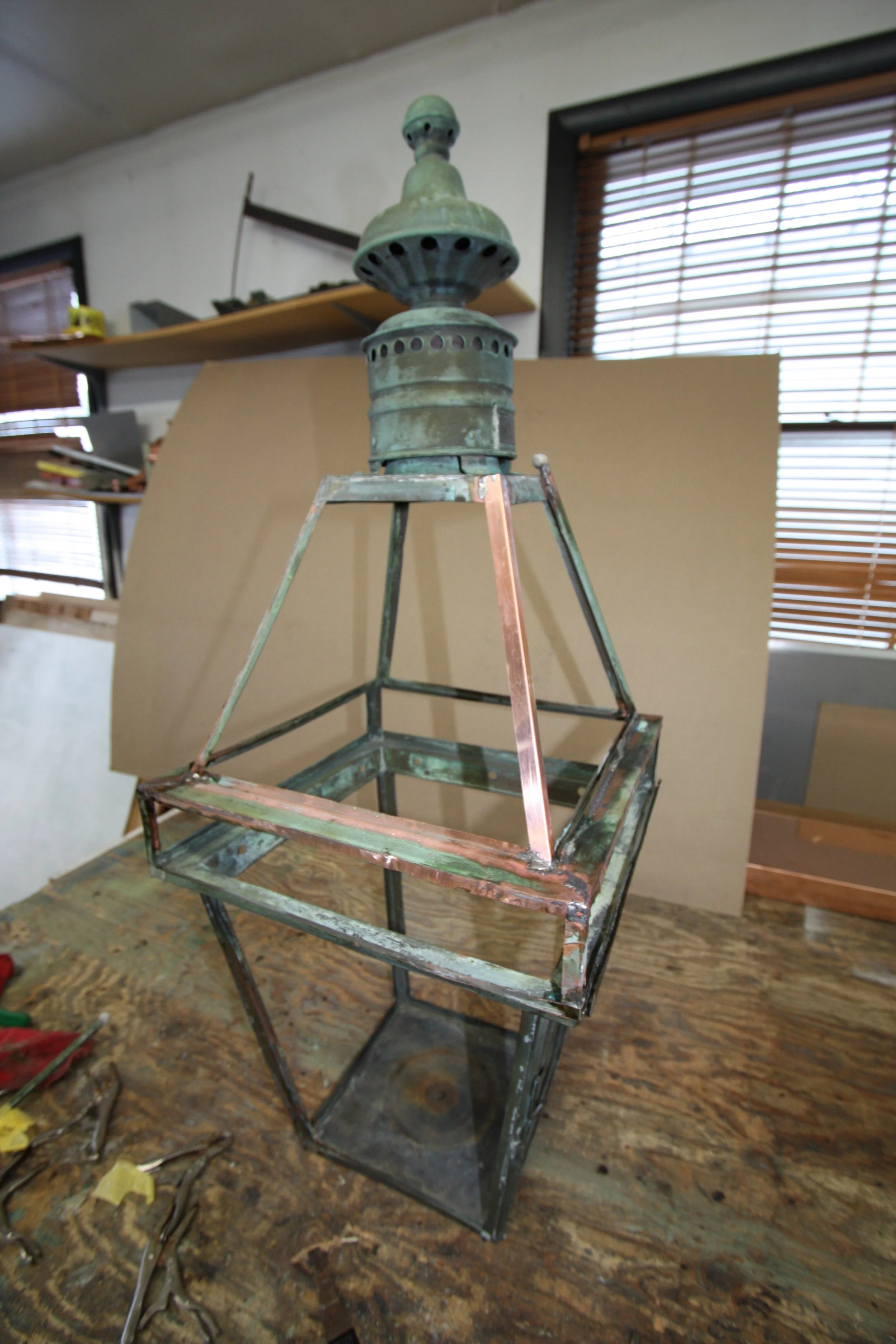
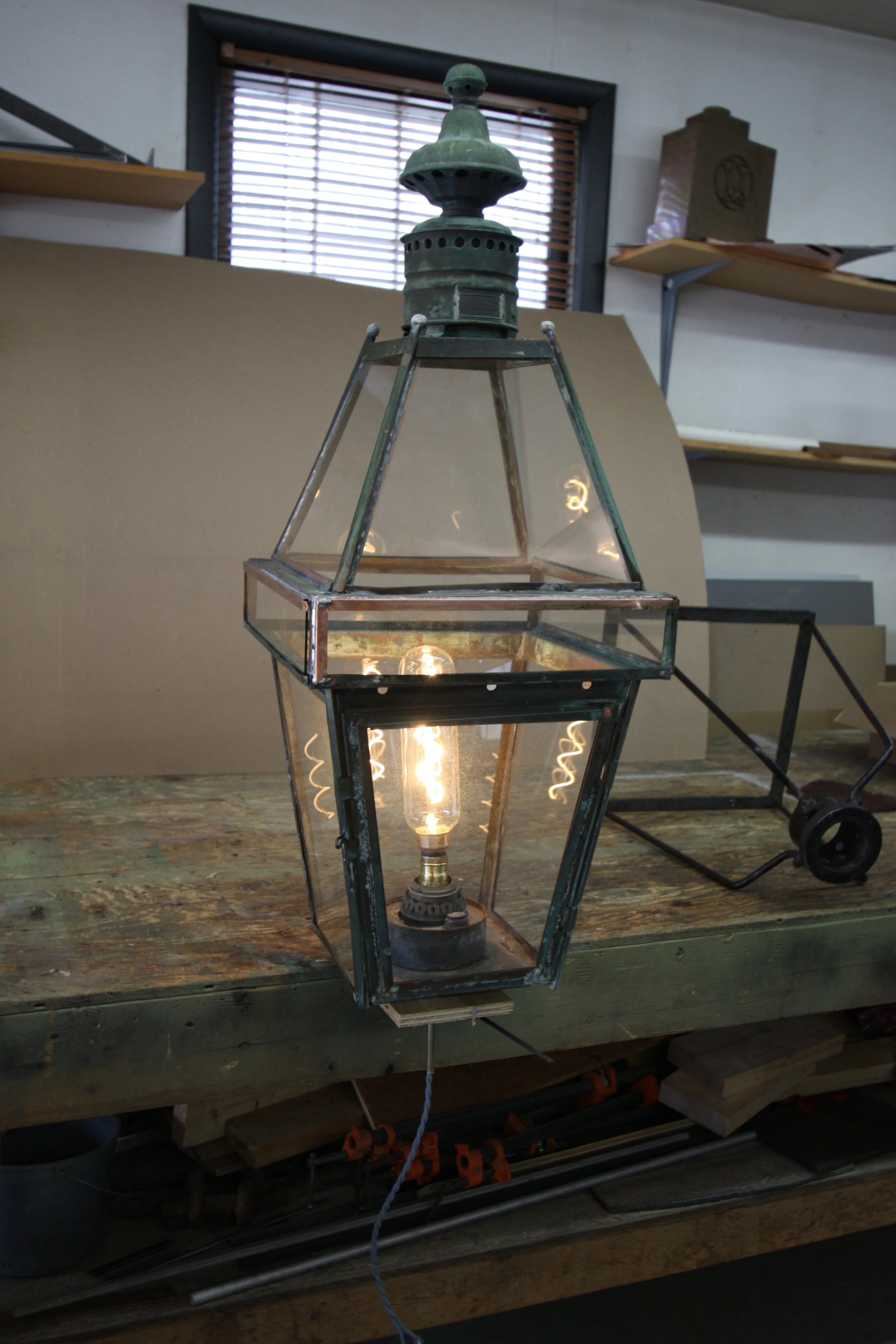
We are grateful and lucky to have a talented local craftsman like Casey to so expertly repair our lantern. It is expensive to properly repair and maintain items in our collection, including those that enhance our grounds. If you’re enjoying this story and appreciate the wonderful work that Casey did, please consider a donation to offset the cost of his good work.
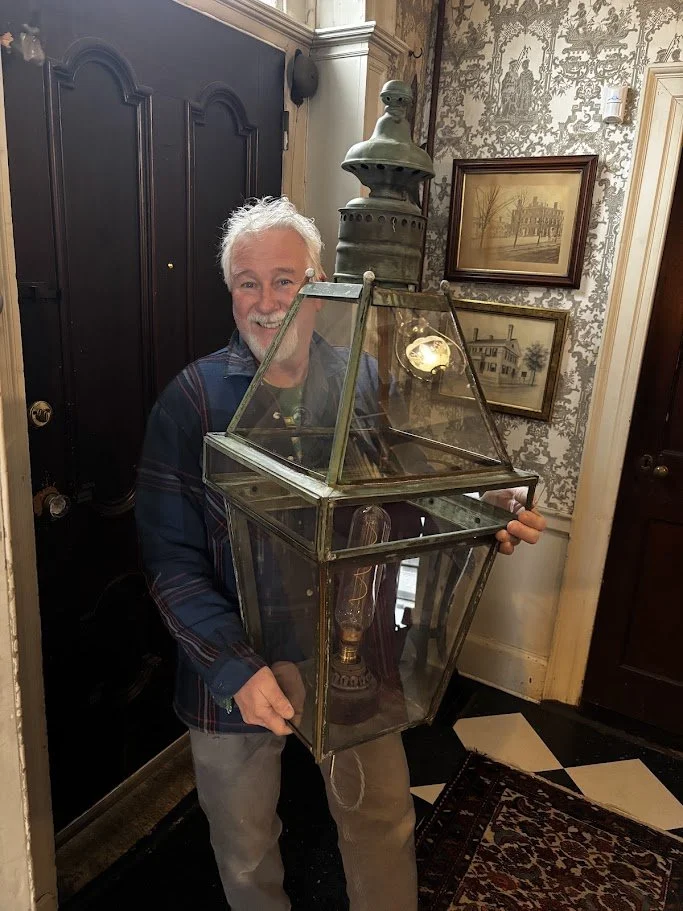
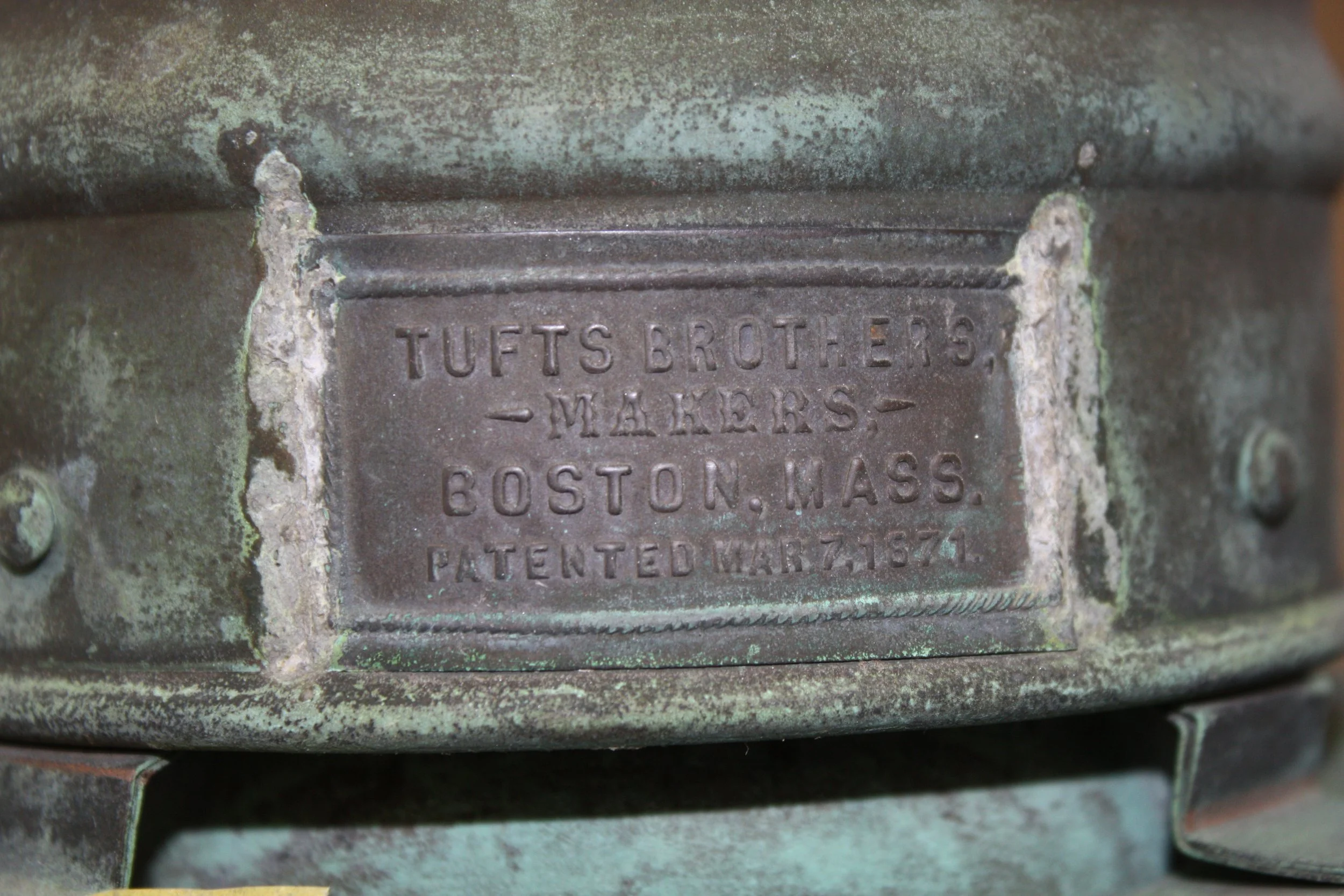
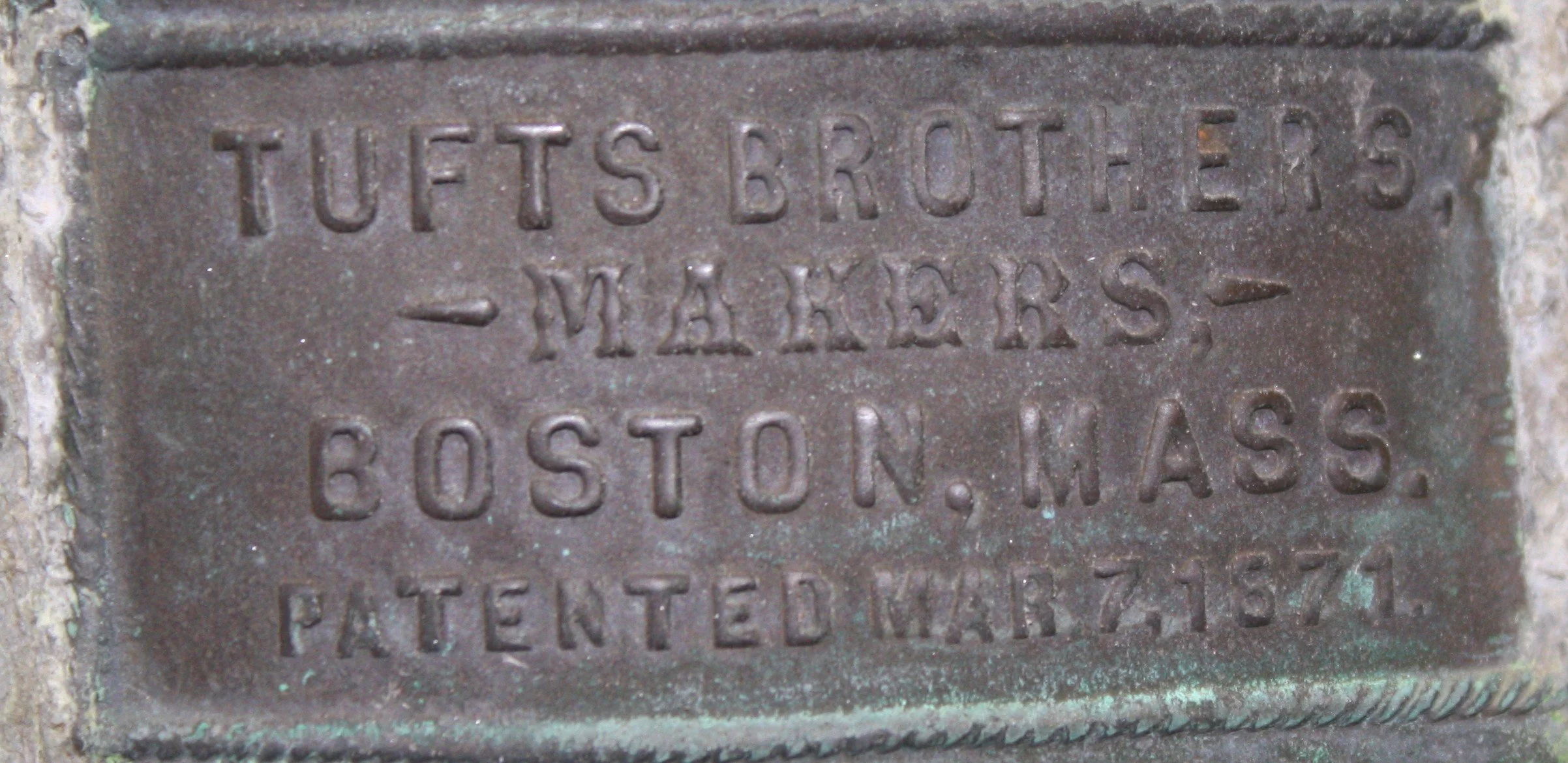
I rooted around my files to see if there was a history of the lantern. Nothing. The second-hand information I gathered suggested that it was an original Newburyport gas streetlight, installed in 2014. With not much to go on (though I hope that this article will unearth new information), and after a cursory glance at the plate on the lamp, I sent if off into Casey’s capable hands.
Here allow me to interject a note about money. I am notoriously parsimonious with other people’s money. My budget is tight, my purse-strings tighter. I also know that there is a cost to caring for historical collections. The only way I would be able to justify the cost of a full restoration of the lantern, when we have so many objects in need of conservation here, is if I could reasonable verify that this was a Newburyport streetlight.
And we were off.
Newburyport was obsessed with gas lighting from the first decade of the 19th century.
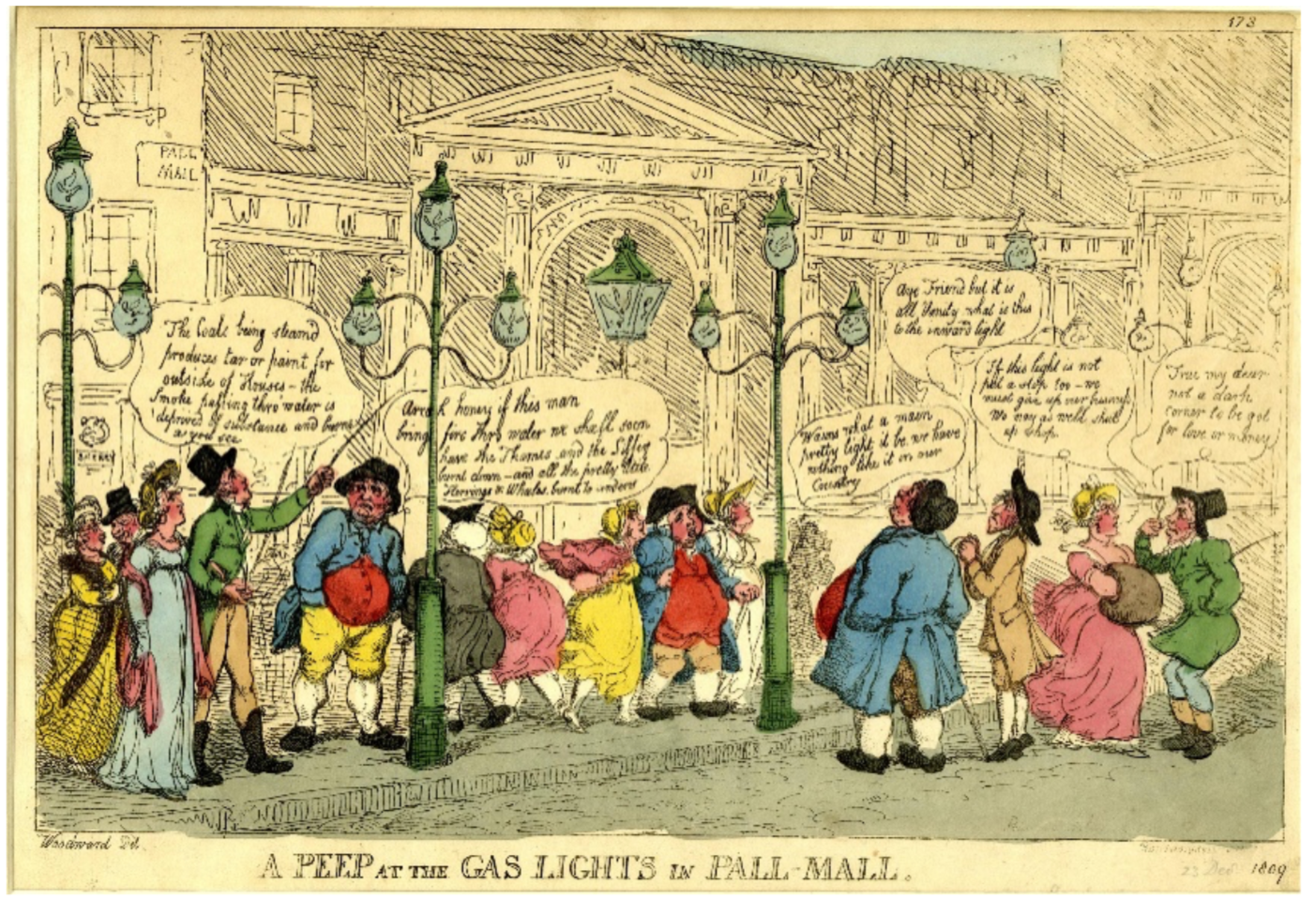
First, Newport, Rhode Island pewterer David Melville invented a gas-powered streetlamp and installed it outside his house. There is some controversy about when this took place, but the street marker claims 1805. I find no report of this in Newburyport’s papers, but when, in June 1807, German inventor Frederick Albert Winsor famously lit one side of Pall Mall in London with gas lamps and made headlines across the world, Newburyport, and the rest of the world took notice. Ultimately, Winsor’s gas works were not a success as the gas produced was pungent and impure.
When, a decade later, Baltimore lit its first public street light, it was big news in Newburyport once again. And here we have: tangent #1. The brain behind illuminating Baltimore with gas was American portraitist Rembrandt Peale, best known for his portraits of George Washington and Thomas Jefferson, but best known in Newburyport as the son of Charles Willson Peale. In 1765, elder Peale, dipping out of Maryland to avoid his creditors, made his way to Newburyport, where he scored commissions for portrait miniatures, but also, according to his unpublished autobiography, was hired to make "emblematic Ensigns" for Newburyport Stamp Act protests. Charles Willson Peale, was the graphic designer of the Sons of Liberty in Newburyport. As I have said before, the connections in this community often boggle my mind. Read more about Peale and his connections to the Museum of Old Newbury’s statue of William Pitt.
Back to Rembrandt Peale, who opened Peale’s Baltimore Museum and Gallery of Fine Arts in Baltimore in 1814 and soon after blew everyone’s mind when he illuminated his artwork with gas lighting. Peale charged an additional fee to see the lights demonstrated at night, and the lines were around the block. The gas in question was made by distilling wood and tar behind the museum.
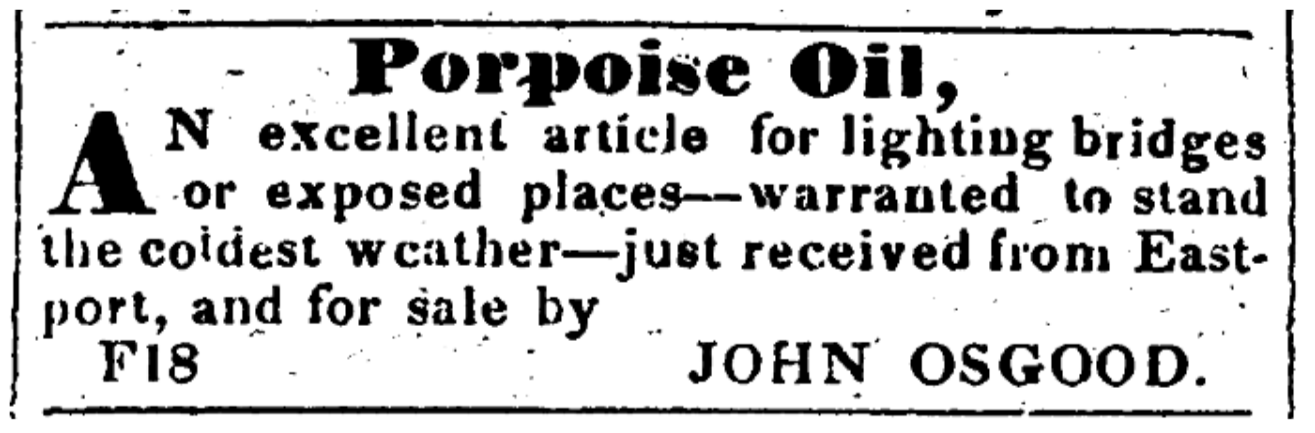
Gas lighting was rapidly replacing oil lamps for street illumination across New England by the 1840’s. Earlier lamps were generally lit with whale and even porpoise oil, which was sold in Newburyport in 1835.
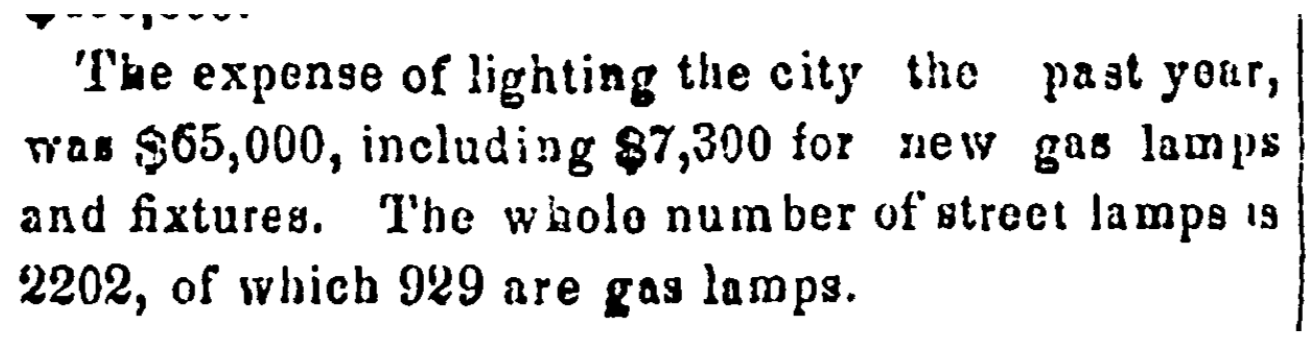
Boston was an early adopter of gas lighting, installing its first gas lamp in the Haymarket in 1828. By 1851, Newburyport was slowly replacing oil streetlights with gas. As of January 10, 1851 the city had purchased “new gas lamps”, and nearly half the city was lit by gas.
The lighting of streets was viewed in the 19th century not just as a matter of wayfinding and convenience, but as a matter of public safety and morality. As in the Pall Mall cartoon above, advocates for enhanced illumination argued that they would discourage misdeeds of all kinds, from prostitution to assault. In 1855, the editor of the Newburyport Herald pressed for more gas lights on State Street to discourage “rowdyism and theft”. Gas lights were far brighter than oil lamps, and so presumably would check all manner of misbehavior. They were also more practical, as piping could provide a steady flow of gas while oil reservoirs needed to be refilled. Supporters argued that the installation of gas lines would cut down on labor costs as well, for an additional public benefit.
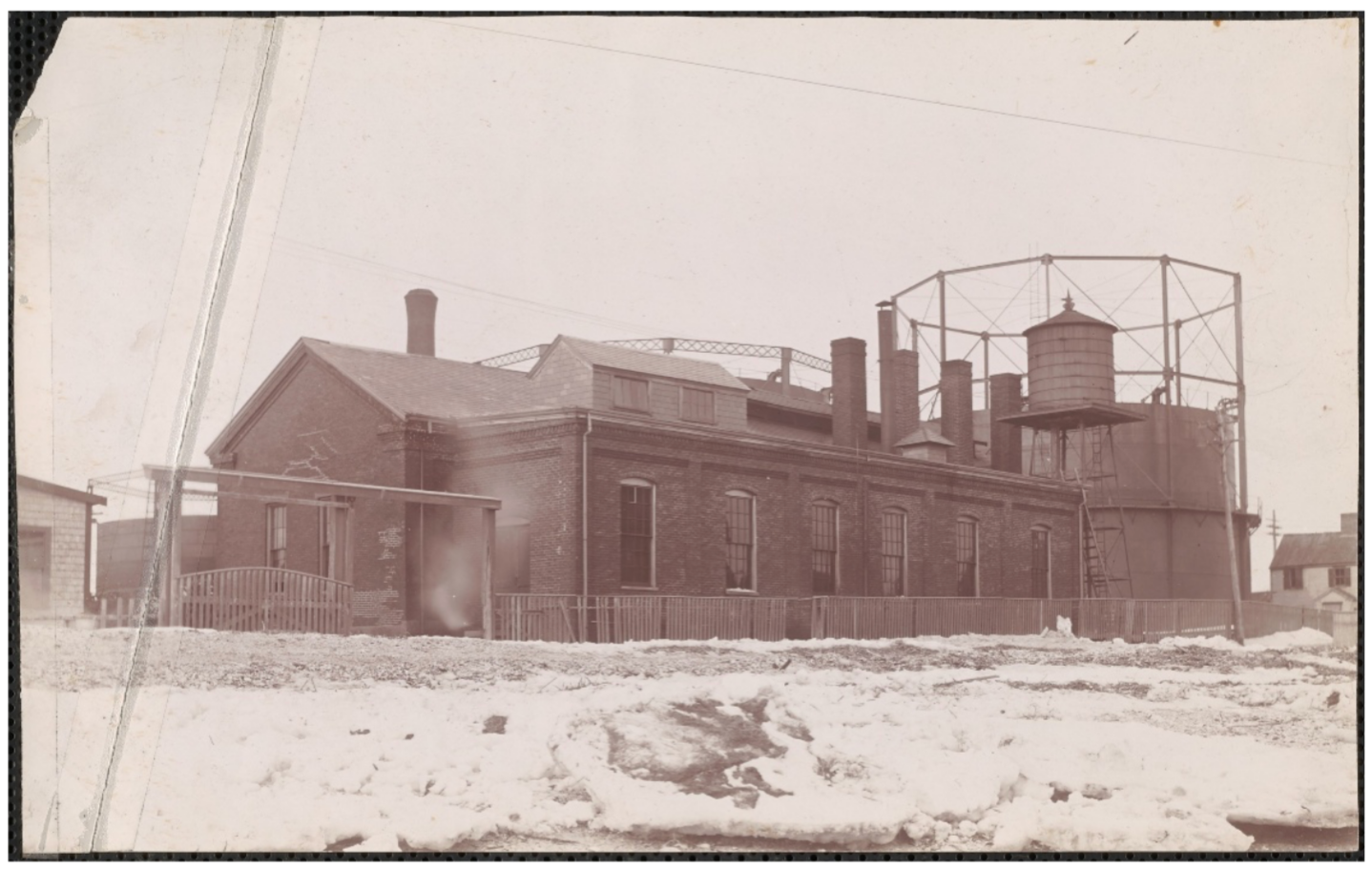
Of course, this gas had to be made locally to be piped out to homes and streets. Enter the Newburyport Gas Company. The Newburyport Gas Company was chartered in 1850, and an 1852 deed confirms its location at the end of Union Street. Gas was made by distilling coal, which was then filtered and pressurized, a process known as “coal gasification” and sent on its way throughout the city.
In 1856, an anonymous letter-writer, who was likely a plant for the gas works, made an impassioned case arguing that gas lights were more effective than police. It is worth quoting here in detail.
[For the Herald.]
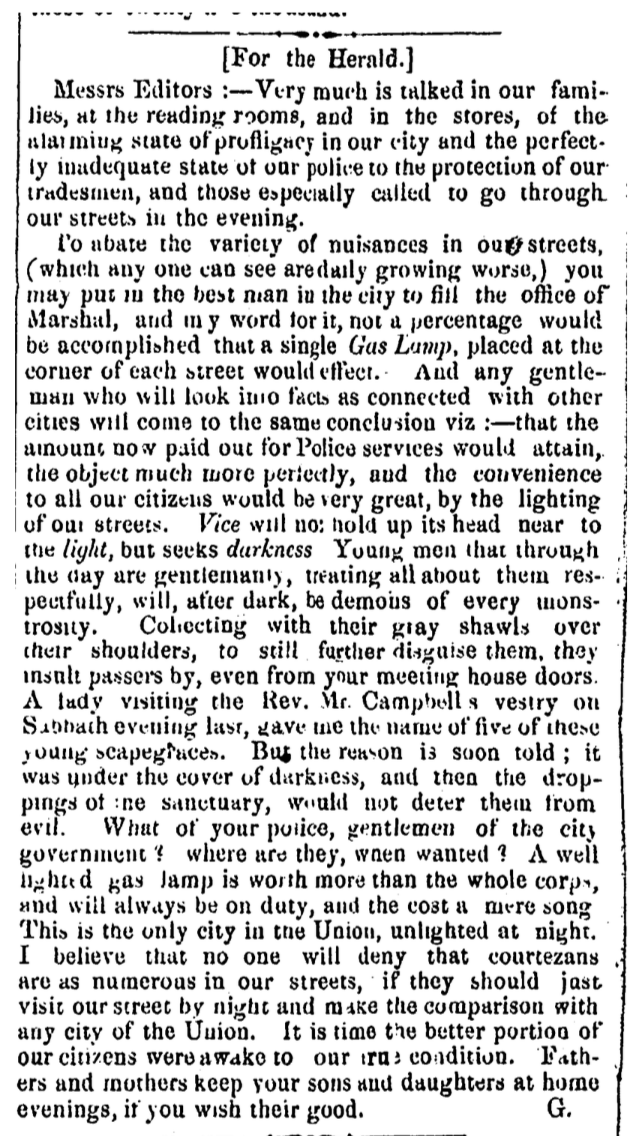
Messrs Editors:—Very much is talked in our families, at the reading rooms, and in the stores, of the alarming state of profligacy in our city and the perfectly inadequate state of our police to the protection of our tradesmen, and those especially called to go through our streets in the evening.
To abate the variety of nuisances in our streets, (which any one can see are daily growing worse,) you may put in the best man in the city to fill the office of Marshal, and my word for it, not a percentage would be accomplished that a single Gas Lamp, placed at the corner of each street would effect. And any gentleman who will look into facts as connected with other cities will come to the same conclusion viz:—that the amount, now paid out for Police services would attain, the object much more perfectly, and the convenience to all our citizens would be very great, by the lighting of our streets. Vice will not hold up its head near to the light, but seeks darkness Young men that through the day are gentlemanly, treating all about them respectfully, will, after dark, be demons of every monstrosity. Collecting with their gray shawls over their shoulders, to still further disguise them, they insult passers by, even from your meeting house doors. A lady visiting the Rev. Mr. Campbell’s vestry on Sabbath evening last, gave me the name of five of these young scapegraces. But the reason is soon told; it was under the cover of darkness, and then the droppings of the sanctuary, would not deter them from evil. What of your police, gentlemen of the city government? where are they, when wanted? A well lighted gas lamp is worth more than the whole corps, and will always be on duty, and the cost a mere song. This is the only city in the Union, unlighted at night. I believe that no one will deny that courtezans are as numerous in our streets, if they should just visit our street by night and make the comparison with any city of the Union. It is time the better portion of our citizens were awake to our true condition. Fathers and mothers keep your sons and daughters at home evenings, if you wish their good.
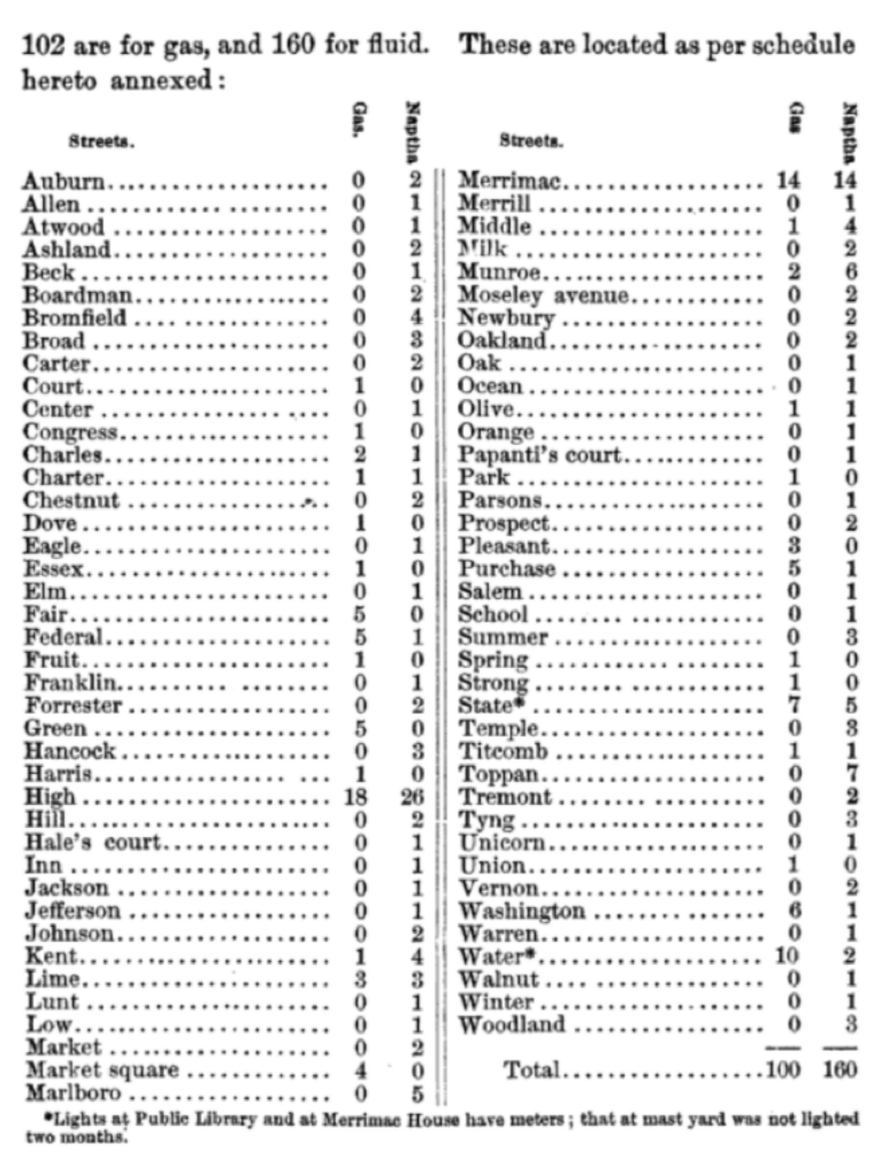
Now back to the case at hand. The lantern that had adorned our Fruit Street stairs was made by Tufts Brothers of Boston and patented in 1871, so certainly not one of the very first gas streetlights in Newburyport. After a good deal of hunting, however, the smoking gun — in the Mayor’s Address and Annual Report of 1873, a detailed list of expenditures related to lighting the streets of Newburyport, and the location of the streetlights and whether they used gas or liquid fuel. The liquid fuel by this time was naptha, a form of kerosene.
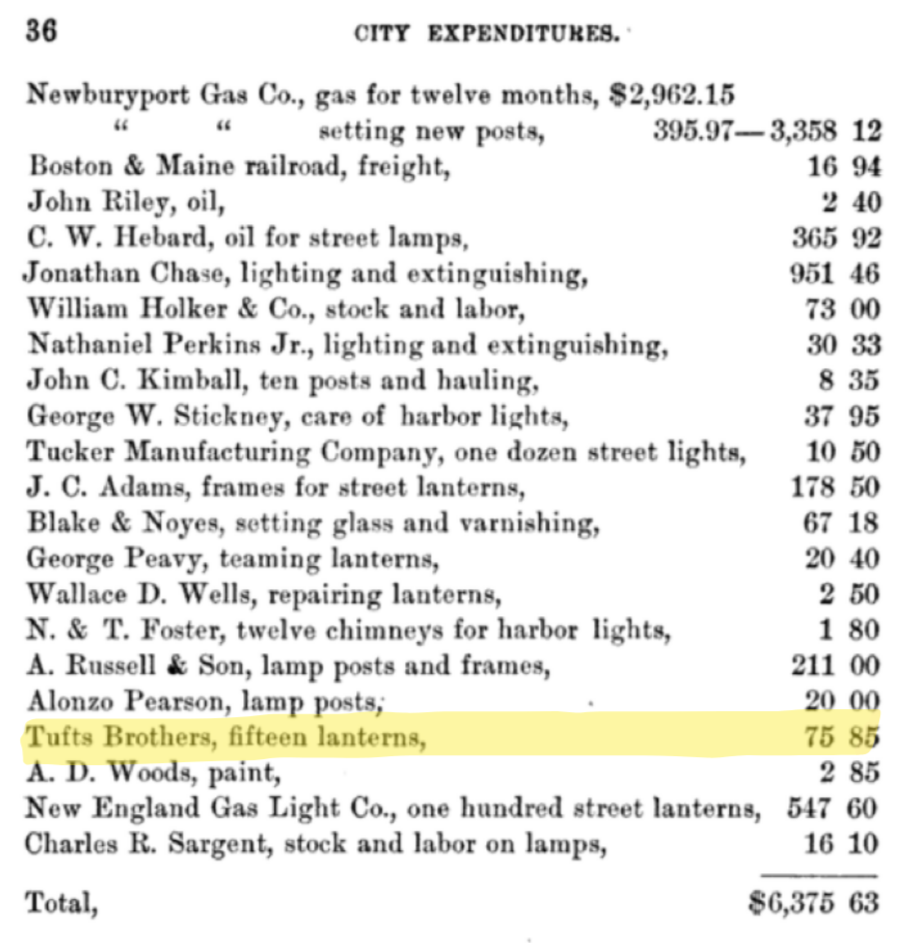
And here, my friends, we find the purchase of 15 Tufts Brothers lanterns, of which our lantern, presumably, was one.
And so, its bona fides in hand, our lantern made its way into the loving care of Casey McHale, owner of Newbury Copper Shop. It was rebuilt, piece by piece, until, 288 days later, Steve Crosby picked it up and brought it back to its rightful place, a welcoming beacon for all the good people of Newburyport who utilize Fruit Street. Though it is now electrified and joined by a host of other lights up and down the street, we would like to credit it with its traditional role as crime-fighter. There hasn’t been an episode of criminal “rowdyism” in quite a while around here, after all.