
Adventures in the Archives: Dr. Perkins and the Tattooed Man
by Bethany Groff Dorau, Executive Director
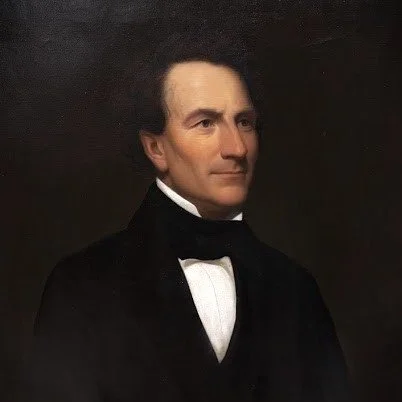
Dr. Henry Coit Perkins by Thomas Bayley Lawson, 1858, Collection of the Museum of Old Newbury
Henry Coit Perkins has become one of my favorite people of late, even though he has been dead since 1873. He is hard-working, humble, joyful, enthusiastic, creative, intelligent, and undeniably handsome. He saw thirty patients a day for most of his career, and walked to all of their homes. He was a vegetarian (as am I), a polymath, whose interests ranged from dinosaur bones to chloroform, and he prided himself on never charging more than his patients could afford.
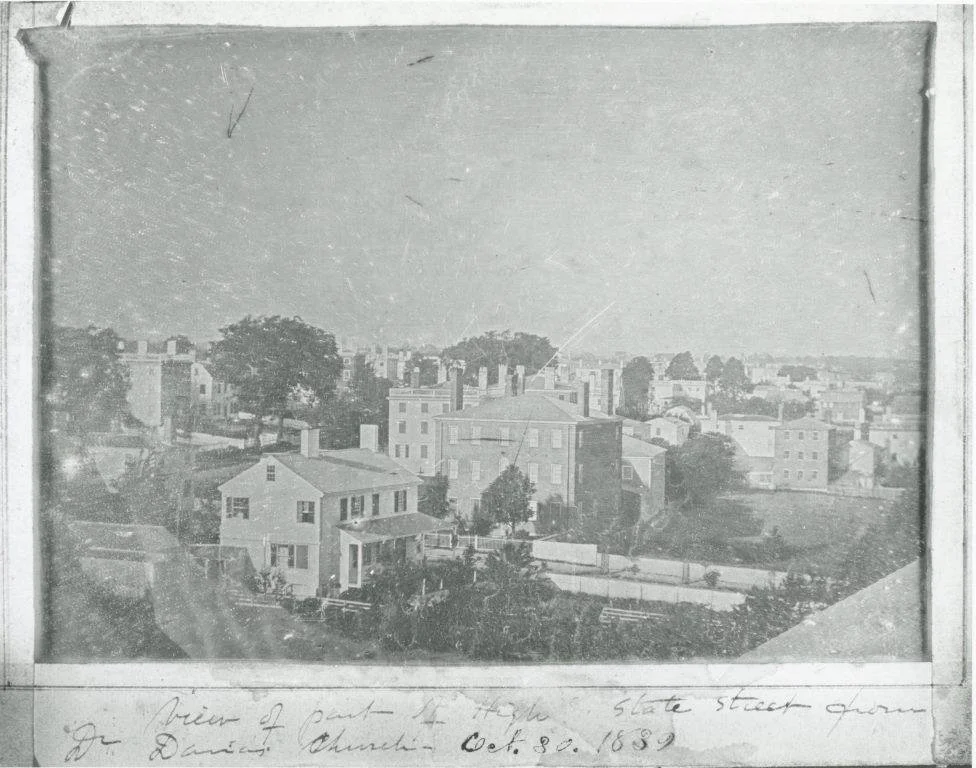
Henry Coit Perkins, View of Part of High and State Street from Dr. Dana’s Church, October 30, 1839. Whole-plate daguerreotype, Collection of the Museum of Old Newbury.
The esteemed Dr. Perkins is best known today for his daguerreotypes, some of the earliest ever taken in the United States. This image, taken from the steeple of the Harris Street Church, no longer in existence, is marked October 30, 1839. The large brick building in the center of the frame is where I am sitting right now - the Cushing House. The smaller brick building to the right in this image - daguerreotypes are reversed, so it is easy to get disoriented - is now the Perkins Art & Research Center, where the good doctor’s papers are held. The original priceless daguerreotypes are held off-site for safe-keeping.
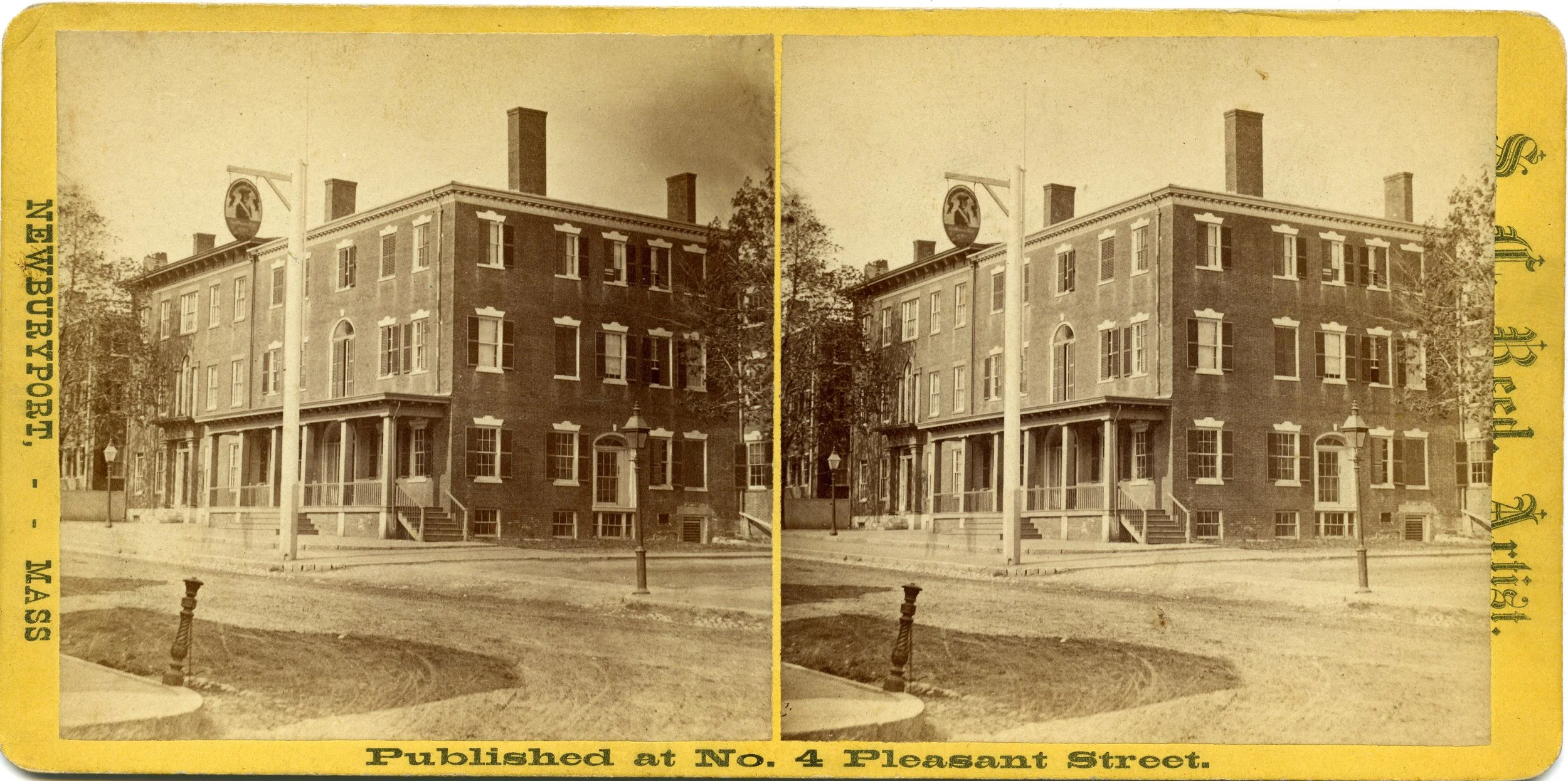
In addition to being the leading physician in Newburyport, Dr. Perkins was also the de facto medical examiner. The Wolfe Tavern above was known as the Merrimac House in 1853 when Dr. Perkins investigated the suspicious deaths of two young women. This stereo-view is from our collection.
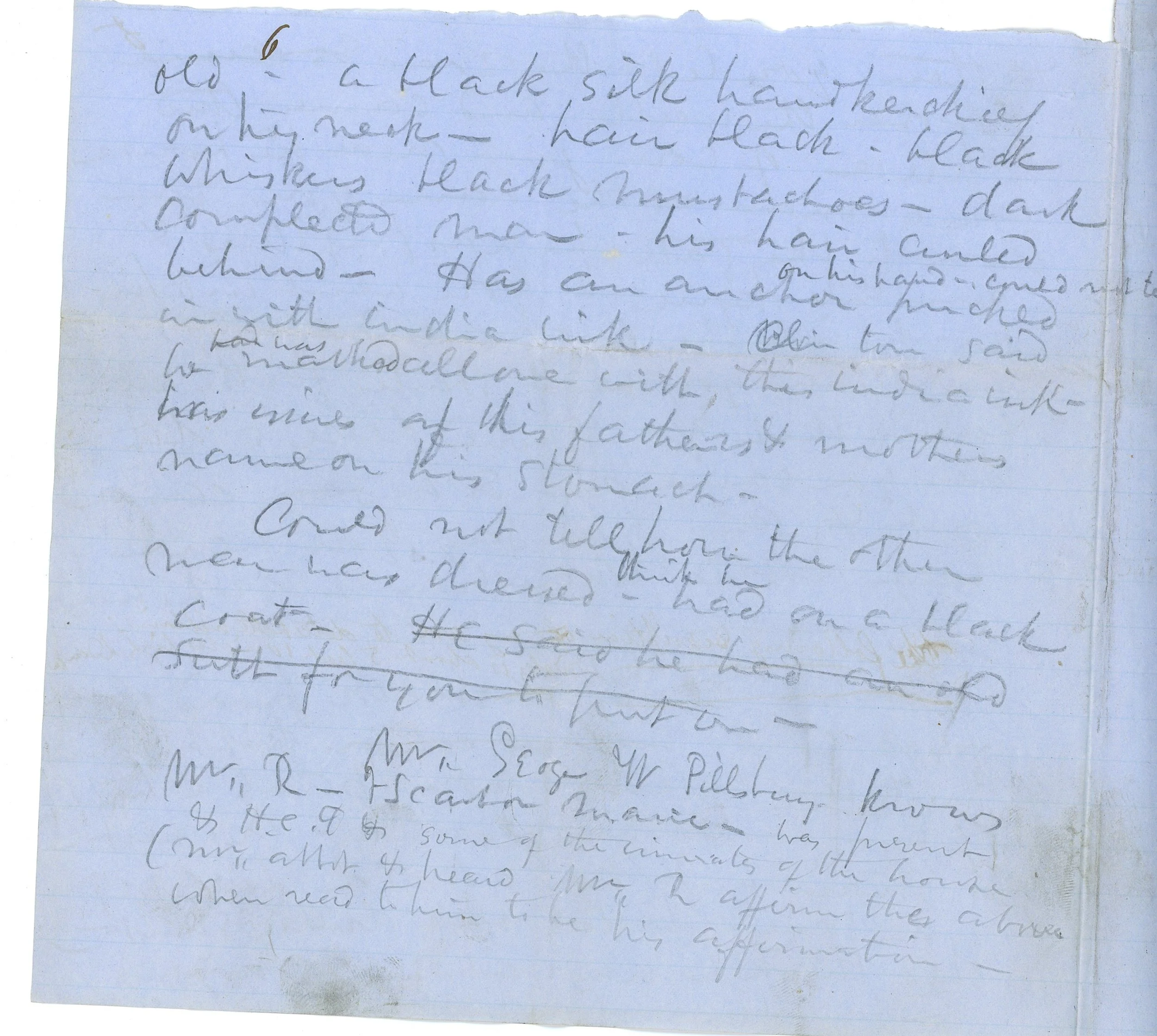
The story of Antoinette Sampier and Elizabeth Burnham (likely not their real names), both found dead in their room at the Merrimac House on December 17, 1853 is a story for another time, but it piqued my interest in another document found among Dr. Perkins papers. This collection of 8 pages of fragmentary notes is almost impossible to read. Upon close examination, it appears to be a collection of statements taken for a criminal investigation in which Dr. Perkins and several others were hunting for a suspect in a brutal attack. Here, as best I can manage it, is a transcription of the page at the top of this story. Never fear - I’ll tell you the whole tale soon - it’s a doozy!
“a black silk handkerchief on his neck — hair black — black whiskers black moustachoes — dark complected man — his hair curled behind — Has an anchor on his hand pricked in with india ink — Clinton said he was marked all over with this india ink — has initials of his fathers & mothers name on his stomach —
Could not tell how the other man was dressed —think he had on a black Coat — He said he had an old suit for you to put on —
Mr. Geo. W. Pillsbury knows Mr. R at Scarboro Maine — was present & H.C.P & some of the inmates of the house ([illegible] & heard Mr. R affirm the above when read to him to be his affirmation —”
This is a fascinating record for many reasons. Henry Coit Perkins, the H.C.P. mentioned above, was actively investigating a horrific crime, just two years after the Merrimac House deaths. For my purposes, however, it is the description of the suspect’s tattoos that are the most captivating. Details like those given above paint a vivid picture of a man whose photograph may never have been taken. This description is also a record of how a man on the margins of society, to put it mildly, decorated his body.
The good doctor may have been handsome, learned, and wise, but it is his description of the man with a big black beard and an anchor tattoo on his hand that will stay with me.
The papers of Henry Coit Perkins are available for study in the Perkins Art & Research Center. Feel free to stop in on Friday and Saturday from 10-2!