
Adventures in The Archives: Webster’s American Spelling Book
By Sharon Spieldenner
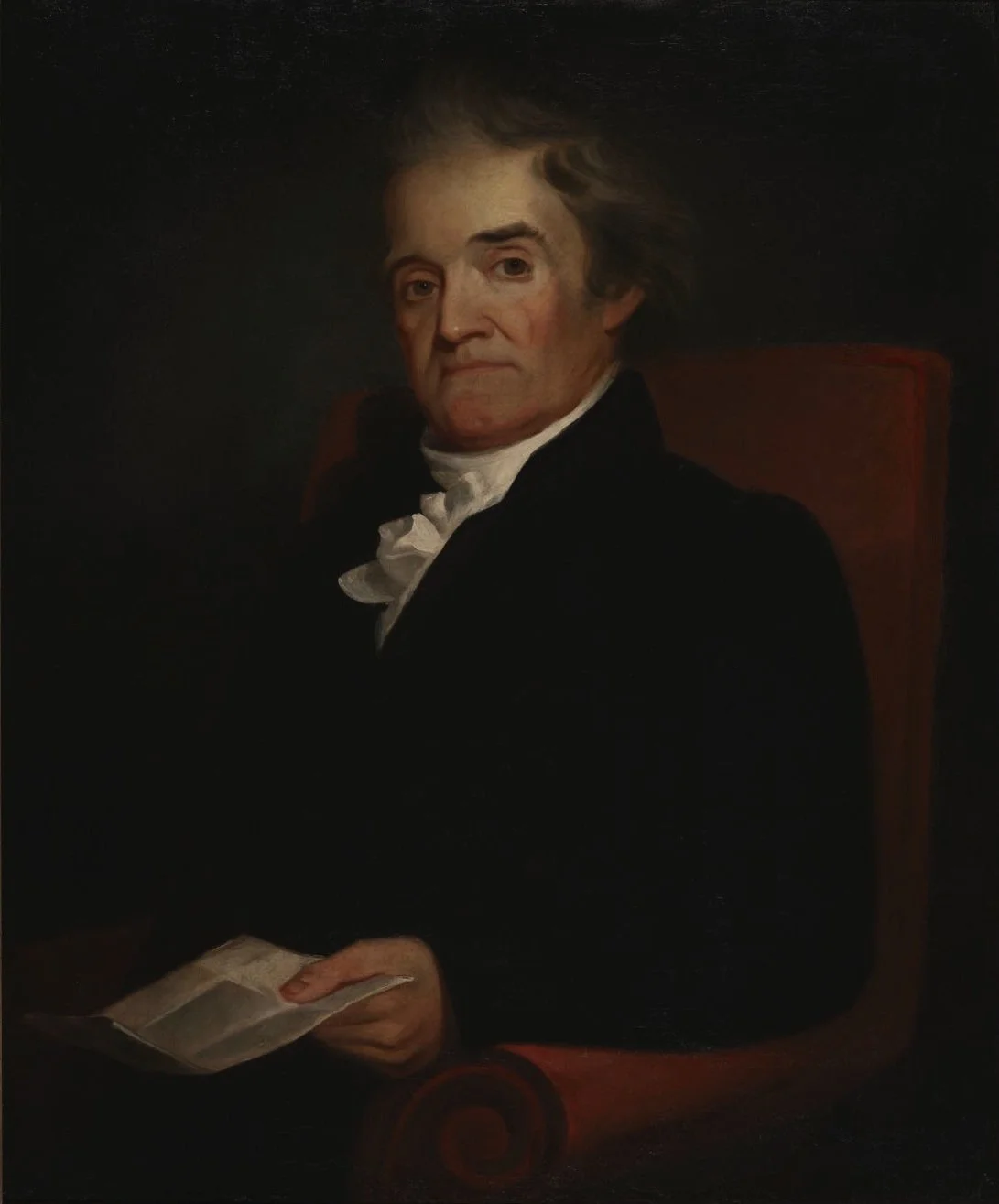
Portrait of Noah Webster, author of The American Spelling Book
The American Spelling Book:
Containing an easy standard of pronunciation
Being the First Part of a
Grammatical Institute of the English Language
to which is now first added, an appendix,
containing a Moral Catechism and a Federal Catechism.
By Noah Webster, Jun., Esquire
9th Edition
Published by Isaiah Thomas and Ebenezer T. Andrews
Faust’s Statue, No. 45, Newbury Street, Boston.
MDCCXCIV [1794]
Before publishing his famous American Dictionary of the English Language in 1828, Noah Webster authored a three-volume educational series for schoolchildren entitled, A Grammatical Institute of the English Language. First published between 1783-1785, the series focused on spelling, grammar and reading and became a cornerstone of early American education.
Noah Webster, was a graduate of Yale College, Class of 1778, and an ardent patriot who strongly supported American democracy. He believed that a common language and a system of public education were essential to uniting the newly independent nation. At the time, New England had numerous dialects and inconsistent spelling practices. Webster sought to establish standardized rules for grammar and pronunciation while promoting a more simplified and phonetic approach to spelling. He eliminated any extraneous letters that were commonly used in the British spellings. He is the reason why Americans spell “color” and not “colour” or “center” instead of “centre.” Apparently, Centre Street in downtown Newburyport only recently received the memo (note the name on a 1851 Newburyport map).
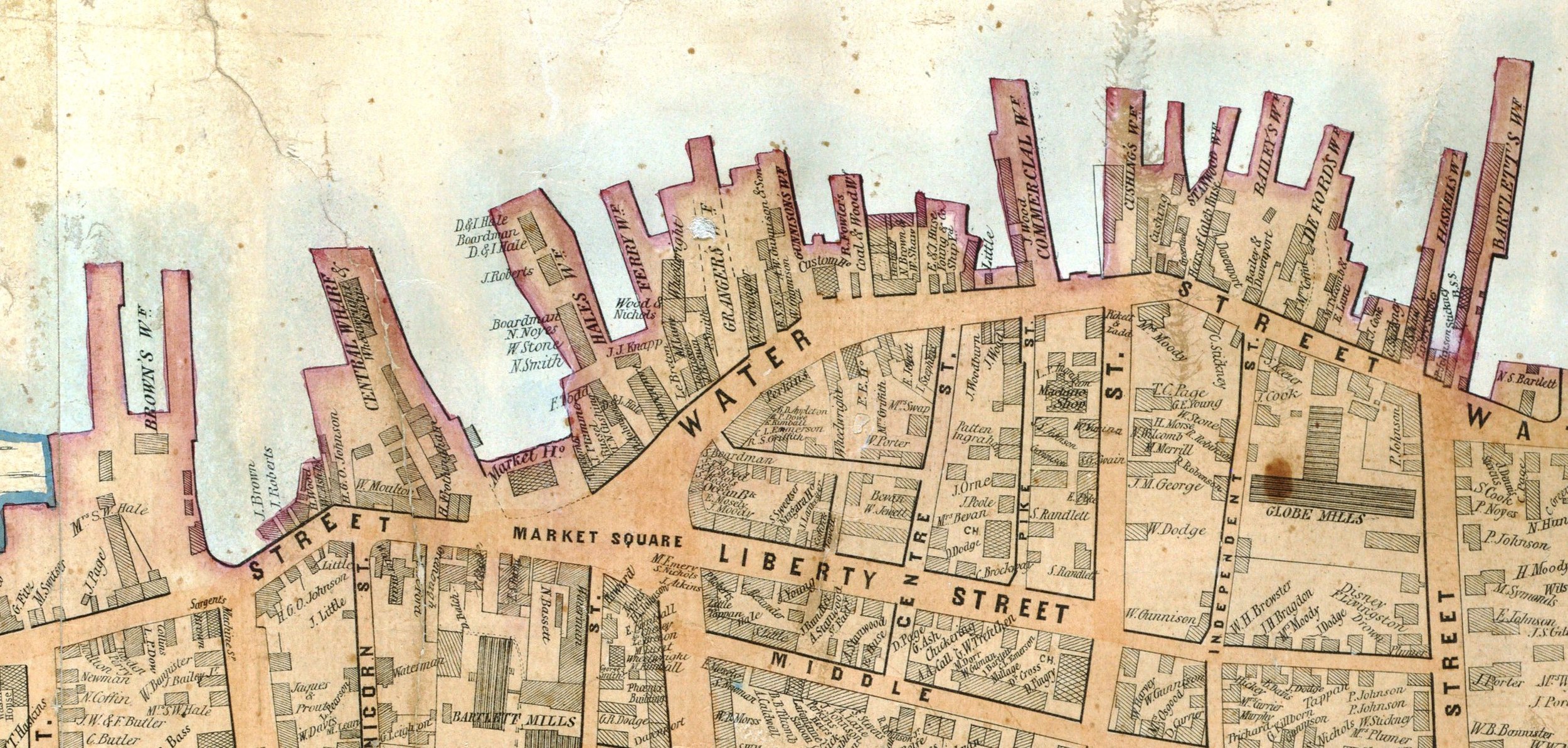
Note “Centre” St. in, well, the center of this 1851 map.
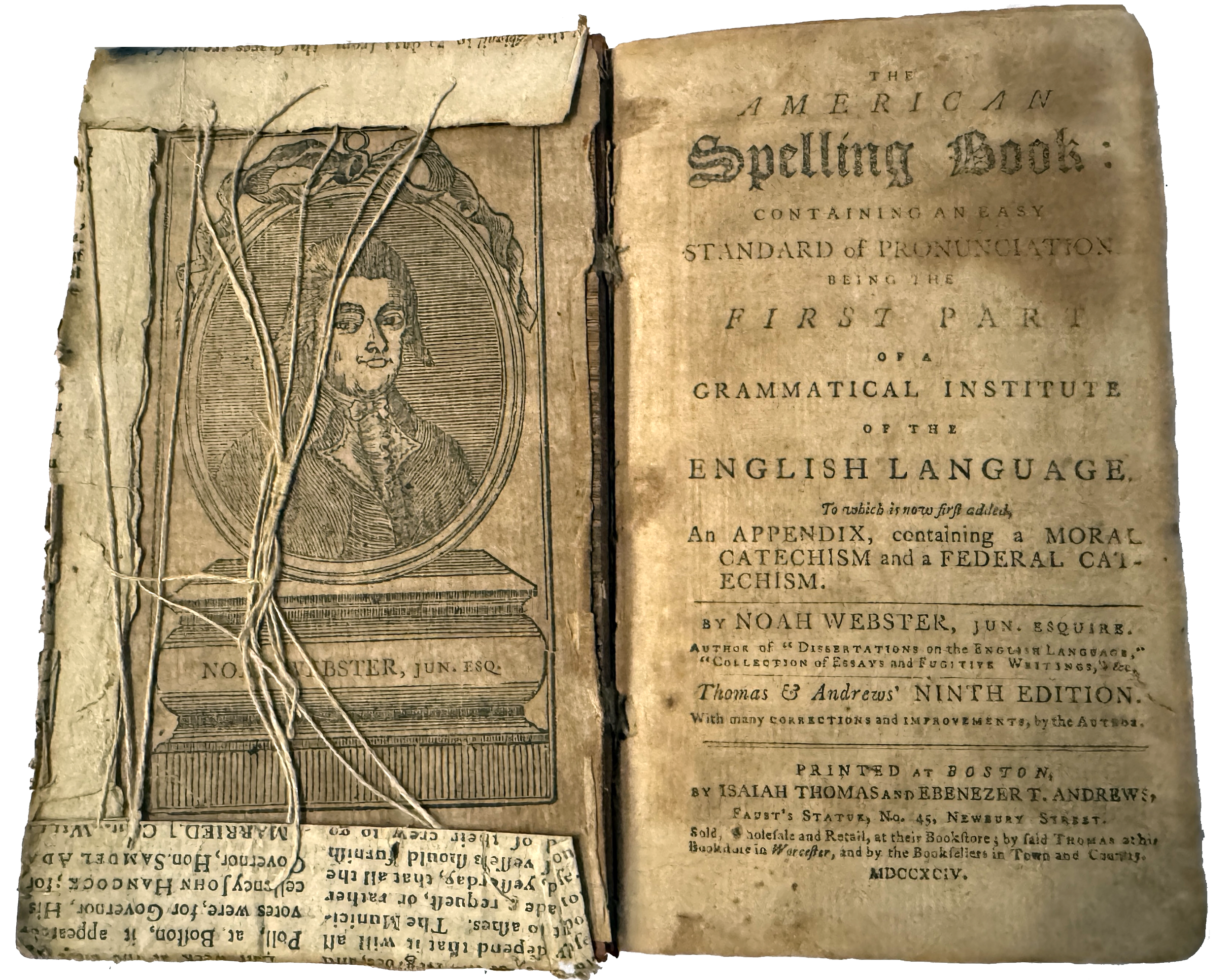
The 1794 Webster’s American Spelling Book, held in The Perkins Art and Research Center.
The Perkins Art & Research Center is fortunate to hold a well-preserved 1794 copy of Webster’s American Spelling Book, also known as the“Blue-Back Speller”because of the color of its original cover. Published on Newbury Street in Boston, this small volume of 156 pages is Part I of Webster’s educational series. It includes a frontispiece portrait of NoahWebster in his mid-thirties and nine finely detailed woodcuts illustrating short fables and moral lessons.
Although the young owner of the book remains unidentified, he or she carefully protected it by wrapping and stitching the original paper-covered boards with a page from an eighteenth-century Newburyport newspaper, the Essex Journal and Massachusetts and New-Hampshire General Advertiser, published byJohn Mycall. The flowery doodles and letters in sepia ink that adorn the endpapers offer as light glimpse into the life of the book’s owner.
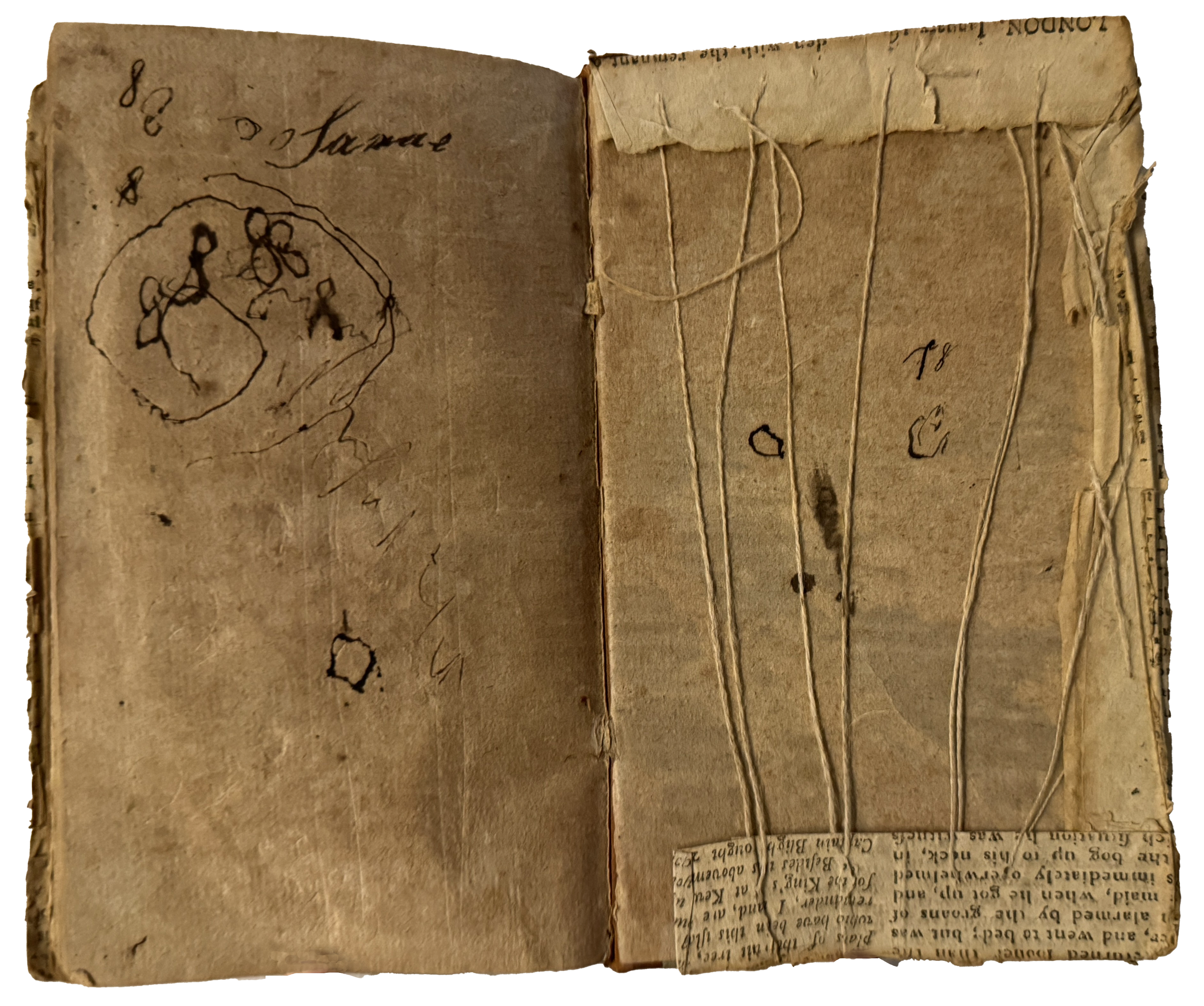
The endpapers of American Spelling Book. The doodles, and efforts to preserve the book with newspaper give a glimpse into the previous owner’s life.
This 1794 edition is particularly significant because it was the first to include a Moral Catechism in the appendix. The catechism introduces themes of moral virtue, humility and ethical behavior. At the very end of the volume is a Federal Catechism, which explores the principles of the Constitution, the roles of federal and state governments, and the responsibilities of citizens in a democratic republic.
Surprisingly, Noah Webster had a connection to Newbury, MA. He married Rebecca Greenleaf(1766–1847), granddaughter of Rev. Daniel Greenleaf (1680–1763), who was born in Newbury. Rev. Greenleaf attended Harvard and later became pastor of the Congregational Church in Yarmouth, Massachusetts, where Rebecca’s father, William Greenleaf, was born. During the Revolutionary War, William served as sheriff of Suffolk County. He gave the first public reading of the Declaration of Independence from the balcony of the Old State House in Boston on July 18, 1776. This fun discovery of a small schoolbook in the Museum of Old Newbury’s collection led us down an unexpected historical rabbit hole, connecting early American education, the evolution of language, local family history and the Revolutionary War. It’s perfect timing as we celebrate the 250th anniversary of our nation.