
A Relic of Marie Antoinette: A Detective Story
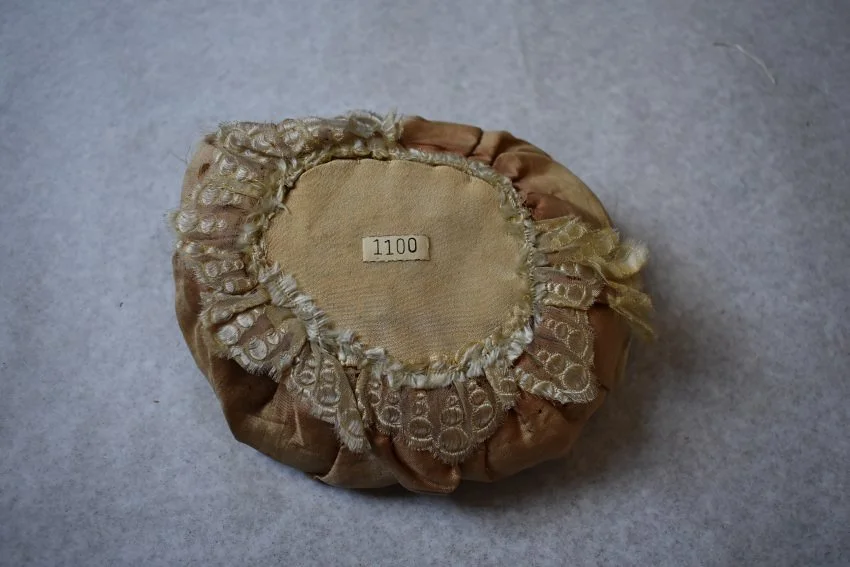
Hello, friends! Today’s celebrity edition of Weird, Wild, Wonderful, we go on a research adventure in search of a connection to…Marie Antoinette.
Months ago, Sierra Gitlin was working on cataloguing some items in the collection and came across the item above, a silk and lace pincushion. The years had not been kind to it - the silk was shattered, the writing on it nearly illegible. Intrigued, she went looking for more information and found a fabulous and frustrating catalogue record. “Pin cushion - made from piece of Marie Antoinette's gown in 1792.” No provenance, of course, except a donor name of “Miss Williams”.
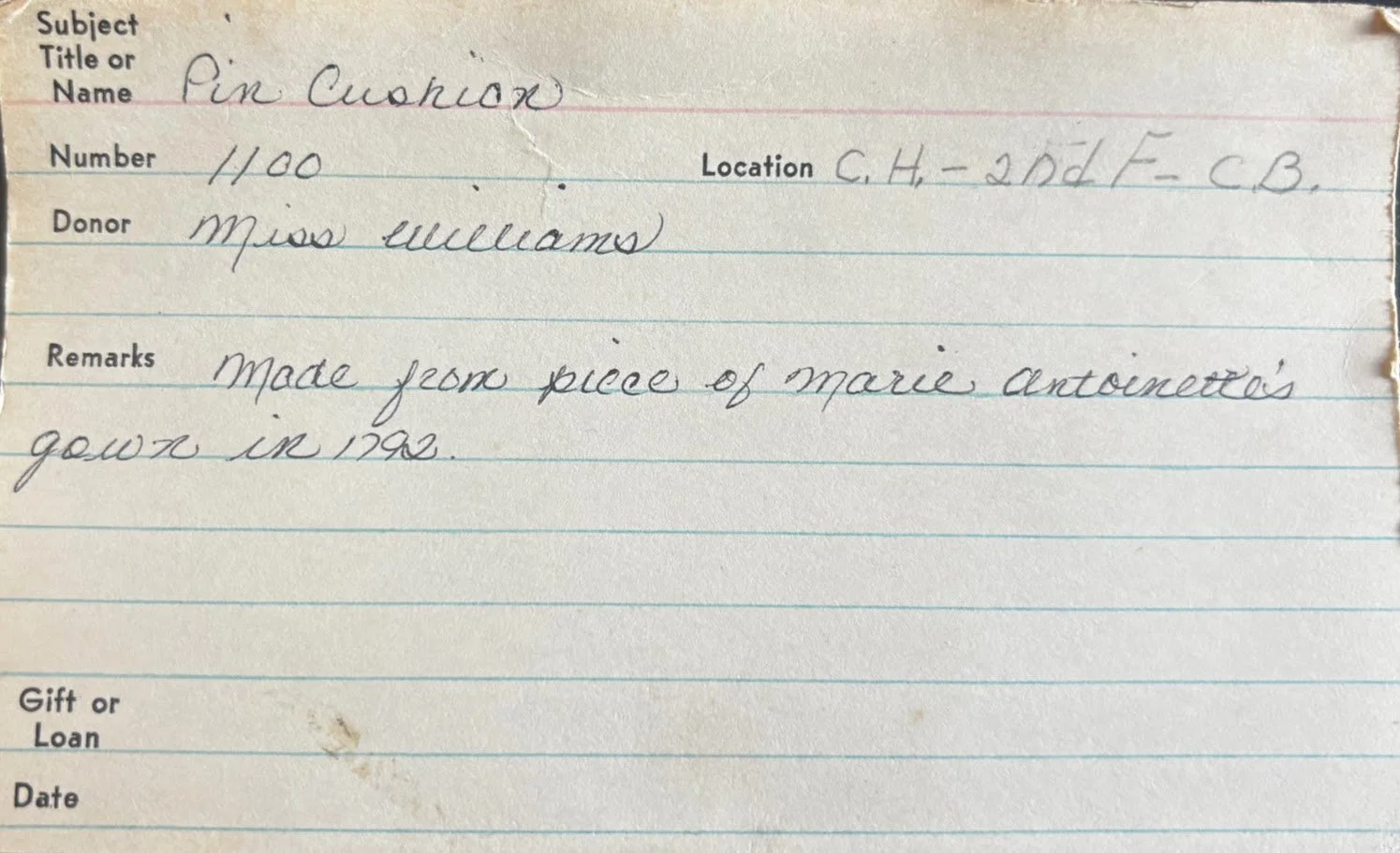
We all twittered, did some cursory research, purchased a special cloche to keep it safe, and then we were all drawn into other things. Though very little was know about this cushion, it made its way into my list of “can you believe it?” items, as in “Can you believe we have an elbow bone/hair jewelry/Timothy Dexter’s hand in our collection?”
I was asked to speak at an event for Lowell’s Boat Shop last night. The format was fun - 20 slides, 20 seconds each. It’s a PechaKucha-style presentation - kind of like speed dating, based on the Japanese desire for brevity and precision in communication. Brevity? Precision? Not my strong suits, but here I was, trying to figure out just how many words I can say in 20 seconds. I gave the organizers a fancy title for my talk, but basically assembled a Show-and-Tell of my favorite things.

This is the event that sent me back to the Marie Antoinette pincushion. Though I am advertised as a “History Maven”, one of the other speakers brought a Great Horned Owl, so I was aware that my presentation had to be pretty interesting to rank.
There are few figures in history more fascinating, and more difficult to encapsulate in 20 seconds, than Marie Antoinette, so this article is a blessed opportunity to share everything I had to leave out.
First, just in case you weren’t paying attention in school (or to recent television shows), a quick recap…
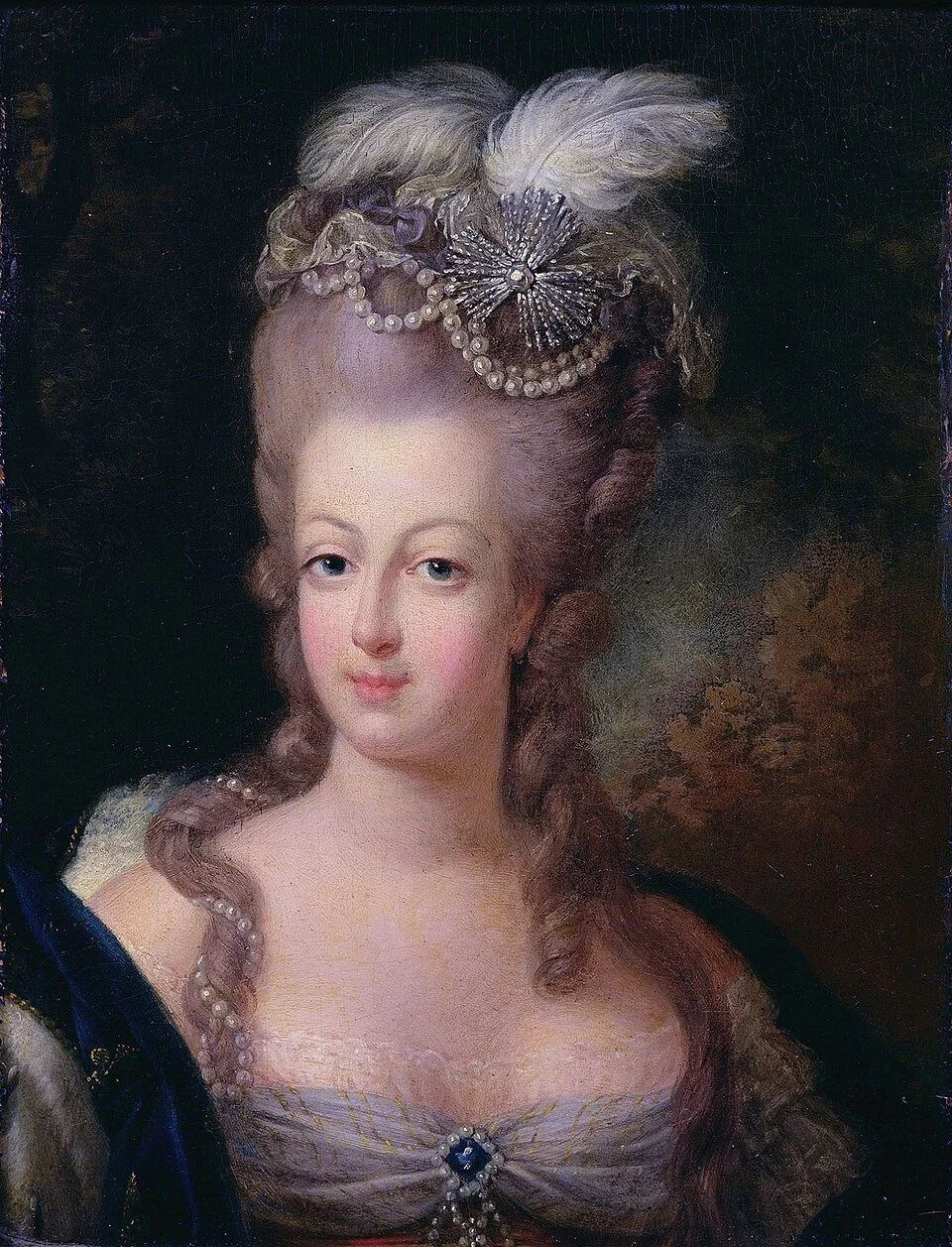
Marie Antoinette was born an Austrian archduchess in Vienna in 1755 and married the future Louis XVI of France in 1770, at age fourteen. When he became king in 1774, she became queen and assumed the starring role in the glittering, exhausting theater of the French court at Versailles. The young queen was famous for fashion, and was
both endlessly fascinating and endlessly criticized. She earned a (mostly undeserved) reputation for financial extravagance amid a financial crisis, and was plagued by scandals, including the Diamond Necklace affair, in which she was not actually involved.
And no, she almost certainly never said, “Let them eat cake.” That line was attached to her later and unfairly helped turn her into a cartoon villain.
Then came the French Revolution. The royal family’s failed escape in 1791 made things much worse, and by 1792 the monarchy had collapsed. Louis XVI was executed in January 1793, and Marie Antoinette was guillotined on October 16, 1793.
The relic collecting began long before Marie Antoinette was executed. Versailles was ransacked in 1789, and some of these items (or parts of them) were later sold as souvenirs.
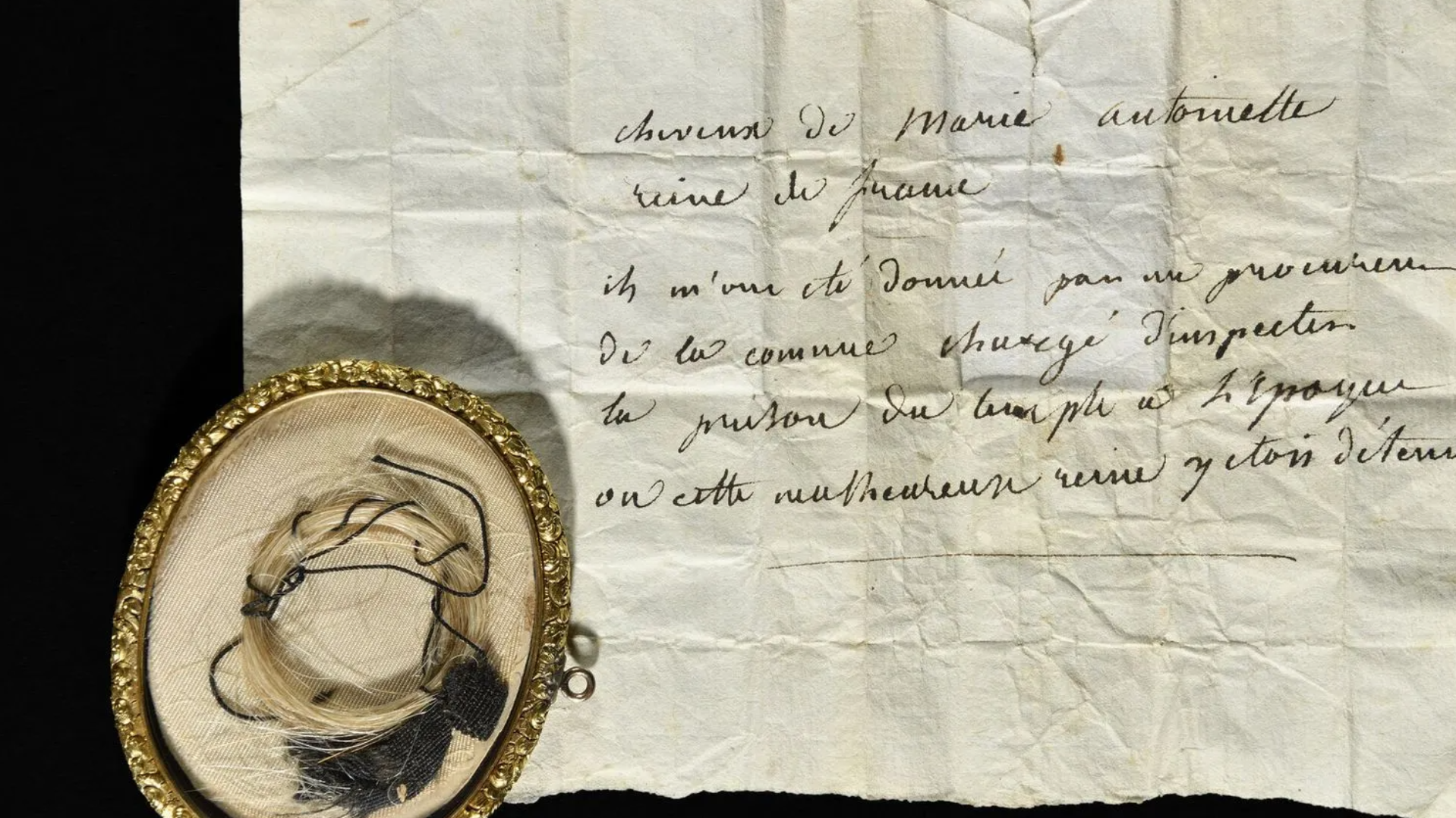
Locks of hair said to belong to the queen have circulated for generations. A recent auction in France featured this locket and a note that reads, “the hair of Marie-Antoinette Queen of France was given to me by a Commune prosecutor in charge of inspections of the Temple prison at the time when this unfortunate woman was detained there”.
Other institutions claim shoes, a bodice, ribbons, a handkerchief. Like most relics, items intimately associated with the body were the most valuable in the wake of Marie Antoinette’s death.
Whether this is or is not an actual piece of a dress belonging to Marie Antoinette is NOT the most important question, in my opinion. Given the scant documentation with this piece, it is of primary importance to me to see if it is even possible that this came from France, and if so, if we can verify that the donor believed it was a piece of the famous queen’s dress.
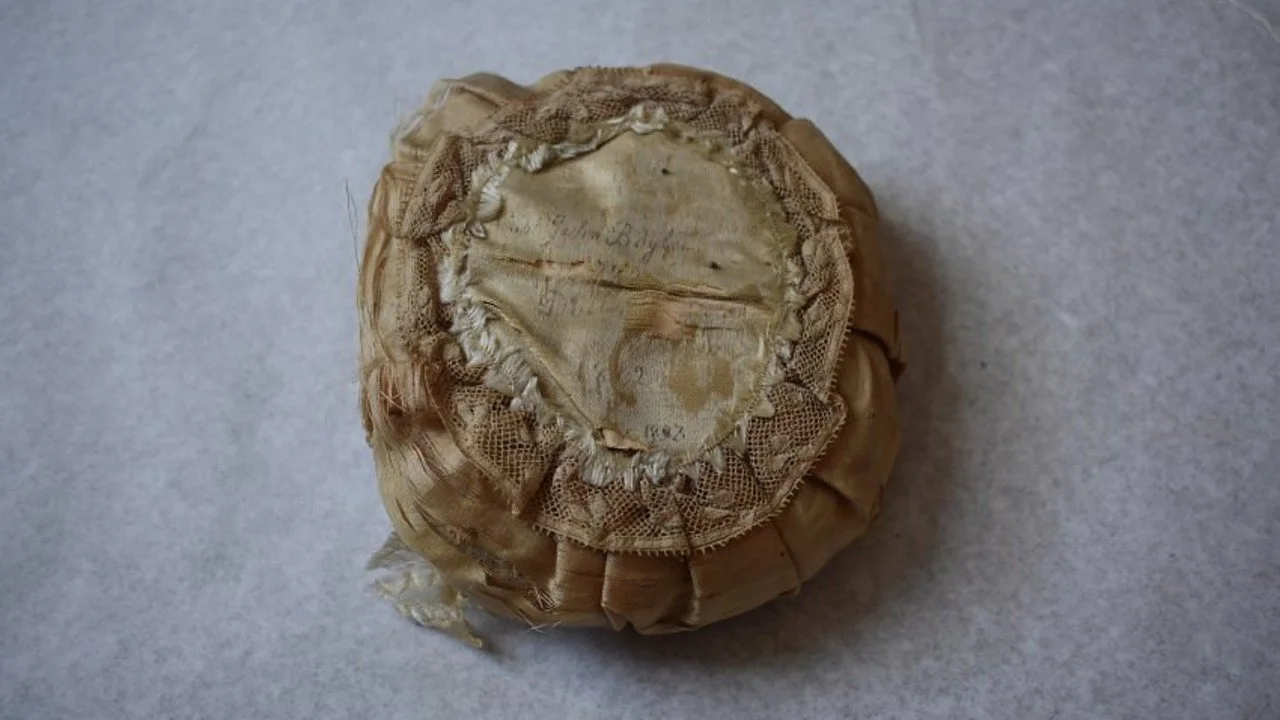
I ransacked the collections files, folders, card catalogue, online database, and archive (with help). Nothing. I decided to start with the name that is most legible on the cushion. It had been listed as “Capt. John Boy/Badly/Bayley” in one record. That was not much help, though there was a Captain John Bayley. The dates just didn’t work. I also early put aside the later date of 1892 on the artifact, assuming that it was commemorating a gift made of the object, then already 100 years old. I am prepared to be wrong about that, but a later date did not seem to work with any of the other information.
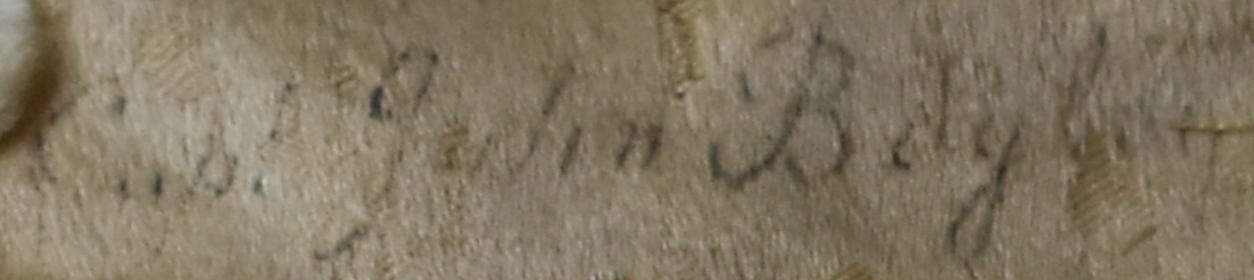
Upon further inspection, and a whole lot of squinting and magnifying glasses, I tried Captain John Bagley on for size.
Voila. Captain John Bagley, born in Newbury in 1765, died in Amesbury in 1826. I went into the trusty family tree and there he was - my 3rd cousin 2x removed.
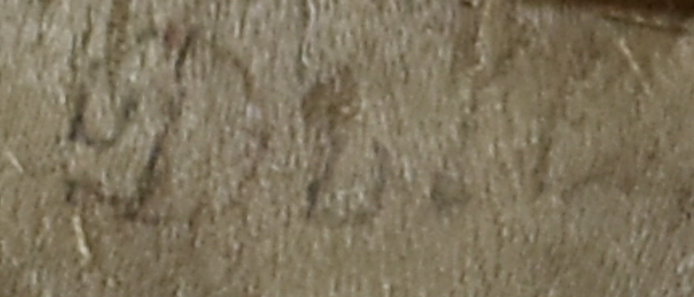
Another clue…Boll? Doll? We finally settled on Dolly.
Back to the family tree. There, gods be praised, the smoking gun, or at least another clue. Captain John Bagley’s daughter, DOLLY, born in 1792, the same year that the card catalogue lists as when the pincushion was made, and one year before the execution of Marie Antoinette.
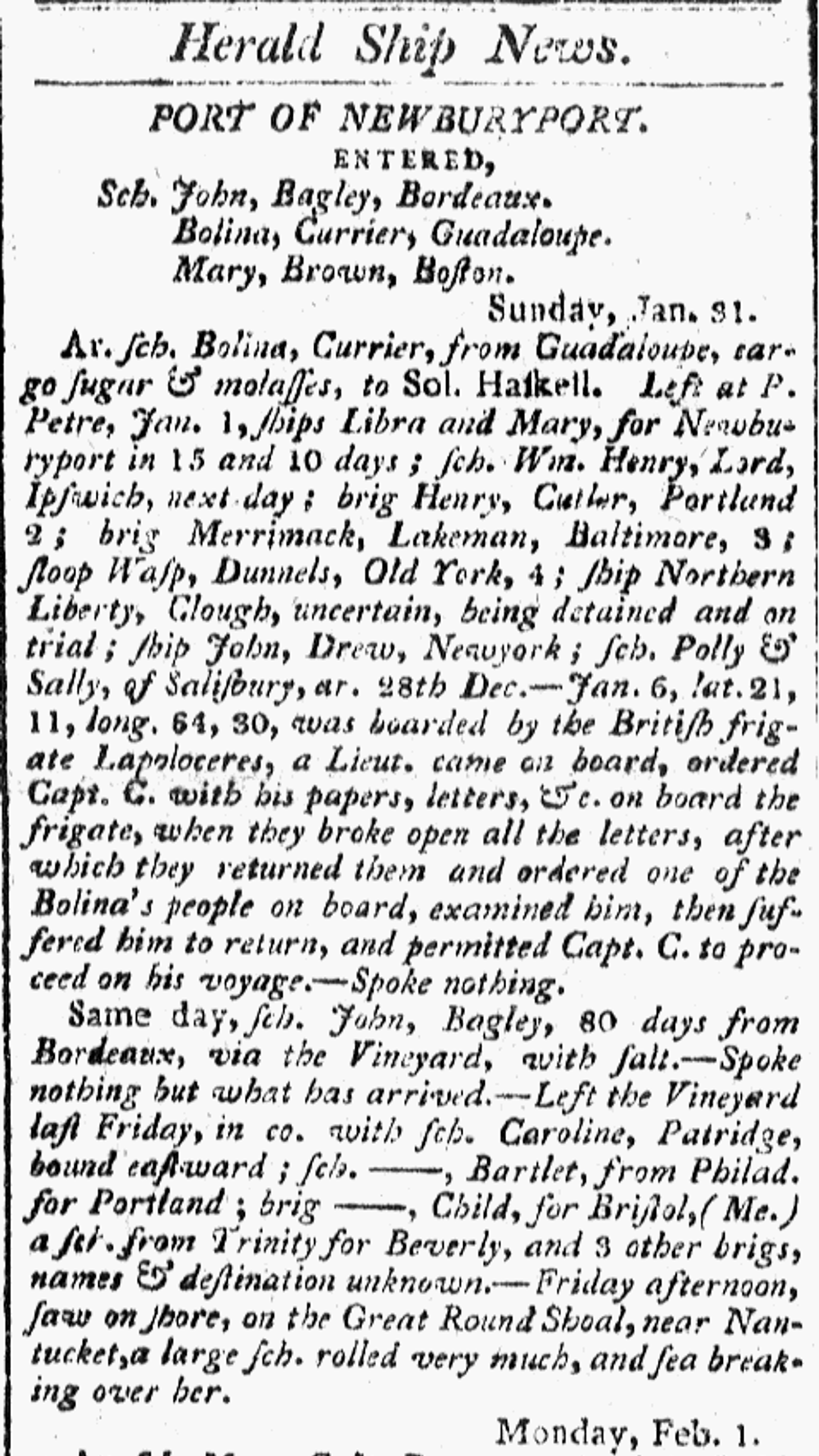
The next step? Place John Bagley in France. It would be wonderful to find a record from a 1792 voyage (I’m working on it), but here is a shipping record that puts him in Bordeaux in 1807, returning to Newburyport in 1808 with a load of salt.
I’ll take it, and I have just made an appointment at the Phillips Library and look at their shipping records, which list John Bagley letters in their collection.
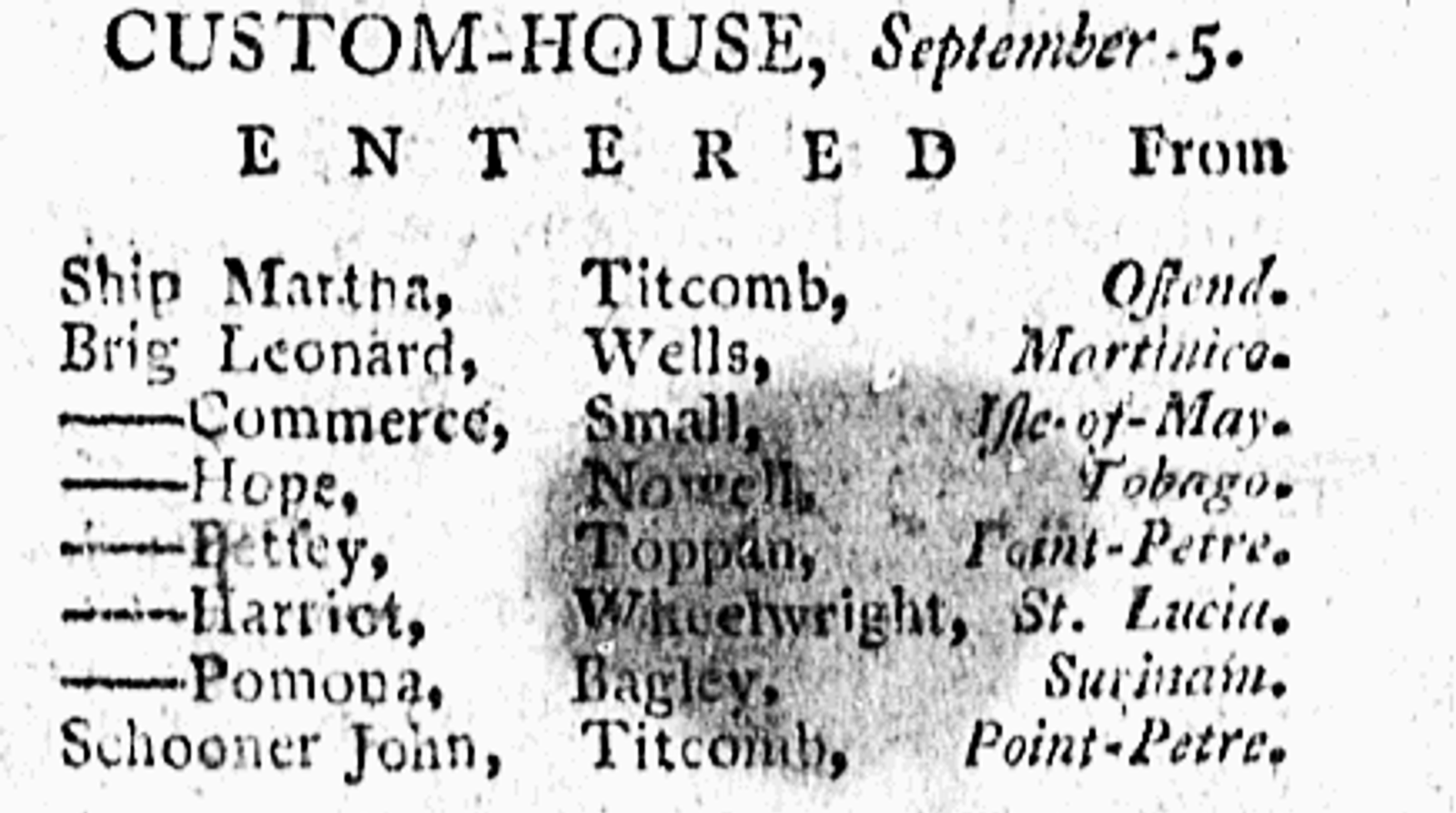
On September 5, 1792, Marie Antoinette was still alive, and Captain John Bagley was returning home from Surinam. His daughter Dolly was born on April 14, so he was almost certainly at sea.
Captain Bagley seems to have been away a great deal in the years between 1790 and 1810, as there are numerous letters waiting for him, and the masters of other vessels reported “speaking” him, or catching up with him at sea.

My next research destination would generally be the records of the Newburyport Marine Society, as there are occasionally lengthy descriptions of voyages. Voila! He became a member in 1793.

Unfortunately, he was a terrible member. He was booted out two years later. No records there - an extra blow because the Marine Society sometimes listed interesting objects brought back by their members.
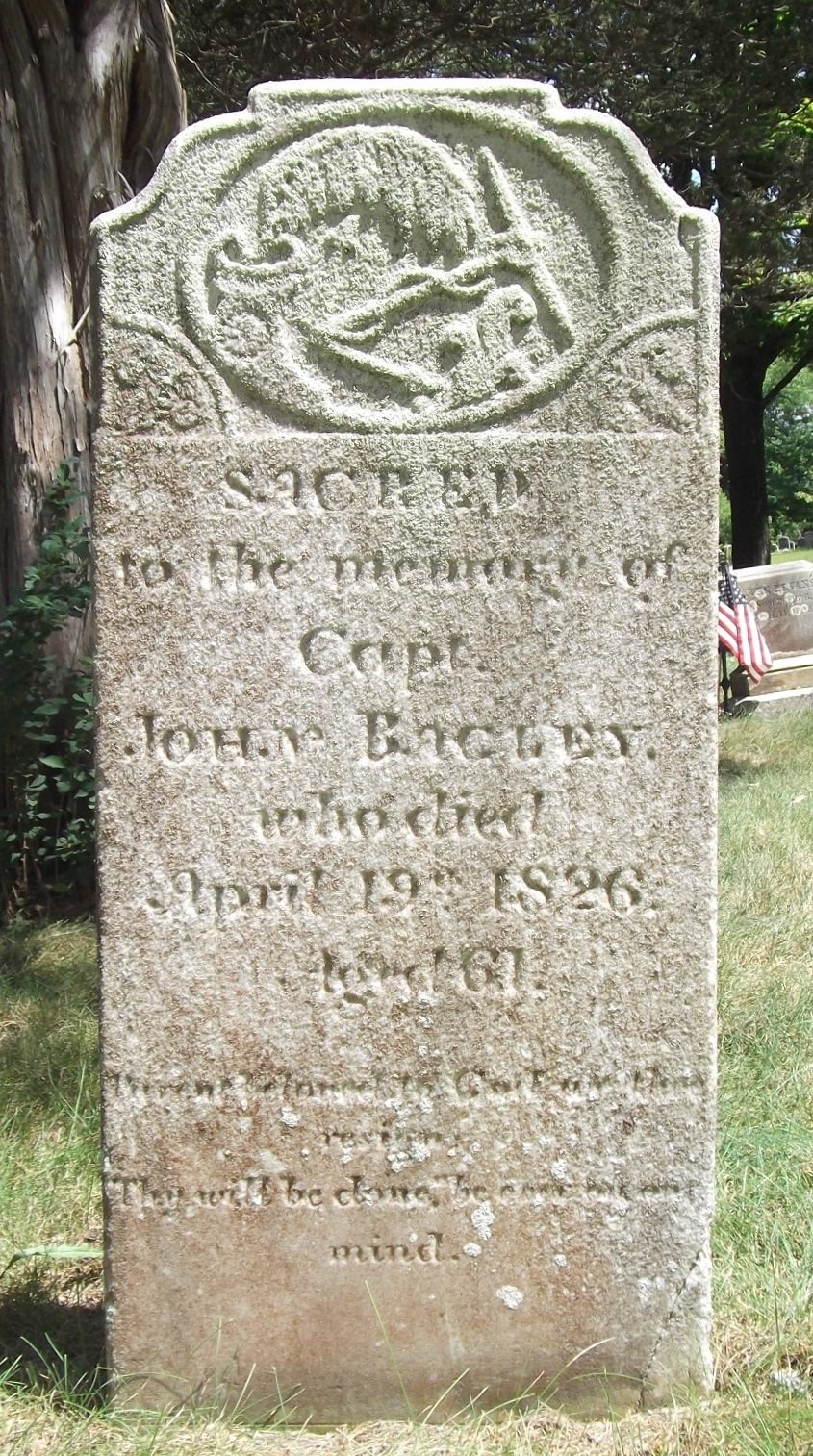
Captain John Bagley’s Headstone in the Salisbury Point Burying Ground in Amesbury. Note the anchor on the top of the tablet.
Coincidentally, John Bagley is the brother of Captain Valentine Bagley, who was famously stranded in 1792 on the Arabian coast, walked through the desert, and was thirsty for the rest of his life. A Whittier poem about him tells the story, and his well is an Amesbury landmark. Read more about Valentine’s adventures here!
Back to the family tree. The other name associated with this object is “Miss Williams”. After a bit of good old-fashioned genealogy, I followed Captain John Bagley through his daughter, Dolly, through her son Edwin J. Colby. Dolly (Bagley) Colby’s grand-daughter, Adaline Colby married James T Williams in 1870. They had two daughters. Neither daughter ever married. Our Miss Williams is Elizabeth Lydia Williams, born in Salisbury in 1872, living in Amesbury in 1880, and still living in Amesbury in the 1950 census. With that information, back we went to the acquisition records. Number 1100, with no other identifying information or date, was indeed given by Elizabeth Colby Williams, listing her mother’s birth name as her middle name. This was a common practice, but also hints that she identified with her mother’s (local) family, at least as far as this gift was concerned. Her father, a Civil War veteran born in Maine, was the child of immigrants from Canada and Wales.
Further sleuthing revealed a treasure trove of items given by “Miss Williams” in the 1930’s. Most were related to the global voyages of her grandfather, Edwin J. Colby, son of Dolly Bagley. His Marine Society record is a bit more impressive. He died suddenly on a voyage to Germany, and was eulogized extensively in the Newburyport Marine Society records.
One of Miss Williams’ many gifts is a pair of daguerreotypes of her grandfather, who died in 1859. On the rare occasions that we can find an image to go with an artifact, even tangentially, we rejoice!
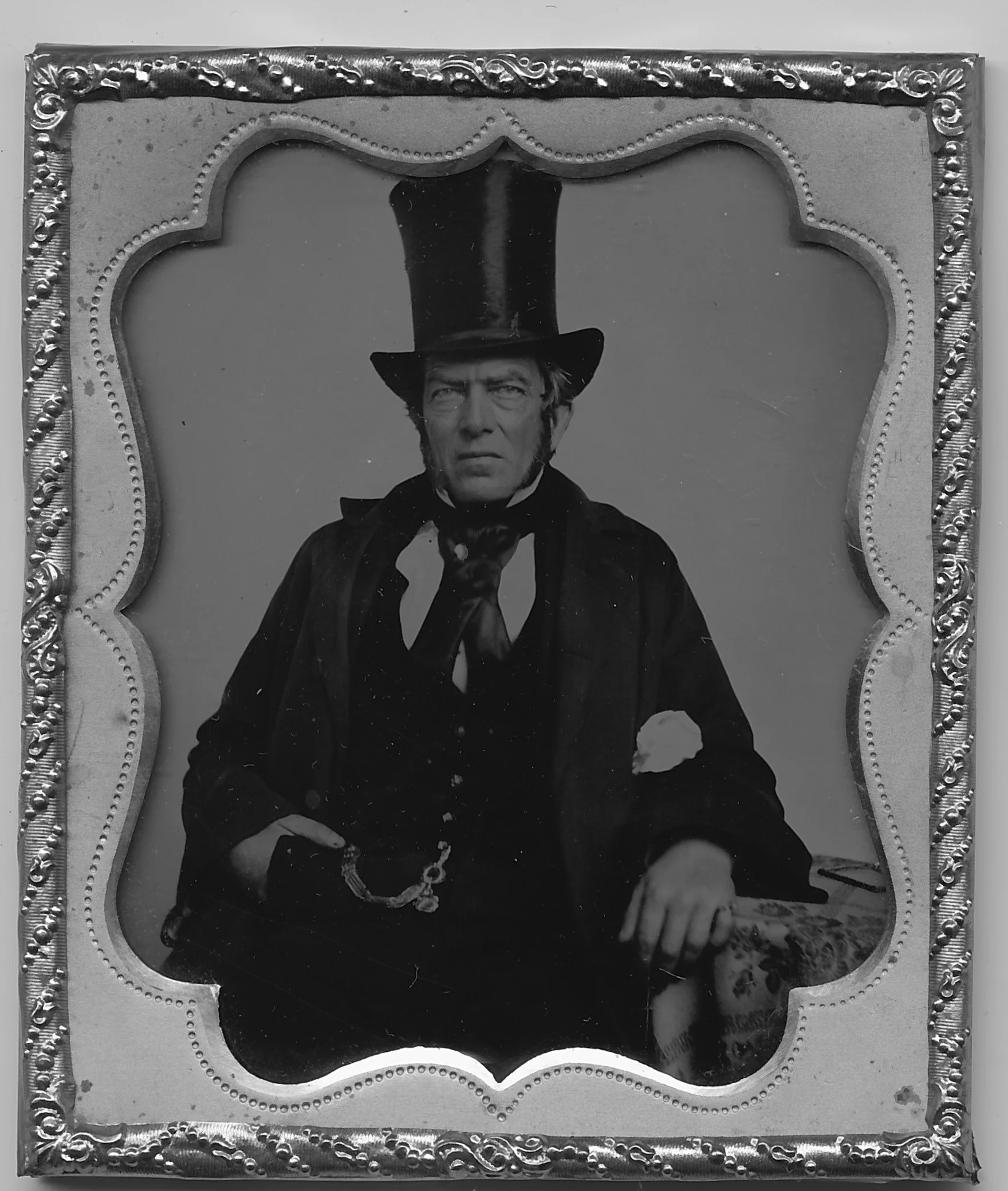
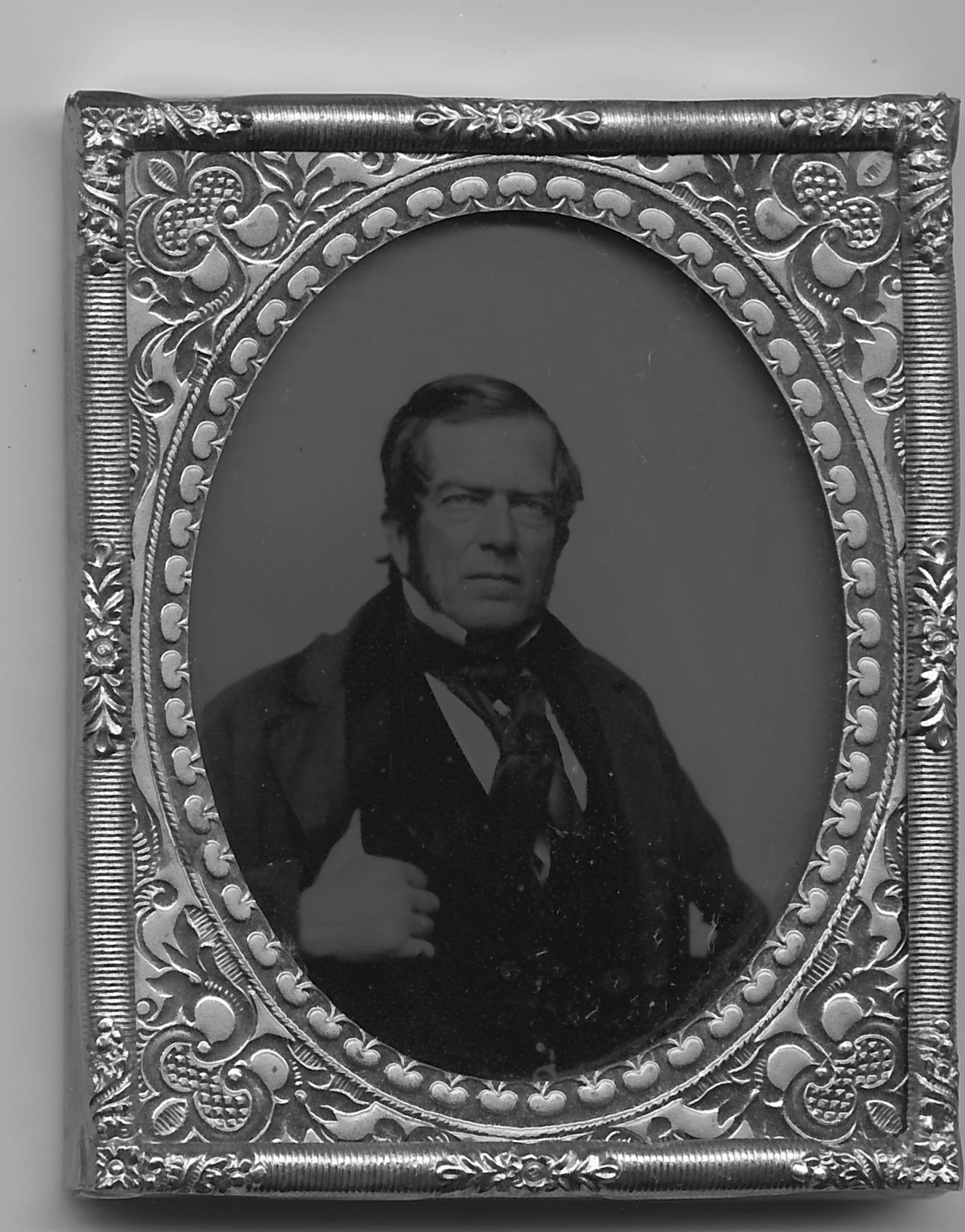
And so, the sleuthing continues, but for now, what we have managed to do is prove that the chain of descent from Captain John Bagley to Elizabeth Lydia Colby Williams makes it possible that this pincushion is from France in 1792. Was it purchased in France on the eve of Revolution as a keepsake for a daughter born while her father was at sea? Was it cut from a gown looted from Versailles after the doomed queen fled her palace? As with many relics, it may never be possible to prove this conclusively. The pincushion will be visiting a textile expert soon to get a read on its likely age and origin, and we will keep looking for clues.
There is more work to be done here, but for now, I am happy just to have this tantalizing story be possibly true. Miss Williams certainly believed it. She gave us many other items in the 1930’s, including curios from India, China, and Africa, all from her grandfather, who died over a decade before she was born. How that man’s legacy must have loomed over Elizabeth Williams, who never left home, living and dying on Main Street in Amesbury.
In the 1920 census, 47-year-old Elizabeth Williams is listed as a housekeeper, working in day service in a private home. She lives with her parents, who are 78 and 71 years old. Her father was a store clerk when she was born, then, as the family fortunes turned, a day laborer. She died after 1950 - I am still trying to find her death record or obituary. I would welcome any family members who may have photographs or information to contact me.
As the granddaughter of a world-travelling, story-telling, artifact-collecting sea captain myself, though I was lucky enough to have my grandfather around well into my adulthood, I feel a special kinship with Elizabeth Lydia Colby Williams. She was not from a family of great wealth, and the artifacts she gave us were clearly precious to her. The curious case of the Marie Antoinette pincushion is a reminder to us all to think of those who passed their treasures on to us, and be endlessly grateful and relentlessly curious.
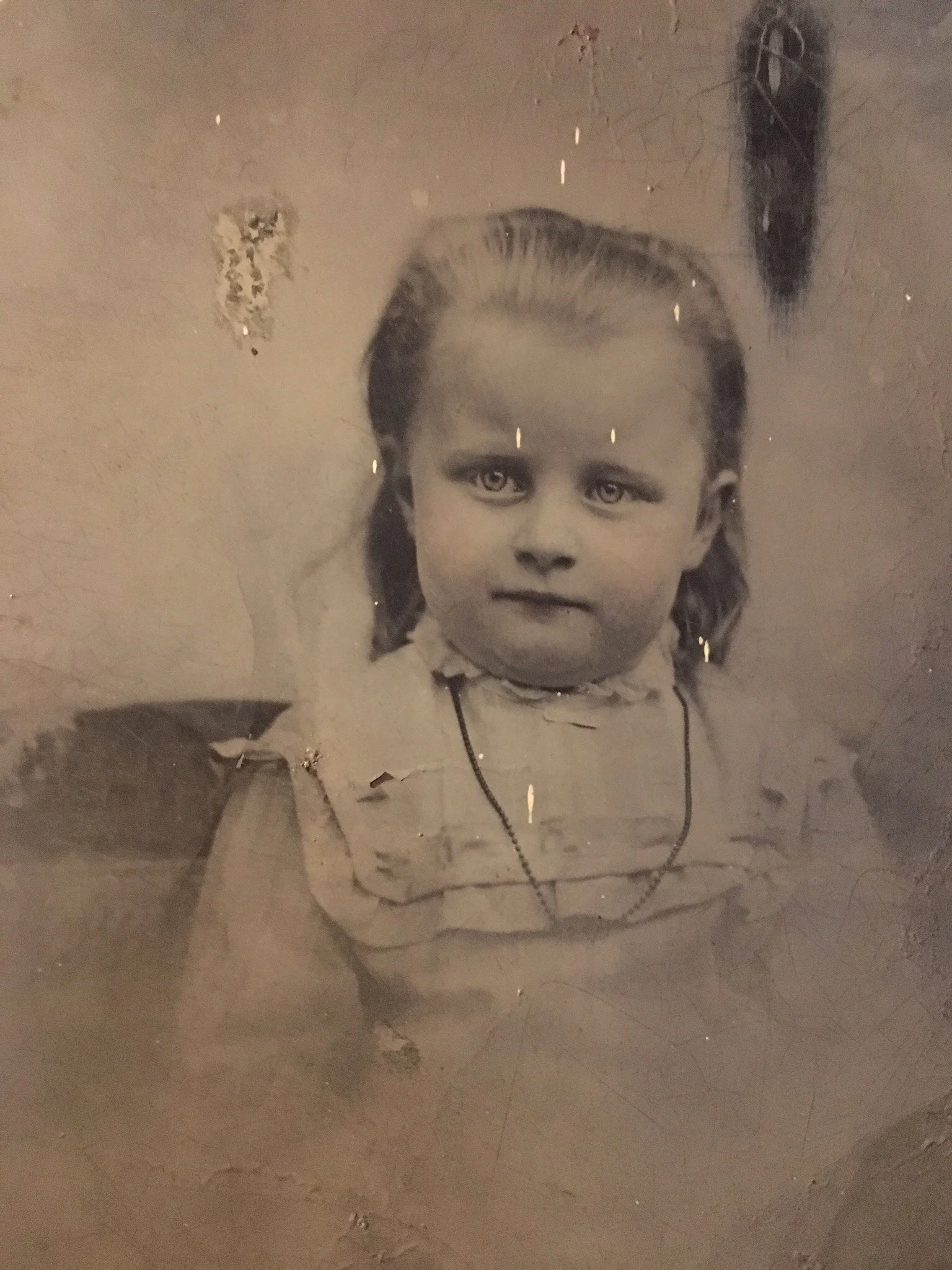
So I leave the final word not to Marie Antoinette, or indeed even to the bold captains who brought back curiosities from around the world to their children and grandchildren.
I leave you with this cutie-pie, Elizabeth Lydia Colby Williams, from a family album, born in 1872, who left her treasures in trust to us, to all of us. Thank you.