
Well, friends, it’s been a busy week, but nobody has been busier than our Archivist and Collections Manager Ashley, who managed to produce another human being while I was fretting about grant applications. Mother and baby are doing very well, and we are all so excited to meet the new addition!
This, of course, means that Ashley is on maternity leave for several months, and so the first of many tasks assigned to me, one which she accomplishes with ease, is late. There’s just not enough hours in the day. So this peek into the archives, due yesterday, is here today, and only, in part, because inspiration struck, and when it did, it struck me full in the chest.
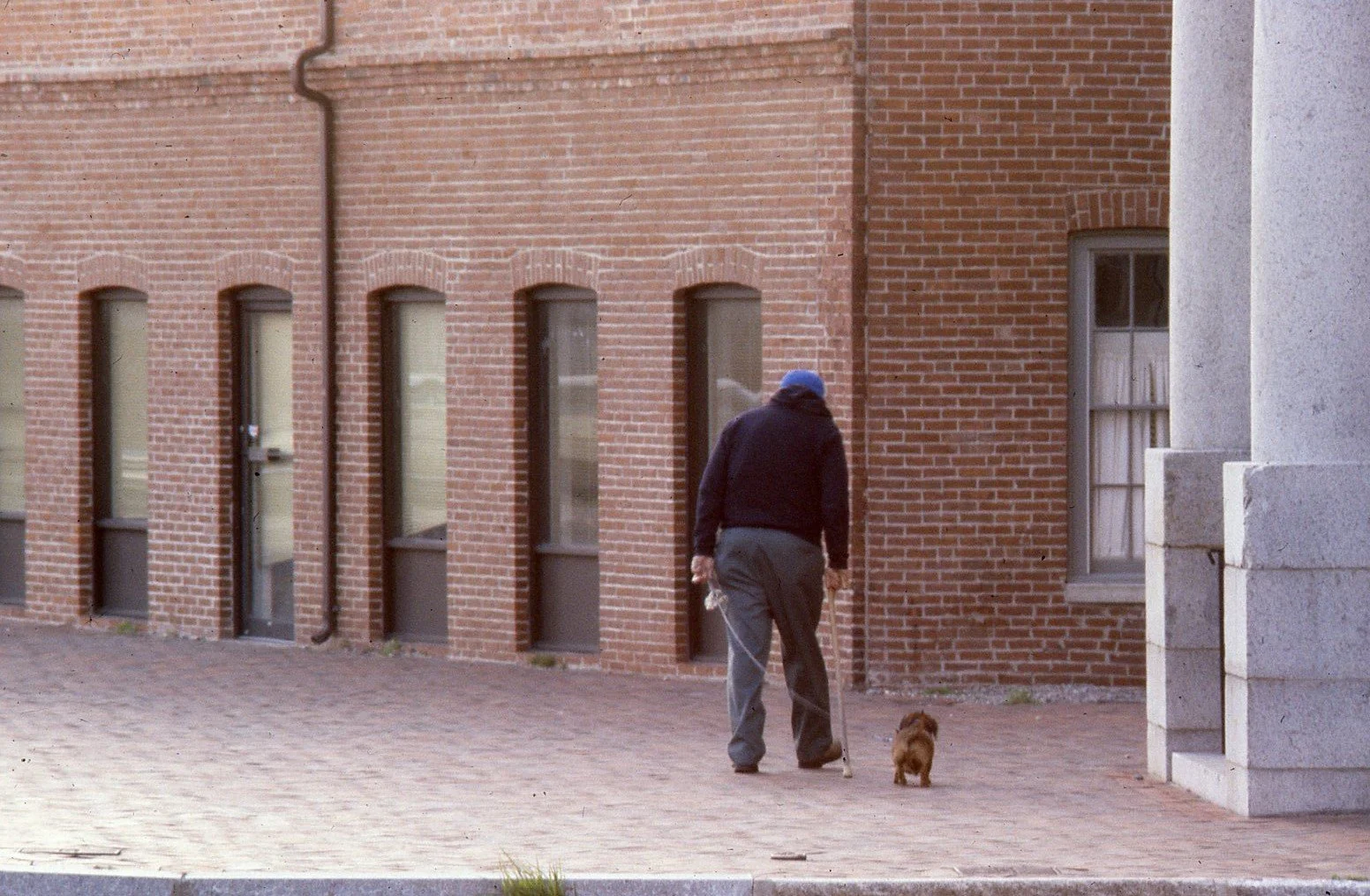
The man in the image above, walking with his cane and a small dog, is my great-uncle George Alan Poore, gone since June 20, 1988, but also gone in some fundamental way, since he was shot in the head in Guam in August, 1944.
Uncle George, immediately recognizable to me, appears again and again in the work of pioneering Newburyport photographer Fran Dalton, whose tens of thousands of images we added to our collection, a treasure-trove of 20th century history. Thank you, Colleen and Frank.
Two feelings wash over me when I see this image. I feel such tenderness, and it is immediately followed by deep and bitter regret. Fran Dalton’s particular gift to me has been the reminder of what I failed to see while Uncle George was still alive.
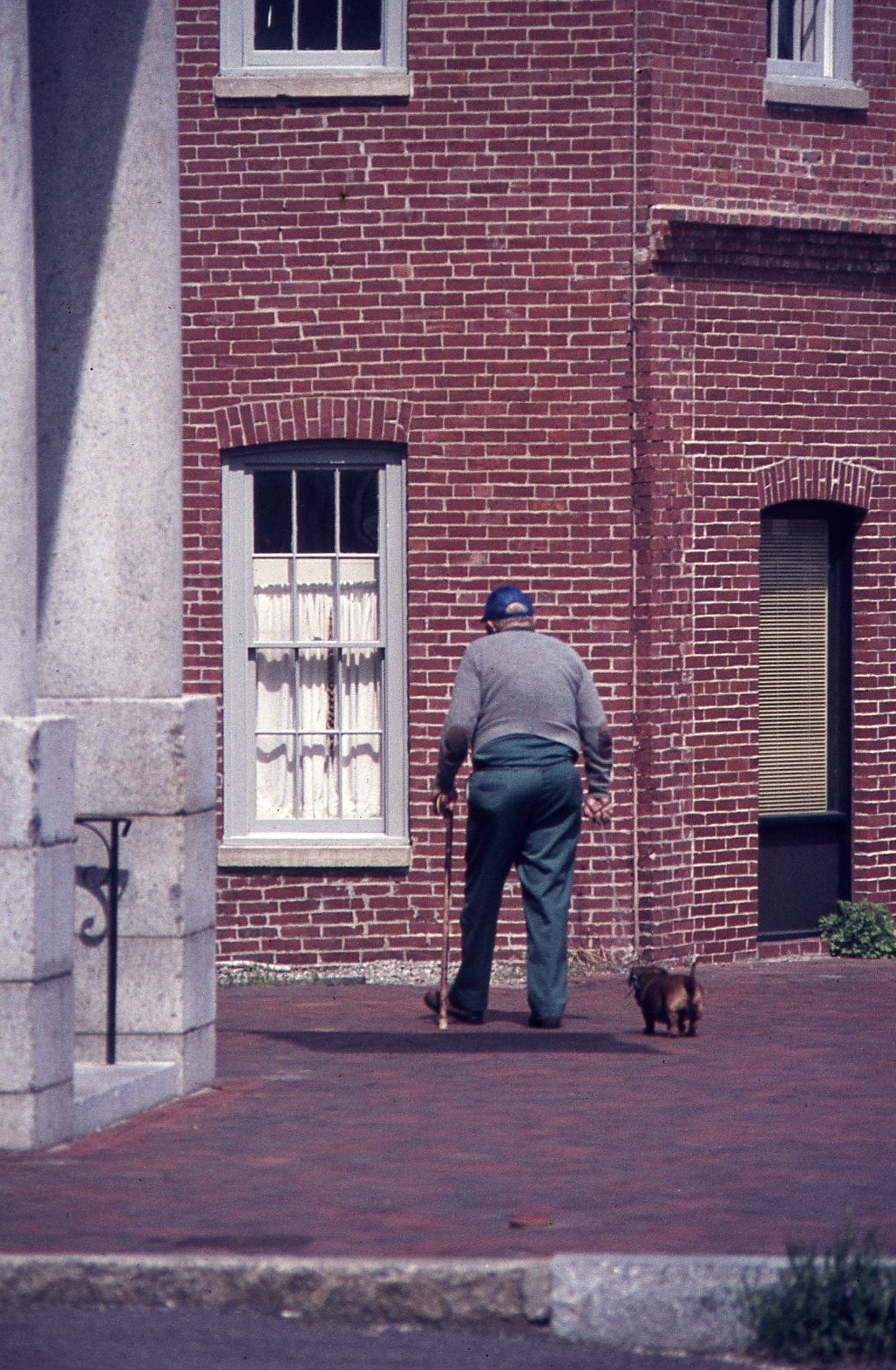
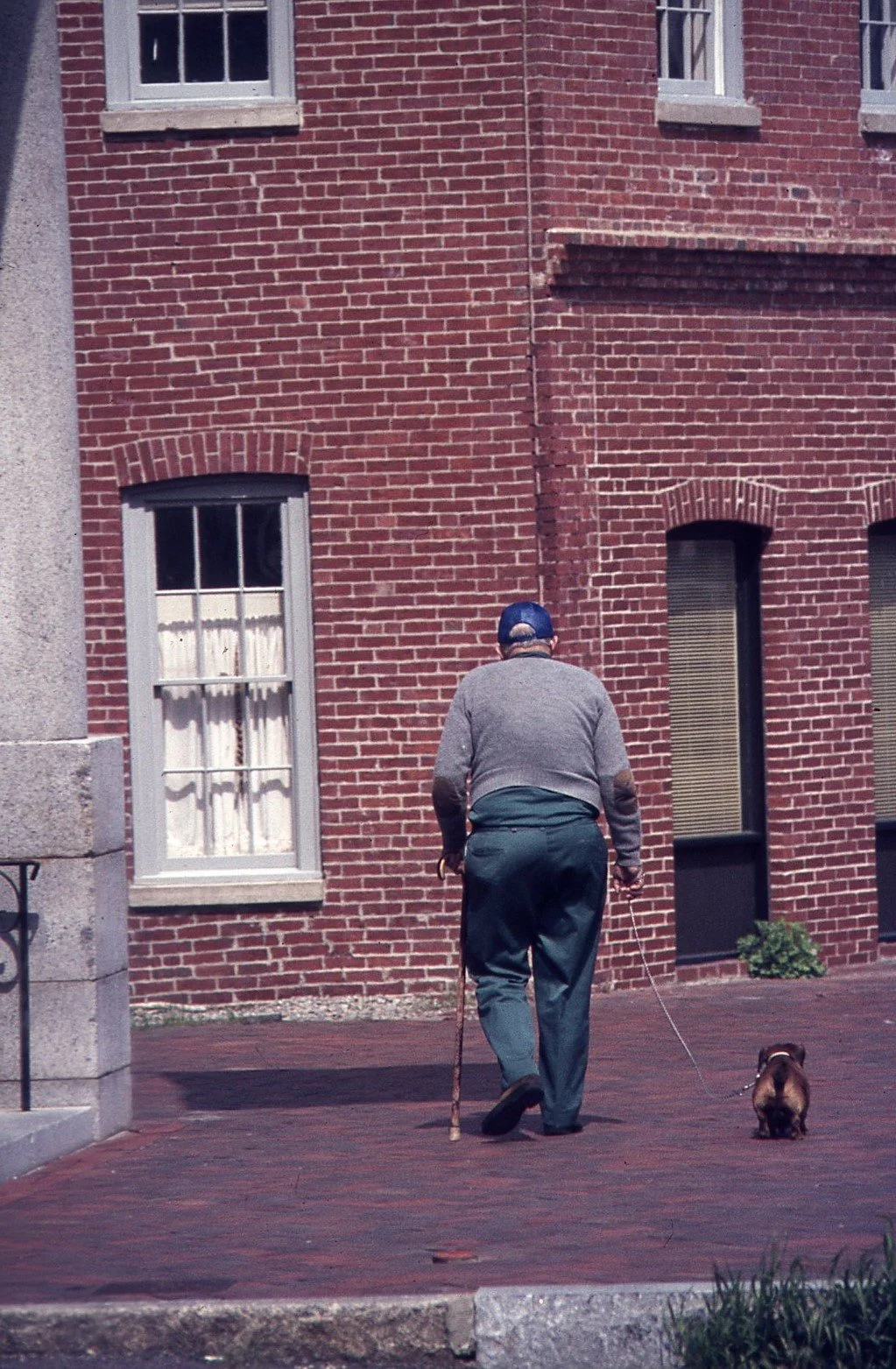
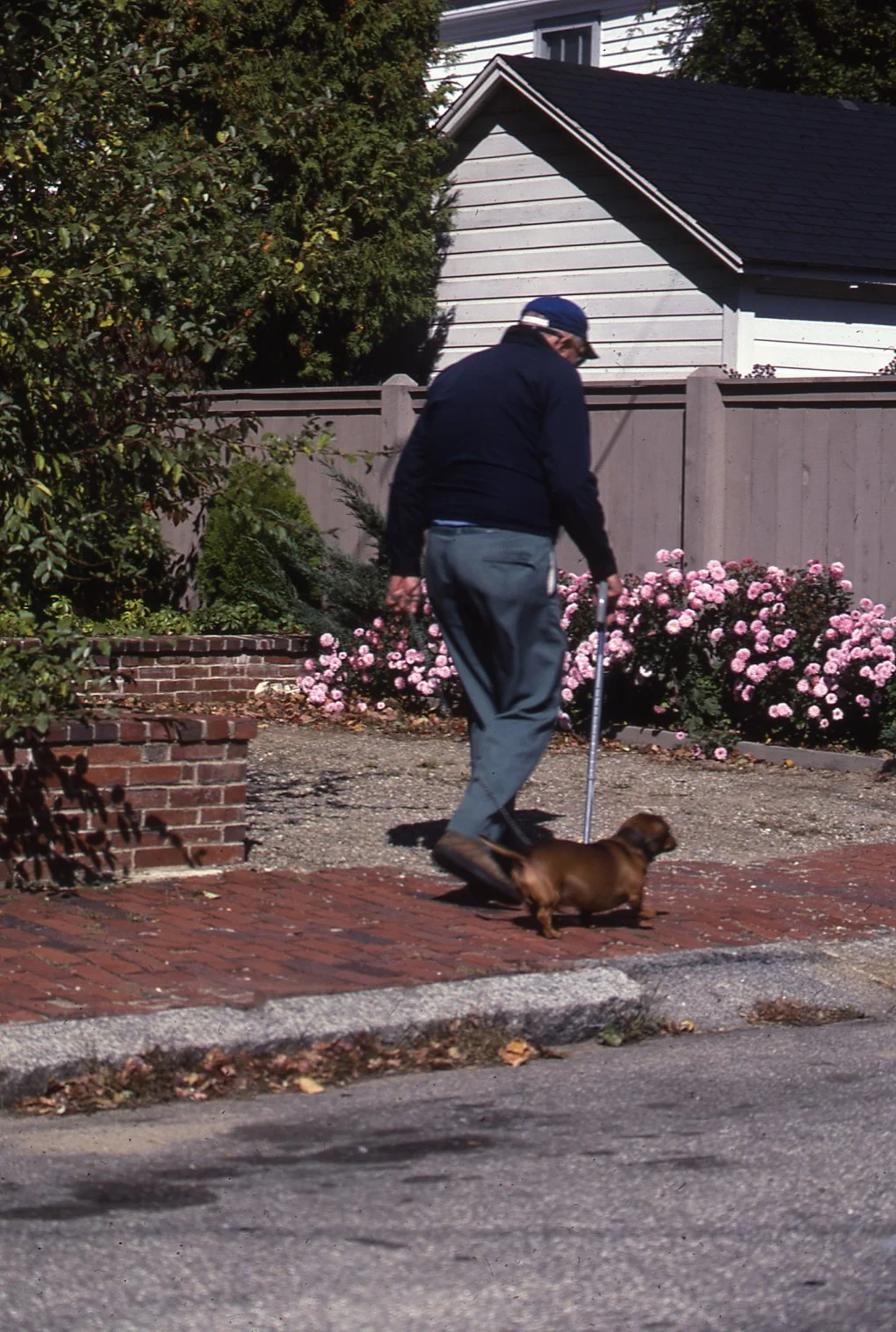
The Museum of Old Newbury has a long and happy partnership with Newburyport Framers, who offer images from our collection, beautifully framed, and donate a portion of the sale back to the museum. When I was asked to offer a brief illustrated overview of the museum’s incredible photography collection, I jumped at the chance. Fran Dalton was, of course, an integral part of that story, and it was while selecting images from the thousands of her images, that I came across these few images.
I had seen one of these images before, as we worked with Colleen and Frank, the donors, to ready the collection for transfer. At the time, inspired by their Newburyport Literary Festival talk, I wrote down my clearest memory of Uncle George.
“I am twelve years old and sitting at the kitchen table with my great-aunt Emily and my grandmother, who is in a wheelchair, and their brother, George, who is talking in gasping grunts about going to the hospital to have shrapnel removed. I ask Aunt Emily what that looks like. It’s terrible, she says. Like bits of metal and machine parts and things, always working themselves out of his legs. She says she once saw them remove a spring, part of a hand grenade that blew up behind him. He is missing a finger and most of one foot. He has a glass eye, but he has taken it out, and the hollow socket is red. His hair is shaggy, longer than any of his brothers, and he likes to look at me with his one milky eye, take off his cap, and thunk thunk on the metal plate on the back of his head with his knuckles. “Guam”, he says. He points to his eye socket. “Okinawa”. I say something and he cups his hand around his ear. “What?”, he shouts, then points to his deaf ear. “Midway,” he says, and laughs, his toothless mouth another socket in his wide, grey face. He is shifting his considerable weight in his chair, the sturdiest chair in the house, and over the years, his large, flat thumb has rubbed the end of the chair arm until a spoon has formed. He drinks, though there is no alcohol allowed in the Poore house, so he arrives drunk from his apartment in Newburyport. He dozes off, and he smells of mildew and cigarettes and liquor. I am scared of Uncle George, and I feel sorry for him, and I leave the room as soon as I can.”
George Allen Poore’s military hospital record validates my memory of him.
Diagnosis: Wound(s), penetrating (point of entrance only: includes incised, puncture or stab wound) with nerve or artery involvement;
Location: Eyeball, generally;
Location: Metacarpal bones, generally;
Causative Agent: Artillery Shell, Fragments, Afoot or unspecified;
Diagnosis: Fracture, compound;
Diagnosis: Wound(s), penetrating (point of entrance only: includes incised, puncture or stab wound)
Type of Injury: Battle casualty
Medical Treatment: Enucleation with implantation; Amputation open, upper extremity, (includes amputation, unqualified, for traumatism)
Disposition: Discharged or Retired for Disability, Line of Duty, Yes
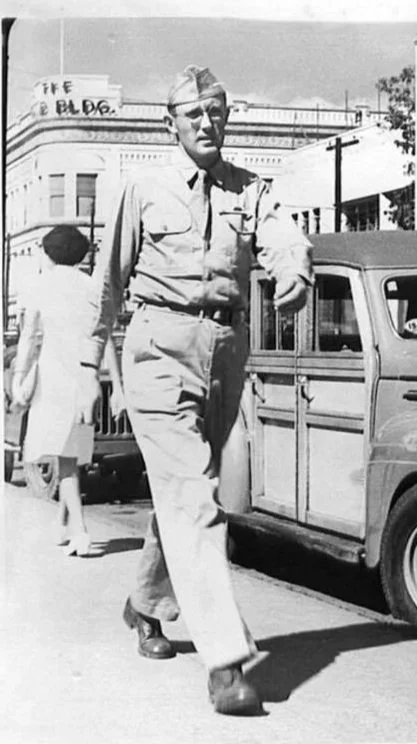
George Alan Poore, 1941, family collection
George Alan Poore died when I was 14 years old, entirely focused on my own struggle to be seen and accepted. I spent years watching him drive up the lane to the house where he was born to see his sisters and try to maintain a connection with all of us.
Fran Dalton saw George in a way that I never could. He photographed him from behind, walking, caring for a vulnerable animal. He did not show his shuffling limp or his empty eye. I wish I could go back and see what Fran saw. I wish I had been more kind, more patient, more present.
Though I cannot change what I saw in 1986, Fran Dalton’s vision of Uncle George has changed my memory of him. I am able to see his vulnerability, his gentleness, and the beauty of his survival. As we are able to share the Fran Dalton collection more broadly, I hope you will see something that moves you, too.