
"Is that a ship on your head?" The Curious History of a Well-traveled Hat
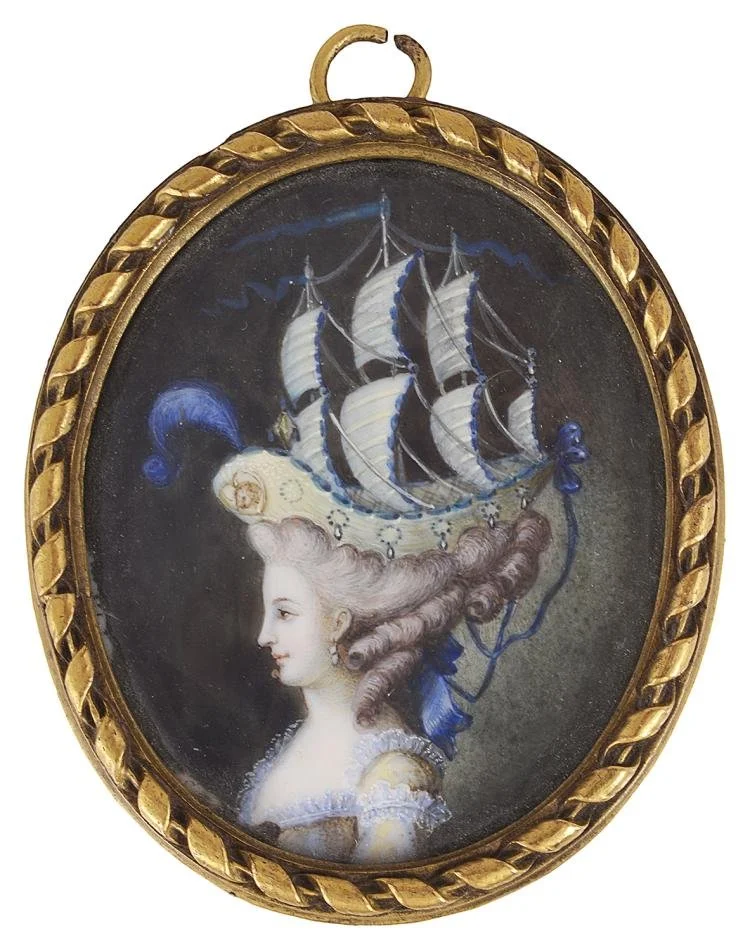
This 19th century miniature portrait on ivory, described as Marie Antoinette, featuring an elaborate “coiffure à la Belle Poule” sold at auction in the UK in 2018.
Well, friends, I recently returned from a whirlwind trip through Great Britain, and for much of the trip, I had a ship on my head, or bumping along in its custom-made carrier. The poor vessel lost a couple of feathers and cracked a mast, but she sailed home in fine style in first class accommodations while James and I were crammed into coach. We were grateful for her journey, as maneuvering an 18” tall, three foot long, extremely delicate assemblage was a challenge, to say the least.
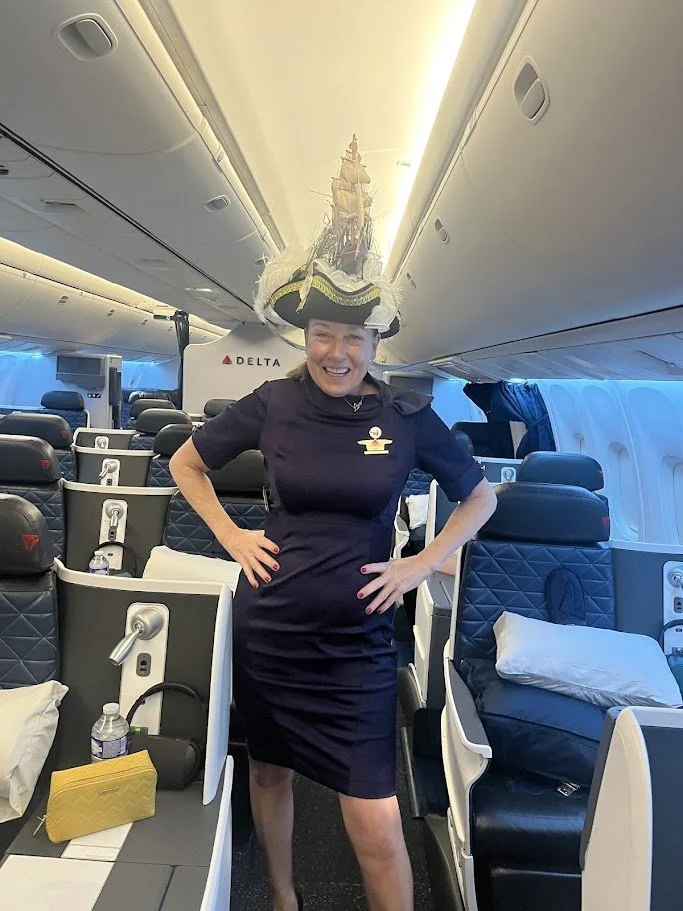
The Dalton sails home from Scotland in first class thanks to Newburyporter and friend Lisa Egan.
It all started in 2024. Thanks to the advocacy (and carpentry skills) of several friends and board members, the Museum had decided to enter the Yankee Homecoming Lions Club Bed Race, a venerable tradition in these parts. Our theme was “Time Flies”. I was dressed as an angel (nobody was buying it), and despite my wings, my outfit just wasn’t quite as visible as we wished. Sharon Spieldenner brought over a hat she had made for a party where she dressed as Marie Antoinette. It was a slightly simpler version of the blingy chapeau of late 2026, with a few ostrich plumes and an unnamed model ship, but when I popped it on my big head, it just felt right. It fit perfectly, and I could be seen from a mile away. I will never forget the feeling of sailing back up Federal Street, bouncing wings and all, to whoops and cheers. Sharon quickly, and very generously, decided the hat and I were meant to be together, and she has been enhancing, refashioning, and repairing it as the occasion demands, ever since then.
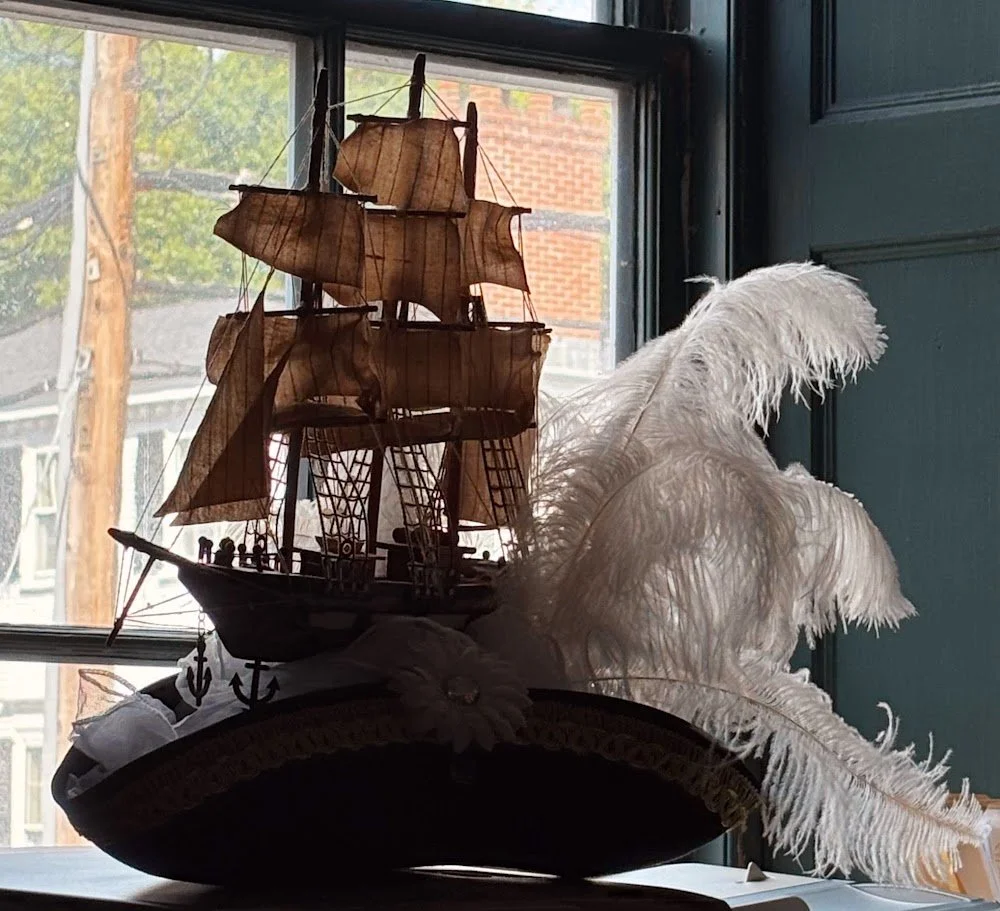
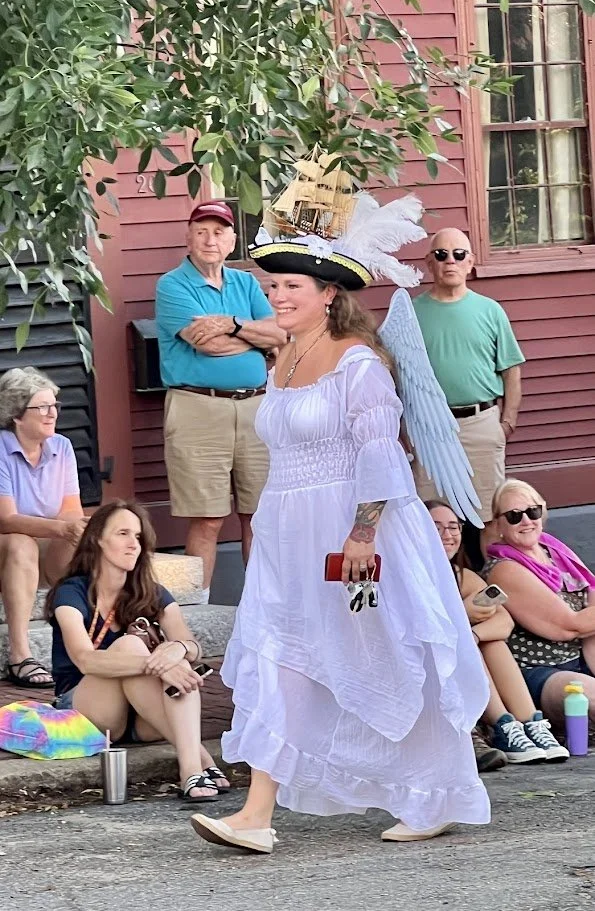
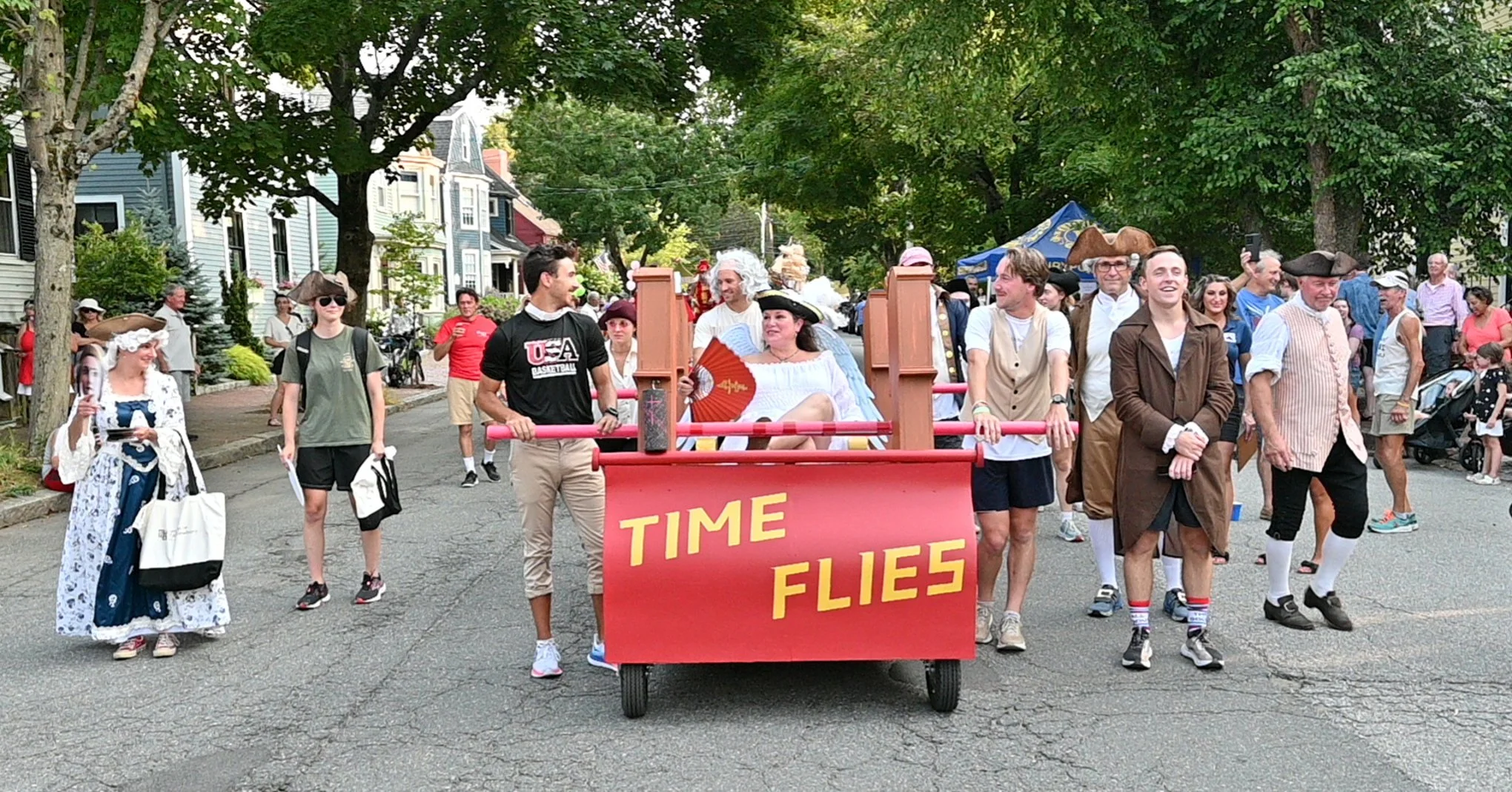
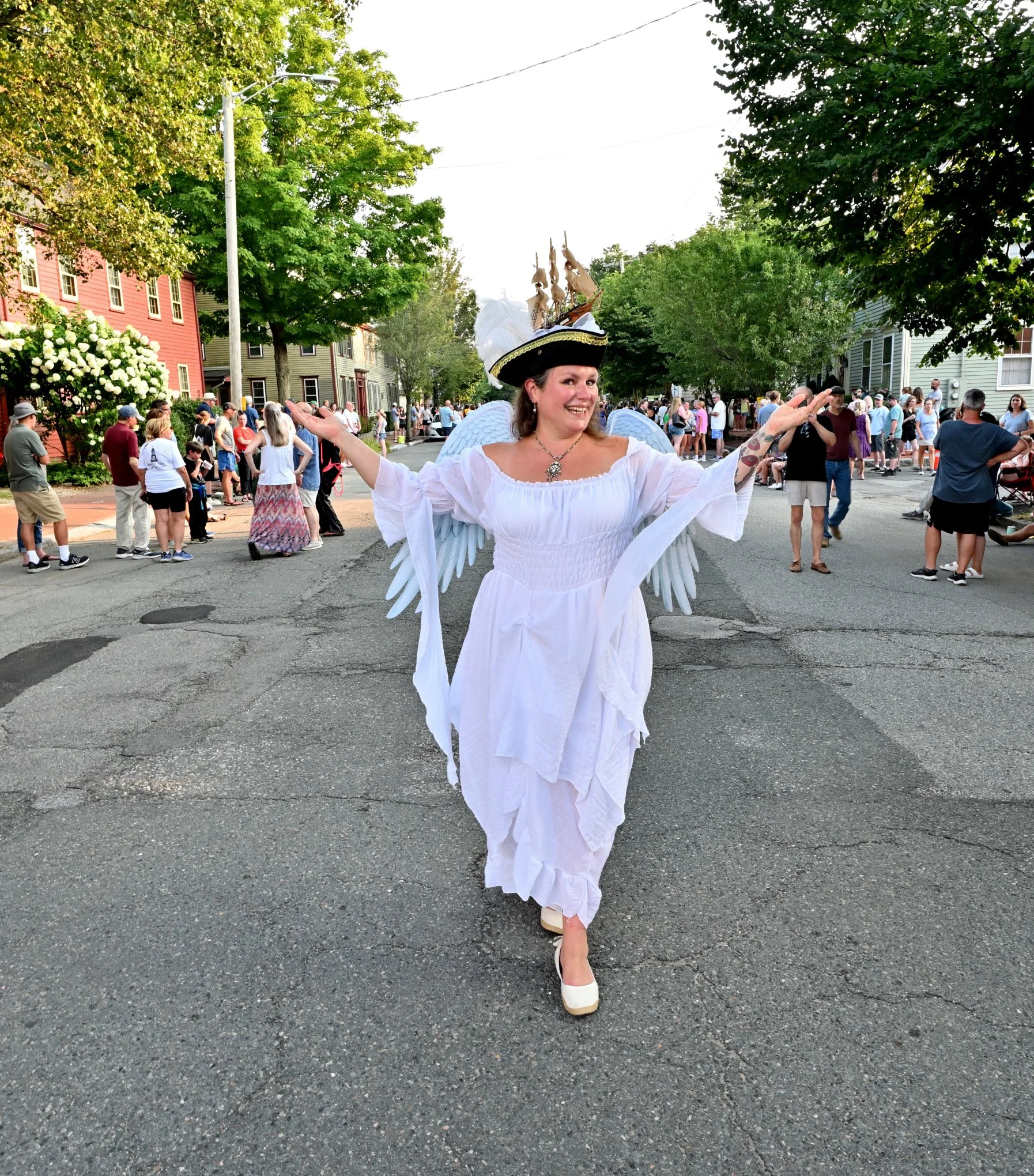
The first outing with The Hat in 2024.
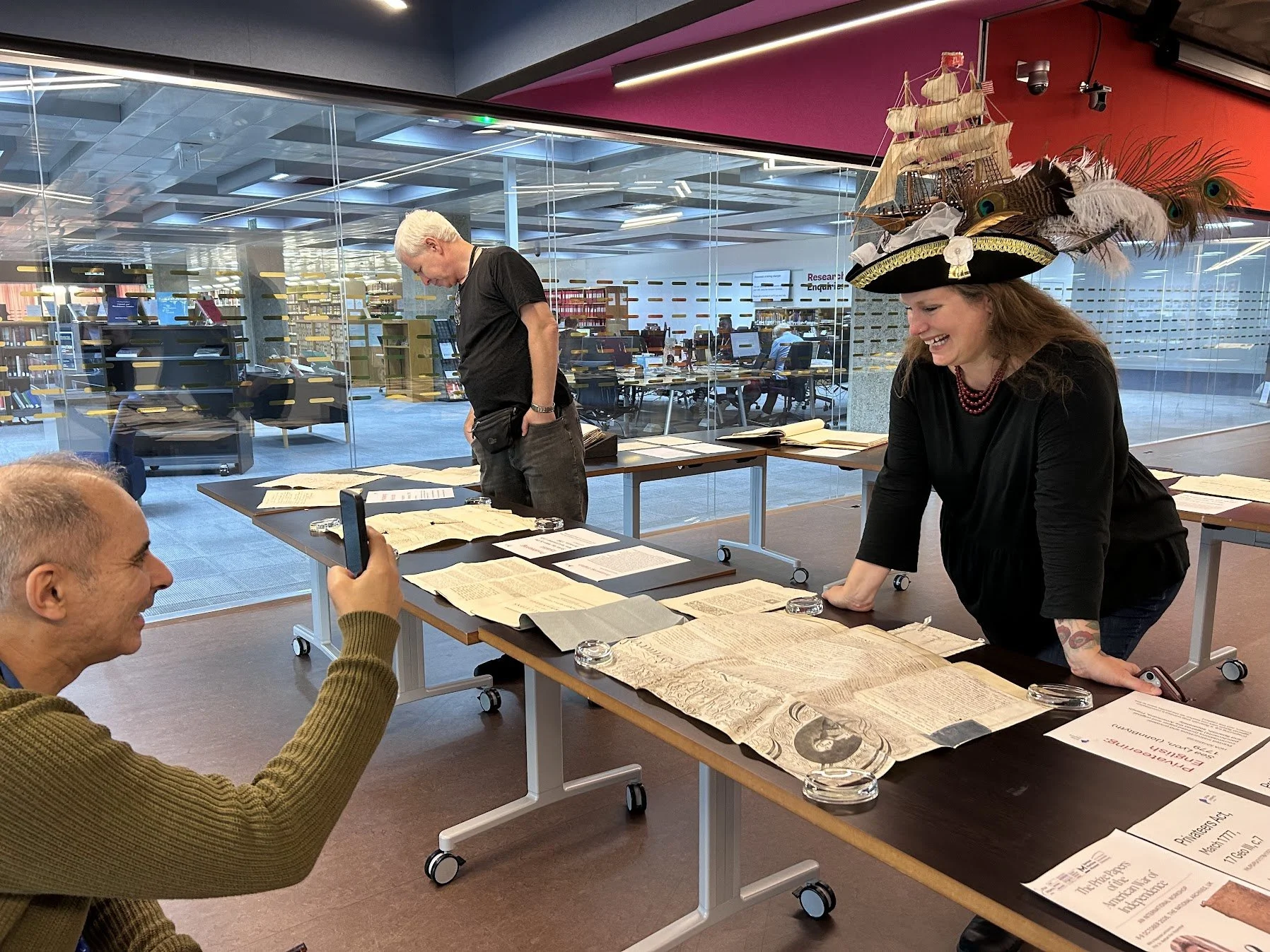
In its most recent iteration, The Hat, rigged as the privateer Dalton, accompanied me to the UK, where I represented the Museum of Old Newbury (and managed to say the word “Newburyport” 27 times), at an international workshop at The National Archives in Kew. I did not don the Dalton on day one, hoping to convince the assembled dignitaries that I was a reasonably sane colleague before I whipped out the frothy headgear. Day two, however, the Dalton hat sailed past the swan pond and in through the glass walls of the National Archives.
The first archivist to see the hat, to her great credit, clasped her hands with delight. “That is SO PERFECT for the 18th century!”, she said.
Like many of you, I wager, I had a vague idea that one of Marie Antoinette’s extreme displays of wealth and time-wasting involved the wearing of a ship, complete with a towering white wig fashioned into billowing waves, on her aristocratic head. I am slightly embarrassed to admit that I did not fully grasp the meaning of that fashion choice, and by extension, the meaning of my adoption of it, 250 years later, until after I returned and a friend sent me an article about the coiffure à la Belle Poule.
To understand how a ship first set sail atop Marie Antoinette’s ill-fated head, it helps to explore the importance of hair (or lack thereof), in European court culture. As art historian Murielle Schlup explains in an article for the Swiss National Museum, “The Power and Pomp of the Wig,” hair loss by the 18th century was associated with syphilis, as the mercury used to treat the disease often lead to hair (and teeth, and eventually, everything else) falling out. It follows, then, that the opposite look, a long, lush mane of hair, would signify health and virility, not to mention disposable income. French King Louis XIII achieved this look with the help of elaborate wigs, and Louis XIV added magnificent curls as emblems of royal authority. Hairpieces were expensive and signified social rank and access to skilled craftspeople, at the very real cost of prisoners and the poor, who were robbed (or nearly so) of their natural hair. There was considerable business, and the seeds of Revolution, behind all that hair.
Aristocrats often combined their own hair with added hairpieces and supporting structures, though men and women (ironically) shaved their heads as the craze for teetering sculptural poufs reached its zenith . Pads, wire, gauze, and ribbons helped produce height and shape, while anything from birdcages, jewels, balloons, locks and keys, and taxidermy supplied the drama. Full wigs had the distinct advantage of being removable, where elaborate hairstyles built around existing hair could not simply be removed at bedtime, and sometimes necessitated sleeping while sitting up. My hat has a considerable practical advantage here, as it does not involve my hair at all, thank goodness. I have a hard enough time sleeping lying down.
Enter the coiffure à la Belle Poule, a fashion event that took place during this period of dramatic hairstyles.
The event that inspired the ship-on-the-head look was a naval battle on June 17, 1778, one of the first exchanges of fire between the French and British navies after France had decisively backed the American Revolutionaries. The French frigate Belle Poule, commanded by Jean Isaac Chadeau de la Clocheterie, encountered the British frigate HMS Arethusa. When the French commander refused a demand to surrender, the ships fought for approximately four hours. The damaged Arethusa withdrew, and France celebrated the engagement as a victory.
Any excuse for French high society to throw an elaborate party, and fashionable hairdressers found a way to mark the occasion.
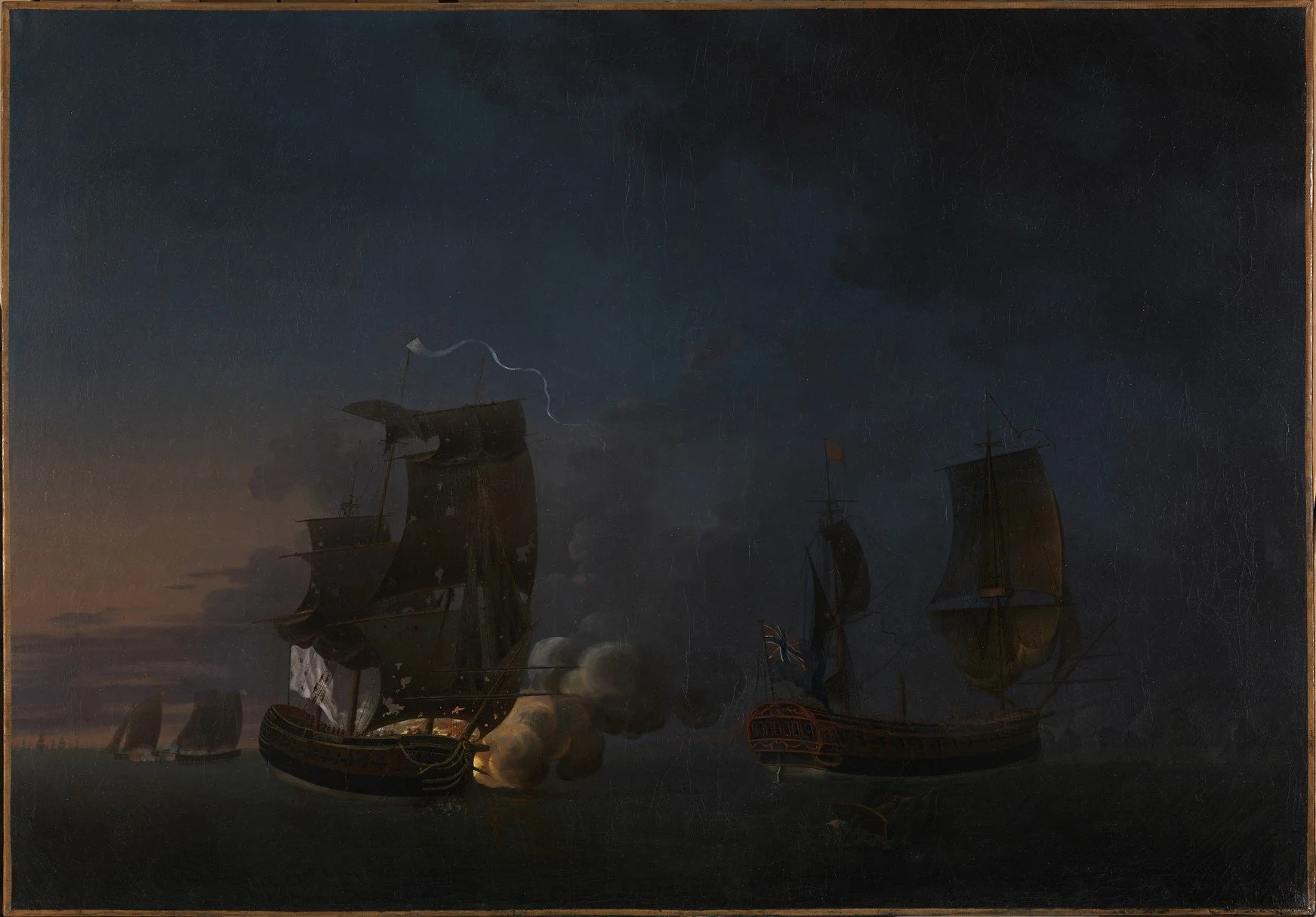
Battle of the Belle-Poule against the Arethusa, 1778.
Auguste Louis de Rossel (1736 - 1804)
The coiffure à la Belle Poule is most often credited to Marie Antoinette and her celebrity stylists, Léonard and Rose Bertin, though contemporary evidence is thin. Several museums, including the Swiss National Museum and France’s Musée franco-américain de Blérancourt, credit the queen with inserting a frigate into a tower of (mostly someone else’s) hair. Whoever wore it first, the ship-on-the-head look spread like wildfire. In the Rijksmuseum, a small etching by Daniel Berger dated 1778 is preserved. It was included in a widely-distributed almanac, the images spread across Europe.
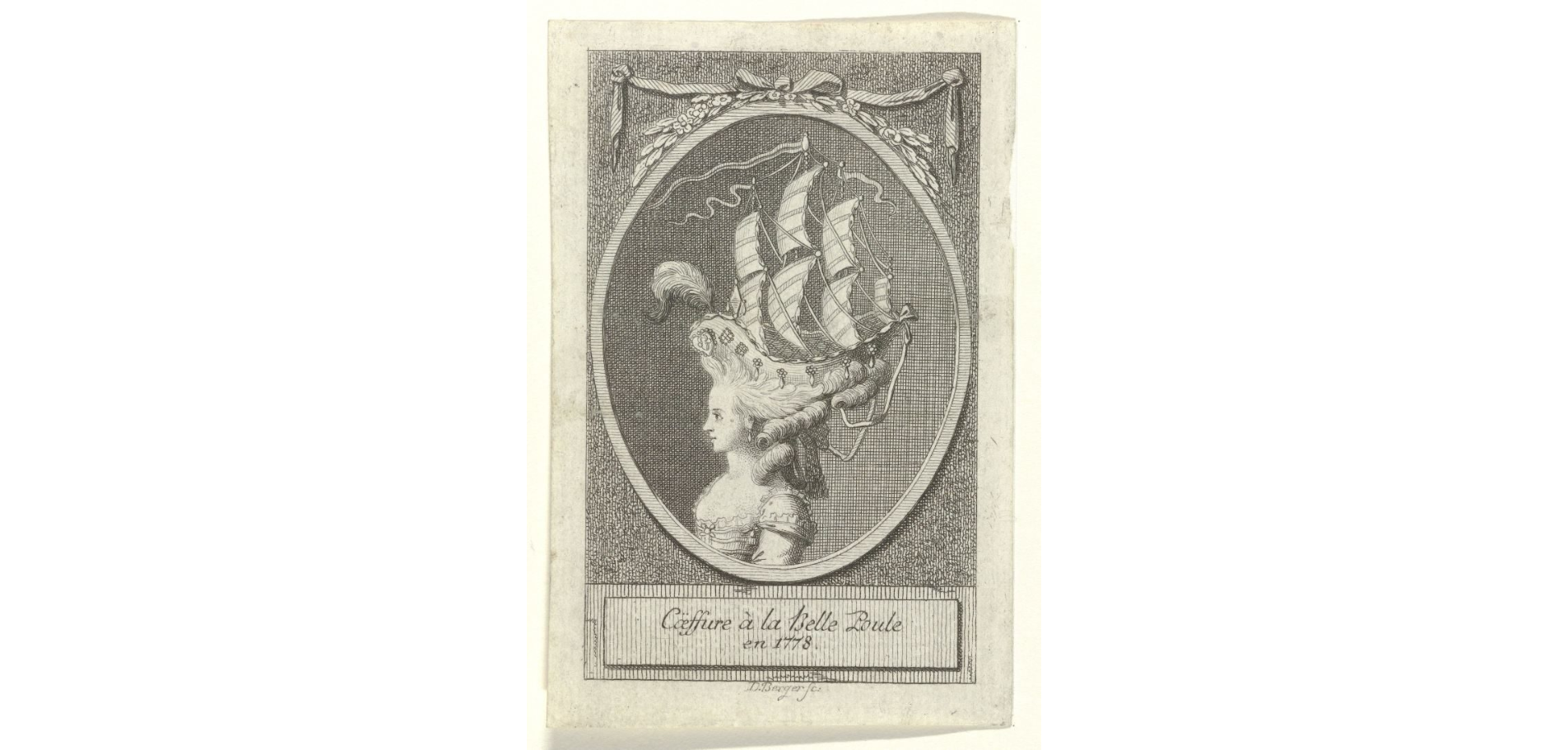
Coëffure à la Belle Poule en 1778, Daniel Berger
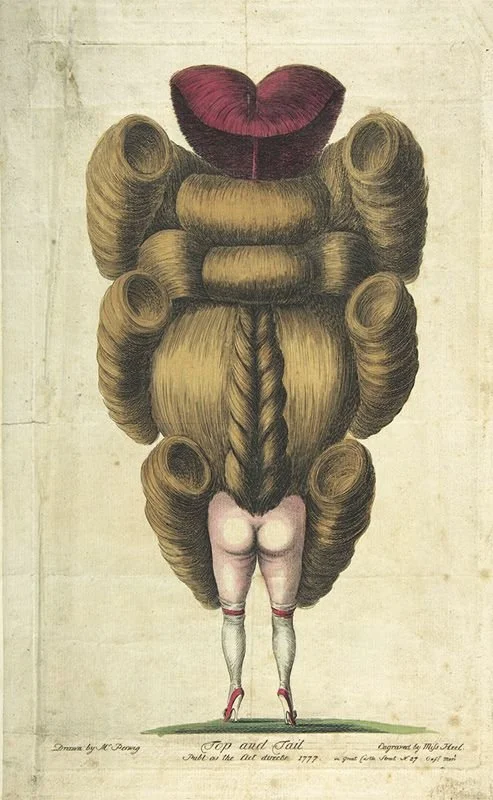
Meanwhile, across the channel, the English were gleefully lampooning the excesses of their traditional foes across the Channel. This anonymous 1777 print, entitled Top and Tail, targeted the fashions of France, suggesting that there was literally no substance under the tower of hair.
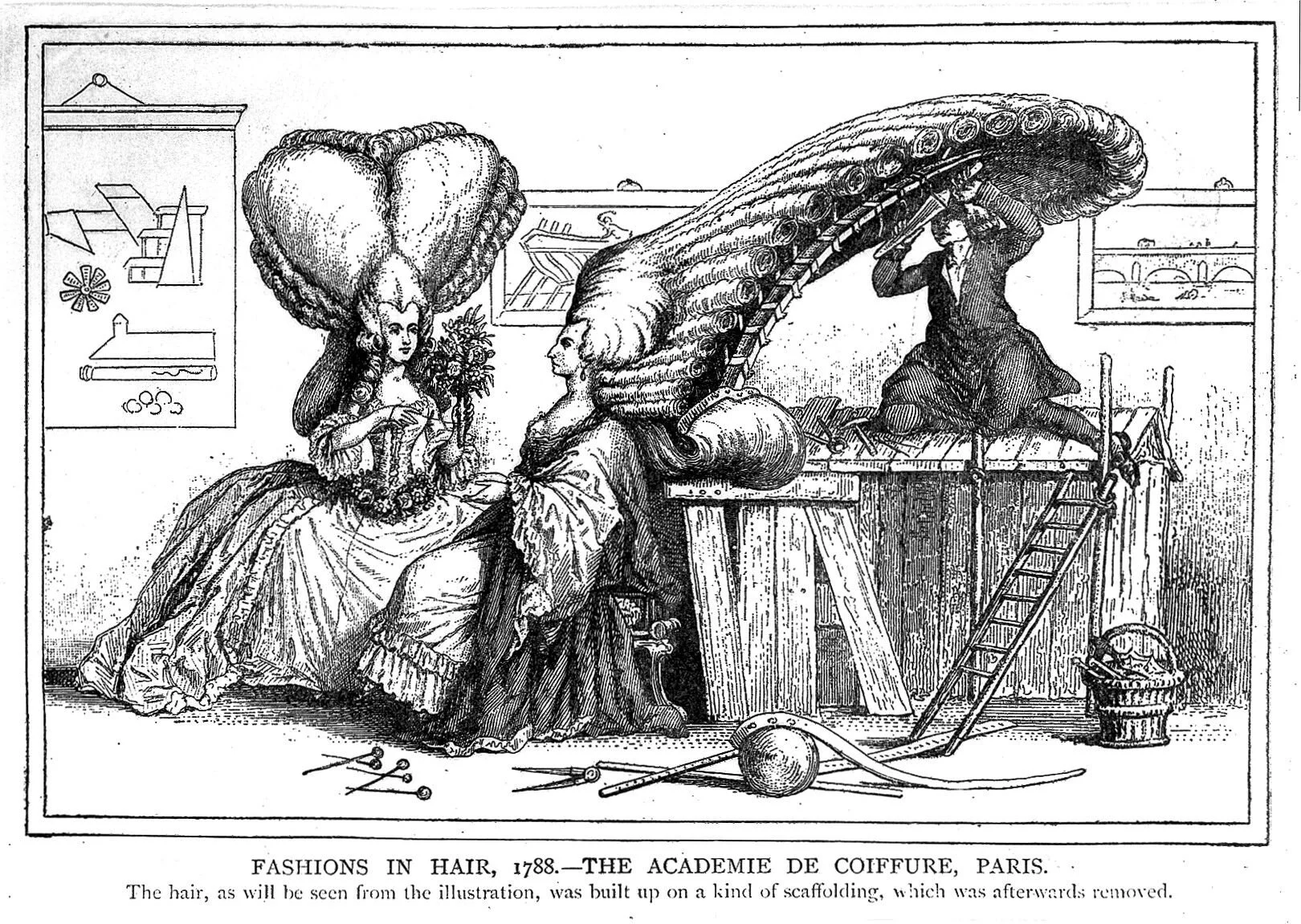
This 1788 British illustration, Fashions in Hair, suggested that French hairstyling was now an engineering project. Courtesy of the Wellcome Collection
You will all be relieved to learn that the ship that has adorned my head over the last two years, while fairly heavy, has not required structural engineering or the addition of other people’s hair. It is a joyful homage to the maritime history of my beloved community, and serves a very practical purpose as well. At crowded events, staff members and volunteers can always find me.
When I was invited to speak at the National Archives UK, I knew this hat would be part of the experience. It had recently done excellent service during our memorable community celebration of the Declaration of Independence on July 19. The hat, like the legendary coiffure à la Belle Poule, would represent a particular ship, the Newburyport privateer Dalton, whose trip to England as a prize capture in 1777 was less collegial.
Sharon got to work. We added meaningful elements to the hat. Nestled amid the peacock, rooster, and turkey feathers, gifts from my own beloved birds, was the “Welcome Home West Newbury” pin worn by my grandmother at the end of World War II. The Dalton burgee flew proudly in Newburyport colors - crimson and gold.
At Kew, my presentation, “Taken by 64 Guns,” followed Offin Boardman, captain of marines aboard the Dalton. The prize records held at the National Archives UK, including a captured copy of the Declaration of Independence, have illuminated Boardman’s experience of capture, imprisonment, and repeated escape, and added exponentially to the trail we can follow on this side of the Atlantic. The Prize Papers workshop provided an opportunity to explore such stories with colleagues studying the records from many different perspectives.
Not to get too sentimental about it, but The Hat, representing a captured vessel in a time of war and struggle, proved to be a wonderful transnational icebreaker. New friends and colleagues took turns trying it on, with lots of laughter along the way.
The coiffure à la Belle Poule celebrated a naval confrontation. The Dalton Hat cheered an international gathering devoted to understanding the cost of war, literally and figuratively. That seems a very agreeable development over the intervening centuries, and an experience I will never forget.
And so, friends, if wearing a ship on my head helps the world to remember Offin Boardman, the Dalton, or the maritime history of Old Newbury. I consider the occasional walk into a doorframe or achy neck a very small price to pay. It is also a wonderful way to start a conversation at a pub. Check out a quick recap of our adventures below.