
Immortality, on Mother’s Day
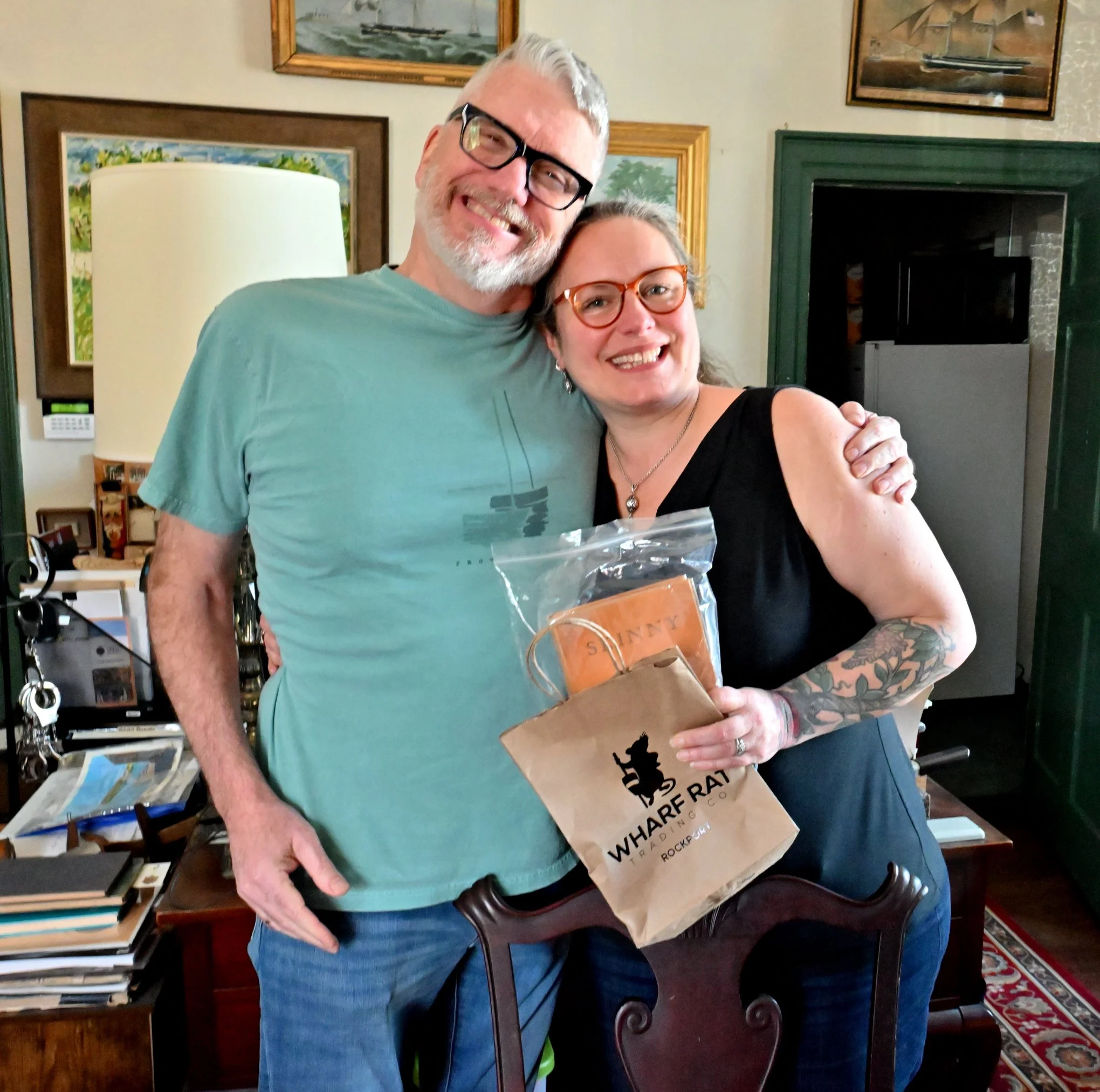
This is my dear friend Alex Baker, known to me as Sandy. This picture was taken yesterday by Bob Watts, caught up in the gleeful chaos that ensues when Sandy and I are in the same room.
We go way back, you see, back to before either of us was born, and we share, along with many other things, an undying love and admiration for Sandy’s grandmother, who I never met, but who still has plenty to say, and who is, in the way we may wish to be, immortal.
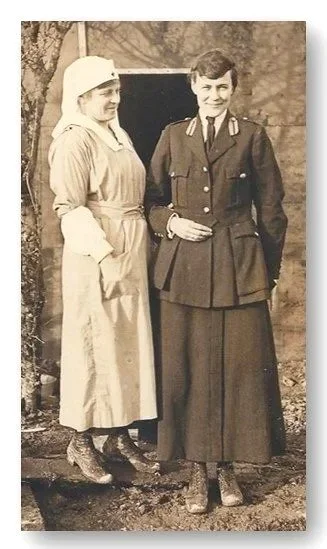
This is how I met Eleanor Johnson Little Baker, seen here on the right. I was working at the Spencer-Peirce-Little Farm, so I knew the Little family well. Eleanor, born in 1886, was the niece of the formidable Aunt Eliza Little, who lived on the farm with three of her other nieces, first cousins to Eleanor. The whole gang periodically got together and Eleanor and her sisters and the farm nieces were part of a reading club founded in 1919 by Aunt Eliza that still gathers every month. As I said, we go way back. When one spends decades in the intimate space of a family’s home, they become part of your constellation.
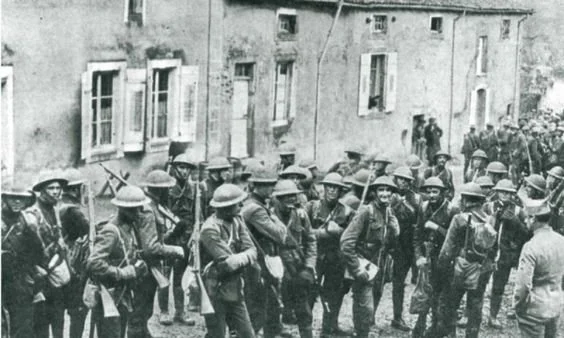
In one of those spine-tingling coincidences, I came across Eleanor in 2012 as I was researching my book about Eben Bradbury, a young Marine killed in World War I. Here is the notable passage from my book.
“In October, a young Red Cross volunteer from Newburyport finally received her orders abroad. Eleanor Little, daughter of Newburyport’s leading banker, had turned her considerable energy and talent to war work as early as 1914. She collected bandages and baby baskets for Belgian orphans, hosted fundraisers for the Red Cross and first learned and then taught battlefield first aid. When she arrived in France at long last, however, she found herself stranded in Paris without an assignment. “To occupy myself I worked sorting mail at the Marine Post Office, where by extraordinary chance a letter directed to Eben Bradbury, which had been all over France, came into my hands.” Eleanor Little knew Eben Bradbury well. The two were nearly a dozen years apart, but both came from prominent local families, and their mothers were frequent social colleagues, judging flower shows together and attending meetings of women’s clubs. Miss Little paused for a moment to think of her friend and his family and then sent the letter on its long journey back to Newburyport.
At least four letters that Eben had written to his son had gone “all over France” and made their way back to the white house on Bromfield Street by the end of the year. There is no way to know which was the very first to arrive, as the order in which they were mailed, one as late as July 9, does not necessarily correspond with the order in which they returned. We know that at least one was still languishing in the Paris marine post office in late October, when it was sent on by Miss Little. What is certain is that one of these letters arrived in early September, marked, like this one, “Killed in Action.” There was no ceremony, no solemn uniformed man arriving at the door, no telegram. The worst news a parent can hear arrived by accident in the mail, three months late. ”
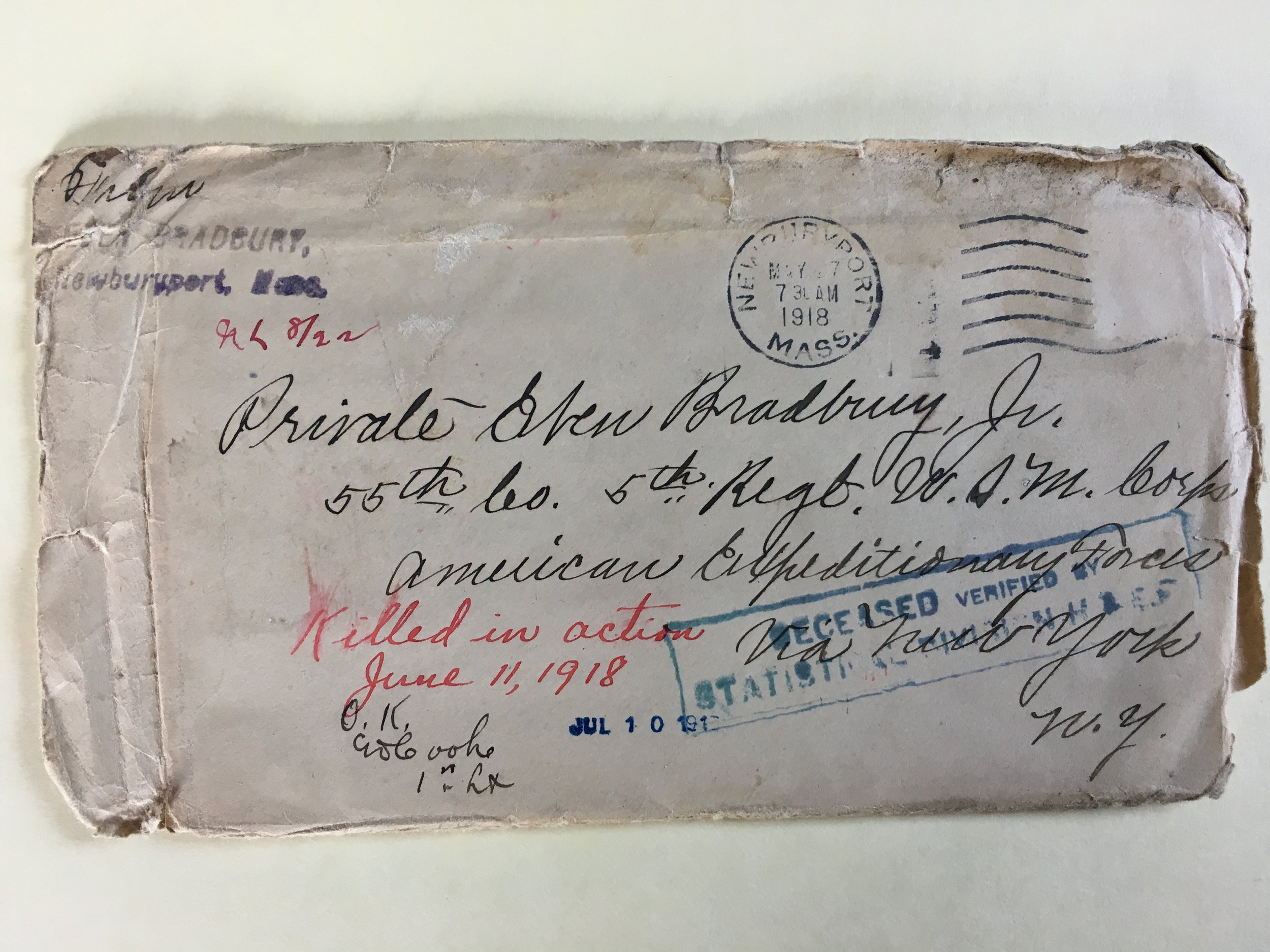
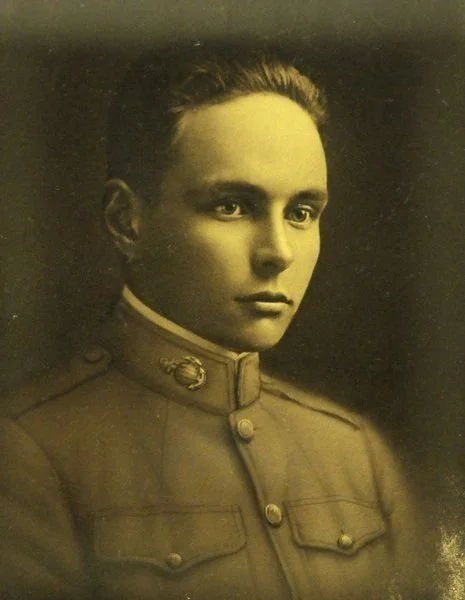
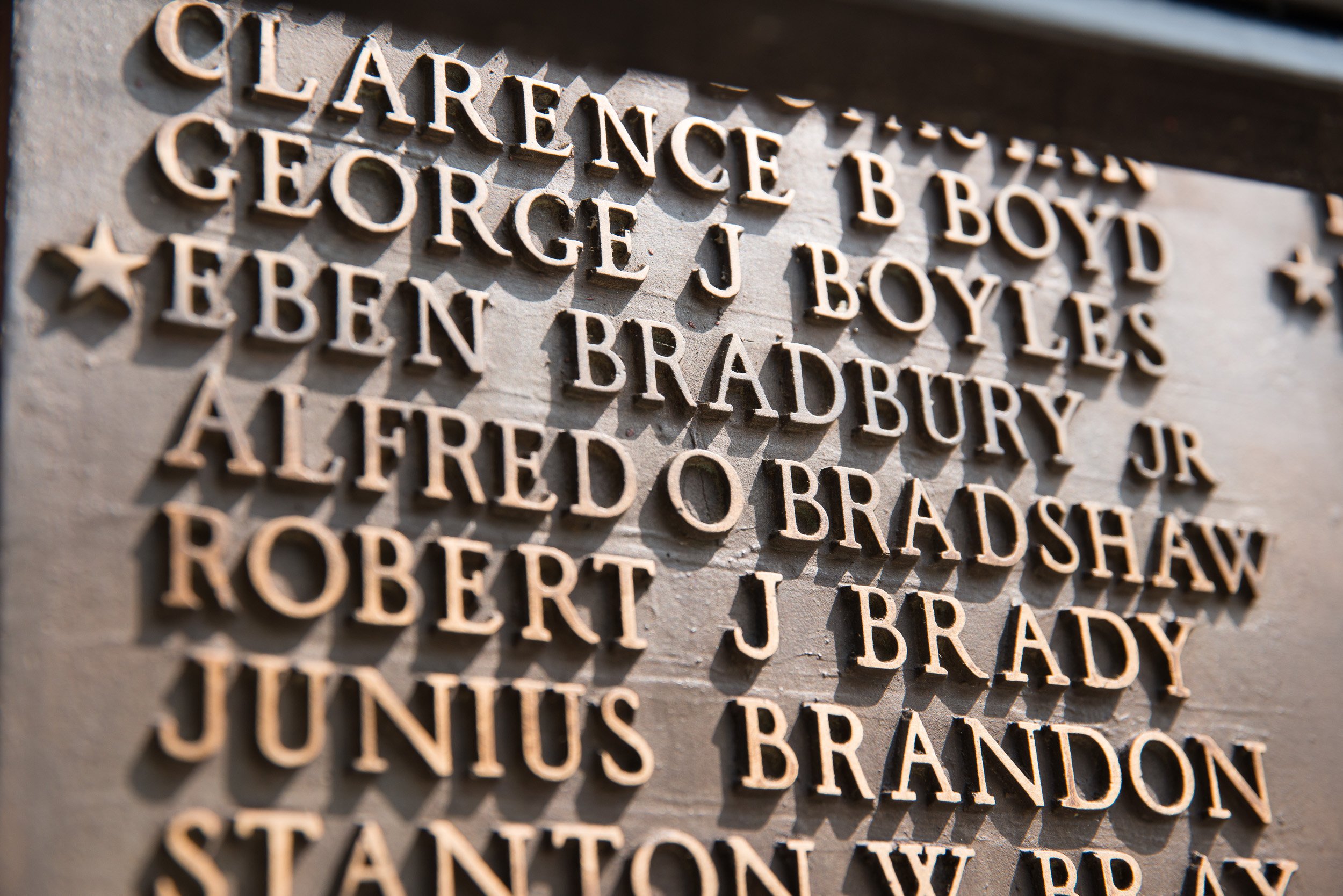
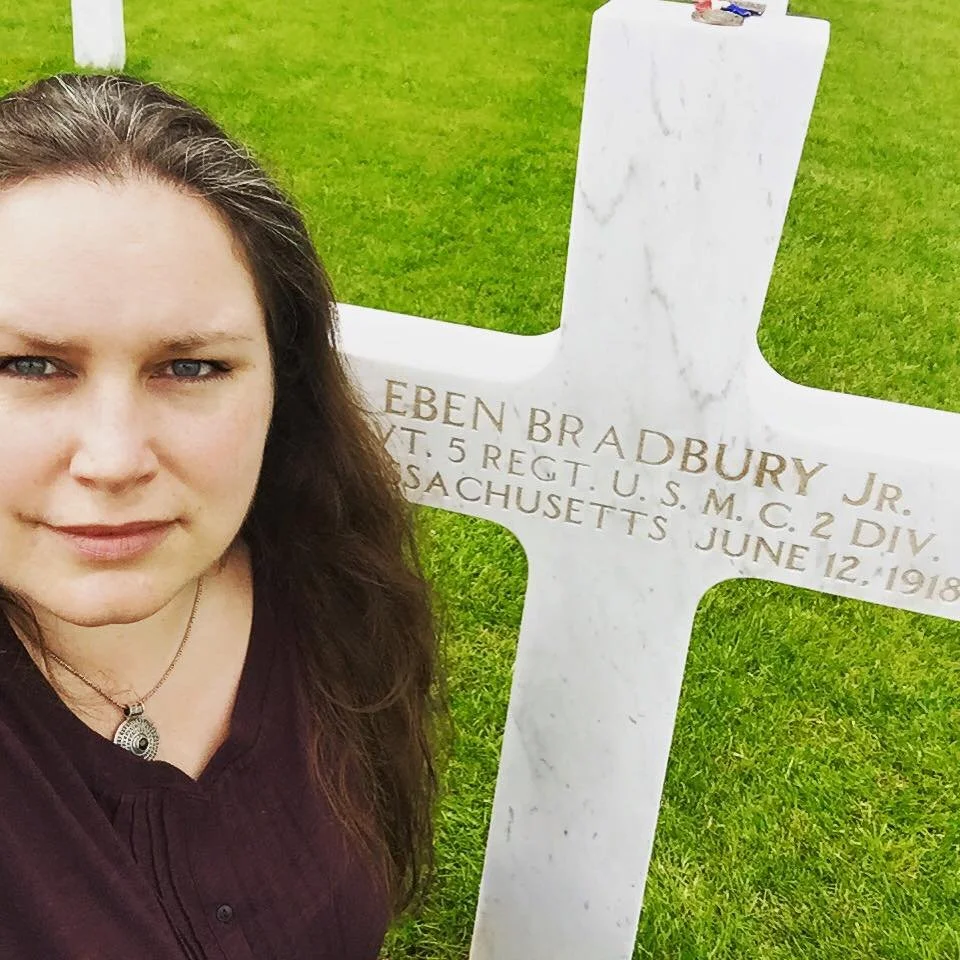
Sandy and I gasped at the tragedy of this coincidence - his grandmother finding a random letter in the Paris sorting office announcing the death of a young man she knew. We became close friends for a hundred other reasons after that, but it was Eleanor who really brought us together. Since then, I have been finding little “notes” from Eleanor all over the place. She was deeply involved in the museum here, was a member of my reading club, and corresponded with other families whose papers are in our collection.
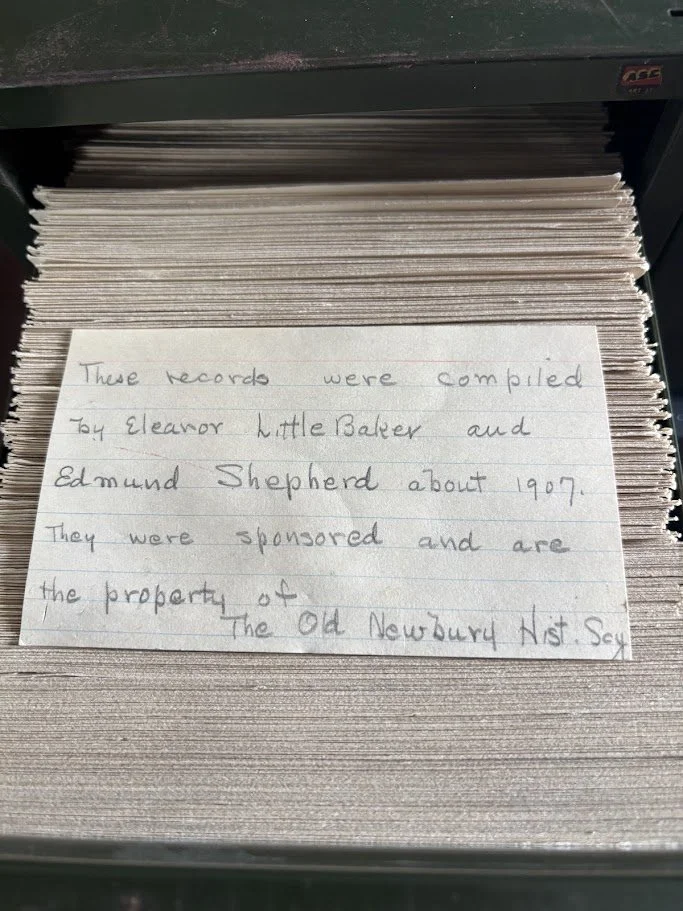
On small example - in this drawer at the museum, a record of Eleanor compiling detailed records of collection objects.
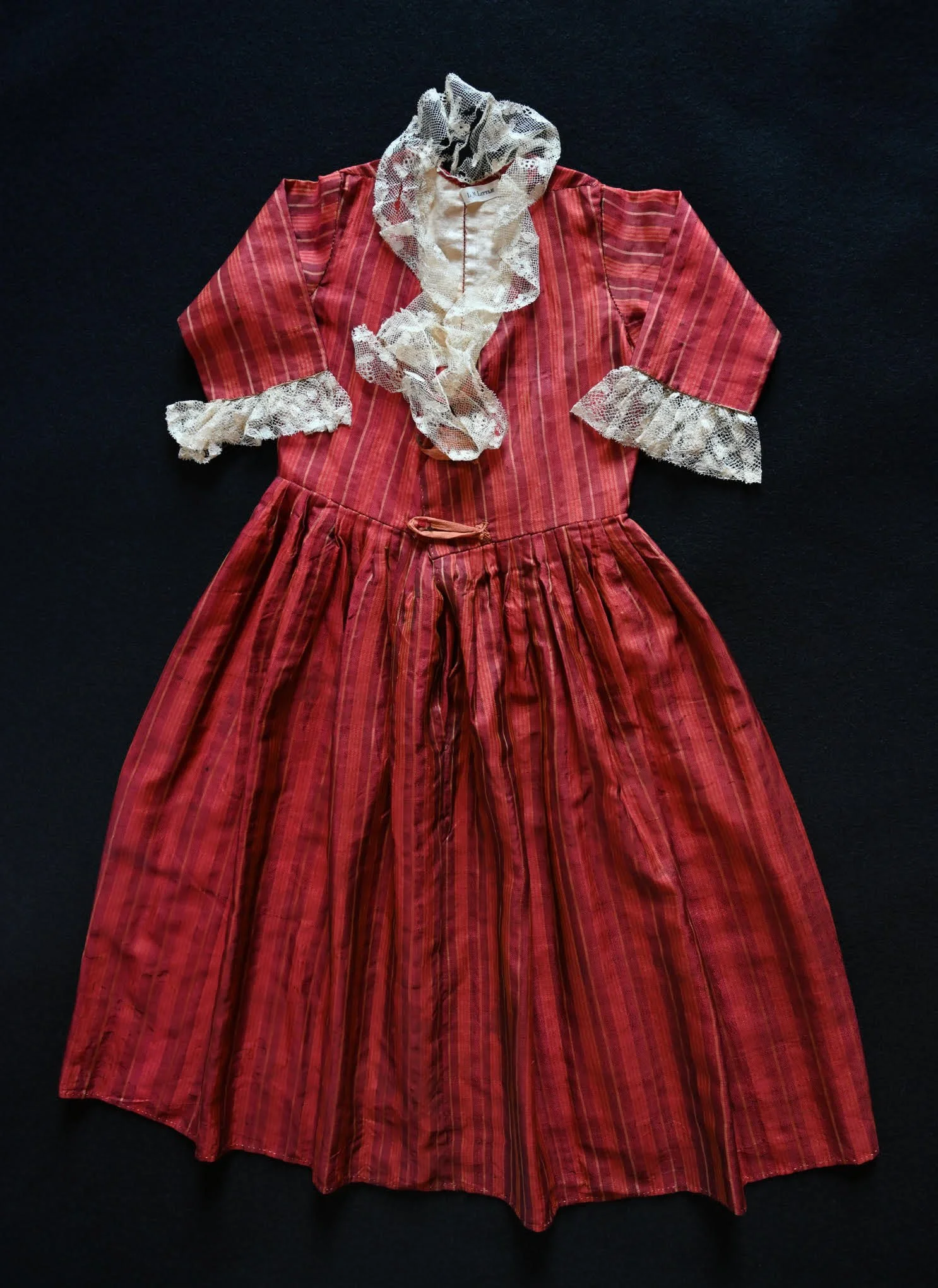
We also have numerous objects donated by her and her family, including the notorious red boy’s dress, passed down through her mother’s family and foisted on Little lads until Sandy’s father’s generation.
Within the last year, Sandy has lost his beloved husband, Butch, and his father, Charles, Eleanor’s son. In both cases, a poem written by Eleanor was reprinted in their memorial program and read at their service.
This week, Sandy came into the museum to visit the archives. He has recently retired, and is interested in volunteering to help process his extended family’s papers. We were looking through a box filled with papers given at the museum over the past century. Several had her name on them.
We opened the first file, and there, on the top, was the poem - her typing and her signature. It is dedicated to Sandy’s father Charles, her only son.
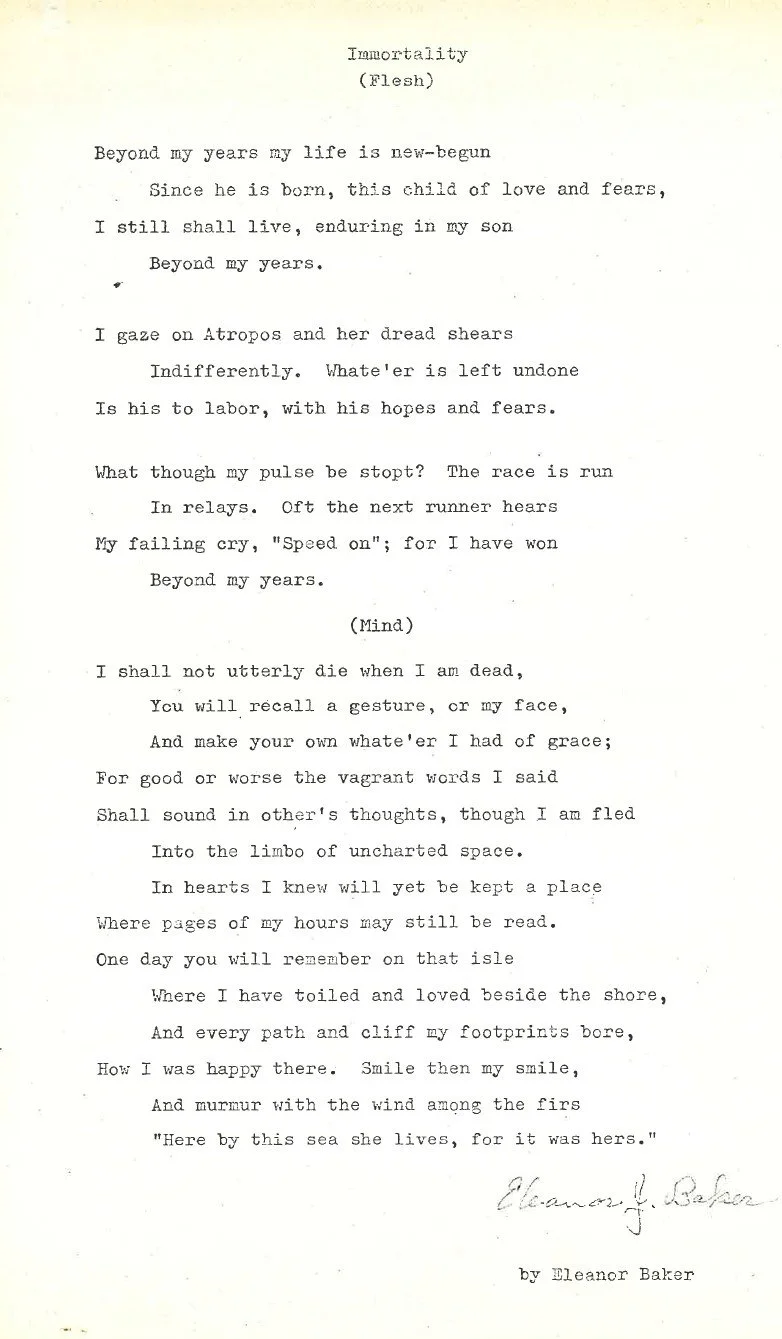
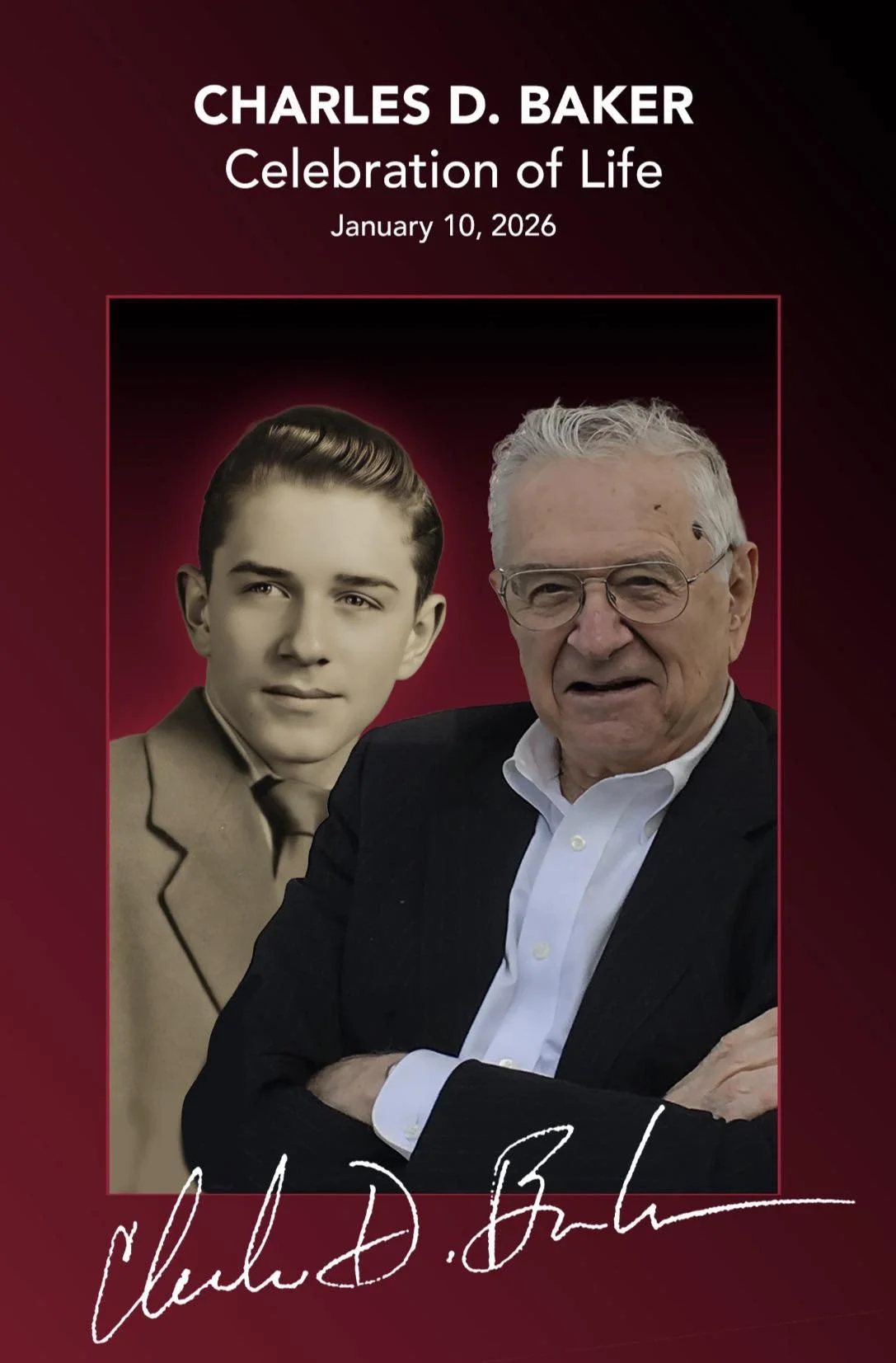
As a mother myself, I feel this deeply, this understanding that your world is passing and it is up to your children to “labor, with their hopes and fears”, carrying your hopes, your words, your memory with them. This is made additionally poignant by the recent death of Charles Baker, the boy to whom she bequeathed the sound of her voice, her love of the sea.
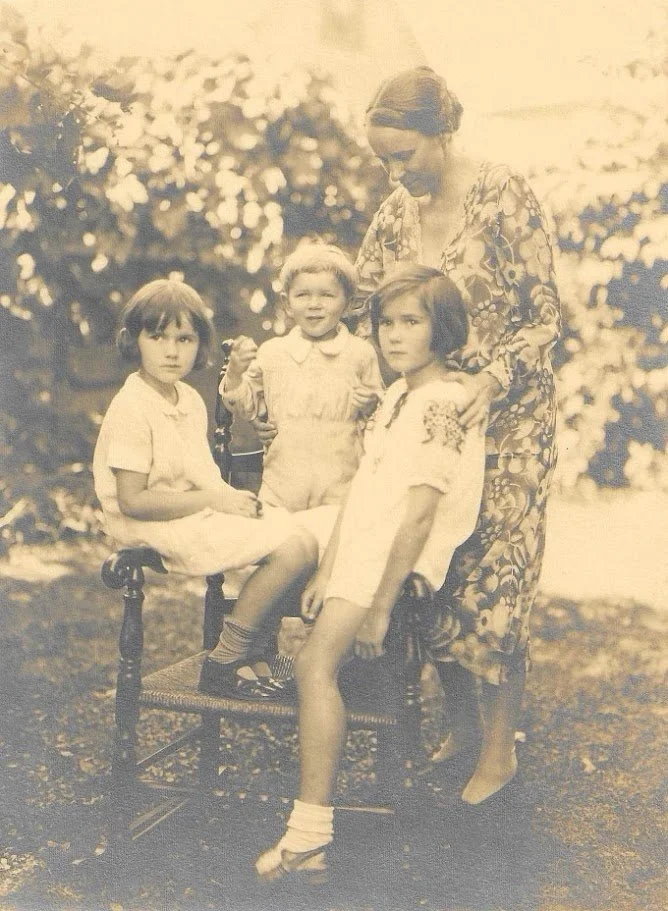
Eleanor Little Baker with her children Nancy, Caroline, and Charles, c.1930
But as a historian, standing with her grandson in a place she loved and knew well, we are also part of Eleanor Little Baker’s immortality, Sandy obviously a far greater order of magnitude than me, but still. I have her recipe for lemon cake. I know that she was funny and fresh and smart. I know that when she moved to New York after Charles was born, she missed Newburyport terribly, and kept up a brisk correspondence with her cousins and friends.
In 1939, she wrote a poem to her fellow reading club members, wishing them “New books as worthy as the old”, and “New gals (perhaps), cakes manifold”. And here I am, a “New Gal”, joining the club a decade after her death. She imagined me - or at least some version of me, taking up the mantle.

Sandy knew his grandmother well. He was 22 when she died at the ripe old age of 96. It is through Sandy, and all of the people that knew her in life, that she has a version of immortality. Though I never met Eleanor, I would like to wish her a Happy Mother’s Day, and though her boy has run his race, Charles’ beloved sons have taken the baton and are speeding on. I can’t run, even metaphorically, but I’m here cheering them on, and thinking of her. And that’s pretty wonderful.
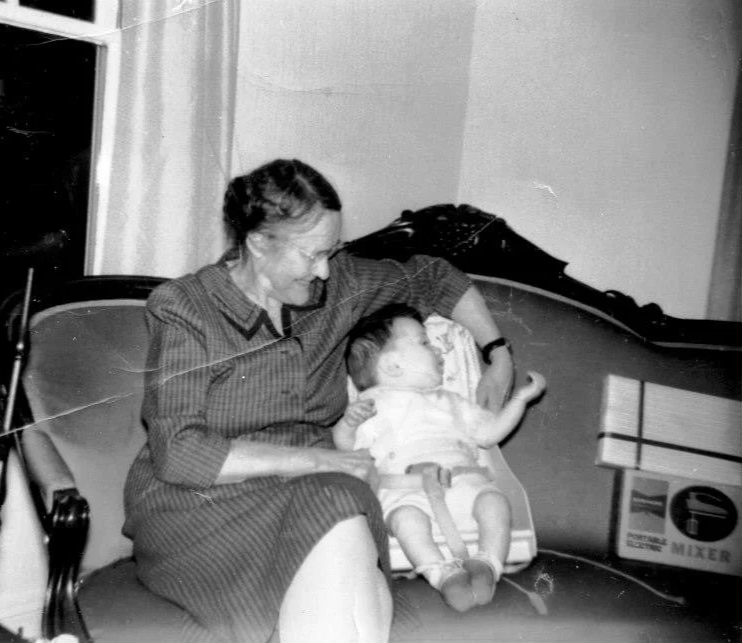
Eleanor and Sandy, c. 1962. Sandy quips “strapped down on the couch, unstrapped in the back seat of the car.” :-) It is possible that this is his brother, but we’ll let it stand.
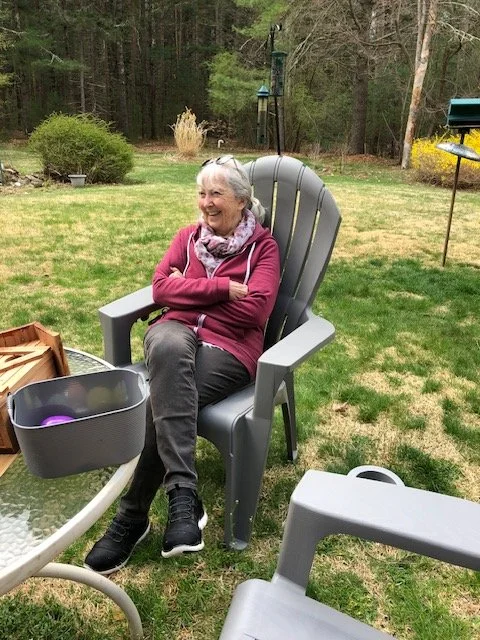
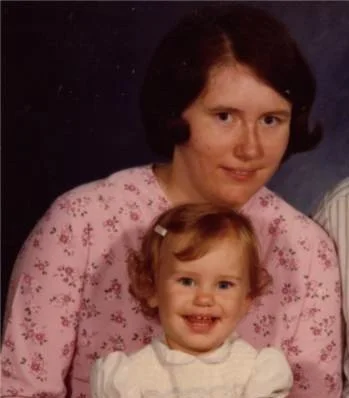
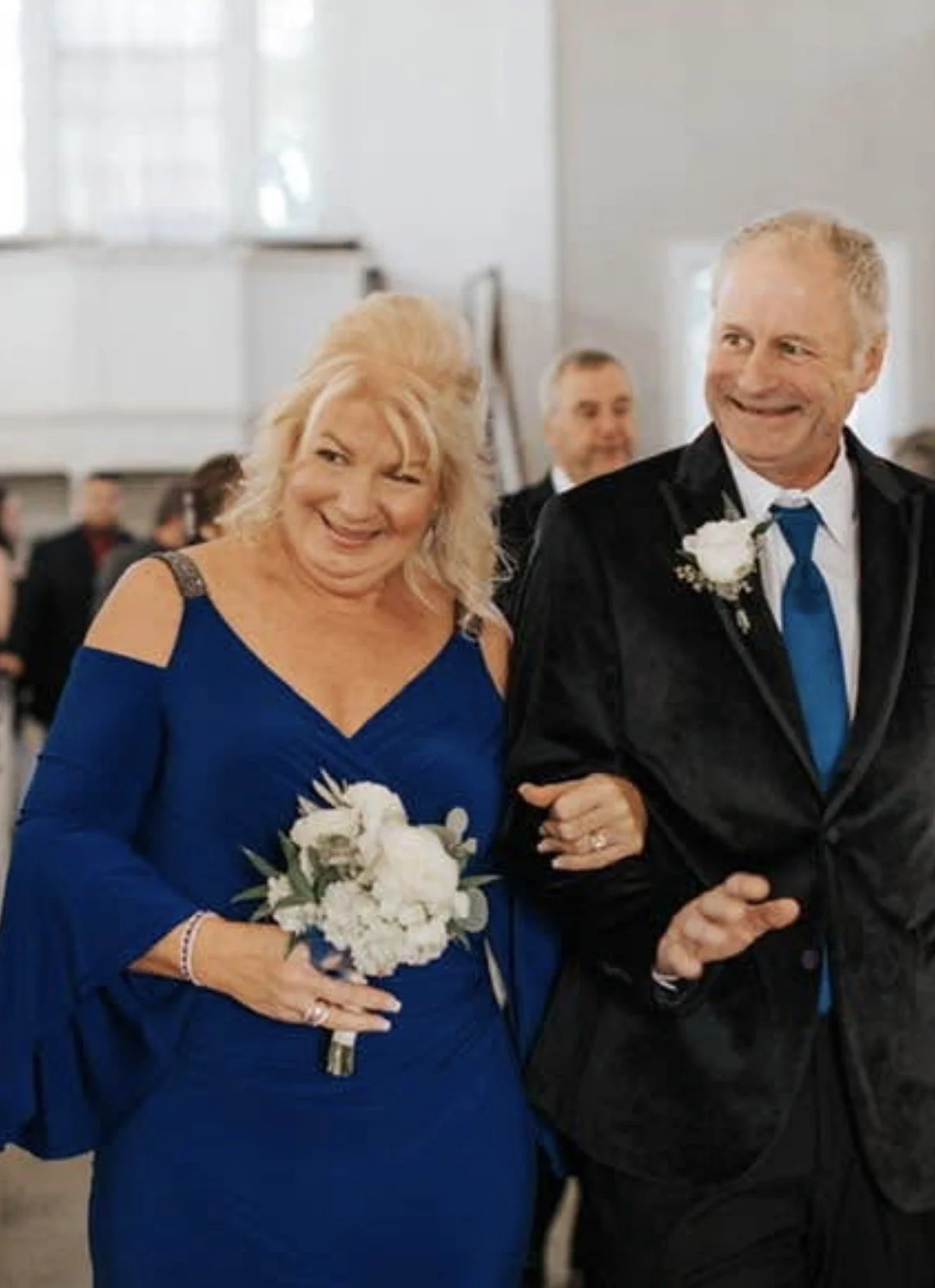
While we’re at it, the staff at the Museum of Old Newbury would like to take a moment to wish our mothers a very Happy Mother’s Day! From L to R, Doris Swofford, mother of Shelley, Jean Uhlig, mother of Bethany, and Cindy Adams, mother of Ashley. She gets two because the last one is too fabulous to leave out! Thank you for everything, Mom!