
Micro-Preservation on Orange St: A Historic Home Field Trip
by Sierra Gitlin
Standard disclaimer: Sierra is a friend and a genius, but we at the Museum of Old Newbury would encourage any homeowner to consult a professional before beginning a project involving historic objects, chemicals, and dental tools!
Don’t get me wrong, I enjoy a good solid winter as much as the next hearty New Englander, but what in the Adolphus W. Greely is going on here? Three big snowstorms in three weeks following weeks of bitter cold? Certainly at this point everyone has taken up cozy indoor diversions - puzzles, knitting, baking, whiskey, etc. Something quiet, comfortable, interesting-but-not-too-interesting; a soothing pastime to while away the dark months while we wait for fairer days. Well, allow me to share with you my most recent diversion-turned-obsession, VICTORIAN DOOR HARDWARE!!
“Definitely not too interesting,” you say? Perhaps I can change your mind.
It all started a few months ago. I am lucky to be the owner/steward of a Victorian house on Orange St., described in the Massachusetts Cultural Resource Information System as “one of the most ornate and extravagantly detailed Queen Anne homes in the city.” The Henry T. Moody House was built by… you guessed it, Henry T. Moody in 1890. It’s a purple, cream, and green (chromatically polarizing) attention-grabber with a turret, stained glass, and elaborate turned and carved embellishments. One day last summer, I found a skeleton key. Obviously if you find a key, you look for a lock, and though all my doors have them, the closest was my bedroom door. I didn’t expect it to work, but with some gentle cajoling and a counterclockwise twist, I heard a click and the bolt slid out. Huzzah! I had a working skeleton key!
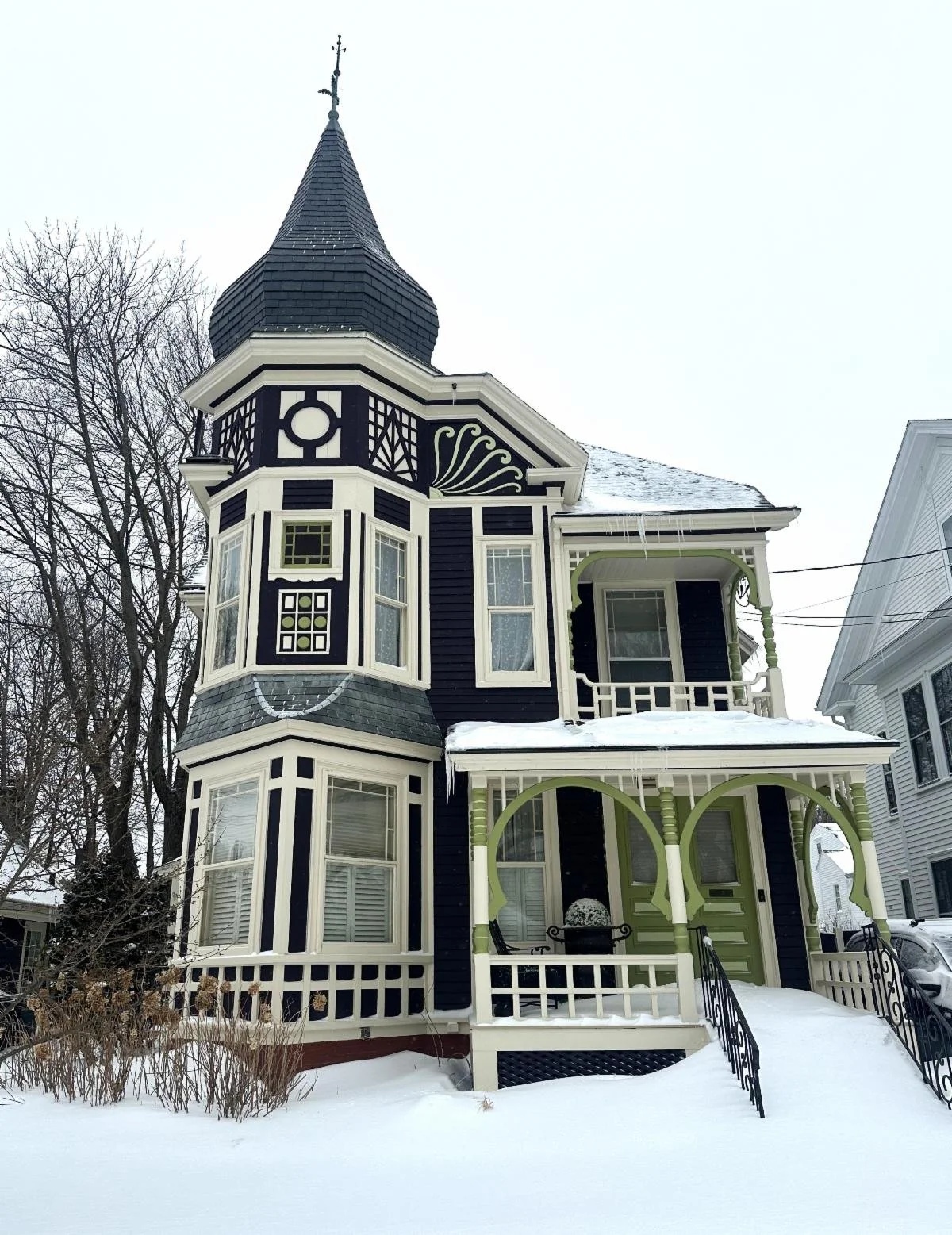
The Henry T. Moody House
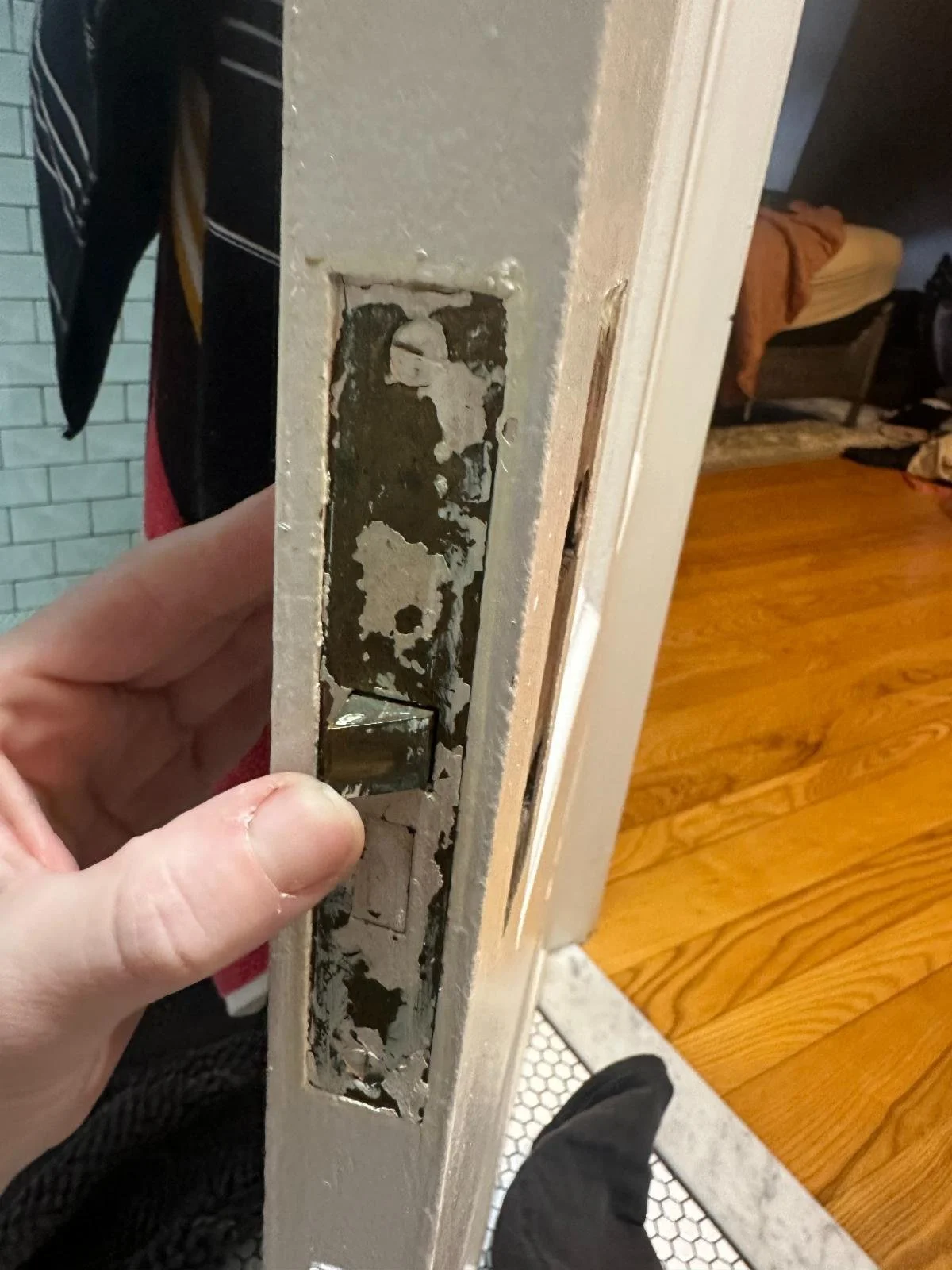
That said, I’m so glad I did this little experiment with the door open, because try as I might that bolt would NOT slide back in. Not for anything. Not from either side. I gave up, and decided I’d just have to take out the mortise lock, manually return the bolt to the unlocked position, and put it all back together. Easy peasy. It’d probably take ten minutes. I’d get to that. Soon.
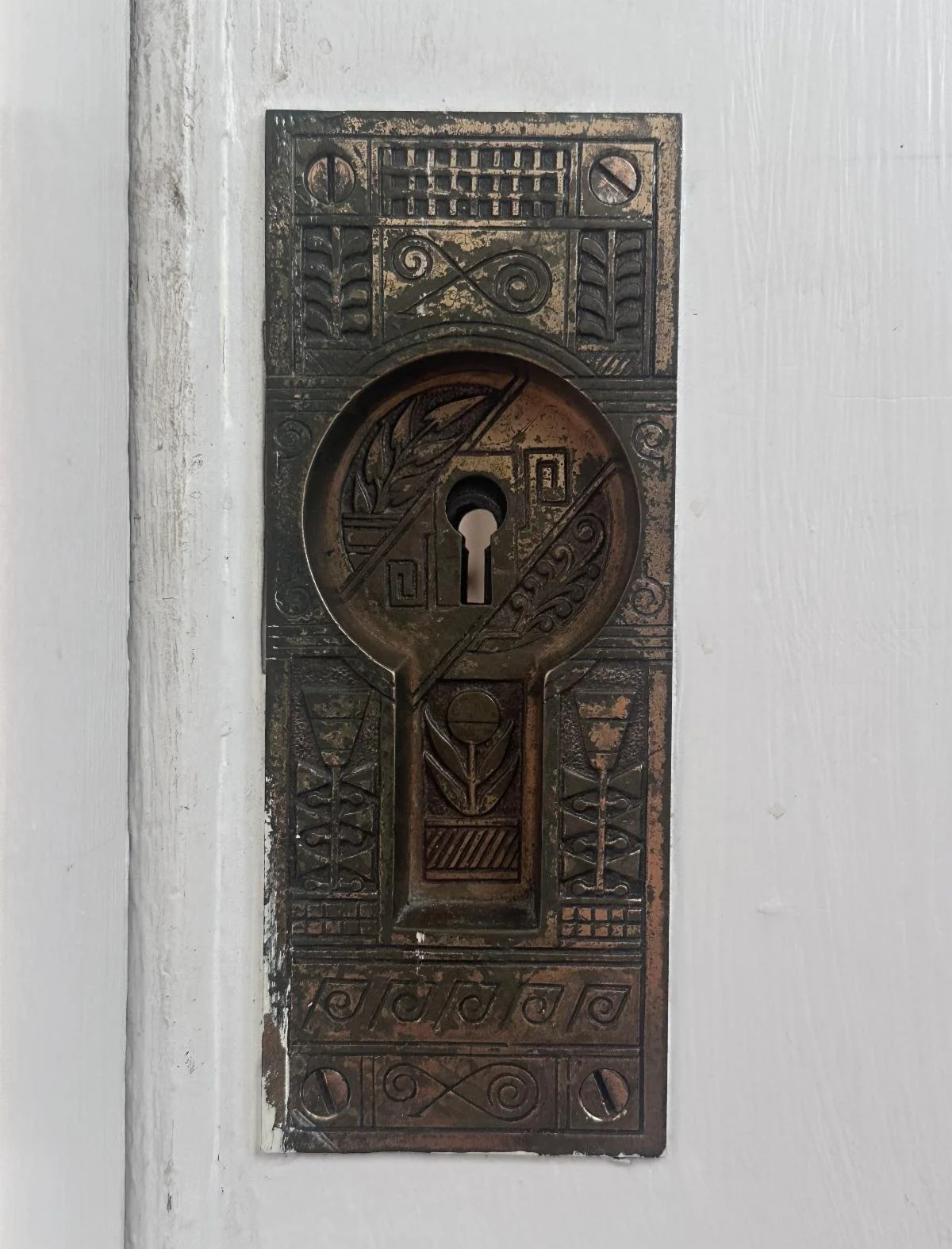
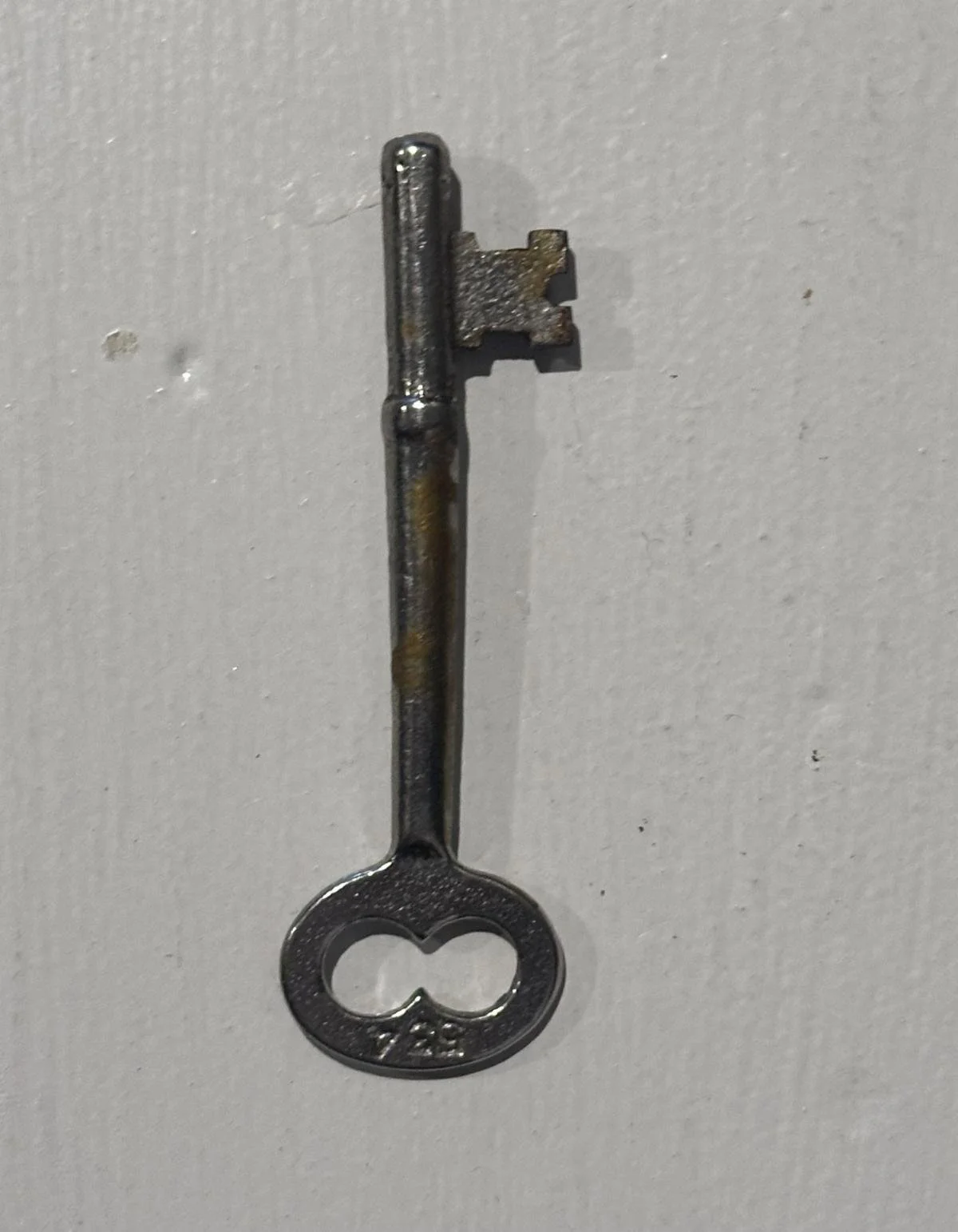
The skeleton key!
Months passed. Cue that big snowstorm we just had. No, not that one. No, not that one either. The first one! The big one! I needed a project! I would unstick my stuck mortise lock!
It really did take less than ten minutes, but once it was out I decided to remedy something that had been bothering me for the 20 years I’ve owned the house. (Pause here to say, humbly, that I have the most GORGEOUS doorknobs. No jokes please. I mean it. They’re original to the house and they’re spectacular. But more on that in a moment.) Over the course of many owners and many paint jobs, the lovely knobs and plates and rosettes had accumulated quite a bit of white door paint in sloppy streaks and dribbles. It was a crying shame and I was finally going to fix it!
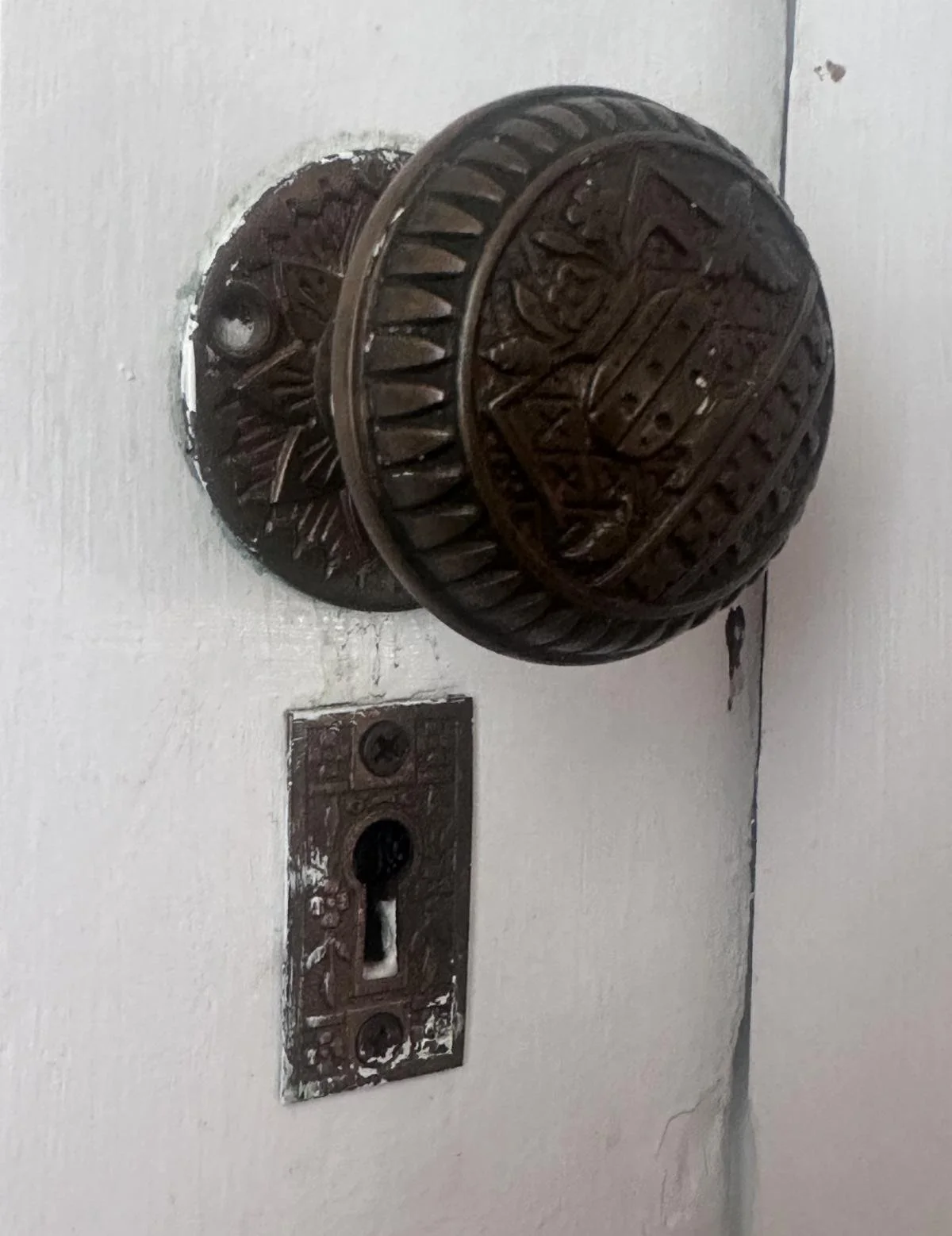
Three snowstorms later, I’m on my tenth set (of 17) and am now the world’s foremost expert on cast-bronze Victorian hardware. Ok that may be a tiny exaggeration, but after lots of research, some trial and error, a dining table workstation, and some elbow grease (and some other kinds of grease), I am getting pretty good at making these beautiful and utilitarian bits even more beautiful and utilitarian.
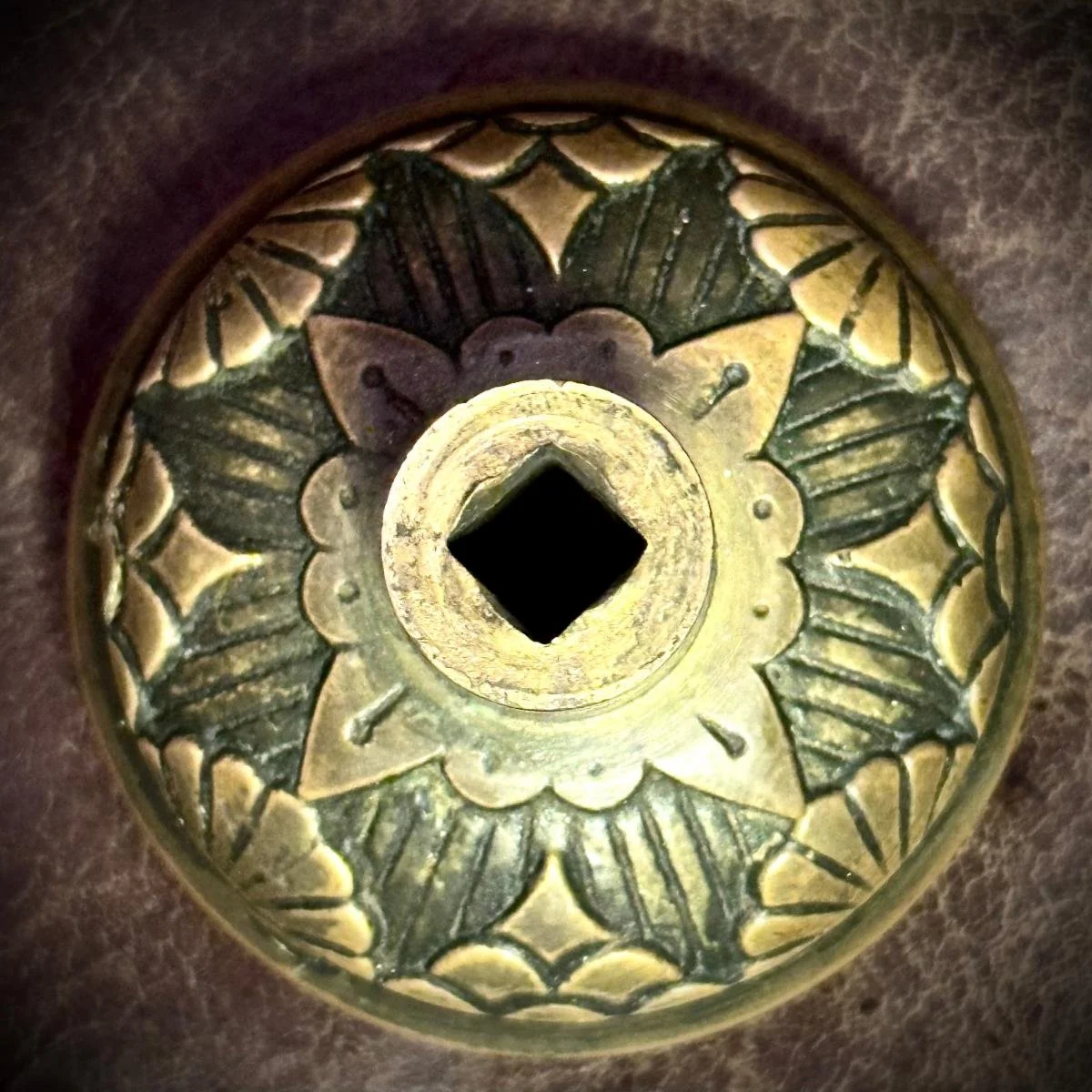
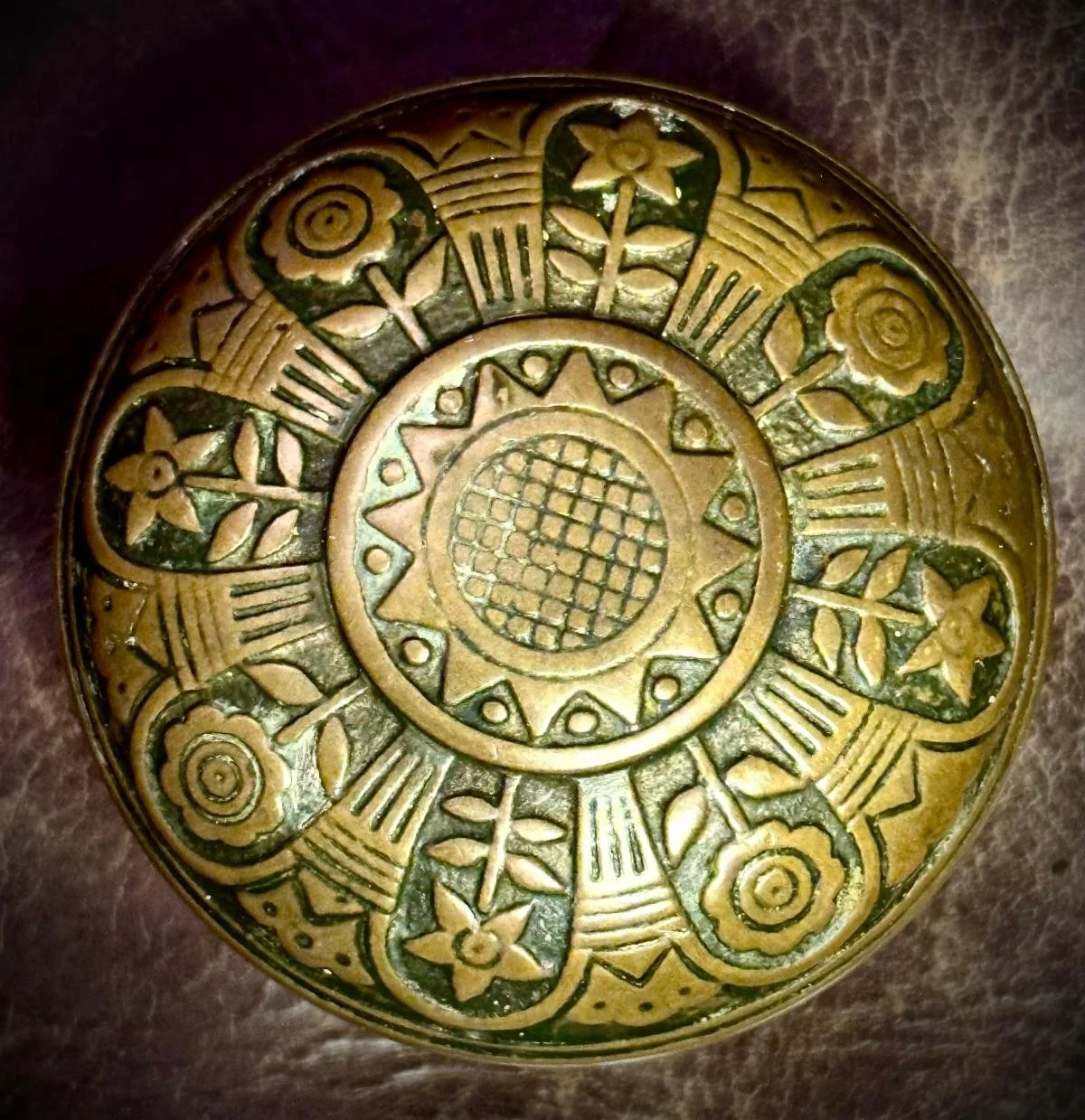
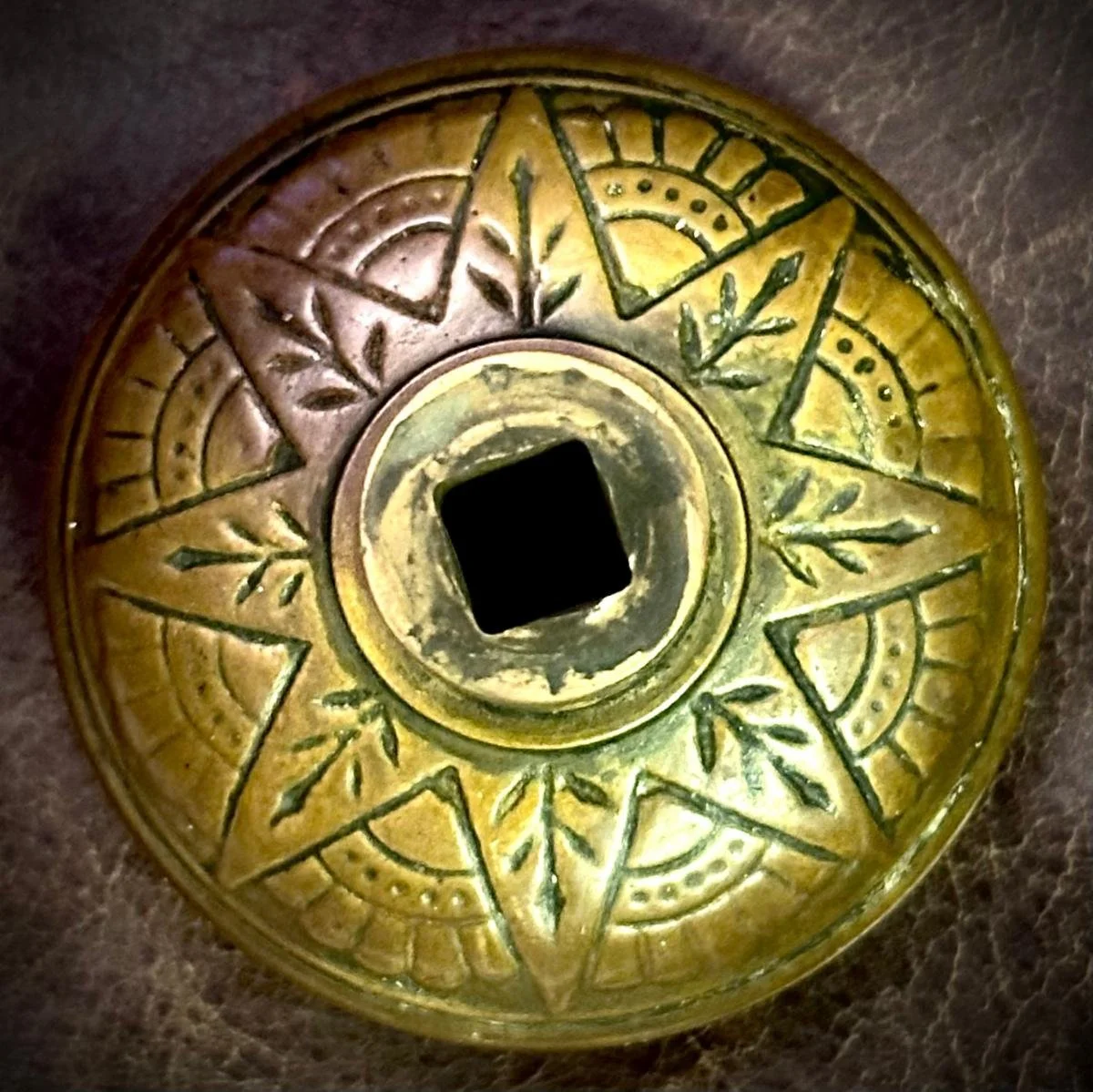
You’re still not convinced this is interesting, are you? Well look. At. These:

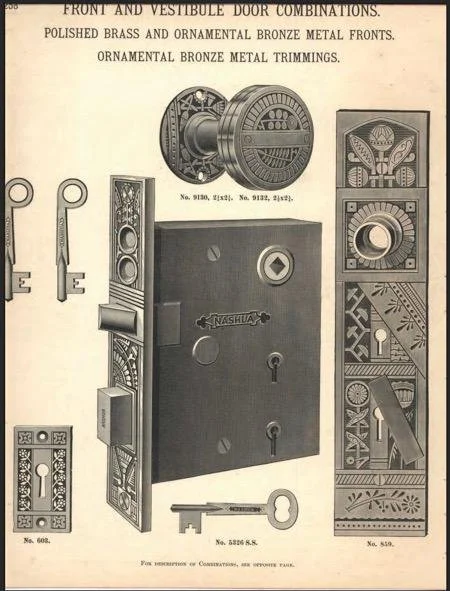
Page from the Nashua Lock Company's 1886 catalog via Antiquedoorknobs.org
They’re like jewelry for the doors! According to “Municipal History of Essex County in Massachusetts” by Benjamin F. Arrington, Henry T. Moody Jr. learned blacksmithing from his father. Moody grew up to be a machinist, champion bicycle racer and manufacturer, and the inventor of, among other things, a specialized piece of hardware called the “Moody hangar” [sic] though I can find no further info on what exactly it was. He established Victor Manufacturing Co. at 63 Water St. (current home of the Newburyport Art Association) and ran a thriving business making fire-proof doors. I have to believe that when he built this house around 1890, the hardware he chose for his home was unlikely to have been an afterthought. It was part of his aesthetic vision.
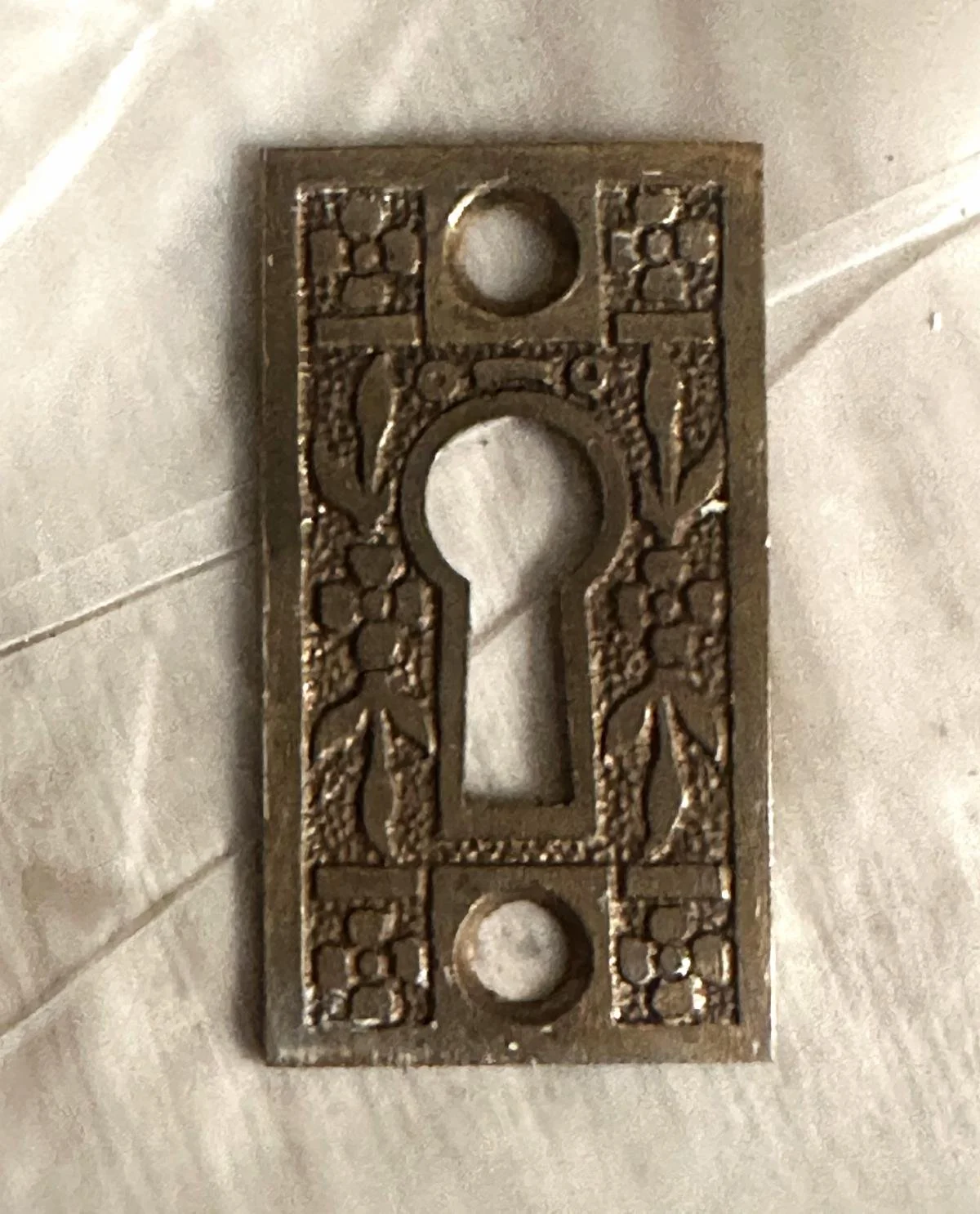
The cast-bronze knobs with matching backplates, rosettes, and keyhole escutcheons are in the Eastlake-style, part of the late 19th-century Aesthetic Movement. Though named for British architect Charles Eastlake, the design reform movement that bears his name found its greatest success in North America. Often categorized as a subset of the Queen Anne architectural tradition, the Eastlake style was a natural fit for this home’s late-Victorian character.
The movement’s "bible" was Eastlake’s 1868 popular book, Hints on Household Taste, which argued that domestic decor should be defined by "honest" construction and the visible pride of the craftsman. He championed geometric silhouettes and thoughtful, hand-wrought details over the deceptive, over-embellished, and mass-produced fashions of the mid-19th century.
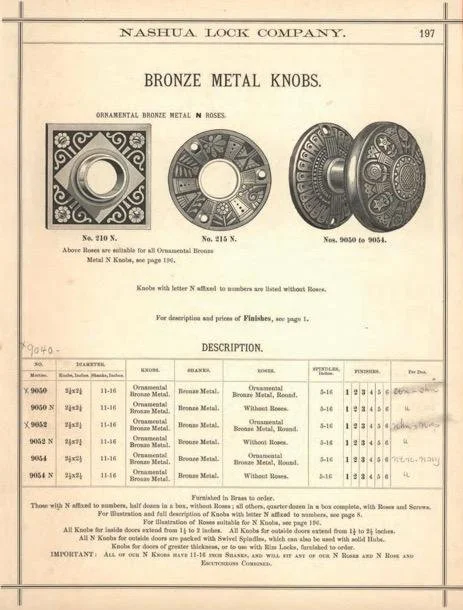
Page from the Nashua Lock Company's 1886 catalog via Antiquedoorknobs.org
While Eastlake himself never manufactured a single piece of hardware, his "rules" for good design were enthusiastically co-opted by the very industrial foundries he sought to reform. By the 1880s, major American manufacturers had adapted (he would say corrupted) Eastlake’s design philosophy, ironically to the mass-production of cast-metal hardware. Eastlake’s structural discipline merged with the Aesthetic Movement, a philosophy that elevated the "House Beautiful" to a moral calling. For the Aesthetes, even the humble doorknob should be a legitimate work of art.
The rich, eclectic hardware Henry T. Moody chose was manufactured by Lockwood Manufacturing Co of Norwalk, CT (they acquired Nashua Lock Co. in 1889). The pattern is called “Broken Leaf,” and it’s a perfect example of the pairing of Eastlake’s rigid, linear borders and geometric patterns with the exoticism of the era. Stylized botanicals, urns, and the intricate "Egyptian Revival" motifs that were fashionable at the time gave a hint of the Art Nouveau opulence that would develop over the next decade.
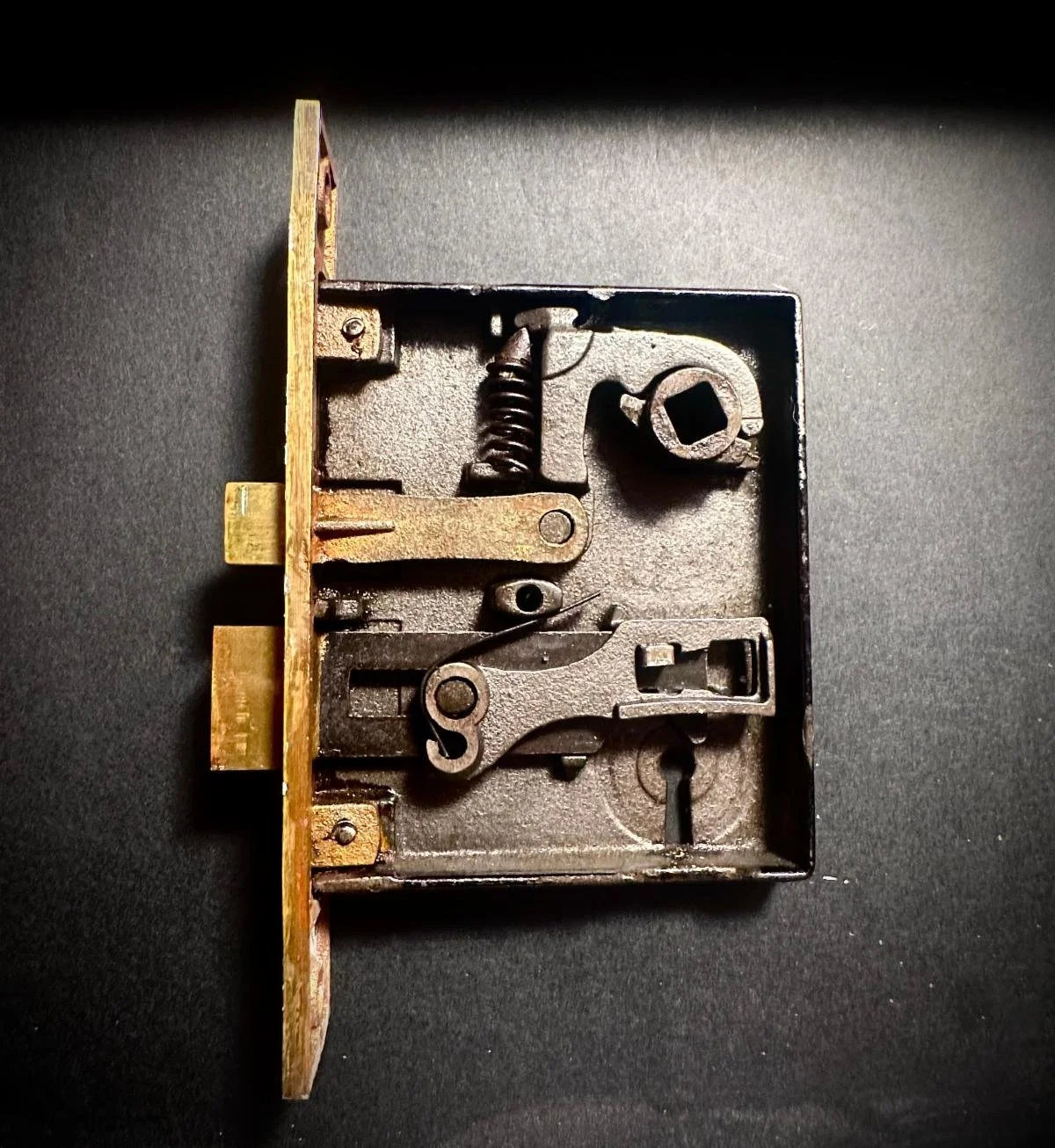
Looking deeper, the inner workings of the doorknob set – the mortise locks – reveal another layer of less obvious beauty: springs, levers, and cam mechanisms cast in iron and steel, remarkably intact after more than a century of daily use. The engineering is simple, durable, and surprisingly elegant. Some of them were a little stuck, and I had to order a couple replacements for broken flat springs. One had a white webby bug nest inside, and one had a tiny dried up grape in it, obviously stuck into the keyhole by one of the many children who has lived here. After a good cleaning and light brush with mineral oil, they work beautifully. In an era of planned obsolescence and constant bewildering technological advances, it’s incredibly comforting to dismantle, clean, and reassembly a purely mechanical object. No computer, no updates, just a straightforward, well-designed, functional item that has worked as intended for nearly 130 years.
Through trial, error, and Google, I found the gentlest and most effective ways of softening and removing old dried-on acrylic and oil paint. I learned of the chemical paradox that a vinegar and salt solution can be used both to produce AND to remove tarnish. Oh, and how about the conditions that produce the noble verdigris and its vile doppelganger “The Bronze Disease.” (Yes it’s called that. It’s a powdery buildup that resembles verdigris only flakey and brighter green. It’s a reaction between the bronze and chlorides, often found on exterior hardware in seaside towns due to the salt in the air. It is actively corrosive and needs to be treated!)
This project is both an art and a science, and as such I do wish I had paid more attention in high school Chemistry, because…copper oxides, dezincification, chelating agents, acids, bases, chlorides, mineral oil, mineral spirits, cuprite, tenorite, and liver of sulfur?! Just like in chemistry class, mistakes have been made, but probably nothing to worry about long term.
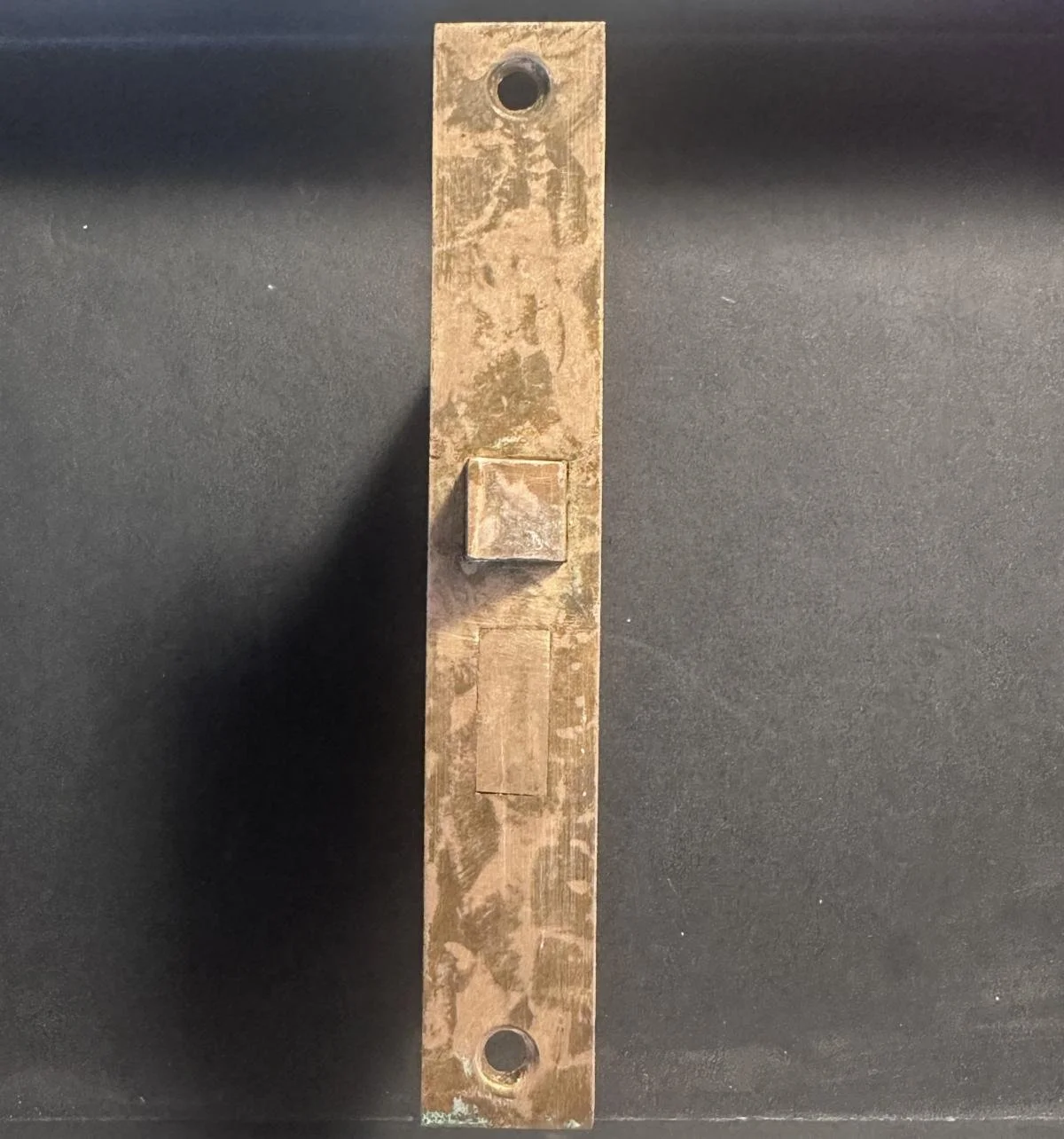
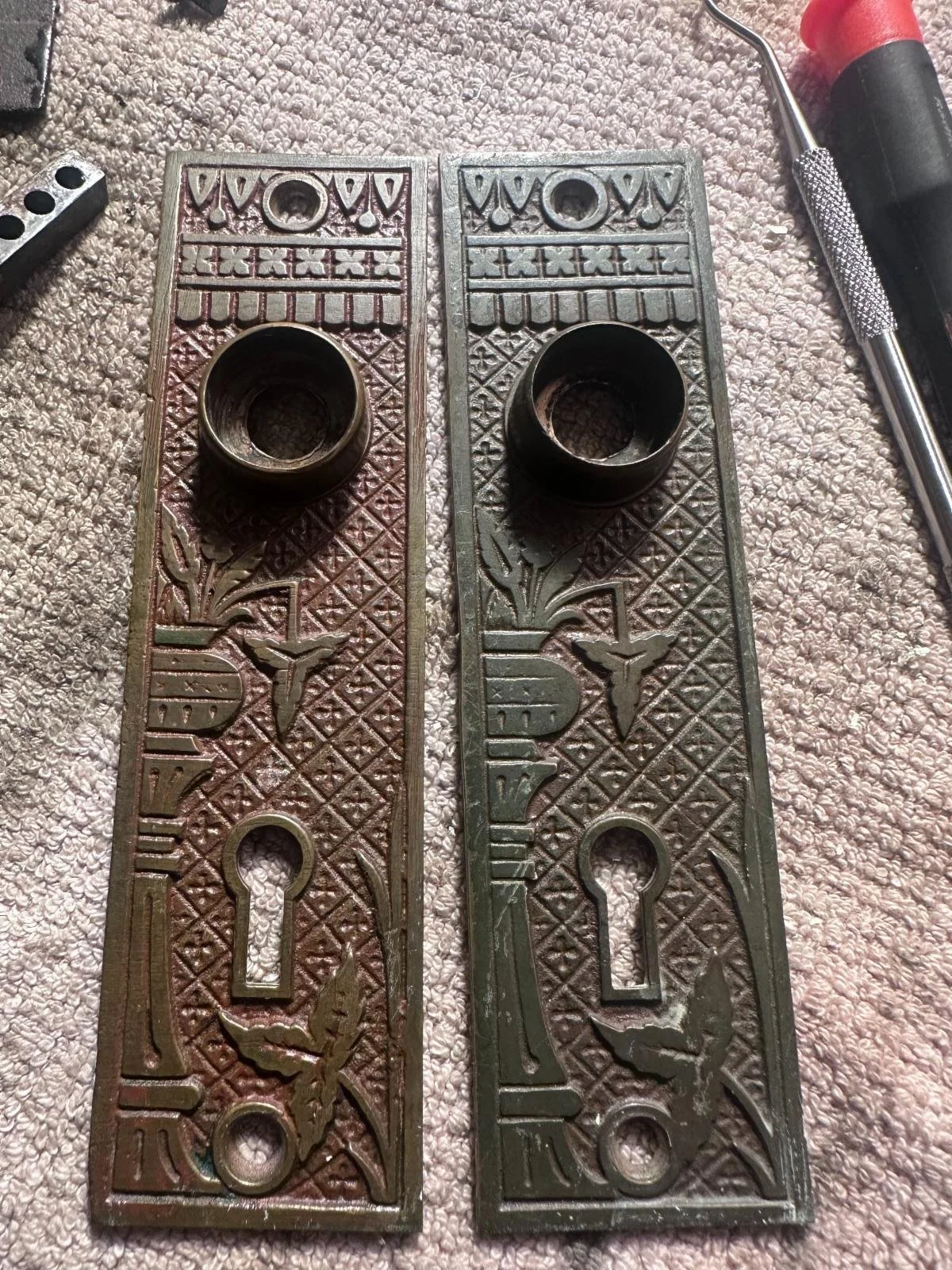
I settled on this as the best process to balance preservation, conservation, and my own aesthetic preference: (PLEASE do your own research on your particular hardware before trying these or any other cleaning or restoration methods, especially the chemistry class stuff!). First I used WD-40 and/or Citristrip (a gentle citrus-based paint stripper) to soften and remove old dried paint with toothpicks and a dental scraper (not recommended - too scratchy - but highly satisfying and sometimes the only thing that will do.) Then a cleaning with warm water, dish soap, and a toothbrush. A vinegar soaked q-tip works well to remove some of the tarnish and brighten the raised design details, followed by a baking soda and water rinse to neutralize and flush away any acidic residue. A thorough air drying to prevent trapped moisture, and finally a light coat of Renaissance Wax applied with a soft cloth. High maintenance knobs over here on Orange St, but well worth it!
The goal was not to make them look new, but to stabilize, remove paint, and lightly boost the contrast that had developed naturally over many years. Speaking of which, yes, if you think too much about it, that patina is kind of grimy, but in a marvelous twist (pun intended), I give you the “oligodynamic effect:” the biocidal properties of some metals like copper, silver, and zinc, in which metal ions actually puncture the cell walls of bacteria and viruses, effectively self-sanitizing the doorknob within a few hours of contact with a sneezy child’s hand! In any case I made the aesthetic choice to leave as much patina as possible, including a single flake of gold glitter petrified into the knob of my daughter’s bedroom door.
It’s easy to overlook a doorknob. Yet it is the most touched object in a house. Every resident, every visitor, every generation has turned these same pieces of bronze. I think of all those hands, all those exits and entrances; the firsts, the lasts. Historic preservation is often thought of in grand terms: façades, rooflines, structural integrity, wide-pine floors discovered under old linoleum. But preservation also happens on a much smaller scale… sometimes through a magnifying glass with a toothpick. Keeping the hands busy, reveling in small wonders, and pausing to appreciate the everyday beauty that surrounds us are all good for the soul, especially when you can make something lovely shine even brighter in the process.
This is good winter work. Outside, the snow keeps falling.
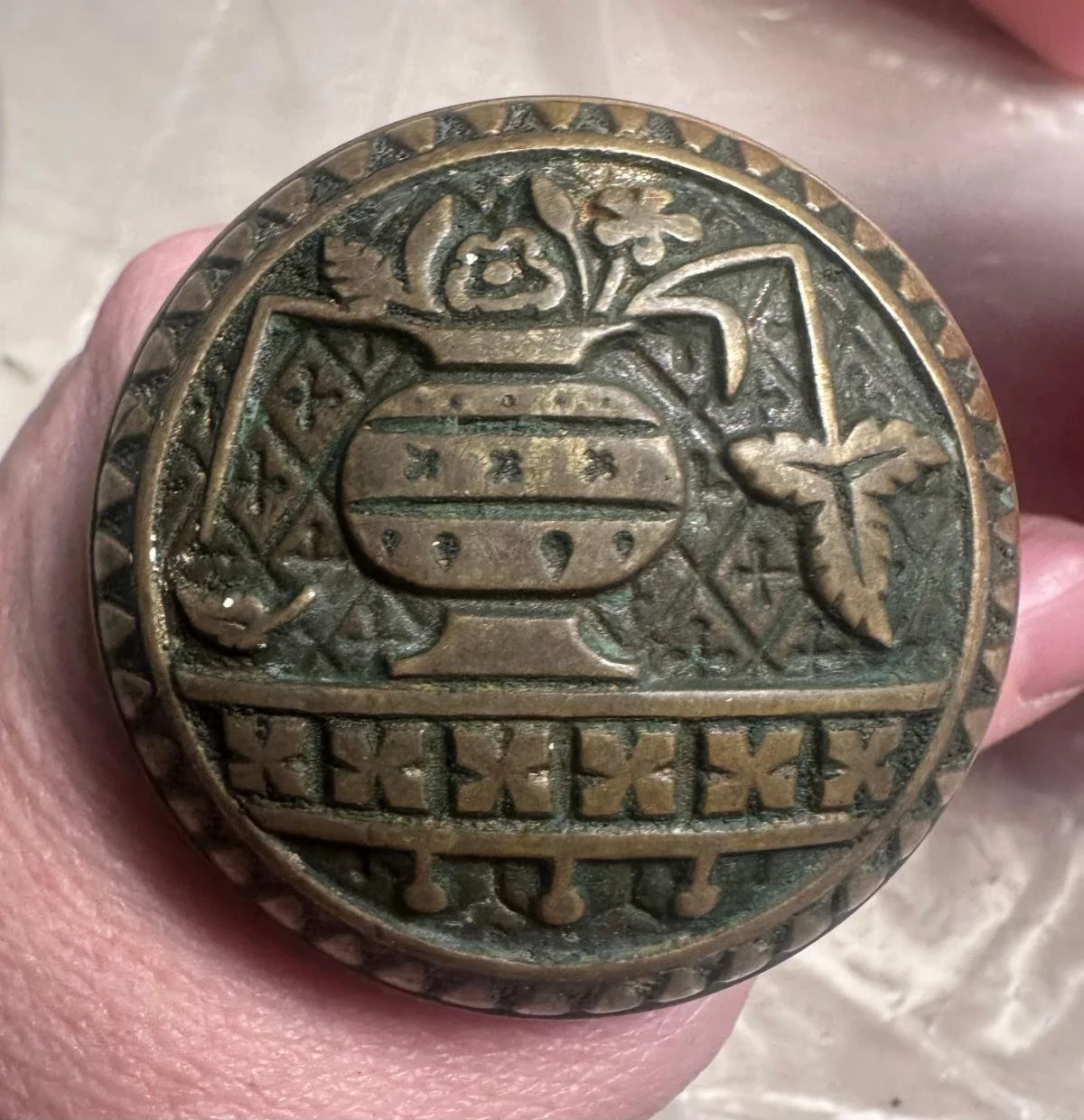
Before
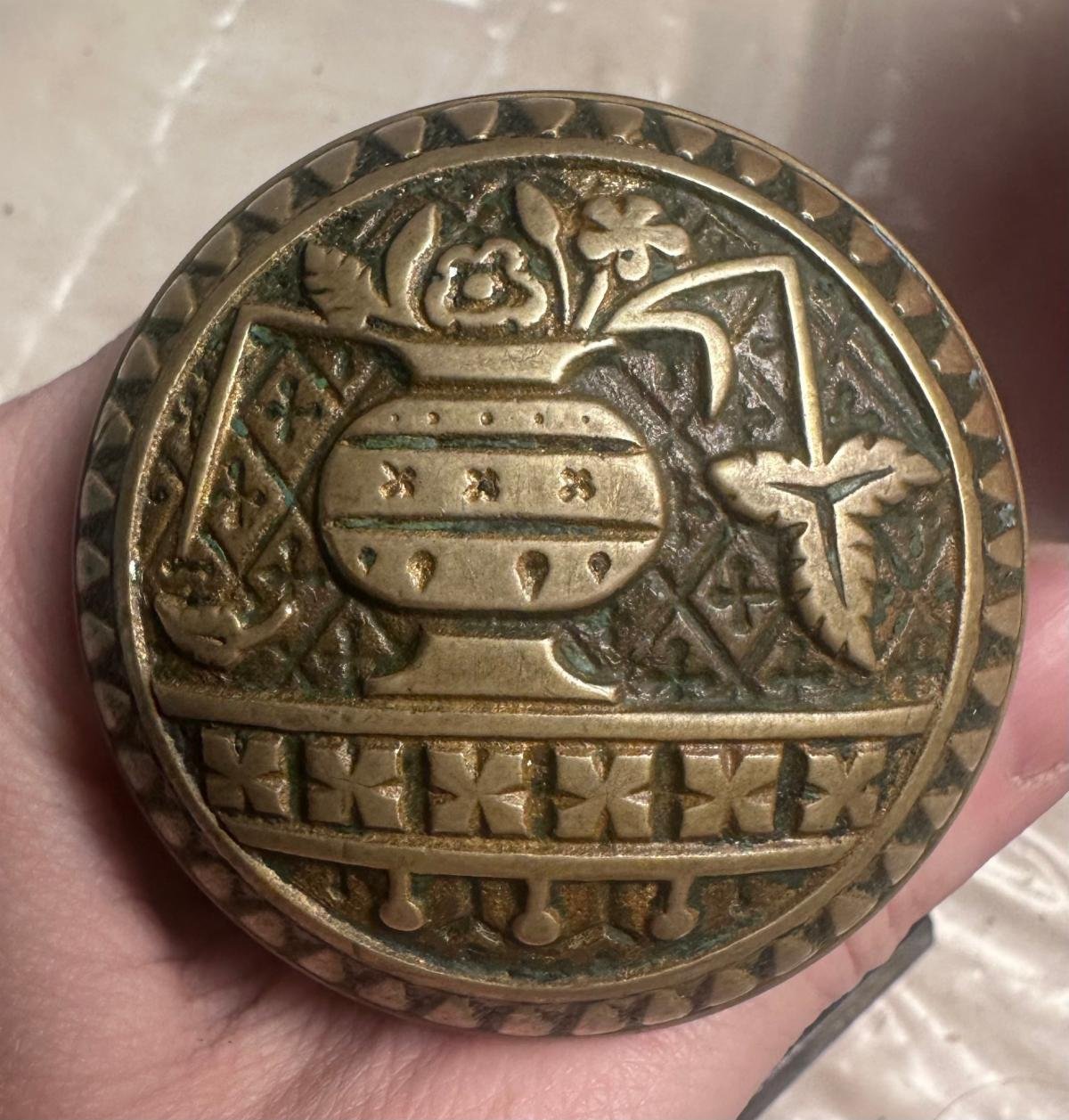
After
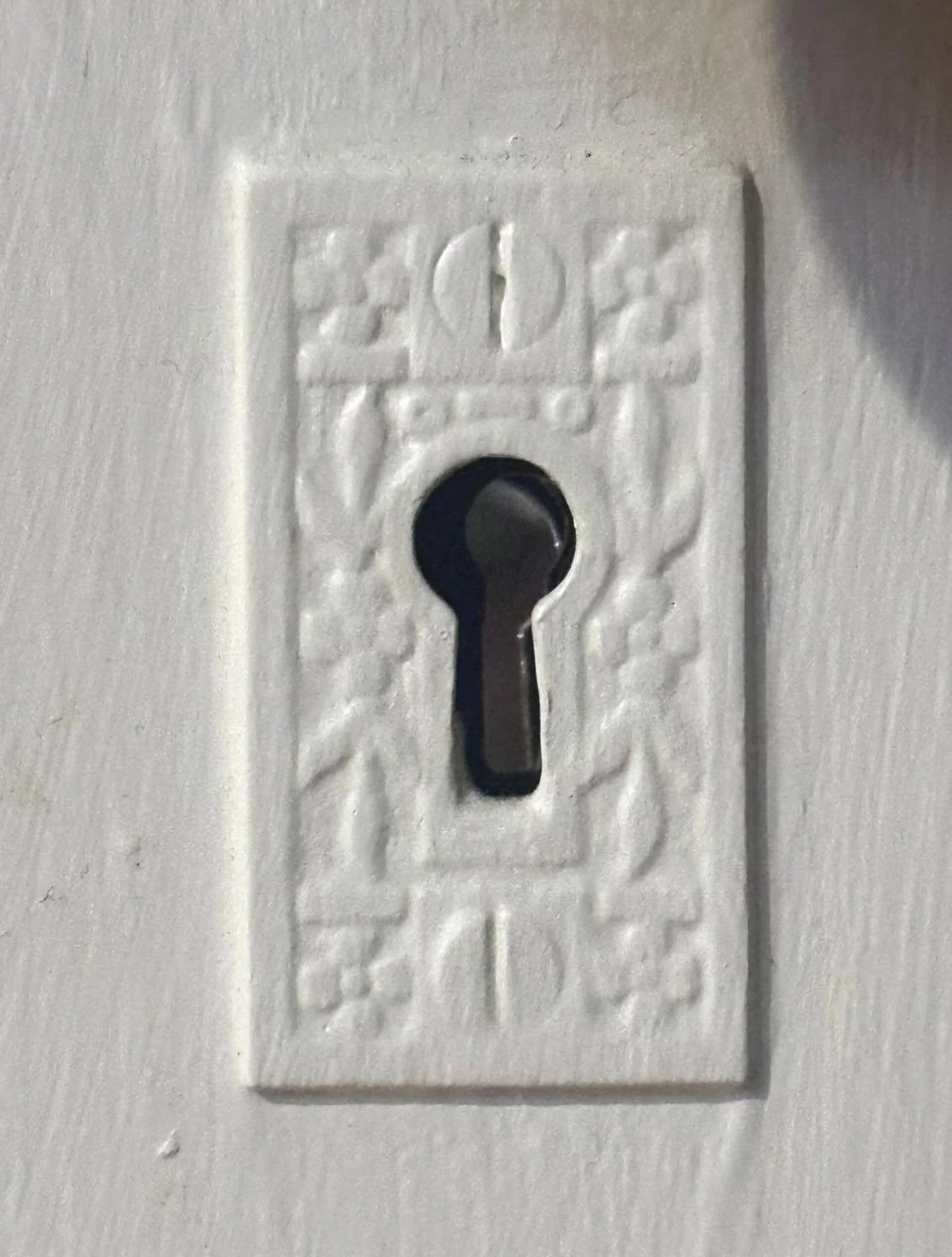
Before
After